


Somebody lands on a website, reads one article, and leaves. No email captured, no way to reach them again, nothing. That visitor might’ve been a perfect fit for whatever’s being sold, and there’s no way to know, because they’re just gone now, back into the internet, probably never coming back on their own. That’s the entire problem a lead magnet is built to solve.
A lead magnet is the trade. Something genuinely useful, offered for free, in exchange for an email address. Sounds simple, and it is simple, but most businesses still get it wrong. They offer something too generic, or too big, or something that has nothing to do with what they actually sell. This guide covers what a real lead magnet looks like, the types that actually convert, and the full process for building and shipping one that does its job instead of collecting dust in a Google Drive folder.
What Is a Lead Magnet?
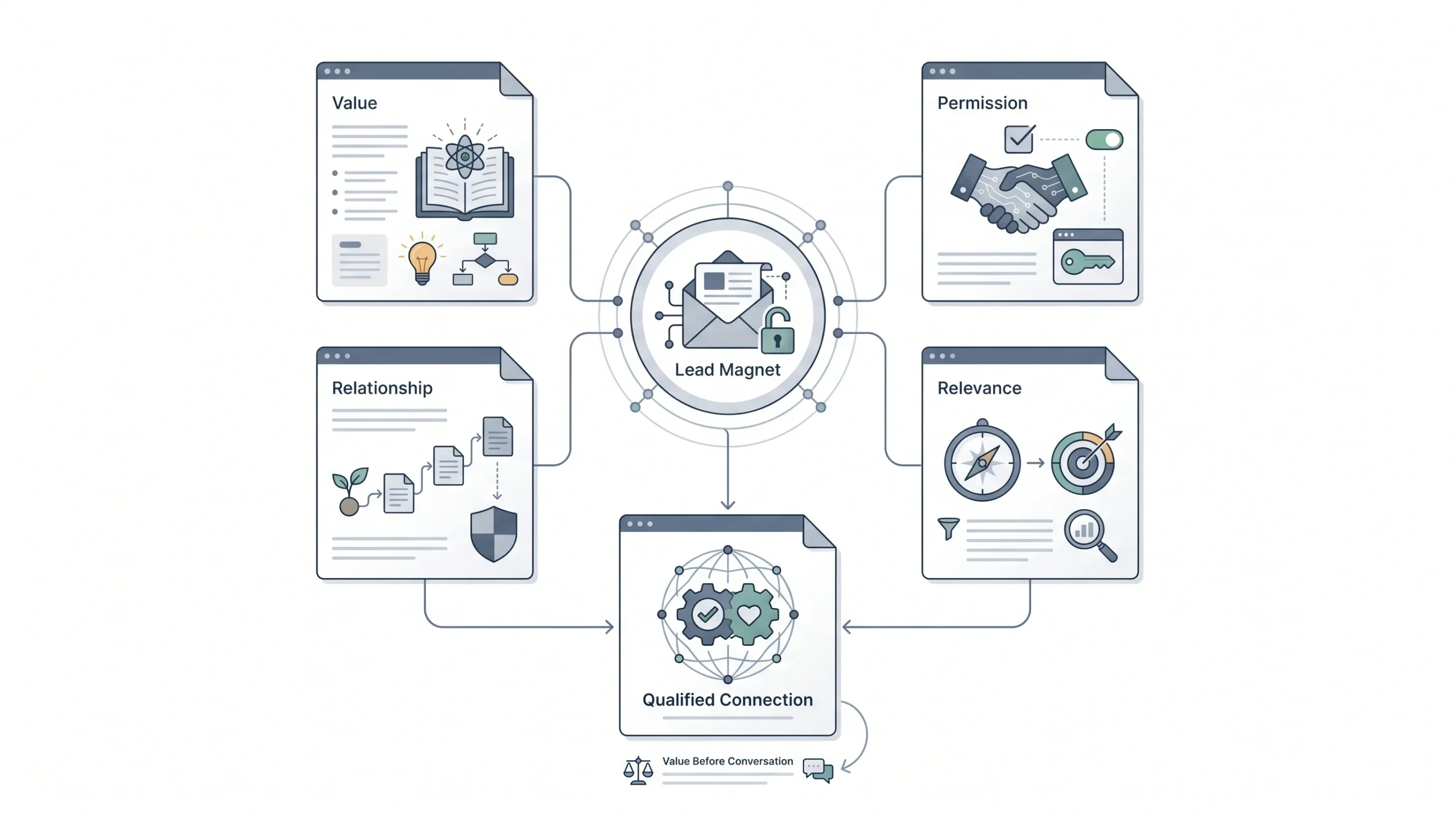
A lead magnet is a resource offered for free in exchange for someone’s contact information, usually an email address. That’s the transaction. The visitor gets something useful right now, the business gets permission to keep talking to them later. Simple exchange, but a lot rides on both sides of it actually holding up their end.
Here’s where beginners get confused. “Lead magnet,” “content upgrade,” and “freebie” all get used interchangeably, and they’re not quite the same thing.
| Term | What it is | Where it lives | Goal |
|---|---|---|---|
| Lead magnet | A standalone resource traded for an email | Landing page, popup, ad | List growth |
| Content upgrade | A bonus tied to one specific piece of content | Inside a blog post | List growth from existing traffic |
| Freebie/giveaway | Something free with no strategic targeting | Anywhere | Vague engagement, not always leads |
A content upgrade is technically a type of lead magnet, just one that’s tied specifically to whatever content someone’s already reading. A freebie, on the other hand, is often just free stuff with no real targeting behind it, a generic sticker pack or a random giveaway entry that attracts anyone and everyone, including people who’ll never buy anything.
Tip: “Free” alone isn’t the point. Targeted relevance is what actually makes something a lead magnet instead of just clutter sitting in someone’s inbox.
Why Lead Magnets Work (And Why Some Fail Completely)
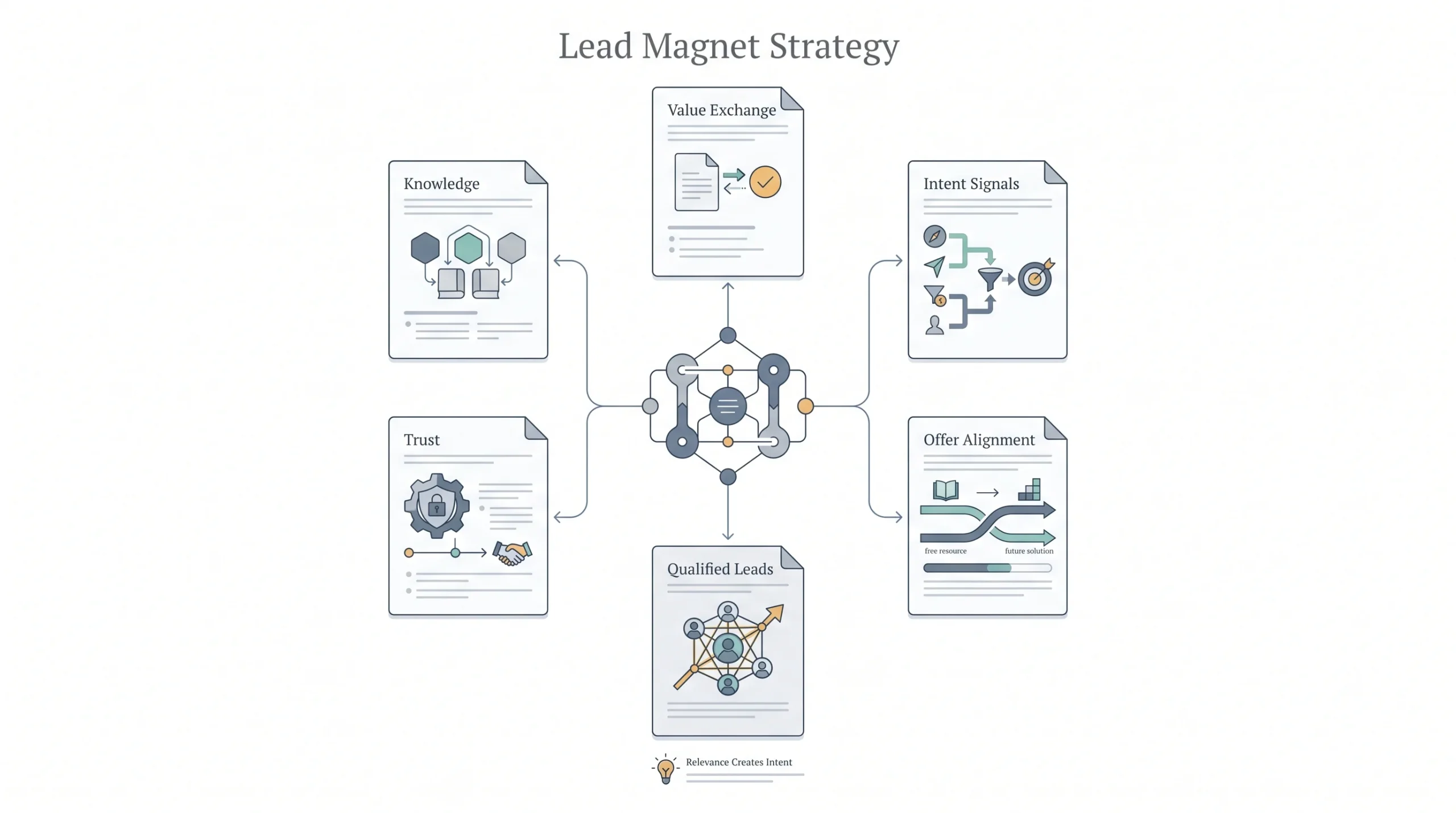
The psychology behind this is pretty straightforward. Give someone something useful for free, and there’s a natural pull to reciprocate, even in a small way, like handing over an email address. It’s low commitment. Nobody’s risking money. And there’s a self-selecting effect happening too. Someone who downloads “How to Choose a CRM for a 10-Person Sales Team” is basically raising their hand and saying exactly who they are and what they’re dealing with right now.
That’s the win. Now here’s why so many lead magnets flop anyway. Too generic, and it attracts everyone, which really means it attracts nobody useful. A “free marketing tips” PDF pulls in students, hobbyists, curious strangers, and maybe three actual potential customers buried somewhere in a thousand downloads. Too disconnected from what’s actually being sold later, and the whole thing becomes a dead end. Someone downloads a free recipe ebook and then gets pitched software they never asked about. That gap kills trust fast.
What Makes a Lead Magnet Actually Good
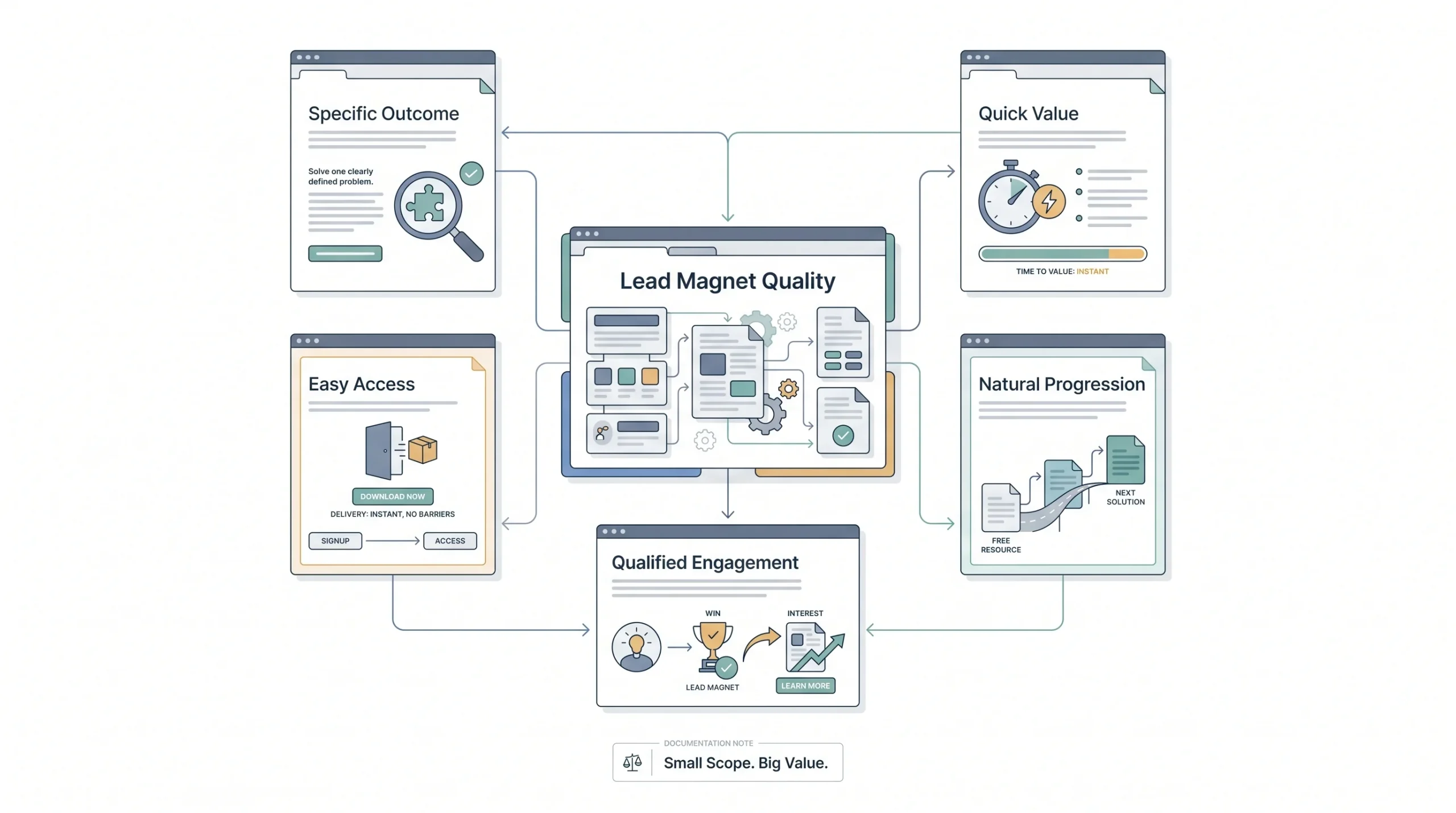
Forget vague adjectives like “valuable” and “helpful.” Those words don’t actually tell anyone how to build something that works. Here’s a real checklist instead.
| Quality | What it means | Quick test |
|---|---|---|
| Specific | Solves one clear problem, not a broad topic | Could you summarize it in one sentence? |
| Fast to consume | Usable in minutes, not hours | Would someone finish it today? |
| Immediately useful | Delivers a quick win, not just theory | Can they act on it right away? |
| Relevant to the paid offer | Naturally leads toward what you sell | Does it logically connect to your product? |
| Easy to access | No friction between signup and delivery | Does it show up instantly? |
Specificity is the one that trips people up the most. “A guide to social media marketing” tries to cover everything and ends up being useful for nothing in particular. “A 7-day posting calendar for a solo founder with no design skills” is small, but it’s small on purpose, and that’s exactly why it works.
Strategy: A 60-page ebook nobody finishes is worse than a one-page checklist somebody actually uses today. Length isn’t the value. Usefulness is.
Types of Lead Magnets (With Examples for Each)
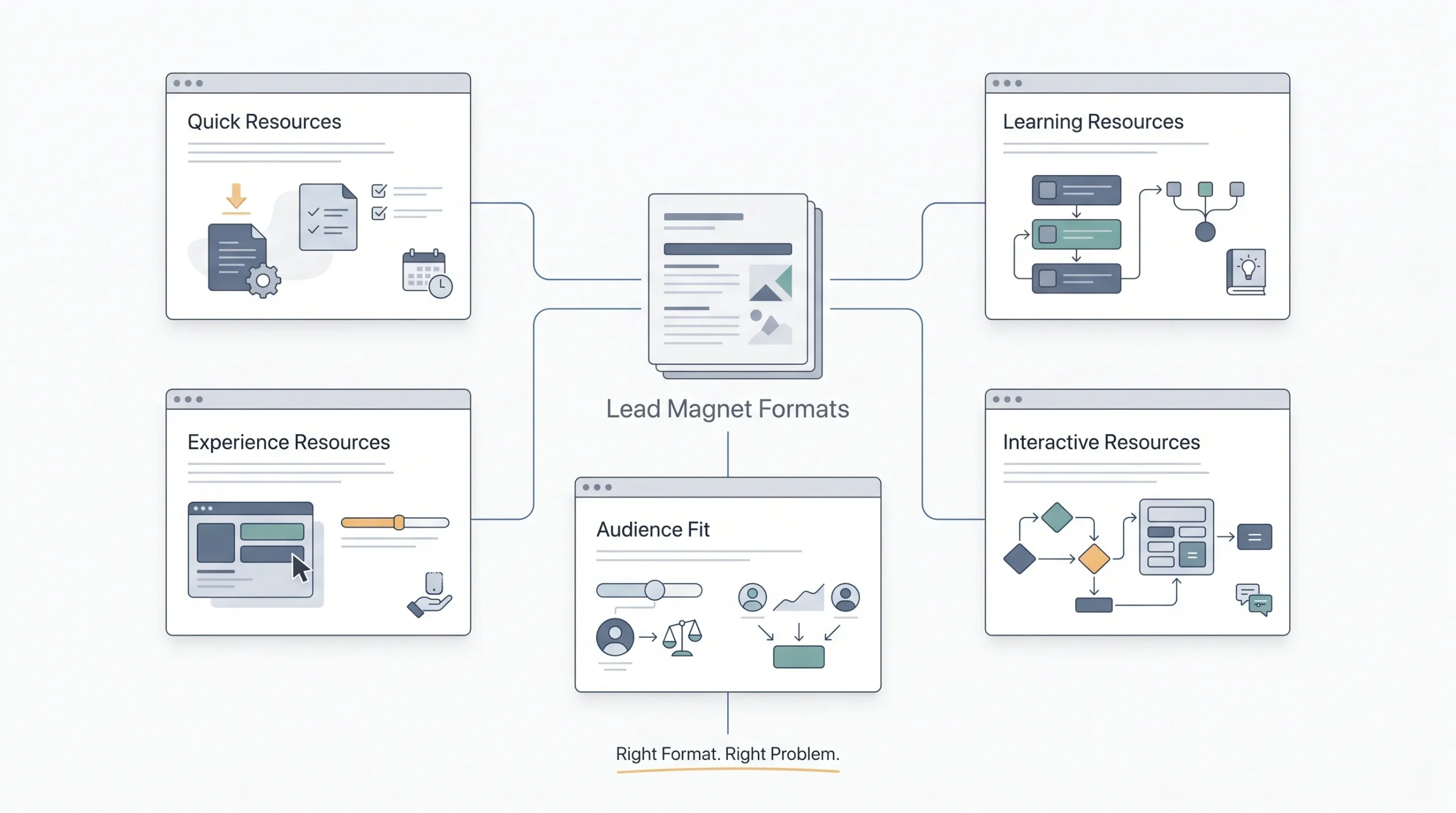
There’s no single “best” lead magnet type. What works depends entirely on the problem being solved and how the audience likes to consume information.
Checklists and Cheat Sheets
The fastest thing to build and often the fastest thing to get used. A checklist works because it removes thinking, the reader just follows the steps in order. “47-point pre-launch checklist for an ecommerce store” is a real example of this format doing exactly what it should.
Templates and Swipe Files
Ready-to-edit documents that save someone real time. A proposal template, a content calendar spreadsheet, a set of email scripts. These work especially well for audiences who are busy and just want a starting point instead of a blank page.
Guides and Ebooks
The classic format, and honestly the most overused and most often done badly. Works when it’s genuinely focused on one topic. Fails when it turns into a rebranded version of information that’s freely available everywhere else with nothing new added.
Calculators and Interactive Tools
A spreadsheet or web tool that does math the visitor would otherwise have to figure out themselves. “ROI calculator for CRM implementation” or “how much you’re losing to cart abandonment” are strong examples, because they give a personalized result instead of generic advice.
Quizzes and Assessments
Great for audiences who don’t fully know what they need yet. A quiz that ends in “you’re a Type B marketer, here’s what that means for your strategy” pulls people in because it’s about them specifically, not a generic topic.
Free Trials and Samples
Common for SaaS and ecommerce. Instead of describing the product, this lets someone actually experience it. Works well when the product itself is genuinely good, and can backfire fast if the trial experience is confusing or buggy.
Webinars and Video Training
Higher effort to produce, but often higher trust built in return, since seeing and hearing someone builds a different kind of connection than reading text does. Works especially well for higher-priced offers where trust matters more before someone’s ready to buy.
Discount Codes and Coupons
Ecommerce-specific, and one of the most direct lead magnets that exists. No education needed, just a straightforward incentive. Works because the intent to buy is often already there, the discount just removes the last bit of hesitation.
Resource Libraries and Toolkits
A bundle of smaller resources grouped together. Works well once there’s already an audience with proven interest, since it takes more content to assemble than a single checklist or template does.
| Business type | Best-fit lead magnet types |
|---|---|
| B2B SaaS | Calculators, templates, comparison guides |
| Ecommerce | Discount codes, quizzes, buying guides |
| Coaches/consultants | Assessments, mini-courses, free strategy calls |
| Agencies | Audits, checklists, case study collections |
| Course creators | Mini-lessons, webinars, cheat sheets |
How to Choose the Right Lead Magnet for Your Audience
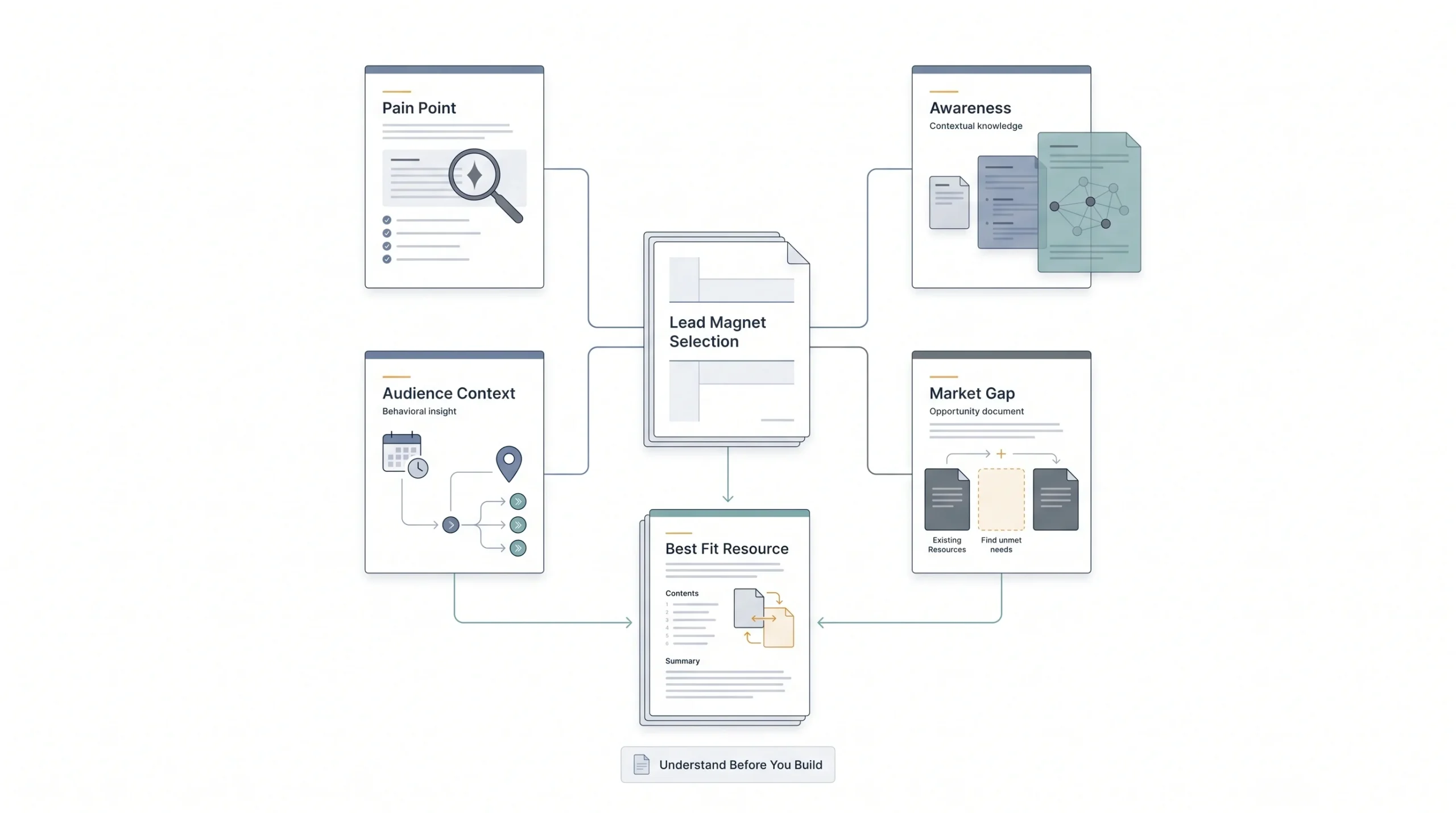
Picking a format from a list is the easy part. Picking the right one for a specific audience takes more thought, and this is the step most guides skip entirely.
Start with the actual pain point, not a topic. “Email marketing” is a topic. “Not knowing why an email list stopped growing” is a pain point. Lead magnets built around real pain points get downloaded. Ones built around broad topics get ignored, because nobody feels an urgent need to fix a topic.
Next, think about what stage of awareness the audience is actually in. Someone who doesn’t know they have a problem yet needs something different than someone who’s actively comparing solutions.
| Funnel stage | Subscriber mindset | Best lead magnet type |
|---|---|---|
| Cold/unaware | Doesn’t know they have this problem yet | Quiz, assessment, short guide |
| Problem-aware | Knows the problem, not the solution | Checklist, how-to guide |
| Solution-aware | Comparing options | Comparison guide, calculator, free trial |
Look at what competitors are already offering too, not to copy it, but to see what’s saturated and where a real gap exists. If every competitor in a space offers the same “ultimate guide to X,” there’s an opening for something more specific and more immediately usable instead.
How to Create a Lead Magnet: Step-by-Step
This is where the actual build happens.
1. Identify One Specific Problem to Solve
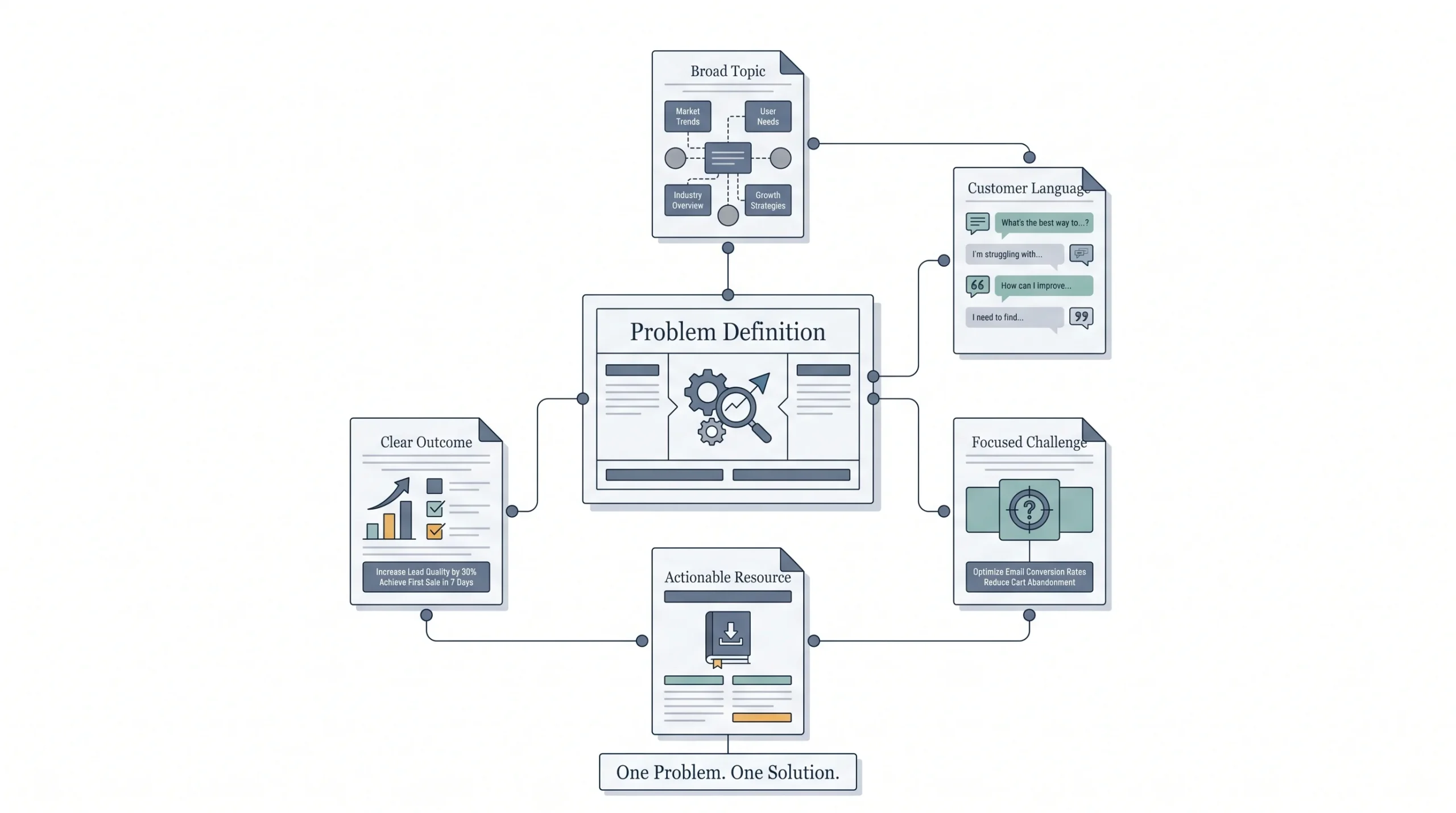
Not a category, a single, specific problem. “Help with marketing” is too broad to build anything sharp around. “Figuring out which social platform is actually worth the time for a small business” is specific enough to build a real, focused resource around.
A good way to test this before building anything: try writing the problem as a single sentence a real person would say out loud, not a marketing category. “I don’t know if Instagram or LinkedIn is worth my time” is something an actual small business owner might say. “Social media strategy” is not something anyone says out loud, it’s a category on a website menu. If the problem can’t be phrased the way a real person would complain about it, it’s still too vague to build a sharp lead magnet around.
2. Research What the Audience Is Already Asking For
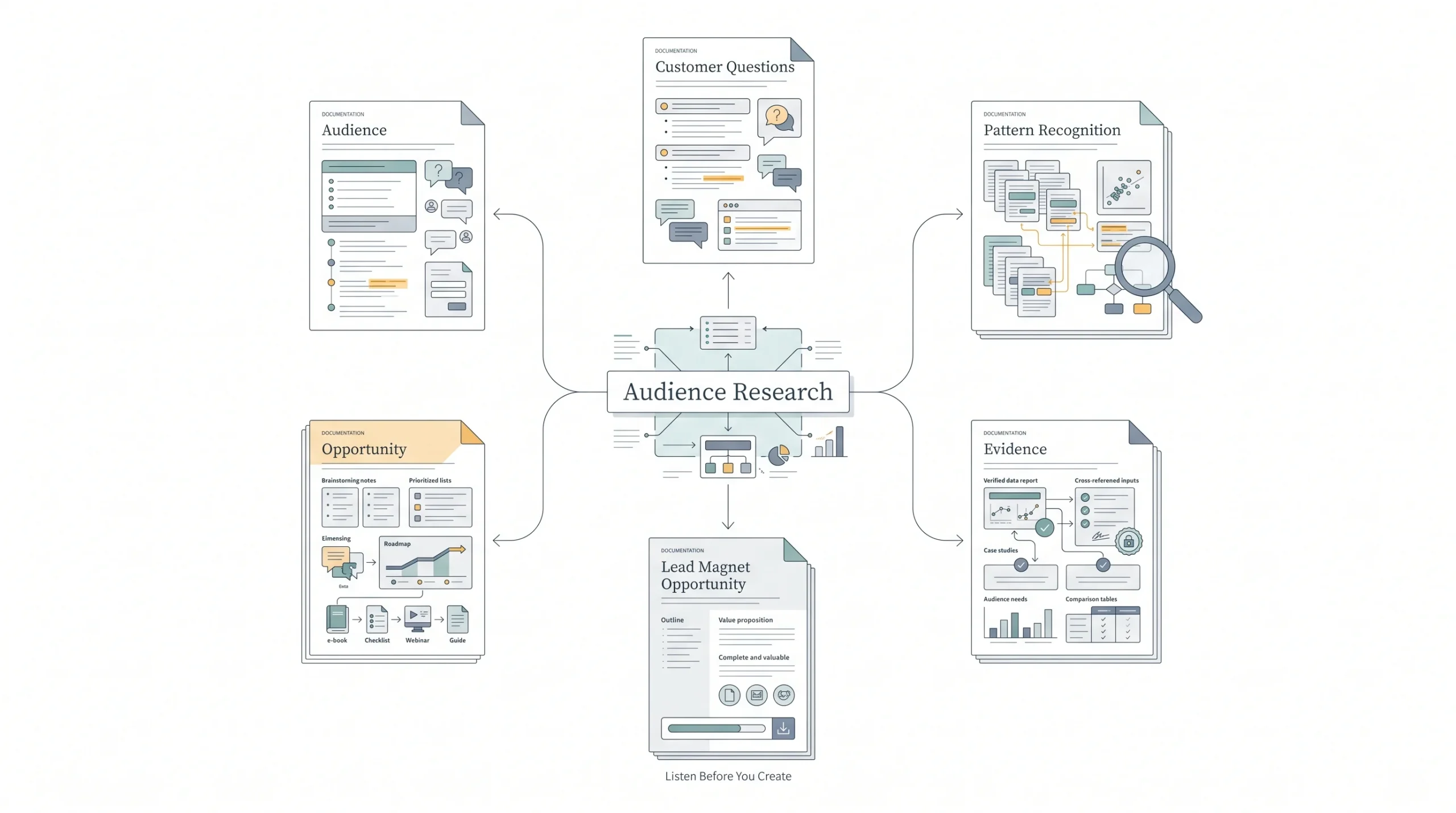
Look at actual questions being asked in comments, support tickets, sales calls, forums, wherever the audience already talks. The best lead magnet ideas usually aren’t invented, they’re just noticed. If the same question keeps coming up, that’s usually the lead magnet waiting to be built.
Sales call recordings and support tickets are especially underused for this. Whatever question a sales team gets asked over and over on discovery calls is basically free market research handed over for nothing. If five different prospects in a month all ask “how long does implementation usually take,” that’s a strong signal a lead magnet answering exactly that question, with real numbers, would get downloaded and genuinely trusted.
3. Choose the Right Format for That Problem
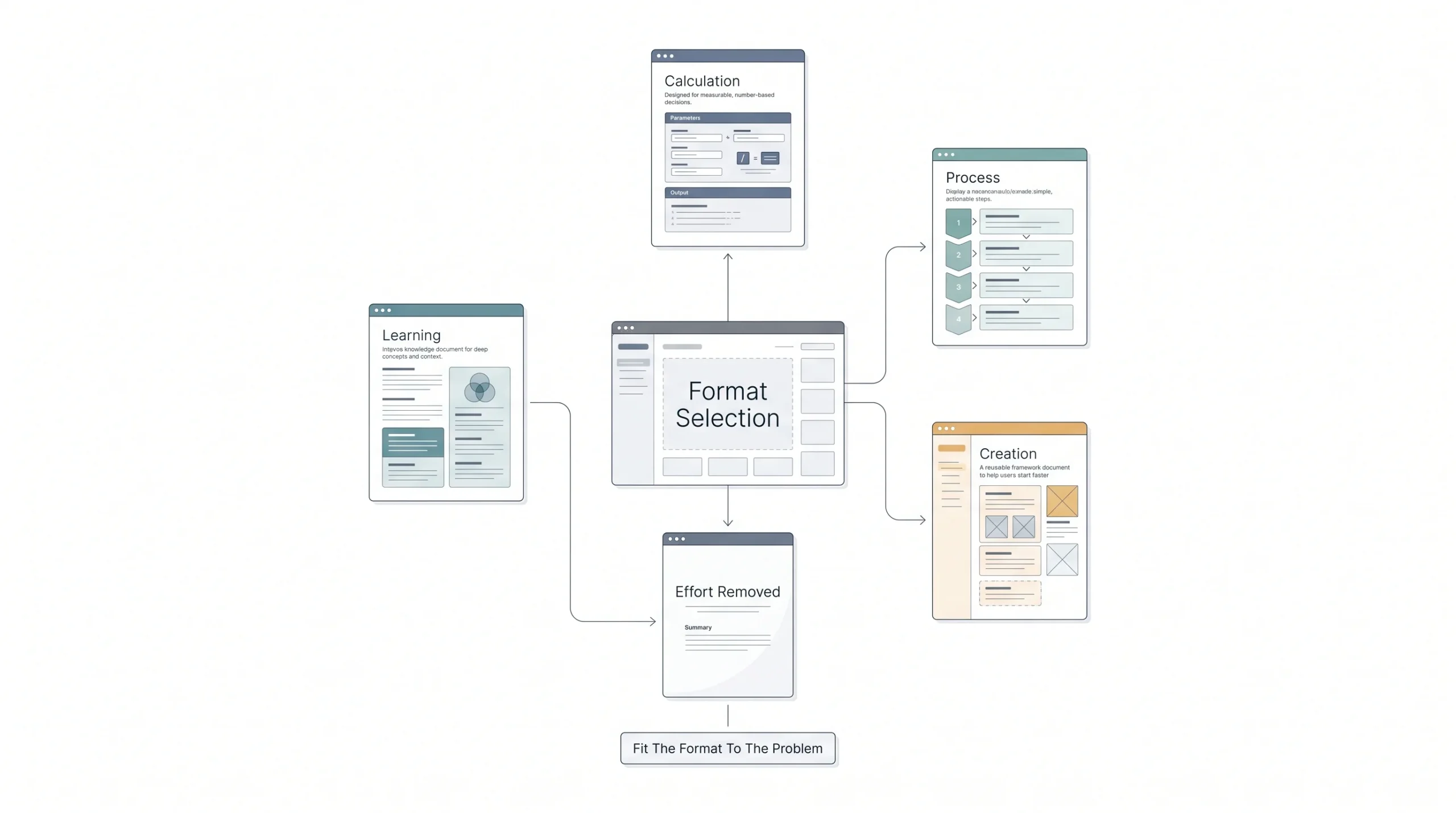
A calculator works for a math-based problem. A checklist works for a process-based problem. A template works for a “give me a starting point” problem. Matching the format to the actual shape of the problem matters more than picking whatever format seems trendy.
Getting this wrong is common. A process-based problem crammed into a long-form ebook forces the reader to dig through paragraphs for something that should’ve been a simple numbered list. A math-based problem explained only in prose, with no actual calculator or spreadsheet attached, leaves the reader doing the math themselves anyway, which defeats the entire point of offering help in the first place.
4. Outline Before Creating
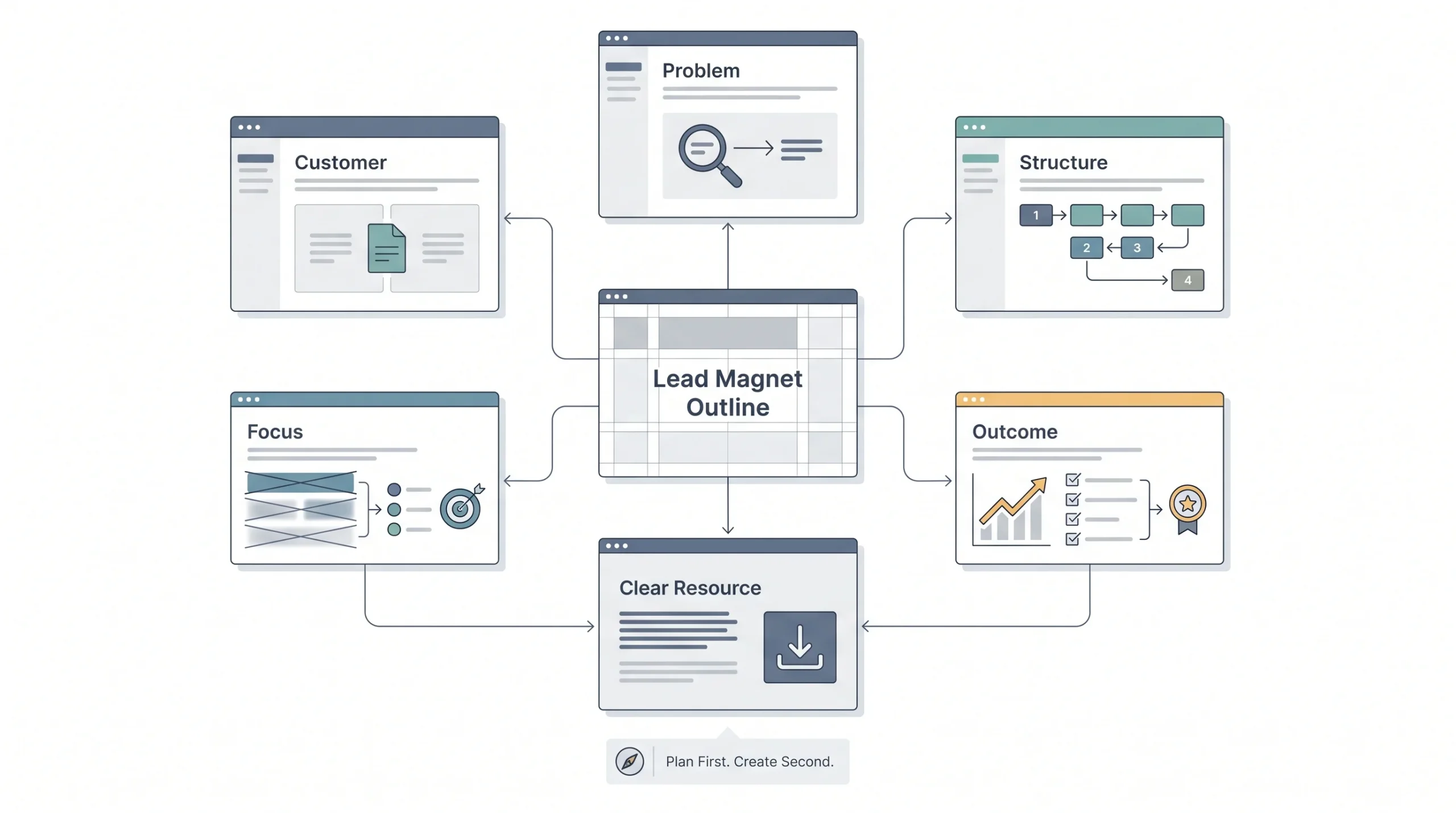
Even a one-page checklist deserves five minutes of outlining first. What are the actual steps or sections. What order makes sense. What’s the one outcome the reader should walk away with. Skipping this step is how lead magnets end up bloated with tangents that don’t belong.
A simple outline for even a short lead magnet might just be three lines: the problem it solves, the three to five steps or sections it covers, and the one action the reader should take after finishing it. That’s often enough structure to keep the whole thing focused and stop it from drifting into unrelated advice halfway through.
5. Design It to Be Genuinely Usable, Not Just Pretty
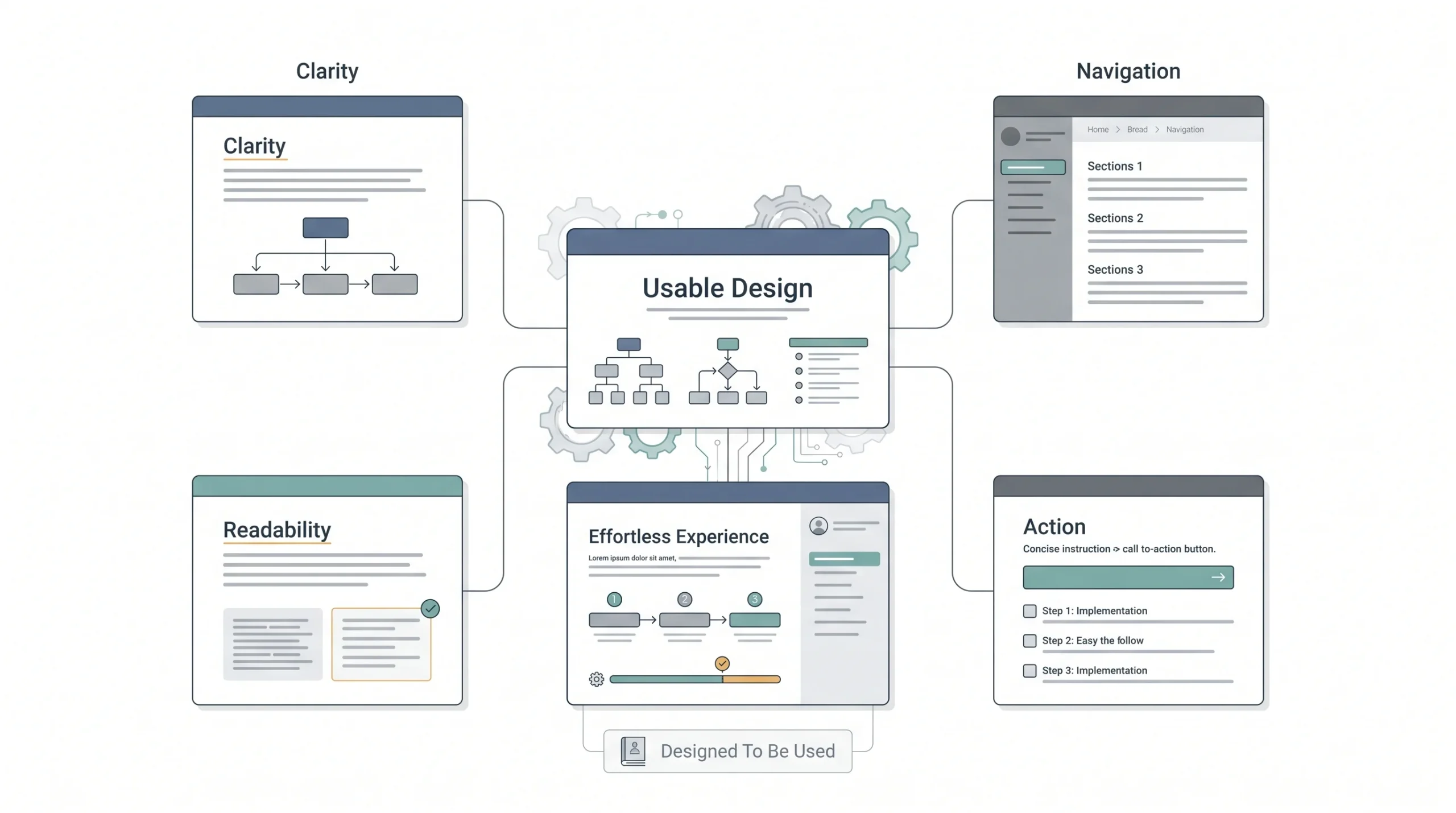
Clean formatting, readable fonts, enough white space to not feel overwhelming. Design matters, but usability matters more. A gorgeous PDF that’s confusing to actually follow still fails at its one job.
Practical things that actually help usability: numbered steps instead of dense paragraphs, checkboxes for anything that’s meant to be tracked or completed, and a table of contents for anything longer than a couple of pages. None of this requires design skill, it just requires thinking about how someone will actually use the document at 11pm on their phone, not how it looks in a polished portfolio screenshot.
6. Write a Landing Page That Sells the Free Thing Properly
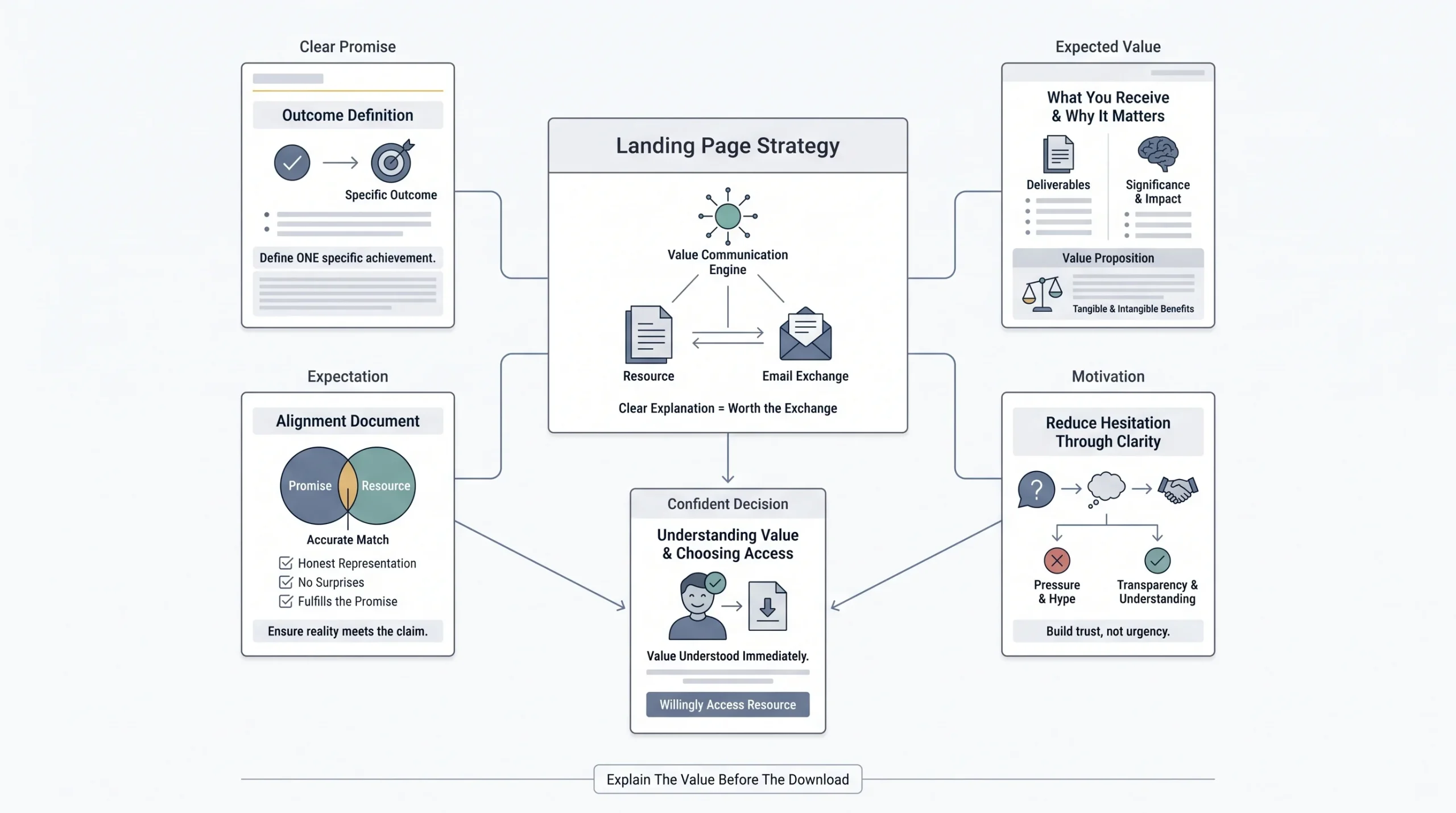
Even free offers need real copy. “Download our guide” undersells everything. The landing page needs to say exactly what’s inside and exactly why it’s worth the thirty seconds it takes to hand over an email.
This gets covered in more depth further down, but the short version here: treat the landing page like a mini sales page, not an afterthought slapped together in five minutes after the actual lead magnet is finished. The copy is often the difference between a resource that converts well and the exact same resource sitting mostly ignored.
7. Set Up Delivery
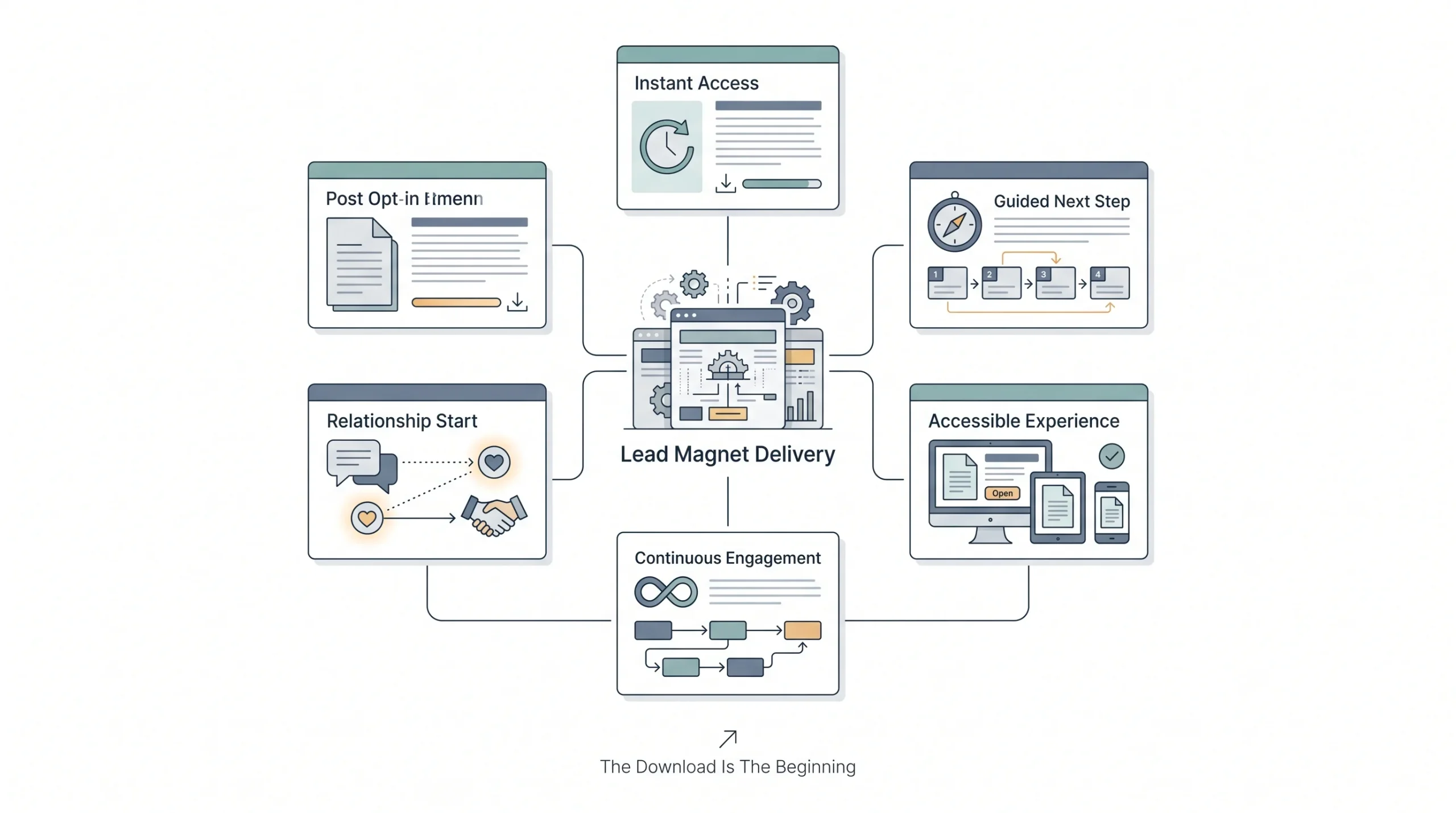
The lead magnet needs to arrive instantly, automatically, without anyone manually sending it. A delay of even a few hours kills momentum, because the moment of interest has already passed by the time it shows up.
| Step | Why it matters |
|---|---|
| Instant email delivery set up | Delays kill momentum and trust |
| Thank-you page with next steps | First chance to nurture past the download |
| Mobile-friendly file/format | Most opt-ins happen on phones |
| Clear file naming | Confusing files get lost or ignored |
| Welcome sequence connected | The lead magnet should launch the funnel, not end it |
The thank-you page deserves more attention than it usually gets. Most businesses treat it as a dead end, a plain “check your inbox” message and nothing else. That page is actually prime real estate. It’s the one moment someone’s fully engaged, right after opting in, before the excitement fades. A quick next step here, a related blog post, a low-pressure invite to follow on social, or even a soft mention of the paid offer, earns attention that a cold email three days later never will.
Tip: A lead magnet that isn’t connected to a follow-up sequence is just a file transfer, not a strategy.
8. Promote It Across the Right Channels
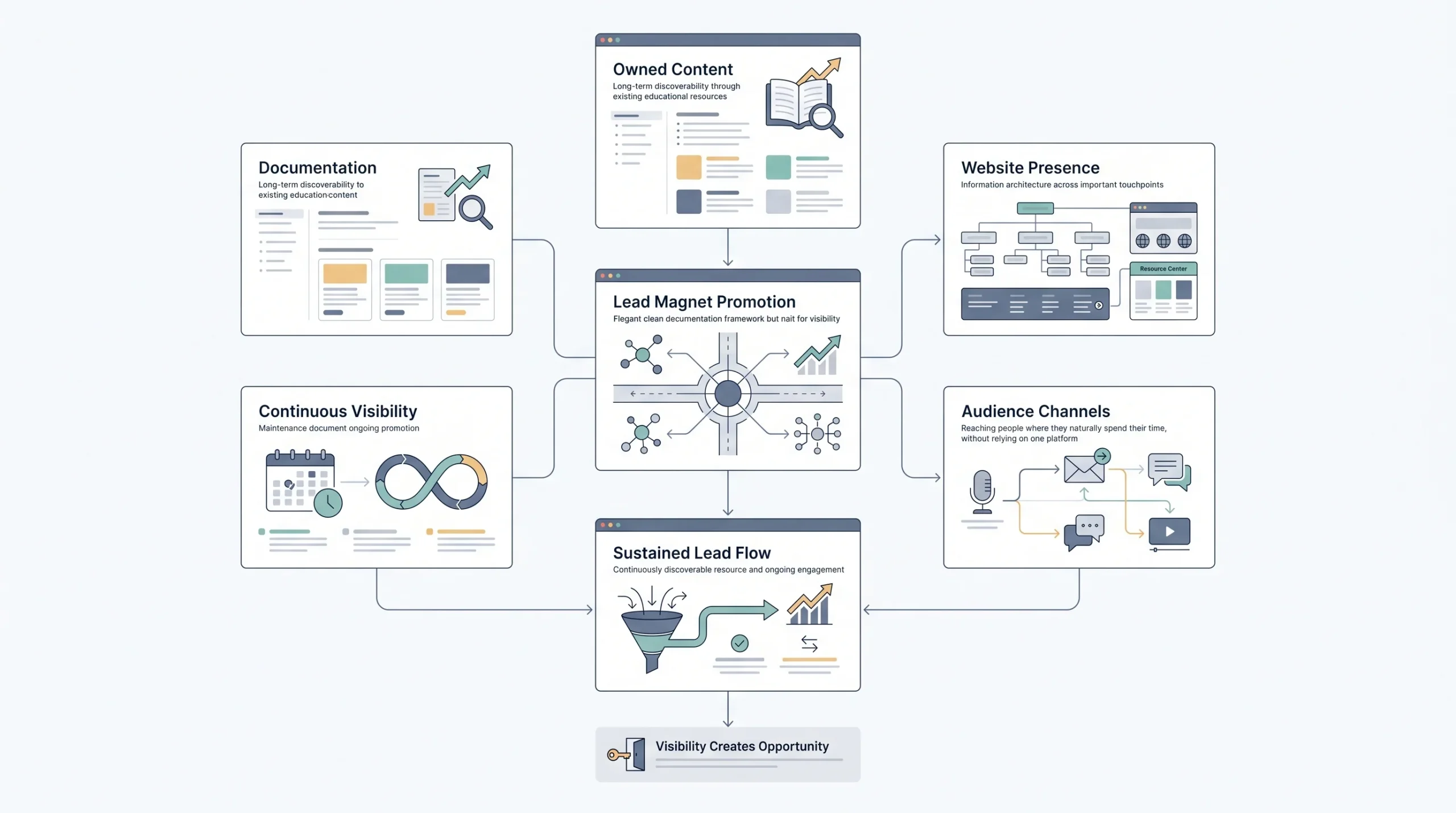
A great lead magnet sitting on an unlinked page does nothing. It needs visibility, on the website, in existing content, wherever the target audience already spends time.
This isn’t a one-time task either. A lead magnet promoted once during launch week and then forgotten stops pulling in new leads the moment attention moves elsewhere. Linking to it from relevant blog posts, keeping it visible in site navigation or a popup, and occasionally resurfacing it on social media keeps it working long after the initial push instead of quietly fading into an old blog archive nobody visits anymore.
9. Connect It to the Actual Funnel
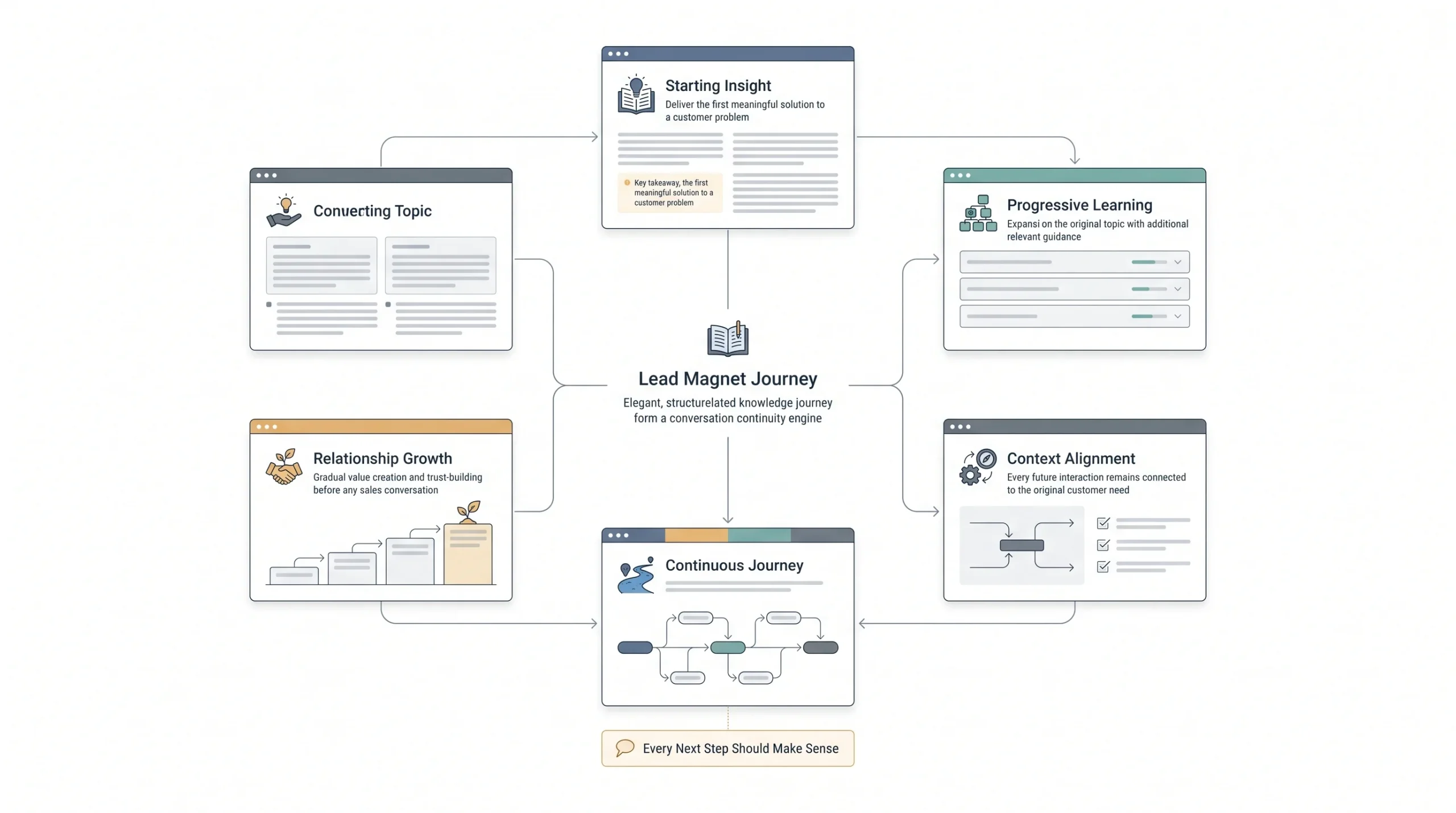
This is the step most often forgotten. The lead magnet isn’t the finish line, it’s the opening move. Whatever gets downloaded should logically lead into a welcome sequence that continues the conversation, not just a one-time email that hands over a file and goes silent.
Practically, this means the first few emails after the download should build directly on the topic of the lead magnet itself, not jump straight into an unrelated pitch. Someone who downloaded a CRM comparison guide expects the next few emails to keep helping them think through that decision, not immediately switch to promoting a completely different product line.
10. Test and Improve Based on Real Data
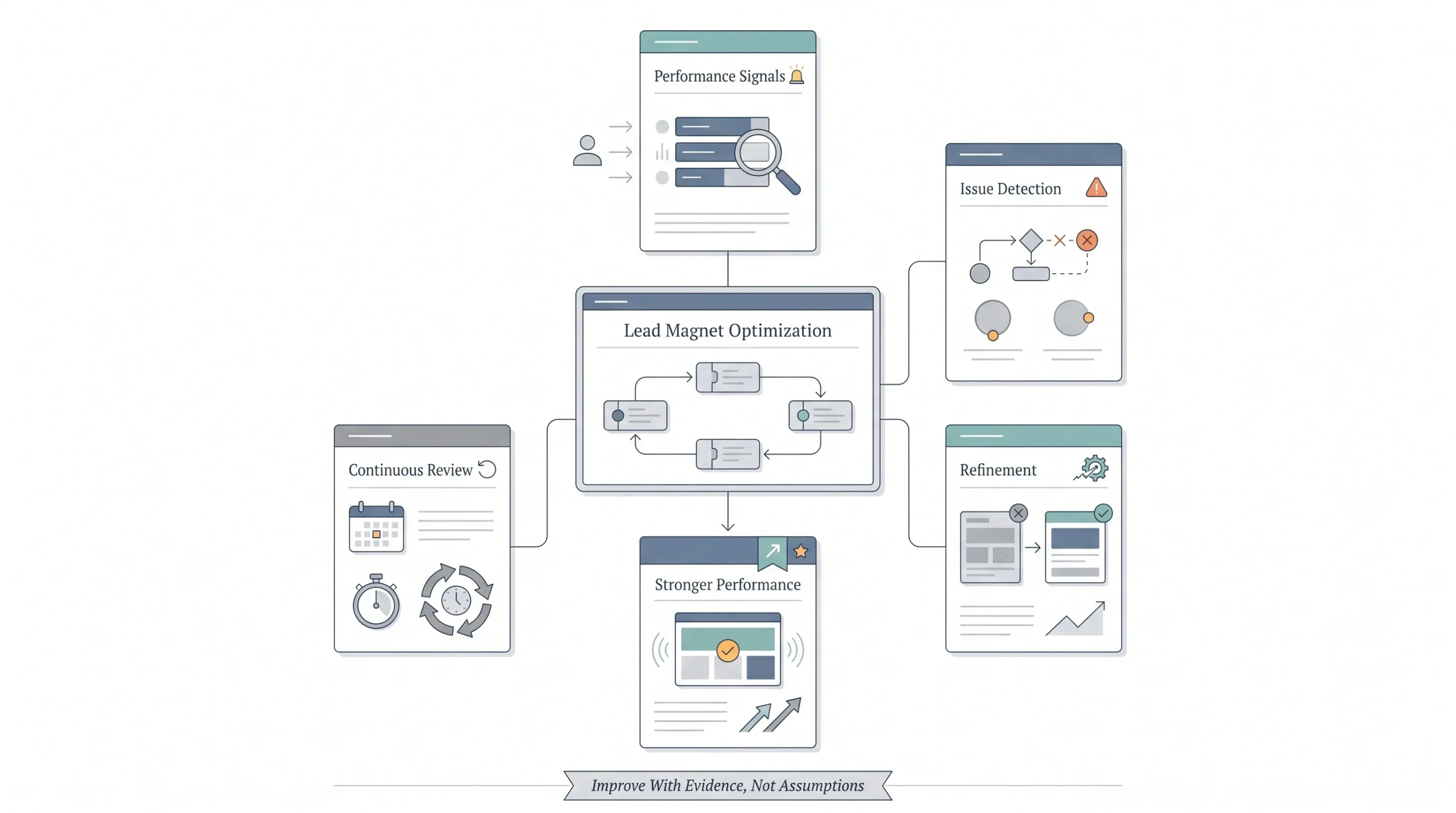
Watch the actual numbers. If the landing page gets traffic but barely anyone signs up, that’s a copy or offer problem. If people sign up but never open anything after, that’s a delivery or welcome sequence problem. Fix the actual weak point instead of guessing.
Worth revisiting every few months, not just once at launch. A lead magnet that converted well a year ago can quietly stop working as the market shifts, competitors release something sharper, or the original pain point becomes less urgent. Treating the numbers as a one-time check instead of an ongoing habit is how a good lead magnet slowly turns into a stale one nobody notices has stopped pulling its weight.
Writing Landing Page Copy That Actually Converts
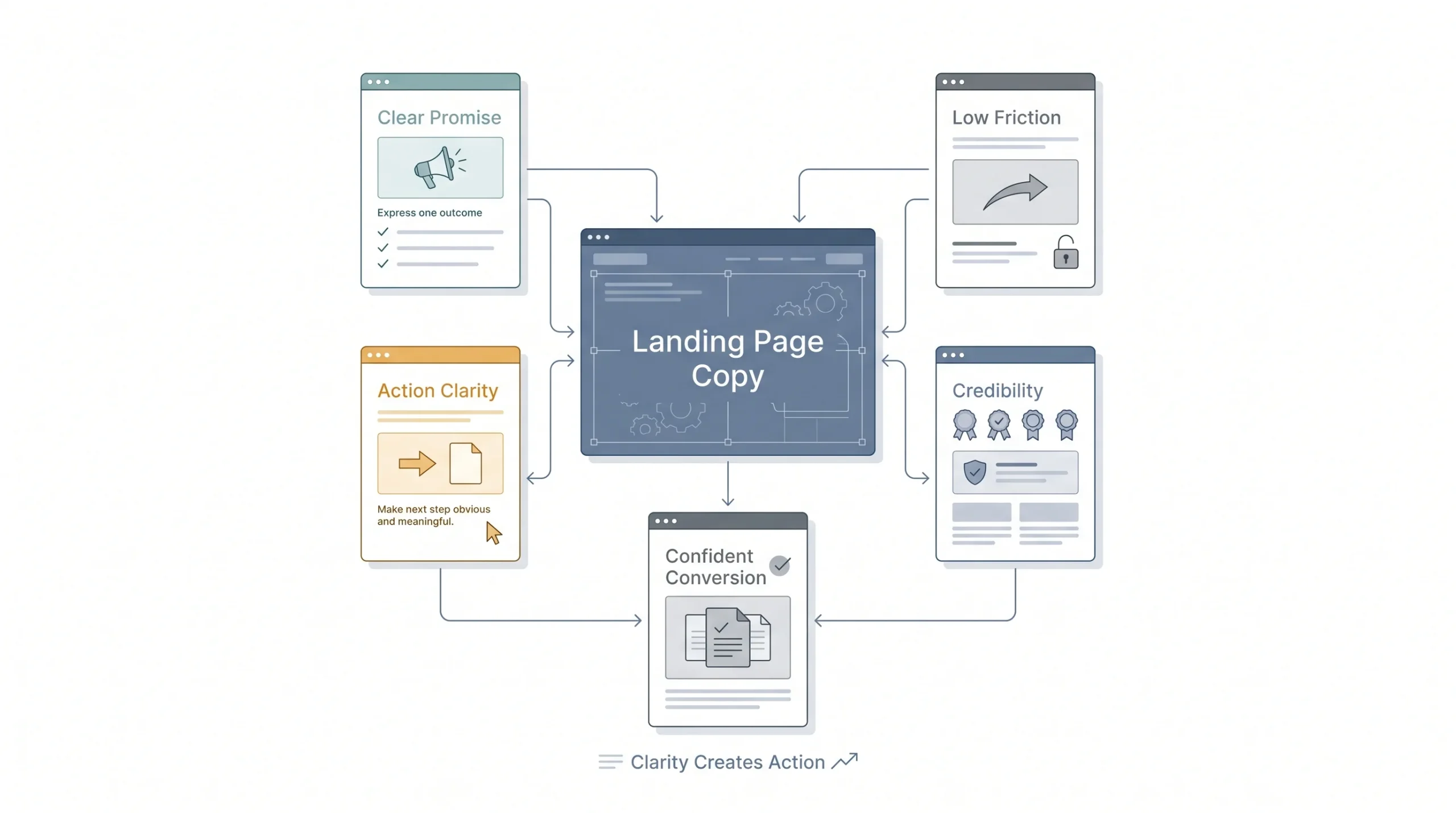
The headline has one job, make the value obvious in a single glance. “Download our free guide” tells the visitor nothing about what’s actually inside or why it matters to them specifically.
| Weak | Stronger | Why |
|---|---|---|
| “Download our free guide” | “The 12-point launch checklist we use before every product drop” | Specific beats generic |
| “Sign up for updates” | “Get the calculator that shows your exact ROI in 2 minutes” | Value beats vague |
Keep the form itself short. Every extra field, phone number, company size, job title, adds friction and drops the conversion rate a little more each time. Email address alone is usually enough to start. Anything more can come later once trust is already built.
Social proof helps but doesn’t need to be complicated. A single line like “downloaded by over 4,000 marketers” or a short testimonial about the resource itself, not the whole business, does more good than a wall of logos that don’t clearly relate to what’s being offered.
And the CTA button deserves more thought than “Submit.” Something like “Send Me the Checklist” reminds the visitor exactly what they’re about to get, right at the moment they’re deciding whether to click.
How to Promote Your Lead Magnet
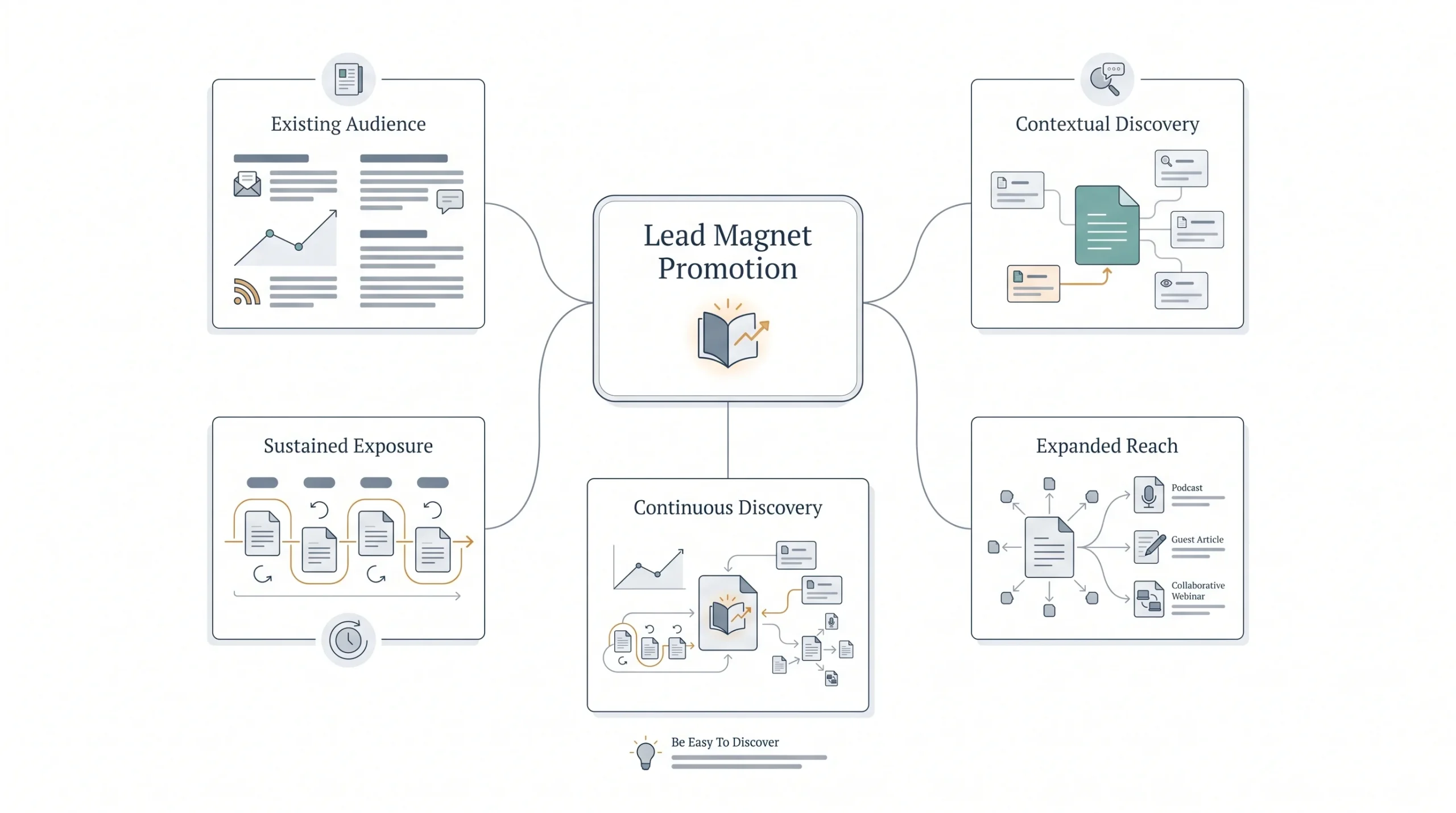
Building it is half the job. Getting it in front of people is the other half, and it’s the half that gets neglected most often.
| Channel | Best for |
|---|---|
| Website opt-in forms/popups | Capturing existing traffic |
| Content upgrades in blog posts | High-intent readers already engaged |
| Social media posts | Broader reach, cold audience |
| Paid ads | Fast list growth, scalable |
| Guest posts/partnerships | Borrowed audience, credibility |
Content upgrades tend to convert particularly well because the visitor is already reading something related. Someone deep into a blog post about email segmentation is a much warmer prospect for a segmentation template than someone scrolling social media with zero context.
How to Measure If Your Lead Magnet Is Actually Working
Download count alone doesn’t say much. A thousand downloads from people who never open another email and never buy anything is a worse result than two hundred downloads from genuinely interested people who stick around.
| Metric | What it tells you |
|---|---|
| Landing page conversion rate | Whether the offer and copy are working |
| Cost per lead (if running ads) | Whether the channel is efficient |
| Welcome sequence open rate | Whether the lead magnet attracted the right people |
| Lead-to-customer rate | Whether the lead magnet leads to real revenue, not just names |
Landing page conversion rate is usually the first thing worth checking, since it’s the fastest signal of whether the offer itself is landing. Lead-to-customer rate takes longer to show up but matters the most in the end, because it answers the actual question behind all of this: did the lead magnet bring in people who eventually became customers, or just people who liked free stuff.
Conclusion
A lead magnet isn’t the goal, it just feels that way because the download count is the easiest number to watch. The real goal is everything that happens after, whether the right person showed up, whether the welcome sequence actually continued the conversation, whether any of it eventually turned into a customer instead of just a name sitting on a list. Specific beats broad every time. Useful beats impressive every time. Get one lead magnet working end to end, download through follow-up through eventual sale, before trying to build five more.
Frequently Asked Questions
Does a lead magnet have to be free?
Yes, by definition. Something paid, even a small amount, changes the psychology completely and turns it into a tripwire offer instead of a lead magnet. The whole point is removing risk so someone hands over their email easily.
How long should a lead magnet be?
As long as it needs to be to solve the specific problem, and not a page longer. A one-page checklist can outperform a fifty-page ebook if the checklist actually gets used and the ebook sits unread.
Can a business have more than one lead magnet at a time?
Yes, and it often should, once there’s enough traffic and enough distinct audience segments to justify it. Different lead magnets can target different pain points or different stages of awareness, as covered earlier.
How often should a lead magnet be updated?
Whenever the information inside it goes stale, or whenever conversion rates start dropping without an obvious reason. Checking in every few months is a reasonable habit for most lead magnets.
What’s the difference between a lead magnet and a free trial?
A free trial usually requires more commitment, sometimes even payment details upfront, and it’s tied directly to the actual product. A lead magnet is typically lower commitment and often a standalone resource rather than the product itself.
Should a lead magnet require a phone number, not just an email?
Generally no, especially early in the relationship. Every extra field reduces how many people complete the form. A phone number can be requested later, once trust is already established through the email relationship.
Can a lead magnet be something other than a downloadable file?
Yes. A free trial, a quiz result, a strategy call, even a private community invite can all work as lead magnets. The format matters less than whether it solves a real problem in exchange for contact information.
What’s a realistic landing page conversion rate for a lead magnet?
This varies a lot by traffic source and offer quality, so there’s no single number to chase. Cold traffic from ads generally converts lower than warm traffic from an existing blog reader who already trusts the content. Comparing a page against its own past performance tends to be more useful than comparing against an outside benchmark.
Should a lead magnet be gated behind a popup or placed directly in the content?
Both can work, and it often comes down to testing. Popups tend to interrupt but can capture attention fast. In-content placement, like a content upgrade offered right where it’s relevant, tends to feel more natural and can convert well among readers who are already engaged.
What happens if a lead magnet stops converting well after working fine for months?
Usually a sign the offer’s gone stale, the audience shifted, or a competitor released something sharper covering the same ground. Worth revisiting the copy and the resource itself rather than assuming the channel or traffic source is suddenly the problem.
Is it okay to repurpose old blog content into a lead magnet?
Yes, and it’s often a smart shortcut. Pulling together the most useful points from a well-performing blog post into a cleaner, downloadable format saves the work of starting from scratch, as long as it’s reorganized and tightened up rather than just copied as-is.
Does a lead magnet need its own dedicated landing page, or can it live on a regular page?
A dedicated landing page usually converts better, since it removes distractions like navigation menus and unrelated links that give visitors an easy way to leave before signing up. A regular page can still work for content upgrades tied closely to that specific piece of content.