

Look, most businesses waste six months publishing content that vanishes into the void the moment it goes live. They write it, share it once on social media, watch it get maybe 40 views, and then never think about it again. Meanwhile some competitor down the street is still getting traffic from a blog post they wrote three years ago. That’s not luck. That’s the difference between understanding evergreen content vs trending content and just… publishing stuff because a calendar said Tuesday needed a post.
Here’s the misconception that gets businesses into trouble: more content equals more traffic. Nope. Doesn’t work that way. You can publish five posts a week and get less traffic than a competitor publishing five posts a month, because they picked the right type of content for the right moment and you didn’t. Volume isn’t the game. Strategy is.
The brands that actually win at content marketing don’t pick a lane and stay in it forever. They don’t say “we’re an evergreen company” or “we’re a trending news site” and call it a day. They understand that evergreen content vs trending content isn’t a competition where one wins and the other loses. It’s a toolkit. Sometimes you need the hammer, sometimes you need the screwdriver, and using the wrong one on the wrong day is how you end up with a content calendar full of posts nobody reads.
So let’s get into the real question here. What is evergreen content, actually, beyond the buzzword? What is trending content, and why does everyone chase it even when it burns out in 48 hours? Which one drives more traffic over a year? Which one actually converts visitors into customers? Where does the ROI come from, and does it come faster from one or the other? Should a five-person SaaS startup prioritise differently than a news publisher or an e-commerce brand doing seasonal sales?
By the end of this, you’ll have a real framework, not just definitions. You’ll know how to spot evergreen topics before your competitors do, how to catch a trending wave before it crests, and how to blend both into a content calendar that doesn’t just look good on paper but actually moves revenue. We’ll walk through comparison tables, real traffic curves, ROI math, case studies, and a decision framework you can literally screenshot and use for your next planning meeting.
What You Will Learn in This Guide
- The core differences between evergreen content and trending content, and why conflating the two wrecks content strategies
- How each content type behaves in search engines, on social media, and in Google’s ranking systems
- A full side-by-side comparison covering SEO value, ROI, virality, competition, and maintenance
- When to prioritise evergreen content and when trending content should take the lead instead
- The 80/20 content strategy that most sustainable brands quietly run behind the scenes
- Tools and workflows for finding evergreen topics and catching trends before they peak
- How to combine both into one funnel that captures attention and then converts it
- A decision matrix you can use on any future content idea in under two minutes
What Is Evergreen Content?

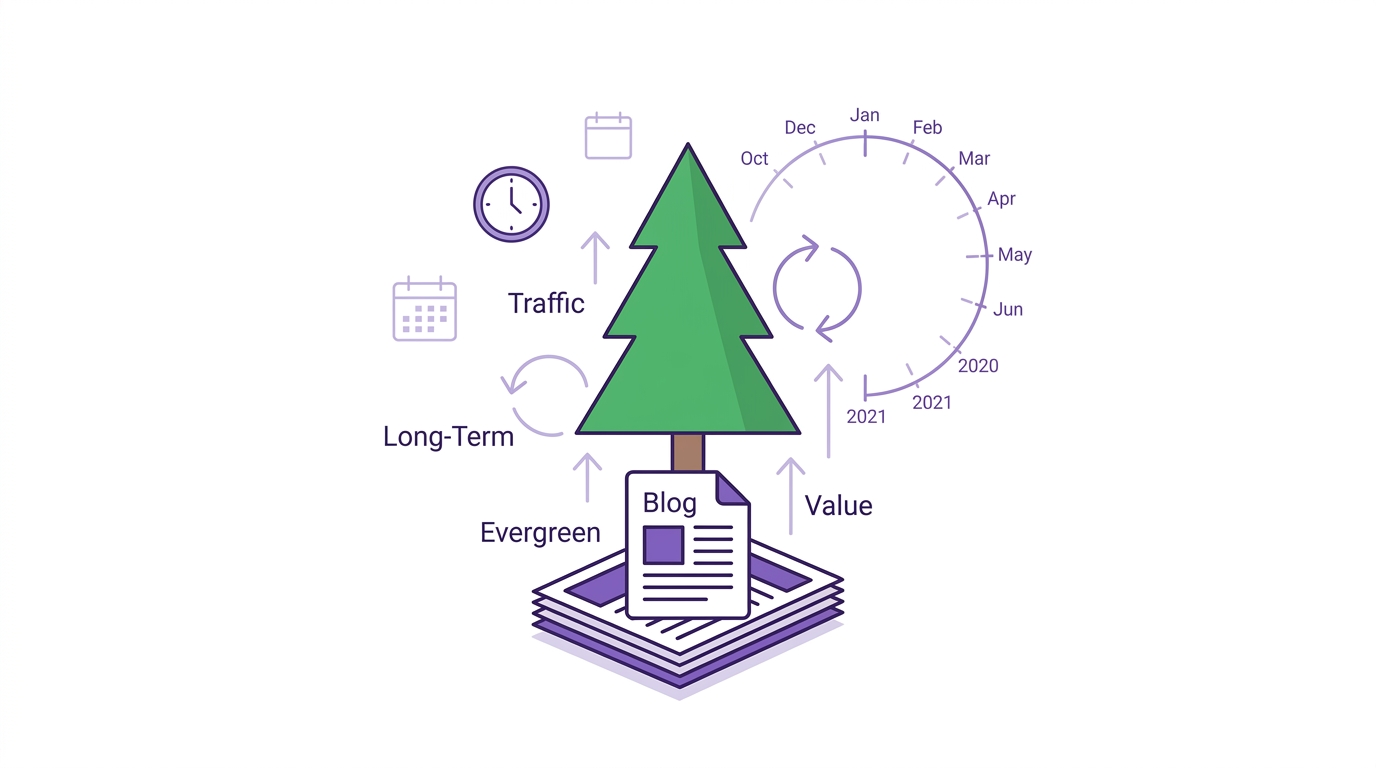
Evergreen content is any piece of content that stays relevant and useful long after it’s published, the same way an evergreen tree stays green through every season instead of dropping its leaves in winter. That’s actually where the name comes from. Think “How to Tie a Tie,” “Beginner’s Guide to Budgeting,” or “What Is SEO.” These topics don’t expire. People searched for them five years ago, they’re searching for them today, and they’ll be searching for them five years from now.
The reason this matters commercially is simple: content that keeps getting searched keeps getting traffic, month after month, without you lifting a finger once it’s ranking. That’s the entire appeal. You do the work once, upfront, and it pays you back on a loop.
Why It’s Called “Evergreen”
The gardening metaphor isn’t just cute branding, it’s genuinely accurate. An evergreen tree doesn’t go bare in autumn like deciduous trees do. Your content works the same way. A trending article about a product launch is basically a deciduous tree, it’s bright and full for a season and then it’s bare. An evergreen guide on “How to Write a Resume” keeps its leaves year round because the underlying need behind that search never disappears.
Characteristics of Evergreen Content
Evergreen content has a few identifiable traits, and honestly if a piece of content is missing most of these, it’s probably not evergreen no matter how much you want it to be.
Doesn’t expire quickly. The information stays accurate and useful without a shelf life. A guide on “how compound interest works” doesn’t need a rewrite because the math hasn’t changed since Isaac Newton was alive.
Solves recurring problems. People run into the same problem over and over, whether it’s “how to remove a wine stain” or “how to write a cover letter.” Recurring problems mean recurring searches, and recurring searches mean recurring traffic.
Consistent search demand. If you pull up Google Trends for an evergreen keyword, the line stays relatively flat across the year instead of spiking and crashing. That flatness is actually a good sign, it means the content will keep earning long after publish day.
Long ranking potential. Google tends to reward pages that keep collecting backlinks, engagement, and updates over time. Evergreen pages accumulate authority the way a savings account accumulates interest.
Easy to update. Because the core topic doesn’t change, refreshing an evergreen post is usually just swapping out a stat, adding a new example, or tightening the structure, not rewriting the whole thing from scratch.
Examples of Evergreen Content
Some formats naturally lean evergreen more than others. Ultimate guides, tutorials, how-to articles, beginner guides, checklists, FAQs, templates, and resource pages almost always qualify. A “Complete Guide to Email Marketing” is evergreen. A checklist for “Things to Pack for a Camping Trip” is evergreen. A downloadable budget template is evergreen. These formats exist because someone has a specific, ongoing need, and that need doesn’t care what year it is.
Industries Where Evergreen Content Works Best
SaaS. Software companies live and die by “how to” content because their entire funnel depends on people searching for solutions to workflow problems. A project management tool ranking for “how to run a sprint retrospective” is capturing buyers at the exact moment they’re evaluating solutions.
Healthcare. Symptoms, conditions, and treatments get searched constantly regardless of the news cycle. “What causes lower back pain” isn’t going anywhere.
Education. Study guides, exam prep, and subject explainers have permanent audiences because new students show up every single year needing the same answers the last batch needed.
Finance. Budgeting, investing basics, tax explainers. These topics recycle every year with a fresh wave of searchers who are new to the topic.
Real estate. “How to buy your first home” gets searched by a completely new audience every single year, because first-time buyers are, by definition, always new to the process.
Marketing, technology, and travel all follow the same logic: foundational how-to content serves an audience that refreshes constantly even if the content itself barely changes.
What Is Trending Content?
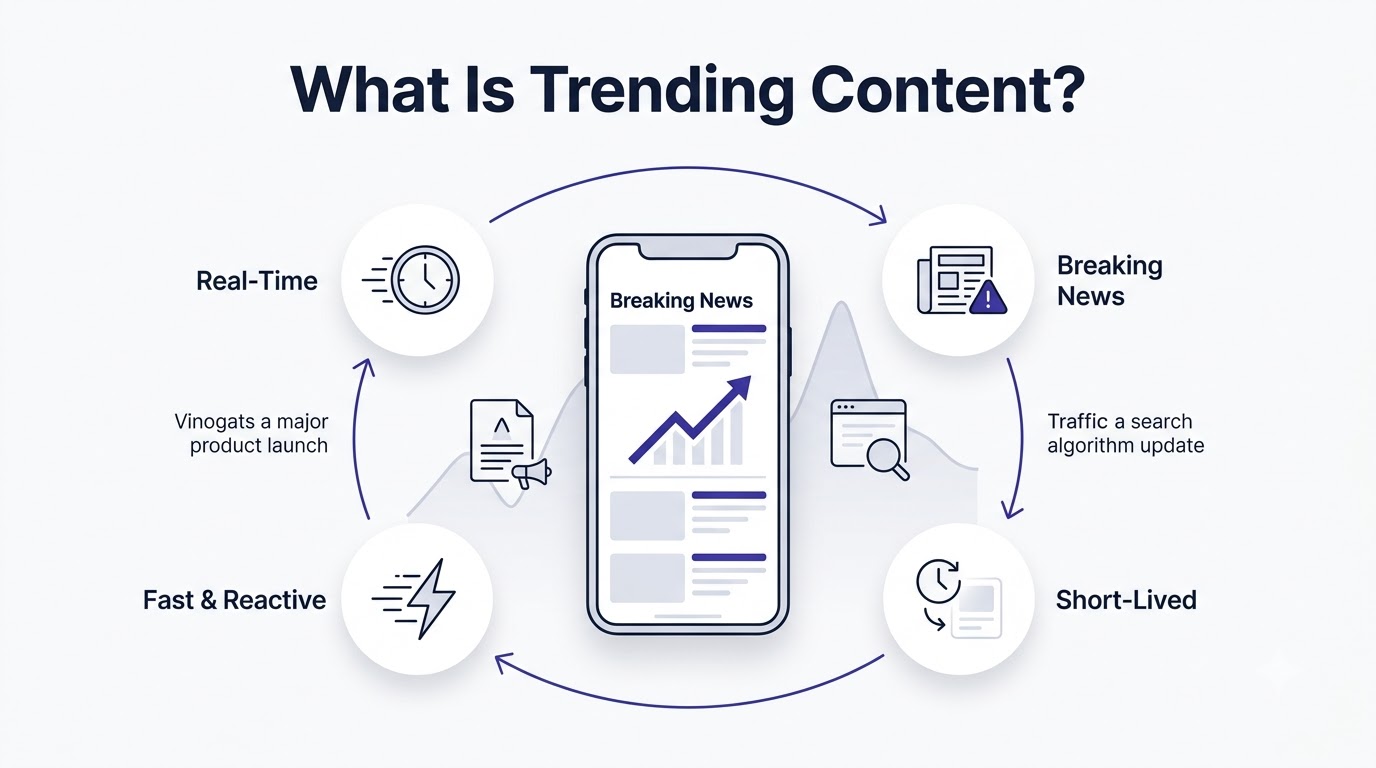
Trending content is the opposite end of the spectrum. It’s built around what’s happening right now, this week, sometimes this hour. Think about the day a new iPhone drops, or when Google rolls out a core algorithm update, or when a celebrity does something that breaks the internet. Trending content is fast, reactive, and tied directly to a moment in time. Its entire value proposition is being early.
Characteristics of Trending Content
Time-sensitive. The relevance window can be as short as a few hours. Miss the window and the content is basically dead on arrival.
Based on current events. It’s reactive by nature. You’re not inventing the topic, you’re responding to something that already happened or is happening.
High search spikes. Search volume for a trending term can go from near zero to hundreds of thousands of searches in a single day, then crash back down just as fast.
Short attention lifespan. Readers care intensely for a brief window and then move on entirely. The same article that got 50,000 views on launch day might get 200 views a month later.
Requires fast publishing. Speed is the whole game. Being three hours late to cover breaking industry news can mean losing 80% of the potential traffic to a competitor who published first.
Examples of Trending Content
Google algorithm updates, AI product launches, industry news, product releases, election coverage, sports events, viral marketing campaigns, and social media trends all fall into this bucket. When OpenAI or Google drops a new model, the marketing blogs that publish same-day breakdowns rack up traffic that a slower, more “polished” competitor never sees, because by the time the polished piece goes live, the conversation has already moved on.
Industries That Benefit Most from Trending Content
News and entertainment are obviously built entirely around this. Their whole business model depends on being first.
Technology benefits enormously because product launches, funding rounds, and AI developments happen constantly and readers want same-day analysis.
Digital marketing thrives on trending content because algorithm updates and platform changes directly affect how marketers do their jobs, so they’re actively searching for fast takes.
Finance sees huge trending spikes around earnings reports, interest rate decisions, and market crashes.
Sports and politics are the most obvious examples, where entire content operations exist purely to cover live, fast-moving events.
Evergreen Content vs Trending Content: The Detailed Comparison
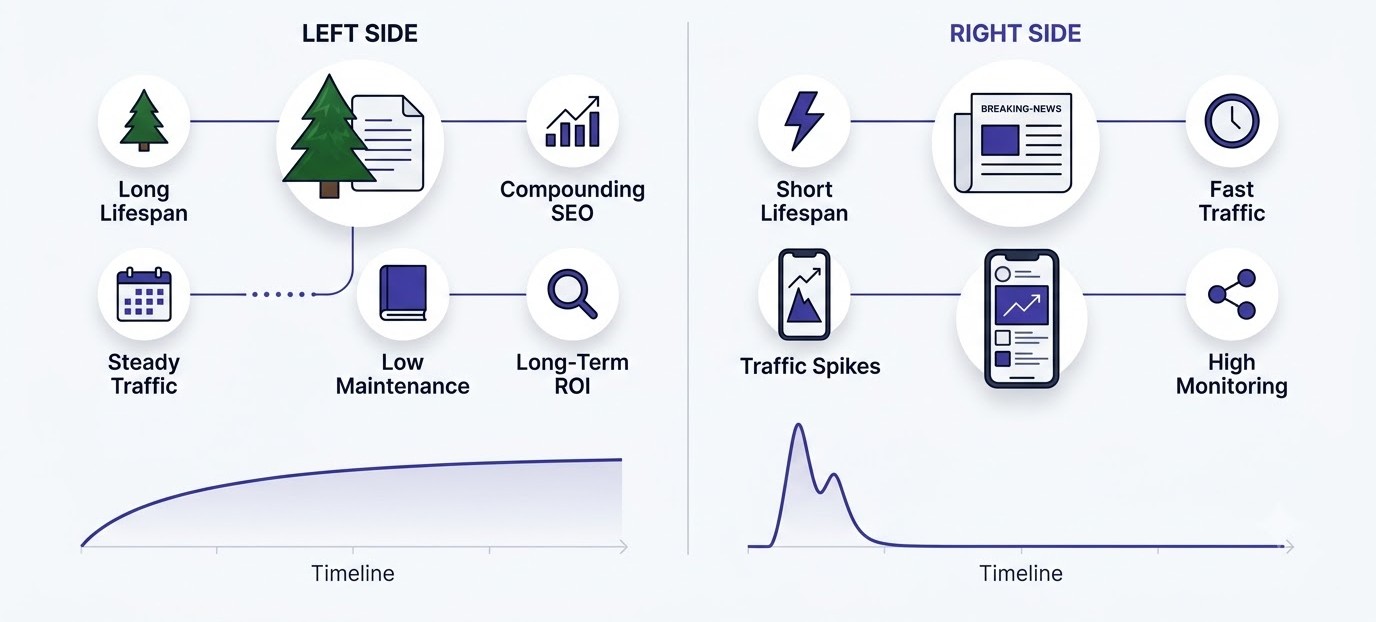
Here’s where a lot of the confusion clears up, because side by side, the differences aren’t subtle at all.
| Factor | Evergreen Content | Trending Content |
|---|---|---|
| Search lifespan | Years, sometimes indefinitely | Days to a few weeks |
| SEO value | Compounds over time | Front-loaded, fades fast |
| Traffic consistency | Steady and predictable | Spiky and volatile |
| Ranking difficulty | Higher, competitive keywords | Lower initially, but crowded fast |
| Competition | High long-term competition | Low competition in the first hours |
| Content updates | Occasional refreshes | Constant, near-daily during the window |
| Revenue potential | Compounding, long-term | Immediate, short-term |
| Lead generation | Strong, sustained | Weak unless tied to a launch |
| Social media reach | Moderate, steady | Explosive but temporary |
| Virality | Rare | Common |
| Maintenance | Low, occasional touch-ups | High, needs constant monitoring |
| Content creation speed | Slower, more research-heavy | Fast, published within hours |
| User intent | Problem-solving, learning | Curiosity, staying informed |
| Conversion potential | High, buyer-intent traffic | Lower, browsing intent |
| ROI | Long-term, compounding | Short-term, campaign-based |
| Link-building opportunities | Strong over time | Strong in the first 48 hours only |
| Brand authority | Builds steadily | Builds visibility, not authority |
| Scalability | Scales through clusters | Scales through publishing speed |
Let’s actually break these apart because a table alone doesn’t tell you why any of this happens.
Search lifespan is the most obvious one. A tutorial on “how to reset your Wi-Fi router” will get searched next year, next decade, forever, because the underlying problem never disappears. A post about “iPhone 17 launch reactions” has maybe a two week window before nobody cares anymore.
SEO value compounds for evergreen content because Google tracks engagement signals over time. The longer a page sits there earning clicks, backlinks, and shares, the more Google trusts it. Trending content gets an initial freshness boost, especially in Google Discover and Top Stories, but that boost has an expiration date baked in.
Traffic consistency is where evergreen wins hands down for anyone trying to build a predictable business. If your traffic depends entirely on catching trends, you’re basically gambling every week on whether something newsworthy happens in your niche. Evergreen traffic doesn’t care what happened in the news today.
Ranking difficulty flips the script though. Evergreen keywords are often brutally competitive because everyone wants that permanent traffic, so you’re fighting established sites with years of backlinks. Trending keywords have almost zero competition in the first hours simply because nobody’s written about it yet.
Content updates work differently for each. Evergreen content needs a refresh maybe once or twice a year. Trending content sometimes needs updates multiple times a day while the story is developing.
Revenue potential and lead generation favor evergreen because the traffic arriving is often problem-aware, meaning they’re already looking for a solution, which is a much warmer lead than someone who clicked a trending headline out of curiosity.
Virality is almost exclusively a trending content phenomenon. Evergreen posts rarely go viral because there’s no urgency driving the share, nobody’s rushing to share a tax guide with their group chat, but they’ll absolutely share breaking news.
Why Google Loves Evergreen Content
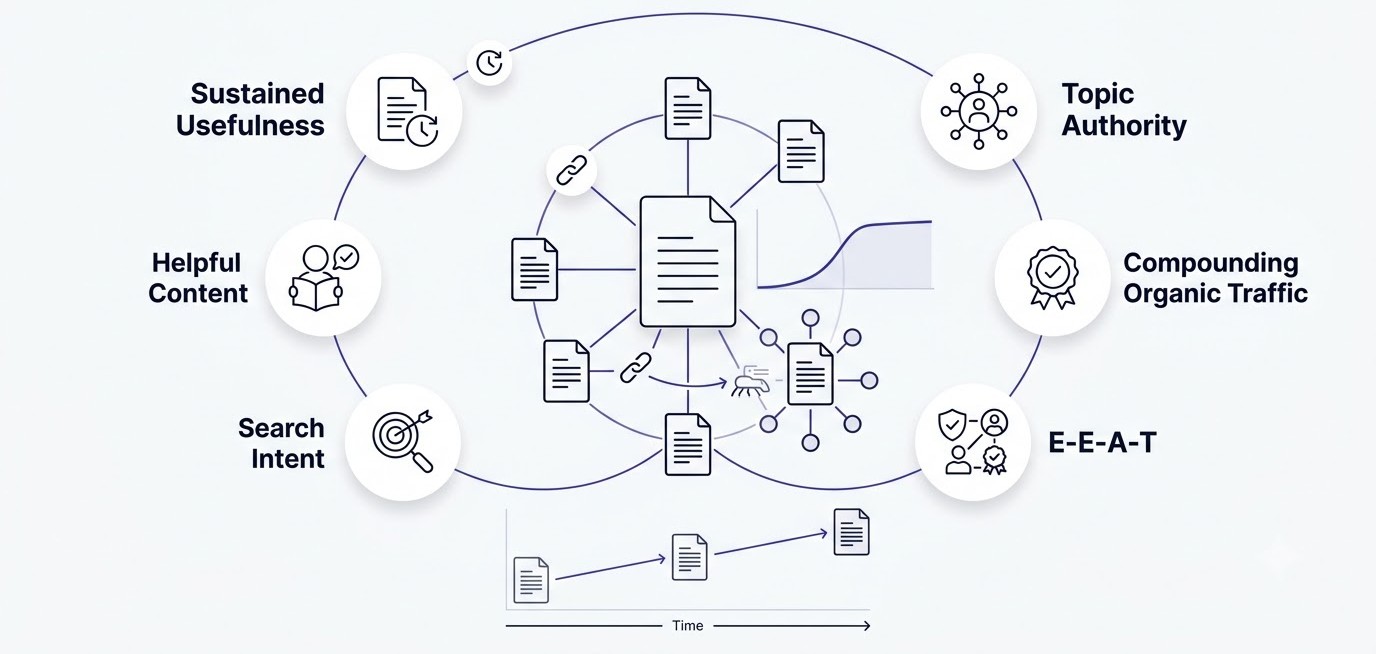
Google’s ranking systems reward pages that demonstrate sustained usefulness, not just fresh publish dates. A page that’s been answering a query well for two years, collecting backlinks and repeat visits the entire time, sends stronger trust signals than a page published yesterday with zero track record.
Freshness vs usefulness is a distinction worth sitting with. Google does have freshness signals that favor recently updated content for certain queries, but for the vast majority of informational searches, usefulness beats recency. A five-year-old guide with a genuinely thorough answer will often outrank a brand-new page that’s thinner on substance.
Helpful content signals come directly from Google’s own guidance, which prioritizes content written for people first, not written primarily to rank. Evergreen content naturally fits this because it exists to answer a real, recurring question rather than to chase a keyword.
Search intent alignment is easier to nail with evergreen content because the intent behind the search rarely shifts. Someone searching “how to start a podcast” wants the same thing today that they wanted last year: a clear process. You can build content that matches that intent precisely and it stays accurate.
Internal linking benefits compound heavily with evergreen pages because you can build entire topic clusters around them. A pillar guide on “content marketing strategy” can link out to dozens of supporting evergreen articles, and each one links back, creating a web of relevance that search engines read as topical depth.
Topic authority and semantic SEO grow naturally when your evergreen library covers a subject from every angle. Google’s systems increasingly evaluate whether a site demonstrates comprehensive coverage of a topic, not just a single well-optimized page.
E-E-A-T contribution (Experience, Expertise, Authoritativeness, Trustworthiness) strengthens with evergreen content because you’re demonstrating consistent expertise over time rather than a single lucky viral hit. A site with fifty solid evergreen guides on personal finance looks a lot more trustworthy to both readers and algorithms than a site with one trending post that got lucky.
Content clusters built around evergreen pillar pages create a structure where crawlers can efficiently find and index related content, which improves crawl efficiency across the whole site.
A realistic example: a SaaS company publishes an evergreen guide called “How to Create a Marketing Budget” and it ranks page three for the first four months. They keep it updated, build a few internal links to it from related posts, and by month ten it’s sitting on page one, generating 3,000 monthly visits it didn’t have on day one. That’s the compounding curve at work, slow start, steady climb, long plateau at the top.
How Trending Content Generates Quick Traffic
Trending content plays an entirely different game, one built on speed rather than authority. Google Discover surfaces fresh, relevant content to users based on their interests and browsing behavior, and it heavily favors content published within the last day or two on topics currently generating interest.
Top Stories carousels work similarly, pulling in news-style content the moment it’s published, often ranking brand new pages above established domains purely because of timeliness. This is one of the only places on the internet where a brand-new domain can outrank a decade-old authority site, simply by publishing faster and more accurately than everyone else.
The freshness algorithm Google runs for certain query types actively boosts recently published content when the query itself signals a need for current information, things like “election results” or “stock market today” trigger this freshness weighting hard.
Social media amplification does a lot of the heavy lifting for trending content too. A well-timed post about breaking news can get shared across X, LinkedIn, and Reddit within minutes, driving a traffic spike that has nothing to do with organic search rankings at all.
News indexing through Google News gets trending content in front of readers actively browsing for current events, a completely separate discovery channel from regular search.
Brand visibility gets a real boost too. Being the source that broke down a major industry update first sticks in people’s minds, even after the traffic dies down. That’s brand equity you can’t buy with an ad budget.
Challenges With Trending Content
The traffic drop is brutal and fast. A trending post might do 20,000 visits in three days and then settle to 50 visits a week after that, forever. If your whole content strategy relies on catching the next wave, you’re on a hamster wheel that never stops.
Constant updates become a real burden during a developing story, you might need to update the same article five or six times in 24 hours to stay accurate, which eats resources fast.
The short lifespan means you’re constantly starting from zero, there’s no compounding effect carrying yesterday’s win into tomorrow’s traffic.
High competition during the peak window is real too, because every competitor with a content team is racing to publish the same take at the same time, so standing out requires either genuine speed advantage or a genuinely sharper angle than everyone else scrambling to cover the same story.
Traffic Lifecycle Comparison
Picture a line that starts low, climbs slowly over three to six months, and then holds steady at a plateau for years. That’s the evergreen traffic curve. Slow growth happens because it takes time for Google to trust a new page, gather backlinks, and understand where it fits in the topic landscape. Stable traffic kicks in once the page establishes its position, typically holding within a predictable range month over month. Long-term rankings mean this page keeps earning traffic with minimal additional investment, sometimes for five years or longer without a major rewrite.
The Trending Traffic Curve
Now picture a completely different shape: a near-vertical spike, a sharp peak, and then an equally sharp crash back to near zero. The immediate spike happens within hours of publishing, driven by search freshness algorithms and social sharing. The peak usually lasts anywhere from a few hours to a few days depending on how long the underlying news story stays relevant. The sharp decline is unavoidable, once the story cools off or gets replaced by the next thing, the traffic doesn’t gradually fade, it drops off a cliff.
What This Means for Search Demand and Lifetime Value
Search demand over time tells you everything about which curve a topic belongs to. Pull up Google Trends for any keyword before you commit resources to it, a flat, consistent line means evergreen potential, a sharp spike means you’re looking at trending behavior.
Organic visibility differs dramatically too. Evergreen pages maintain consistent visibility in search results month after month. Trending pages might rank number one for a week and then completely fall out of the top 50 once the query volume dries up, because Google has no reason to keep surfacing a stale answer to a query nobody’s asking anymore.
Lifetime value of content is really the crux of the whole comparison. An evergreen page that took eight hours to write and ranks for three years, earning 500 visits a month, delivers a completely different ROI equation than a trending piece that took two hours to write and earned 8,000 visits in four days then went silent. Both numbers can look impressive on a monthly report. Only one of them keeps paying you back without more work.
ROI Comparison
The ROI case for evergreen content is basically a compounding interest argument. Lower maintenance means you’re not constantly reinvesting time into the same piece, an occasional update every six to twelve months keeps it fresh. Compounding traffic means the total visits a piece generates over its lifetime keeps climbing, month two might beat month one, and month twelve might beat month six, especially as backlinks accumulate.
Long-term leads flow in steadily because the content keeps getting discovered by new searchers every single week, not just on launch day. Sustainable conversions happen because the traffic arriving is problem-aware and often closer to a buying decision than someone reading a news headline out of curiosity.
Better customer acquisition cost is the practical business outcome of all this. If a guide costs $400 to produce and generates leads for three years straight, the effective cost per lead keeps dropping the longer it runs, something that simply can’t happen with content that has a two-week shelf life.
Trending Content ROI
Trending content earns its keep differently, through fast visibility that gets your brand in front of a large audience almost immediately, no waiting months for rankings to build.
Campaign support is a big one, if you’re launching a product, trending-style content (announcements, comparisons, “what’s new” breakdowns) supports that launch window directly, driving immediate awareness exactly when you need it most.
Immediate engagement on social platforms tends to be much higher for trending content because people are actively discussing the topic in real time, which means more comments, shares, and reactions than a quiet evergreen guide typically gets.
Product launches specifically benefit because trending-style content captures the exact moment of peak interest, right when your announcement is fresh news.
Brand awareness spikes hard during a well-executed trending push, even if the direct traffic doesn’t convert immediately, people remember who covered the story first.
| ROI Factor | Evergreen Content | Trending Content |
|---|---|---|
| Time to positive ROI | 3–12 months | Days |
| Peak ROI window | Ongoing, years | 1–2 weeks |
| Cost per lead over time | Decreases | Stays flat or increases |
| Best suited for | Sustainable growth | Campaign spikes |
| Risk level | Low, predictable | Higher, depends on timing |
When to Prioritise Evergreen Content
There are specific business situations where evergreen content should absolutely be the priority, not a nice-to-have.
New websites need evergreen content first because they have zero authority and zero backlink history. Chasing trends with a brand-new domain almost never works, you won’t rank in Top Stories or Discover without established trust, so you’re better off building a foundation of solid, searchable guides that can slowly earn rankings.
SEO strategy built for the long haul depends on evergreen content as its backbone. If the goal is organic traffic that doesn’t require constant ad spend to maintain, evergreen is non-negotiable.
Lead generation funnels work best when the entry point is a piece of content answering a specific, ongoing problem, because that’s exactly the moment someone’s most receptive to a related offer.
Authority building in any niche happens through demonstrated depth over time, and that only comes from a library of evergreen resources covering a topic from every angle, not from a handful of trending hits.
Small businesses with limited content budgets get more mileage from evergreen content because they can’t compete on publishing speed against bigger newsrooms or agencies with dedicated trend-monitoring teams.
B2B companies deal with longer sales cycles, and buyers in that world are actively researching solutions for weeks or months before purchasing, which means they’re searching evergreen, problem-solving terms, not scanning trending headlines.
SaaS brands specifically benefit because their buyers search “how to” and “best way to” queries constantly, and ranking for those recurring searches puts the product in front of exactly the right audience at exactly the right moment in their research.
Agencies managing client content budgets need to show sustainable results, and evergreen content is easier to defend in a quarterly report because the traffic trend line keeps climbing instead of resetting to zero every few weeks.
When Trending Content Should Be Your Priority
Trending content earns its priority spot in specific, time-boxed situations.
Product launches need trending-style coverage because the launch moment itself is inherently time-sensitive, you want maximum visibility during that exact window, not three months later.
Industry updates like algorithm changes, new regulations, or major shifts in your field create a genuine information gap that your audience needs filled immediately, and being the source that explains it clearly earns trust fast.
Viral campaigns by nature require reactive content that rides the wave of a moment, whether that’s a meme, a cultural event, or something your brand can authentically join in on.
Events and conferences generate concentrated search interest in a short window, live coverage, key takeaways, and same-day recaps capture that demand while it exists.
Seasonal promotions aren’t purely evergreen or purely trending, but they lean trending because they’re tied to a specific calendar window, Black Friday content published in July gets almost no traffic compared to the same content published two weeks before the sale.
Breaking news in your industry demands immediate response if you want any share of that traffic spike, waiting even a day often means the conversation has already moved past you.
Social engagement goals specifically favor trending content because platforms reward timeliness with the algorithm, a reactive post about something happening right now consistently outperforms evergreen content in shares and comments.
The Ideal Content Strategy: The 80/20 Rule
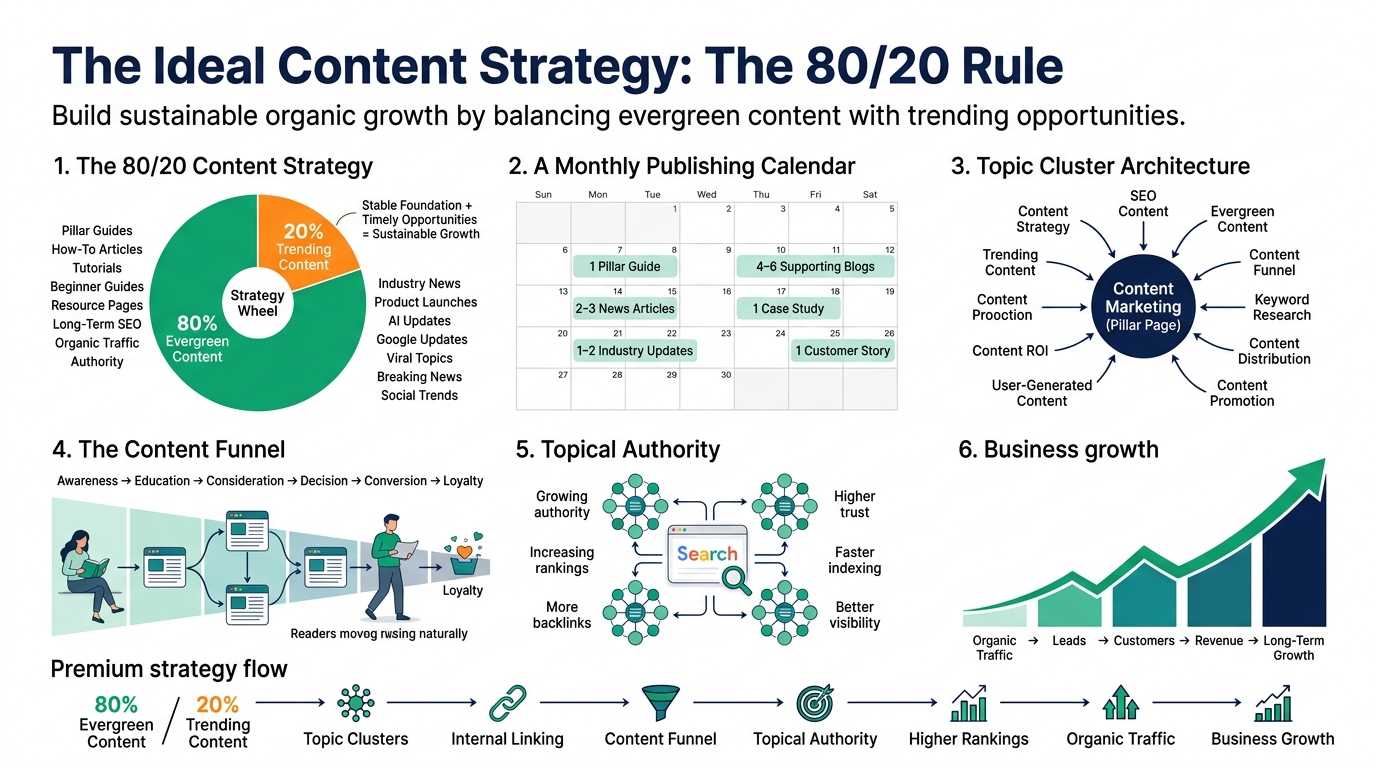
Most sustainable content operations, whether they say it out loud or not, run something close to an 80/20 split. Eighty percent of the content calendar goes toward evergreen pieces that build long-term organic traffic, and twenty percent stays flexible for trending opportunities as they arise.
The logic here is straightforward. Evergreen content is what builds the compounding asset, the actual traffic engine that keeps running whether or not anything newsworthy happens in your industry that month. Trending content is what keeps the brand feeling current and captures the spikes of attention that evergreen alone can’t reach. You need both, but the ratio matters because trending content simply can’t be your foundation, it’s too unpredictable and too short-lived to build a business on.
Monthly Publishing Example
| Content Type | Number per Month |
|---|---|
| Pillar guides | 1 |
| Supporting blogs | 4–6 |
| News articles | 2–3 |
| Case studies | 1 |
| Industry updates | 1–2 |
| Customer stories | 1 |
This isn’t a rigid formula, it flexes based on industry, but the shape stays consistent: the bulk of the calendar builds the evergreen foundation, and a smaller reactive slice stays ready to jump on relevant news or trends as they surface.
Topic Clusters and Content Funnels
Topic clusters are how evergreen content scales without becoming chaotic. You pick a broad pillar topic, say “content marketing,” and build a comprehensive pillar page, then surround it with a dozen supporting articles going deeper into specific subtopics, each linking back to the pillar. This structure tells search engines exactly how your content relates, and it tells readers exactly where to go next.
Internal links tie the whole cluster together, moving readers from a broad entry point deeper into your funnel toward a conversion action, whether that’s a demo request, a newsletter signup, or a purchase.
Content funnels built this way naturally guide someone from “I have a general question” to “I’m ready to solve this specific problem with your product,” which is a much smoother journey than dropping someone on a random blog post and hoping they figure out the next step themselves.
Topical authority is the compounding payoff of all this. The more comprehensively you cover a subject area, the more Google and your readers trust you as the go-to resource on it, which makes every new piece of content you publish in that space rank faster than it would on a site without that established depth.
How to Find Evergreen Topics
Finding genuinely evergreen topics starts with identifying keywords that show stable, consistent search volume rather than seasonal spikes. High-volume stable keywords are terms that get searched at roughly the same rate every month, no wild swings, just a flat, dependable line.
Problem-based searches are usually the strongest evergreen signal because they’re tied to a recurring human need rather than a passing interest, things like “how to fix a leaky faucet” or “how to negotiate a raise.”
Question keywords starting with what, how, why, and when tend to be reliably evergreen because they represent genuine information gaps that don’t close once, they reopen every time a new person hits that same knowledge gap.
Tools for Validating Evergreen Demand
Google Search Console shows you what queries are already bringing people to your site, and consistent month-over-month impressions on the same terms is a strong evergreen signal worth doubling down on.
Google Trends lets you compare the search interest curve for any keyword over the past five years, if the line stays relatively flat without seasonal spikes, that’s evergreen territory.
Ahrefs and Semrush both show historical search volume trends alongside keyword difficulty, letting you confirm both the demand and how competitive it’ll be to rank.
AnswerThePublic and AlsoAsked map out the actual questions people are asking around a topic, which is genuinely useful for building comprehensive evergreen guides that answer every angle a reader might have.
Reddit and Quora are underrated for this. Search your topic on Reddit and look at how often the same questions get asked across different threads over multiple years, that repetition is a direct signal of ongoing search demand you can validate without any paid tool at all.
How to Find Trending Topics Before Competitors
Finding trending topics early requires monitoring search trends, social media conversations, industry forums, competitor updates, and keyword tools. Combining real-time data with audience insights helps identify emerging subjects before they become saturated, allowing you to publish timely, authoritative content that captures traffic and establishes thought leadership.
Tools for Spotting Trends Early
Google Trends again, but used differently here, watching the “Trending Now” section for real-time spikes rather than historical patterns.
Google News surfaces breaking stories as they develop, letting you monitor your industry’s news cycle in one place.
X (formerly Twitter) remains one of the fastest places to catch a story breaking in real time, especially in tech, finance, and entertainment where conversations move within minutes.
LinkedIn is where B2B trends surface first, industry shifts, funding news, and executive commentary often break there before hitting mainstream coverage.
Reddit communities specific to your niche often discuss developments before they’re formally reported anywhere, giving you a genuine speed advantage if you monitor the right subreddits.
Exploding Topics tracks emerging search terms before they hit mainstream volume, useful for catching a trend on the way up rather than after it’s already peaked.
Feedly lets you aggregate industry newsletters and blogs into one feed so you’re not manually checking a dozen sites every morning.
Industry newsletters curated by people who live in your niche often flag developments faster than generic news aggregators.
Product Hunt is essential if you’re in tech or SaaS, new launches and their community reaction show up here before broader tech press picks it up.
YouTube Trending reveals what’s capturing attention across a broader, more mainstream audience, useful for gauging whether something’s actually breaking out or staying niche.
Building a Monitoring Workflow
The real trick isn’t just having these tools, it’s checking them on a schedule. A quick daily scan across two or three of these sources, first thing in the morning, catches most developing stories early enough to publish same-day. Set up alerts for key terms in your industry so you’re not relying purely on manual checking, and assign someone specific ownership of trend-spotting so it doesn’t fall through the cracks when everyone assumes someone else is watching.
How to Combine Evergreen and Trending Content
The smartest content operations don’t treat these as separate lanes, they build a pipeline that turns trending moments into permanent evergreen assets. Here’s how that flow actually works.
Trend. Something happens in your industry, a new tool launches, a regulation changes, a viral moment hits your niche.
Quick article. You publish a fast, focused piece covering the immediate news, optimized for speed over depth, capturing that initial spike in search and social interest.
Update. As the story develops over the following days, you keep the article current with new information, keeping it eligible for freshness signals in Google Discover and Top Stories.
Expand. Once the initial news cycle settles, you go back and add genuine depth, analysis, context, and practical takeaways that weren’t possible to include in the rushed first version.
Evergreen guide. The expanded piece transforms into a comprehensive resource that answers the lasting question behind the original trend, not just “what happened” but “what this means going forward.”
Topic cluster. You build supporting content around this now-evergreen guide, turning a single trending win into a foundation for ongoing organic traffic.
Lead magnet. Parts of the deeper guide get repackaged into a downloadable resource, template, or checklist that captures emails from readers who found real value in the content.
Email sequence. Those captured leads enter a nurture sequence that builds on the original topic, deepening the relationship past the initial trending moment that brought them in.
Sales funnel. Eventually, the nurtured leads move toward an actual conversion action, all traceable back to a piece of content that started as a fast reaction to breaking news and ended as a genuine revenue driver.
This is honestly the smartest way to think about evergreen content vs trending content, not as competing strategies but as sequential stages of the same content’s life cycle.
Real-World Case Studies
Case Study 1: The Evergreen Blog Generating Leads for Years. A financial planning site published a guide titled “How to Build an Emergency Fund” back when their domain had almost no authority. It took roughly seven months to crack page one for its target keyword. Once it landed there, it stayed within the top five positions for over three years, generating a steady stream of leads without a single major rewrite, just periodic stat updates and a fresh example added once a year.
Case Study 2: Trending Article Producing Massive Short-Term Traffic. A marketing publication covered a major algorithm update within four hours of it being announced, publishing a fast breakdown while most competitors were still figuring out what changed. That piece pulled in over 40,000 visits in the following five days, a huge spike, but by week three, traffic had settled back to under 300 visits a month, exactly the trending curve you’d expect.
Case Study 3: SaaS Company Balancing Both Strategies. A project management software company ran roughly an 80/20 split between evergreen how-to content and trending industry commentary. Their evergreen guides drove the bulk of their sustained organic traffic and free trial signups, while their trending posts, mostly reactions to competitor launches and industry shifts, kept their brand visible in social conversations and drove short bursts of referral traffic that occasionally converted into higher-intent leads during active buying windows.
Case Study 4: E-commerce Brand Using Seasonal Plus Evergreen Content. A home goods retailer built evergreen buying guides (“Best Materials for Outdoor Furniture”) that ranked steadily year-round, while layering in seasonal trending content (“Black Friday Furniture Deals 2026”) that spiked hard around specific shopping windows. The evergreen guides fed consistent organic traffic into their site throughout the year, and the seasonal pieces captured concentrated buying intent during peak shopping periods, working together rather than competing for the same budget.
Key Takeaways: Evergreen content builds the base, the slow-growing, long-lasting traffic engine that keeps running whether or not anything newsworthy happens. Trending content captures moments, sharp, valuable, but temporary. The businesses that win long-term treat these as complementary tools, not competing philosophies, and they measure each by the standard that actually fits it: compounding growth for evergreen, immediate visibility for trending.
Decision Framework
When you’re staring at a new content idea and trying to figure out which bucket it belongs in, run it through these questions.
Is the topic seasonal? If yes, it’s likely closer to trending, plan its publish timing around the relevant calendar window rather than treating it as year-round content.
Will people search for it next year? If you genuinely can’t imagine anyone searching this exact question twelve months from now, it’s trending, not evergreen.
Is search demand stable? Pull up the Google Trends line, flat means evergreen, spiky means trending.
Does it solve a recurring problem? Recurring problems mean recurring searches, which is the core signature of evergreen content.
Is it linked to current news? Direct ties to a specific event or announcement almost always mean it belongs in the trending bucket.
Does it support long-term SEO? If the answer is “this will keep ranking and earning traffic for years,” you’re looking at an evergreen investment worth the extra research time upfront.
Can it generate backlinks? Evergreen content tends to earn backlinks steadily over time as more sites reference it. Trending content can earn a burst of backlinks fast if it becomes the go-to source during the news cycle, but that link velocity usually drops off once the story fades.
Can it be updated easily? If refreshing it later would require basically starting over, that’s a sign the underlying topic isn’t stable enough to be truly evergreen.
Run through these eight questions honestly for any content idea and you’ll know within two minutes which type you’re actually building, and more importantly, what kind of resourcing and timeline it deserves.
Actionable Content Planning Template
An actionable content planning template organizes keyword research, search intent, publishing dates, content formats, target audiences, promotion channels, and performance metrics in one place. It creates a repeatable workflow that ensures consistent publishing, aligns content with business goals, and simplifies long-term content strategy execution.
Weekly Calendar Structure
Monday works well for publishing your primary evergreen piece of the week, since it has the full week ahead to start earning initial engagement and indexing before the weekend traffic lull.
Tuesday is a solid day for supporting evergreen content, shorter pieces that link back to Monday’s pillar or existing cluster content.
Wednesday can be reserved as a flex day for trending content, reacting to whatever’s developed in your industry over the first half of the week.
Thursday works for case studies or customer stories, content that performs well when readers are deeper into their research cycle later in the week.
Friday is a good spot for roundups or lighter industry commentary, content that does well with weekend social sharing.
Monthly and Quarterly Planning
Monthly planning should map out your pillar guides in advance since they take the most research and lead time, while leaving flexible slots for trending content that can’t be predicted a month ahead.
A quarterly audit checklist should review which evergreen pieces have dropped in rankings and need refreshing, which trending pieces from the quarter earned lasting backlinks worth expanding into evergreen guides, and which topics in your cluster still have gaps.
A content update schedule keeps your evergreen library from decaying, aim to revisit your top-traffic evergreen pages at least twice a year, checking for outdated stats, broken links, and opportunities to add depth competitors might now be covering that you’re missing.
A repurposing workflow gets more mileage out of everything you publish, turning evergreen guides into email sequences, trending posts into quick social threads, and case studies into short video breakdowns, so a single piece of research keeps paying off across multiple formats.
Expert Tips for Maximum Results
Build topic clusters around evergreen pillar pages rather than publishing standalone posts with no connective structure, this is genuinely the single biggest lever for compounding organic growth over time.
Use trending content as the front door and evergreen resources as the destination, catch attention with something timely, then guide that reader toward the deeper resource that keeps them engaged and moves them toward conversion.
Refresh high-performing evergreen articles regularly with updated examples and current statistics, stale numbers are one of the fastest ways to lose reader trust even when the core advice still holds up.
Repurpose both content types into videos, newsletters, social posts, and podcasts, the research and insight behind a single article can fuel a week’s worth of content across other channels if you plan for it from the start.
Track rankings, conversions, and assisted revenue, not just pageviews, a trending post with 10,000 visits and zero conversions is worth less to your business than an evergreen guide with 500 visits and a dozen qualified leads.
Conclusion
Evergreen content compounds. It’s the slow, steady engine that keeps generating traffic, leads, and authority long after you’ve stopped actively promoting it, and it’s what separates businesses with a real organic search asset from businesses that are just constantly refilling an empty bucket. Trending content works differently, it’s the burst of visibility and timely relevance that keeps your brand part of the current conversation, capturing attention exactly when people are paying the most attention to your industry.
The strongest content strategies never pick one over the other permanently. They use trending topics to pull people in and evergreen resources to keep them, nurture them, and eventually convert them. That combination, roughly 80% evergreen foundation with 20% trending flexibility, is what actually holds up over years, not just quarters.
If you’re auditing your own content right now, go look at what you’ve already published. Sort it by traffic and by age. You’ll probably notice the same pattern most businesses find: a handful of old evergreen posts quietly carrying most of your organic traffic, and a graveyard of trending posts that spiked once and never got touched again. That’s your starting point. Identify the gaps, decide where evergreen content vs trending content actually belongs in your calendar going forward, and build a publishing roadmap that stops chasing every headline and starts building something that actually compounds.
Frequently Asked Questions
What is the difference between evergreen content and trending content?
Evergreen content stays relevant and searchable for years because it answers a recurring problem, while trending content is tied to a specific moment in time and loses relevance within days or weeks once the underlying news cycle moves on. The core difference comes down to search lifespan: evergreen compounds traffic steadily over time, trending delivers a sharp spike followed by a fast decline.
Which content type is better for SEO?
Neither is universally better, they serve different SEO purposes. Evergreen content builds long-term rankings, backlinks, and topical authority, while trending content earns quick visibility through Google Discover, Top Stories, and freshness signals but rarely sustains rankings once the topic cools off.
Does evergreen content need updates?
Yes, even genuinely evergreen content benefits from periodic refreshes, usually once or twice a year, to update statistics, examples, and any details that may have shifted since publication. Content left completely untouched for several years often starts losing rankings to newer, more current competitors covering the same topic.
How often should trending content be published?
Trending content should be published as fast as possible after a relevant development, ideally within hours rather than days, since most of its search and social value is captured in the first 48 to 72 hours. Beyond that window, the topic usually cools enough that publishing offers diminishing returns.
Can trending content become evergreen?
Yes, this happens often when a trending topic gets expanded into a comprehensive guide after the initial news cycle settles. A fast reaction piece about a new industry regulation, for example, can later be rewritten into a lasting resource explaining what that regulation means for businesses going forward, effectively converting a short-term traffic spike into a long-term asset.
Which content generates more backlinks?
Evergreen content generally earns more backlinks over its lifetime because it stays relevant long enough for other sites to reference it repeatedly over months and years. Trending content can earn a fast burst of backlinks during the peak of a news cycle, especially if it’s the first comprehensive coverage of a story, but that link velocity typically drops off once the story fades.
Is evergreen content better for lead generation?
Generally yes, because evergreen content tends to attract problem-aware searchers who are closer to a buying decision, making them warmer leads than someone reading a trending headline out of general curiosity. That said, trending content tied directly to a product launch or industry announcement can also generate strong, time-sensitive leads during that specific window.
What industries benefit most from trending content?
News, entertainment, technology, digital marketing, finance, sports, and politics benefit most because these industries have constant, fast-moving developments that audiences actively want covered as they happen. Industries with slower-moving, foundational topics, like healthcare basics or personal finance fundamentals, tend to see more consistent returns from evergreen content instead.
How do I find evergreen keywords?
Start by checking Google Trends for a flat, consistent search volume line rather than seasonal spikes, then confirm demand using tools like Google Search Console, Ahrefs, or Semrush to check historical search volume stability. Question-based keywords starting with “how,” “what,” and “why” are strong evergreen signals because they represent recurring information gaps rather than one-time curiosity.
Should new websites focus on evergreen content?
Yes, new websites should prioritize evergreen content because they lack the domain authority needed to compete effectively for trending traffic, which often favors established sites with strong existing trust signals. Evergreen content gives a new site time to build backlinks, authority, and consistent rankings that trending content simply can’t provide from a standing start.
How much of my content should be evergreen?
A rough 80/20 split, roughly 80% evergreen and 20% trending, works well for most businesses because it prioritizes the long-term compounding traffic engine while still leaving room to capture timely opportunities as they arise. The exact ratio can shift depending on your industry, news-heavy sectors like finance or tech might lean closer to 70/30 to stay competitive on timely coverage.
How long does trending content stay relevant?
Most trending content peaks within the first 48 to 72 hours and drops off sharply within one to two weeks as the underlying news cycle moves on to the next story. Some trending topics with longer developing storylines, like a slowly unfolding regulatory change, can stay relevant for a month or more before interest fully fades.
How do I measure content ROI for each type?
For evergreen content, track cumulative traffic, rankings, and conversions over a period of six months to a year to capture the compounding effect properly. For trending content, measure the immediate spike in traffic, social shares, and any direct conversions tied to the specific campaign or launch window, since its value is concentrated in a much shorter timeframe.
Can I combine both strategies in one content calendar?
Yes, and honestly this is how most sustainable content operations actually run, building a primarily evergreen foundation while keeping flexible slots open for trending opportunities as they come up. The key is planning your evergreen pillar content in advance while leaving room in the schedule to react quickly when something genuinely newsworthy happens in your industry.
What are the best tools for identifying trending topics?
Google Trends, Google News, X, Reddit, LinkedIn, Exploding Topics, Feedly, and Product Hunt are among the most reliable tools for catching trends early, each serving a slightly different niche or industry. Setting up a daily monitoring routine across two or three of these sources tends to work better than relying on a single tool alone.
How often should I refresh evergreen articles?
Twice a year is a solid baseline for most evergreen content, checking for outdated statistics, broken links, and any new examples or developments worth adding. High-traffic pillar pages that drive significant business value might warrant more frequent reviews, closer to every three to four months, since even small ranking drops on those pages carry real revenue impact.
Does Google prefer fresh content or evergreen content?
Google doesn’t universally prefer one over the other, it depends heavily on the query itself. Queries tied to current events or fast-changing information favor freshness, while queries seeking stable, foundational answers tend to favor established, thoroughly answered evergreen pages regardless of publish date.
What are the biggest mistakes businesses make with content strategy?
The most common mistakes include chasing every trend without a sustainable evergreen foundation, letting evergreen content go untouched for years until it decays, and measuring success purely by pageviews instead of tracking actual conversions and lead quality. Skipping proper keyword research before publishing is another major one, since it often leads to producing content nobody’s actually searching for.
How can small businesses balance evergreen and trending content with limited resources?
Small businesses generally get the most value by prioritizing evergreen content first, since it requires less ongoing maintenance and builds a lasting traffic asset without needing a large team to monitor trends constantly. A small, focused trending presence, maybe one or two reactive pieces a month tied to genuinely relevant industry news, is usually enough to stay visible without stretching thin resources too far.
What is the ideal evergreen-to-trending content ratio for long-term growth?
An 80/20 split favoring evergreen content tends to produce the most sustainable long-term growth for most businesses, since it builds a compounding traffic base while still leaving room for timely visibility. Businesses in faster-moving industries like tech or finance sometimes shift closer to 70/30 to stay competitive on breaking news, but even then, evergreen content should remain the larger share of the overall content mix.