

Somebody on your team is going to say “let’s start a podcast” this quarter. Maybe they already have. And honestly, that’s not a bad instinct. But here’s what usually happens next: they record five episodes, post them on Spotify, get maybe forty listens on a good week, and quietly stop after episode six. Nobody talks about it again.
That’s not because podcasting doesn’t work. It’s because most people think podcast marketing means “record a show and hope.” It doesn’t. It’s a channel with real mechanics, real distribution problems, and at least four different ways to use it depending on what you actually have to work with, time, budget, an existing audience, or none of the above. This is the difference between people who treat audio as a hobby project and people who treat it as an acquisition channel.
So this is going to walk through what podcast marketing actually covers, how to pick the right entry point for where your brand is right now, and what to do with the content once it exists so you’re not leaving most of its value on the table.
What Is Podcast Marketing, Really?
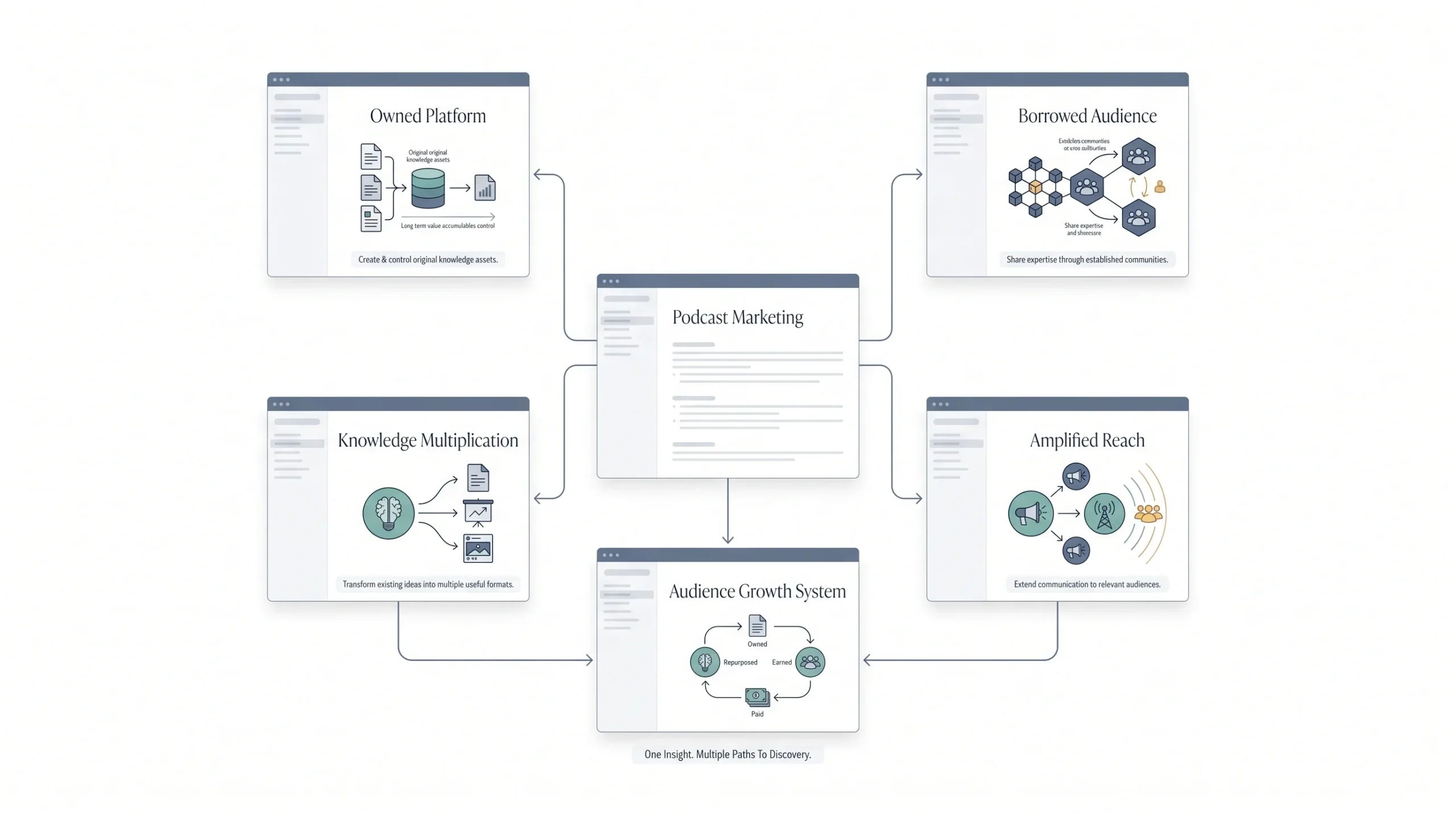
Here’s the thing. When people say “podcast marketing,” they almost always mean one thing: starting your own show. That’s a mistake, and it’s the reason so many brands give up too early. Hosting is just one lane. There are four.
You can host your own podcast, where you own the whole thing top to bottom. You can guest on other people’s shows and borrow their audience instead of building one from scratch. You can pay to sponsor podcasts that already have the listeners you want. Or you can take audio you’re already producing and turn it into ten other things, blog posts, clips, newsletter fodder, none of which require you to record anything new.
| Entry Point | What It Means | Best For |
|---|---|---|
| Hosting your own show | You produce and own the podcast | Brands with a strong point of view, playing the long game |
| Guesting on other podcasts | You show up as the expert on someone else’s show | Founders and consultants who want authority fast |
| Sponsorships and ads | You pay to run ads on relevant shows | Product brands with budget and a direct-response goal |
| Repurposing audio content | Turning episodes into blogs, clips, and posts | Anyone already sitting on audio and not using it well |
Most of what gets written about podcast marketing only covers the first one. That’s like writing a guide to “content marketing” and only talking about blogs. There’s more here, and honestly, the other three options are often the smarter starting point.
Think about it from the buyer’s side for a second. Somebody discovers a brand because a founder was a guest on a show they already listen to. That’s the guesting lane working. A week later they hear a fifteen-second ad read by a host they trust while the show’s mid-roll break plays. That’s sponsorship doing its job. Then they land on a blog post that’s actually a cleaned-up transcript of an episode they never even listened to. That’s repurposing, quietly pulling weight in the background. None of that required the brand to run its own show. That’s the part beginners miss the most, that the audience doesn’t care where the audio came from, they just care whether it was useful.
Why Podcast Marketing Works in 2026
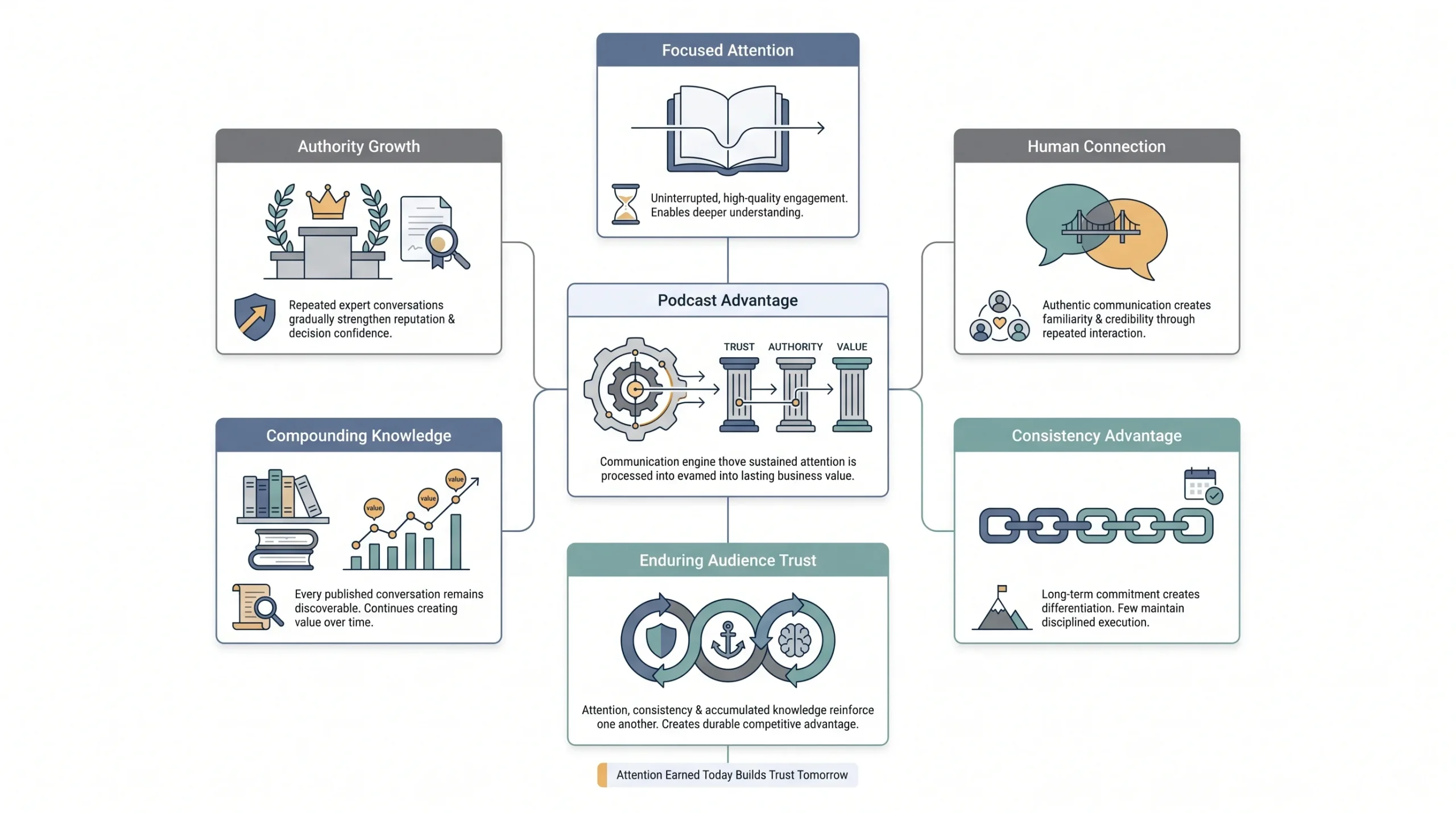
Look, attention is the one thing every marketer is fighting over, and audio wins a kind of attention that nothing else really touches anymore. Someone’s driving to work, or folding laundry, or on a walk with the dog. They’re not scrolling. They’re not multitasking between four tabs. They’re just listening, for thirty, forty, sometimes ninety minutes straight. Try getting that kind of uninterrupted time from a blog post or an Instagram reel. You won’t.
There’s also something about voice that text doesn’t do. When someone hears a founder talk through a problem, stumble a little, laugh at their own joke, it builds a kind of familiarity that reads a lot like trust. That’s why people who listen to a podcast for a few weeks start talking about the host like they actually know them. Nobody feels that way about a company blog.
“You get forty minutes of someone’s full attention. No feed, no notifications, no other tab open. Nothing else in marketing does that anymore.”
And on the competition side, yeah, more shows launch every year, but most of them die within the first ten episodes because nobody sticks with the boring parts, consistency, promotion, actually being good at interviewing. So the bar to stand out isn’t nearly as high as people assume. This matters even more in B2B, where founder-led podcast guesting has quietly become one of the fastest ways to build authority without spending a rupee on ads. A founder doing the rounds on ten relevant shows in three months will often build more credibility than a year of blog posts.
There’s a compounding thing that happens with audio too, and it’s easy to miss if you’re only looking at week-one numbers. A blog post mostly gets its traffic in the first few weeks and then fades unless something keeps refreshing it. A podcast episode doesn’t work like that. People find shows through back catalogs all the time, someone gets recommended a podcast, binges twenty old episodes over a weekend, and now they’ve absorbed months of brand messaging in one sitting. That almost never happens with old blog posts. Nobody binges a company’s blog archive for fun. They’ll binge a podcast they like.
Should You Host, Guest, or Sponsor?
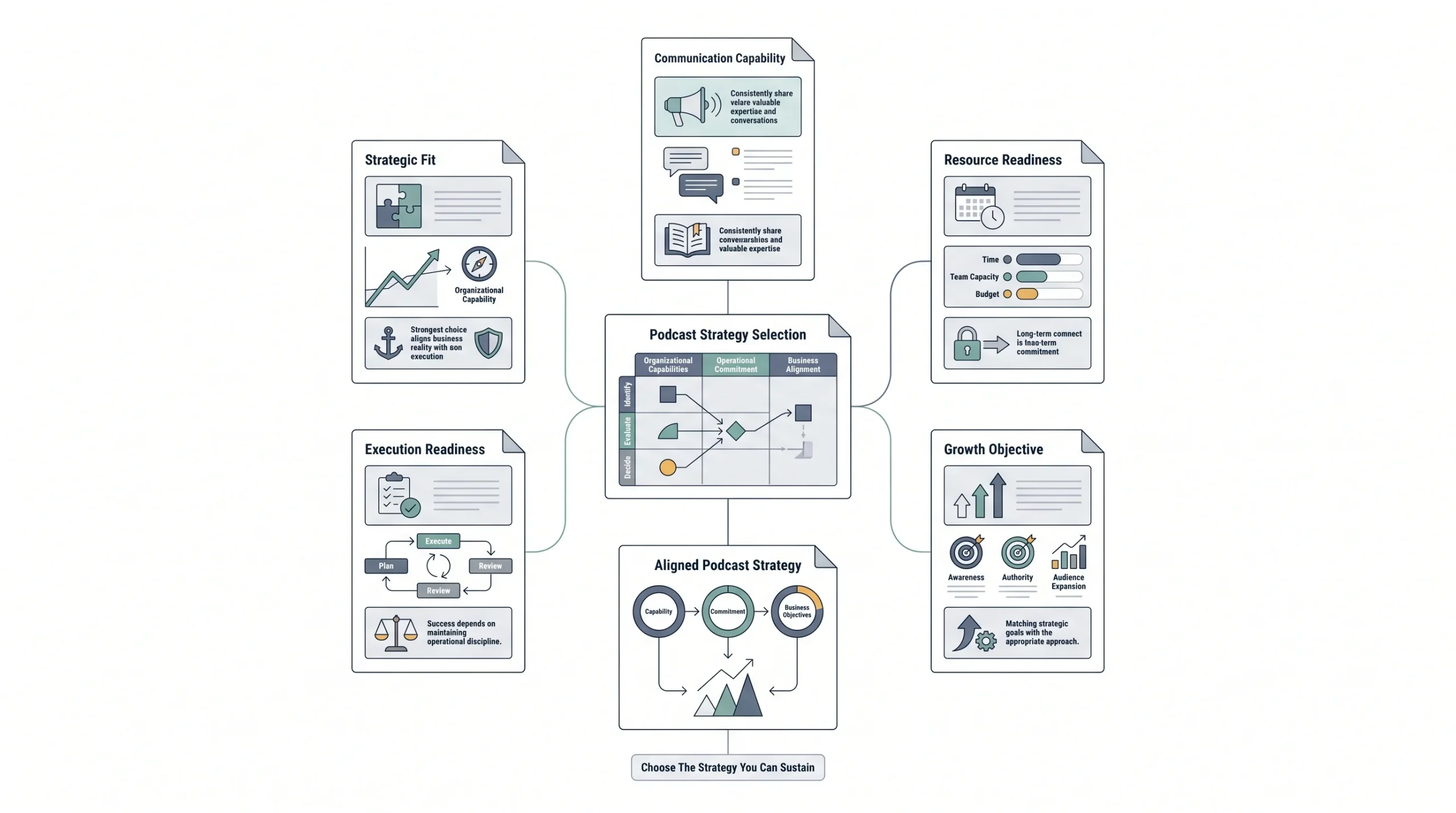
This is the question nobody actually sits down to answer before diving in. They just default to hosting because that’s the version of podcast marketing everyone talks about. But hosting is expensive in time even before it’s expensive in money, and it takes months before you see anything back. So before committing, it’s worth being honest about what you actually have.
Do you have someone on the team who’s genuinely good at talking, someone with opinions, someone who doesn’t sound like they’re reading a script? Do you have six months to wait before this channel starts pulling weight? Is there budget for editing and a decent mic? If the answer to most of that is no, hosting probably isn’t the move yet.
| Factor | Hosting | Guesting | Sponsoring |
|---|---|---|---|
| Time to results | Slow, six months plus | Fast, results in weeks | Fast, immediate reach |
| Cost | Medium to high, production adds up | Low, mostly your time | High, media spend |
| Control over message | Full control | Partial, you’re a guest | Full, within the ad format |
| Best for | Long-term brand building | Borrowing audience and authority fast | Direct response, product awareness |
| Skill required | Production plus consistency | Good pitching, being interesting on the spot | Media buying know-how |
Honestly, if there’s no in-house talent and no patience for a slow build, guesting wins every time. It’s cheaper, faster, and it forces someone to get genuinely good at explaining what the brand does, which is a skill worth having anyway. Sponsoring makes sense once there’s real budget and a specific offer to push. Hosting is the play for brands that already know their angle and are willing to be boring and consistent for a year before it pays off.
How to Start a Branded Podcast (The Hosting Path)
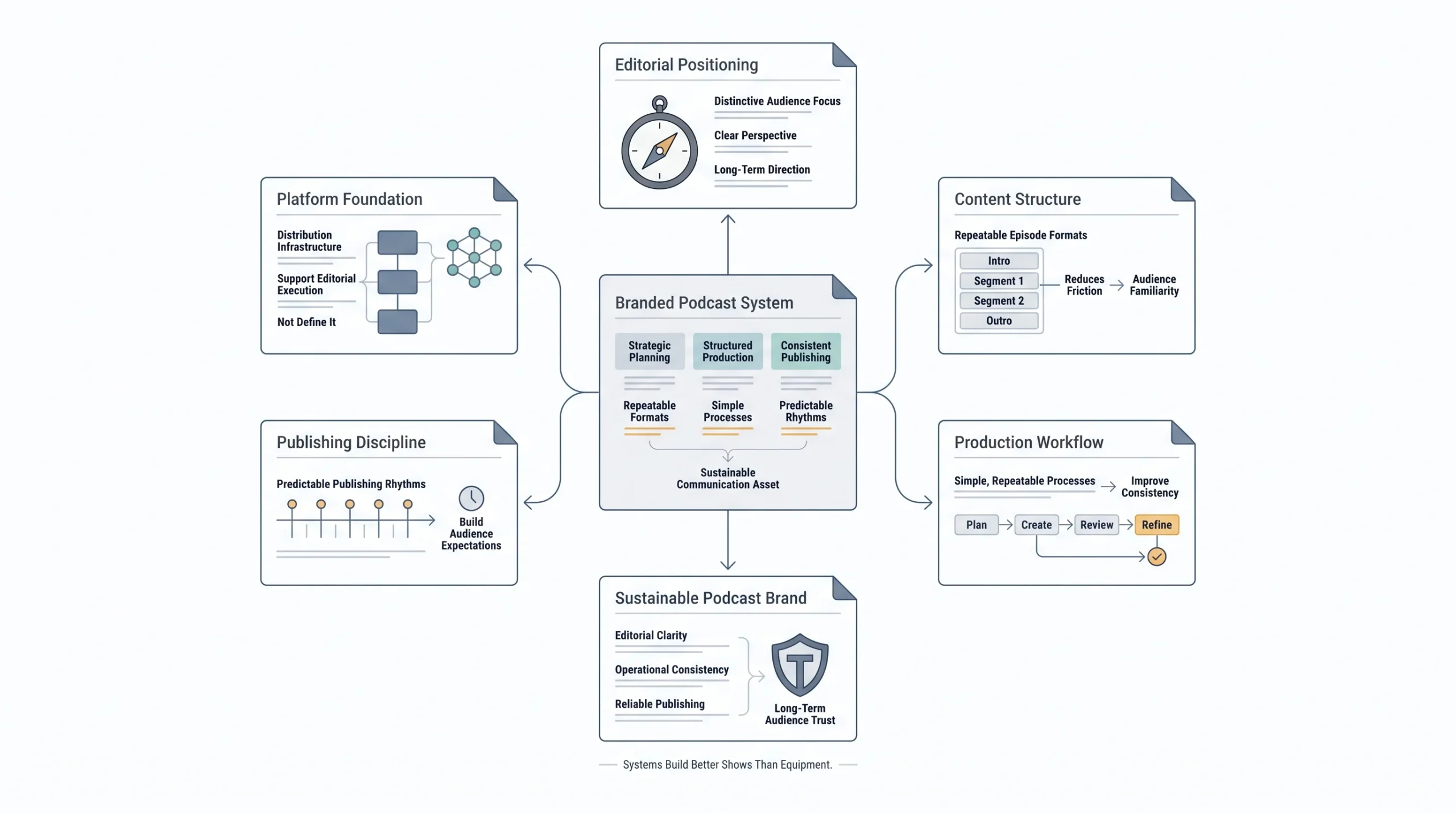
Alright, so say hosting is the right call. Here’s where most shows go wrong before they even record episode one.
Defining Your Podcast’s Niche and Angle
“A show about marketing” is not an angle. That’s a category, and there are already ten thousand shows in it. What’s the specific take? Who’s it for, and just as important, who is it not for? A show for solo founders running paid ads on a shoestring budget is a completely different show than one for enterprise CMOs managing seven-figure media plans, even if both are technically “marketing podcasts.” Pick the fight. Know who you’re annoying by not being for them. That’s what gives a show a personality instead of sounding like every other interview show with a stock intro jingle.
Choosing a Format
The format decision matters more than people think, because it decides how much work this is every single week.
| Format | Effort | Best For |
|---|---|---|
| Interview | Medium | Building a network and borrowing guest audiences |
| Solo or monologue | Low | Founder-led thought leadership, no scheduling headaches |
| Co-hosted | Medium | Personality-driven shows, more entertainment value |
| Narrative or documentary style | High | Big storytelling brands with real production budget |
Interview shows are the easiest entry point for most brands because the guest brings half the content and, often, half the audience too. Solo shows are lower effort but live or die entirely on whether the host is actually interesting to listen to for thirty minutes straight. Narrative shows sound great in theory and take about ten times longer to produce than anyone budgets for. Most brands should not start here.
Equipment and Production Basics
Nobody needs a studio to start. A decent USB mic, something like a Shure MV7 or an Audio-Technica ATR2100, quiet room, and free editing software like Audacity or Descript covers the first twenty episodes easily. What actually kills quality isn’t the gear, it’s background noise and bad editing. Cut the dead air, tighten the rambling, keep the energy up. That matters way more than whether the mic cost eight thousand rupees or eighty thousand.
Choosing a Podcast Hosting Platform
This is where the actual audio file lives and gets distributed to Spotify, Apple, and everywhere else.
| Platform | Pricing | Ease of Use | Analytics Depth | Distribution Reach |
|---|---|---|---|---|
| Spotify for Podcasters | Free | Very easy | Decent, Spotify-focused | Strong on Spotify, syndicates elsewhere |
| Buzzsprout | Paid tiers | Very easy | Good | Wide, all major apps |
| Transistor | Paid, unlimited shows | Easy | Strong | Wide, good for multiple shows |
| Libsyn | Paid | Slightly dated interface | Solid, long track record | Wide, one of the oldest players |
Spotify for Podcasters is the obvious starting point if budget is tight since it’s free and syndicates out anyway. Move to Buzzsprout or Transistor once there’s a real need for better analytics or if the brand runs more than one show.
Publishing Cadence and Consistency
This is the part that actually kills most branded podcasts, not bad content, just inconsistency. A show that drops weekly and never misses builds a listening habit. A show that posts three episodes, disappears for a month, comes back with two more, that’s dead before it starts. Nobody needs to publish daily. Weekly or biweekly, on a fixed day, is enough. What matters is that it’s predictable. Predictable beats frequent every time.
Podcast Guesting as a Marketing Strategy
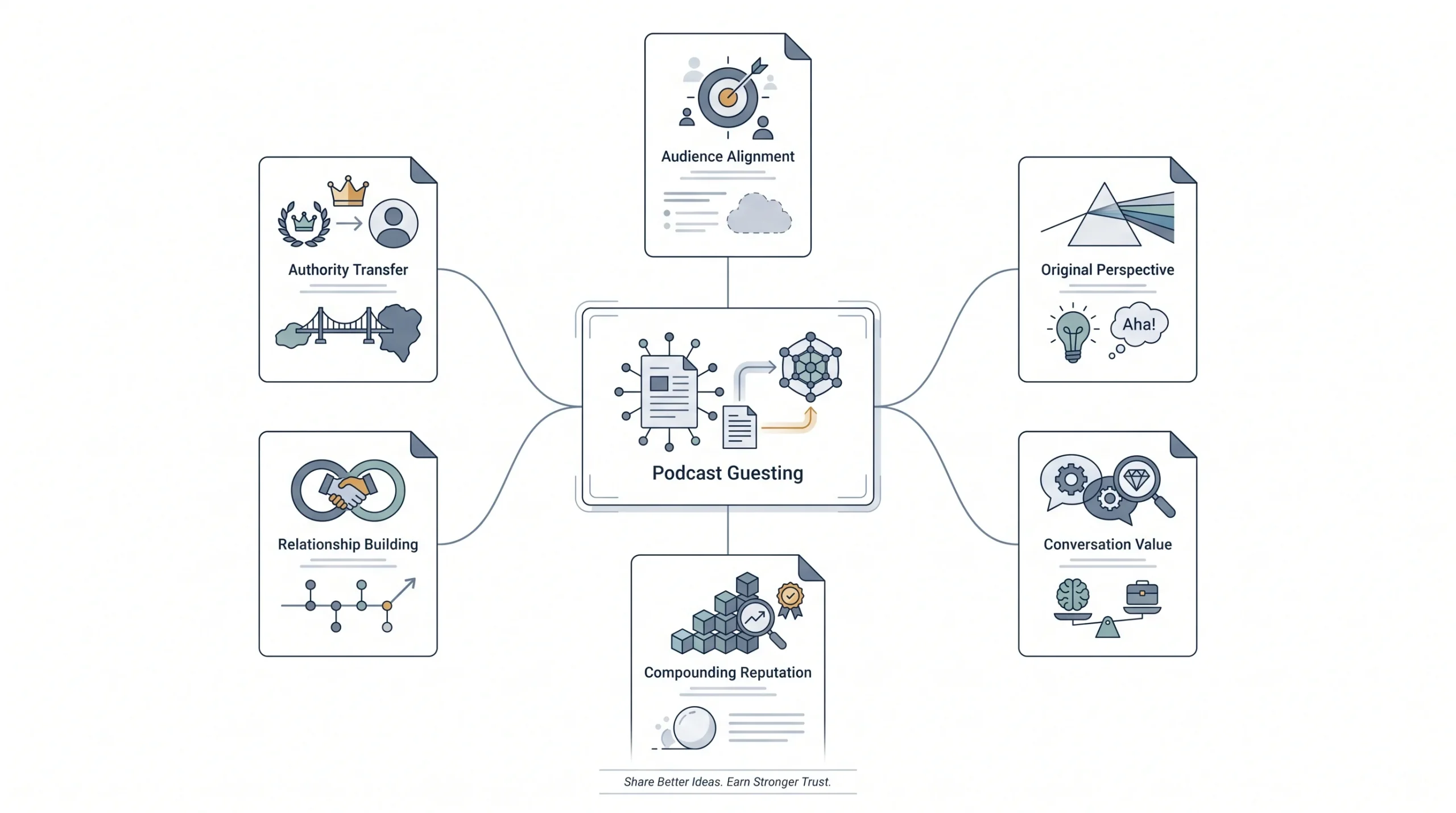
Why Guesting Often Beats Hosting for ROI
Guesting is the underrated move here, and it’s honestly where most brands should start if they’re not already committed to hosting. There’s no production overhead. No editing, no publishing schedule, no worrying about growing a subscriber base from zero. Someone else already built the audience, already has the trust, already has the download numbers. All that’s needed is a good pitch and forty-five minutes of being genuinely useful on the call.
How to Find the Right Shows to Pitch
Bigger isn’t automatically better here. A show with three thousand highly engaged listeners in exactly the right niche will outperform a show with fifty thousand generalist listeners who half-tune out during ads. Look at who’s actually listening, not just how many. Look at whether the host engages with comments, whether guests get shared afterward, whether past episodes led anywhere, a LinkedIn mention, a blog feature, something measurable.
Writing a Pitch That Gets a Yes
Most pitches get ignored because they read like a resume. “I’m the founder of X, I’ve helped Y companies do Z, I’d love to come on your show.” Every host has seen a thousand of those. What actually works is leading with a specific, slightly unusual angle the host hasn’t heard before.
Something closer to: “Most people talk about podcast guesting as a brand-awareness play. What if we talked about the guesting pitches that get instantly rejected and why, using three real ones as examples?” That’s specific. That’s a real episode idea, not a vague credential dump.
Keep it short too. A pitch that takes four paragraphs to get to the point has already lost. Two or three lines, the angle, why it fits their show specifically, and one line on why the timing makes sense right now, that’s usually enough. Mentioning something from a recent episode helps a lot here, it shows the pitch wasn’t copy-pasted to fifty shows in one afternoon, which, let’s be honest, most of them are.
Hosts don’t want a pitch. They want a story they haven’t heard yet.
How to Actually Be a Good Guest
Getting booked is only half of it. Show up with two or three specific stories or numbers ready to go, not generic advice anyone could say. Avoid sounding like a script is running in the background. The best guest moments are the ones that get clipped later, so give the host something quotable, something with a bit of edge to it. Bland answers don’t get shared. Opinionated ones do.
Podcast SEO and Discoverability
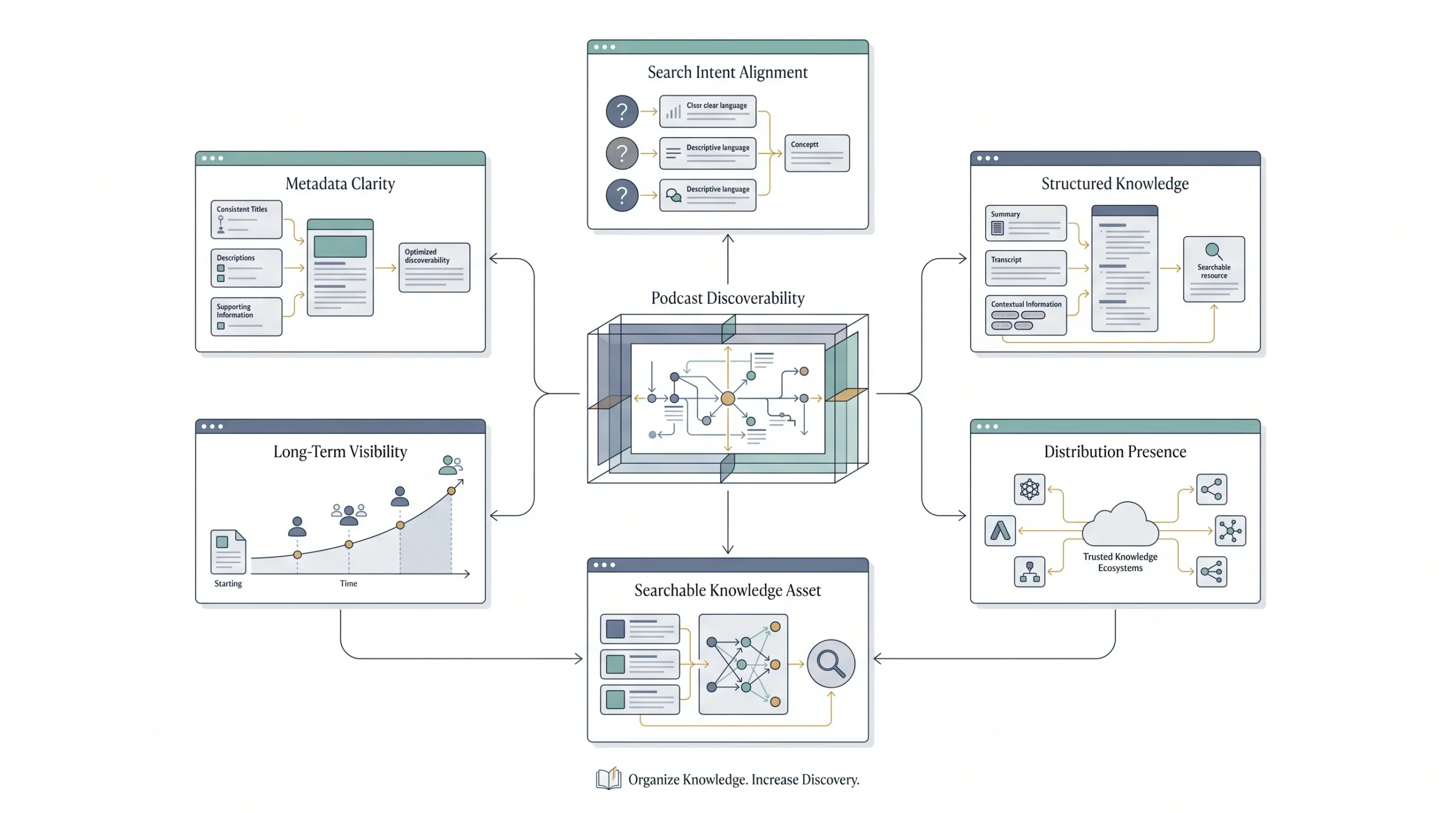
Episode Titles and Descriptions That Get Found
People search Apple Podcasts and Spotify the same way they search Google, with keywords, not clever wordplay. “Episode 47: A Chat With Rahul” tells search engines and listeners nothing. “How to Pitch Podcast Guest Spots (With Real Examples)” tells them everything and matches what someone’s actually typing. Same exact-match keyword logic that applies to blog content applies here too, just in audio form.
Show Notes as an SEO Asset
This is the step almost everyone skips, and it’s the one leaving the most value on the table. A full transcript or a detailed summary published on the website turns a twenty-minute episode into a page Google can actually crawl and rank. Without that, the entire episode is invisible to search. With it, that episode becomes another piece of indexed content pulling in organic traffic long after anyone’s actively promoting it.
Submitting to Directories
Get the show onto Apple Podcasts, Spotify, YouTube Music, and Google’s podcast feeds early. Most hosting platforms push to all of these automatically once set up, so this isn’t complicated, it’s just easy to forget. Missing even one of the big three cuts off a chunk of potential listeners who only browse within their default app.
Repurposing Podcast Content Across Channels
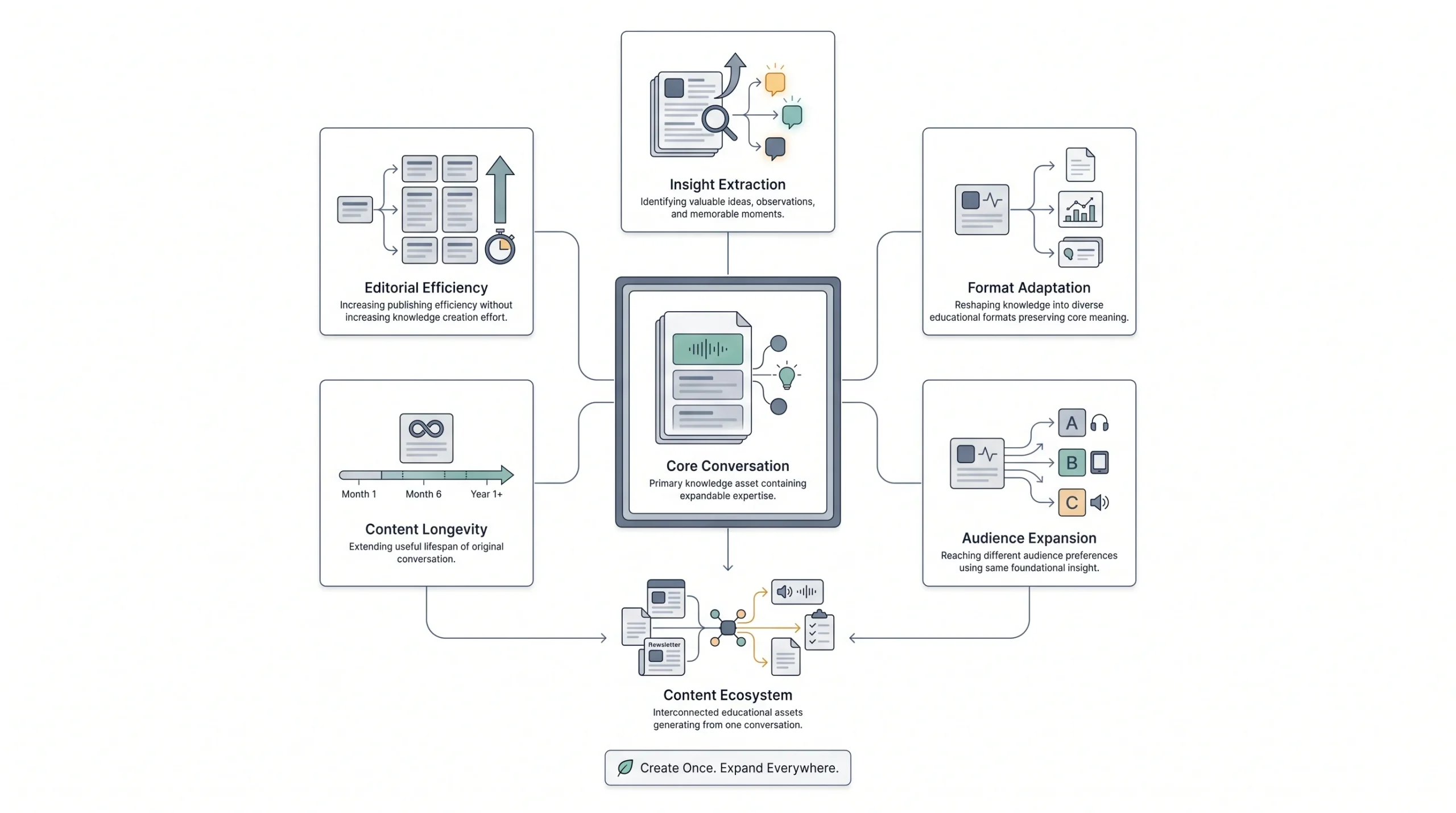
Here’s the part that changes the entire economics of podcasting. One recording session, done properly, can fuel two to three weeks of content across every other channel. Most brands record an episode, publish it once, and move on. That’s leaving most of the value sitting on the cutting room floor.
| Source | Repurposed Into |
|---|---|
| Full episode | YouTube video or video podcast |
| Best 60 to 90 second moments | Reels, Shorts, TikTok clips |
| Key quotes | LinkedIn and X text posts |
| Full transcript | Blog post or pillar content |
| Recurring themes across episodes | Email newsletter series |
| Guest insights | Case study or testimonial content |
The workflow that actually works: record once, then spend the following week pulling out everything usable. The three sharpest quotes become social posts. The most surprising two minutes becomes a short-form clip. The full transcript, cleaned up, becomes a blog post that ranks for the same keywords the episode was built around. Suddenly one recording session isn’t one piece of content, it’s eight or nine, spread across two or three weeks. That’s the actual leverage in podcast marketing, and it’s the part most people skip because clipping and editing feels like extra work after the recording’s already done. It’s not extra work. It’s the whole point.
Podcast Sponsorships and Advertising
Types of Podcast Ads
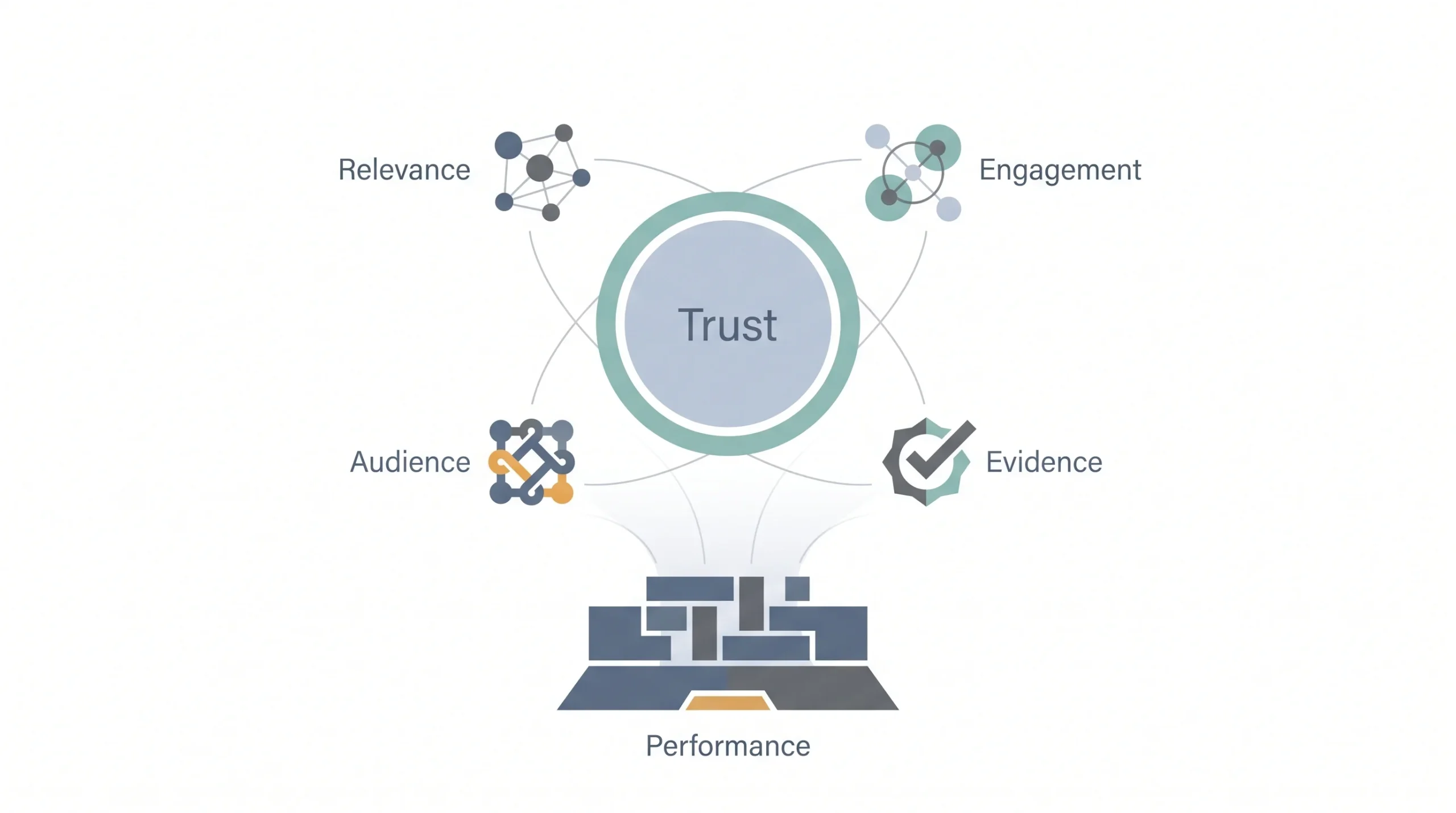
Not all podcast ads work the same way, and the difference matters for what result to expect.
| Ad Type | Trust Level | Cost | Best For |
|---|---|---|---|
| Host-read | High, feels like a recommendation | Higher | Brand credibility, direct response |
| Programmatic | Lower, feels like a generic ad break | Lower | Scale, broad awareness plays |
Host-read ads work because the host is essentially vouching for the product, even loosely. Listeners who’ve spent months with a host’s voice in their ears trust that voice more than a random pre-roll. Programmatic ads are cheaper and scale faster but don’t carry that same weight. They’re a volume play, not a trust play.
How to Evaluate a Podcast Before Sponsoring
Download numbers alone don’t tell the real story. A show with a hundred thousand downloads but a two-minute average listen time is a worse buy than a show with fifteen thousand downloads and a ninety percent completion rate. Ask for actual audience demographics, not just subscriber counts. Ask how engaged the audience actually is, do they respond to calls to action in past sponsor reads, do they show up in the comments, do they follow through on promo codes. That’s the number that matters, not the vanity headline number.
Measuring Podcast Marketing ROI
Vanity Metrics vs. Real Metrics
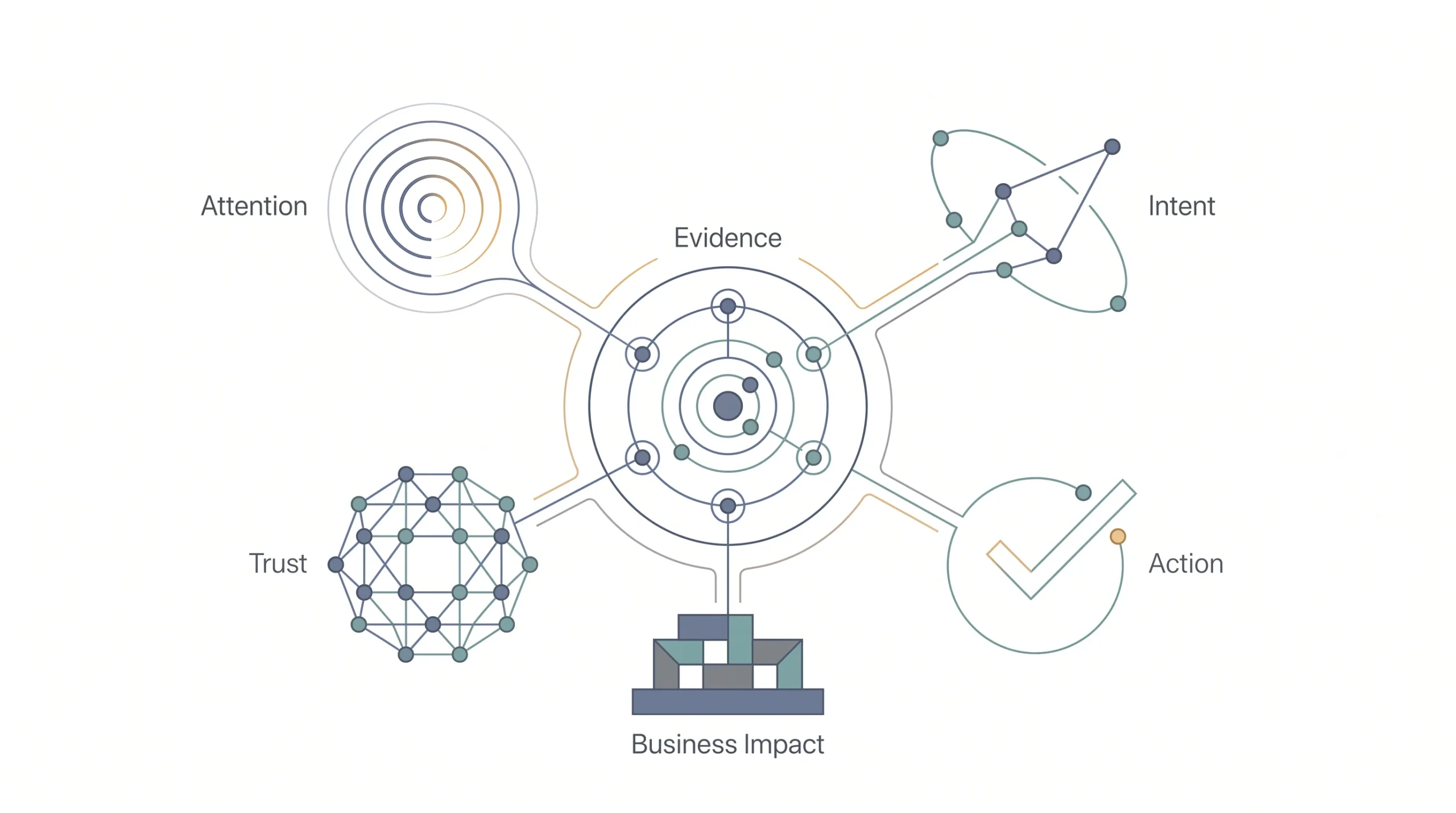
Downloads feel like the obvious metric to track, and sure, track it. But downloads don’t pay bills. Completion rate matters more, because it tells whether people are actually sticking around or bailing after the intro. Website traffic pulled from show notes matters more. Backlinks earned from guesting matters more. A show with modest downloads but a high completion rate and steady traffic back to the site is doing its job. A show with huge downloads and nobody clicking through anywhere isn’t.
Attribution Challenges Specific to Audio
Audio is genuinely harder to track than paid social or email. Nobody clicks a link mid-episode while driving. That’s just reality, and pretending otherwise leads to bad conclusions about what’s working. The workaround is building in trackable touchpoints anyway, unique promo codes mentioned on air, dedicated landing pages tied to specific episodes, UTM-tagged links sitting in the show notes even if not everyone clicks them immediately. It won’t be perfect attribution. It never is with audio. But it’s enough to see directional trends.
| Strategy | Primary Metric | Secondary Metric |
|---|---|---|
| Hosting | Downloads per episode | Completion rate, subscriber growth |
| Guesting | Referral traffic | Backlinks earned, follower growth on the guest’s own channels |
| Sponsorship | Promo code redemptions | Landing page conversions |
| Repurposing | Engagement on the derivative content | Traffic sent back to the full episode or blog |
Where Podcast Marketing Fits in Your Funnel
Podcast marketing isn’t one funnel stage, it actually spans all three, depending on which entry point is being used.
| Funnel Stage | Podcast Marketing Role |
|---|---|
| TOFU | Guesting on other shows, repurposed clips landing in front of new audiences |
| MOFU | A branded show that builds familiarity and trust over repeated listens |
| BOFU | Case-study style episodes, sponsorships tied to a direct offer or promo |
This is worth sitting with for a second, because it means the “start with hosting” instinct usually gets the funnel order backwards. Guesting and repurposed clips do the TOFU job of getting in front of new people. A hosted show is a MOFU nurture tool once there’s already some audience paying attention. And the direct-response stuff, sponsorships, promo-code episodes, that’s BOFU. Skipping straight to hosting without any TOFU motion feeding it is why so many branded podcasts launch to an audience of nobody.
Play this out properly and the channels feed each other. Guesting builds the initial awareness. That awareness sends people to check out the brand’s own show, which does the trust-building work over weeks of listening. And once that trust exists, a sponsorship-style call to action or a case-study episode actually converts instead of getting ignored. Treat these as one system instead of three separate tactics and the whole thing works a lot better than any piece of it on its own.
Conclusion
None of this means every brand needs to launch a podcast tomorrow. That’s actually the wrong takeaway. The real point is that podcast marketing has four separate doors, hosting, guesting, sponsoring, repurposing, and most brands only ever try the most expensive, slowest one first. Start where the resources actually are. If there’s no in-house talent or patience for a six-month build, guest on other shows and repurpose whatever audio already exists. If hosting makes sense, commit to consistency over polish, because that’s what actually keeps a show alive past episode ten. Audio isn’t going anywhere as a channel, and the brands treating it seriously right now are the ones who’ll still be showing up in someone’s earbuds a year from now.
Frequently Asked Questions
Is podcast marketing still worth it in 2026, or is the space too crowded now?
It’s worth it, but not in the “just start recording” sense. Yeah, more shows exist than five years ago, but most of them stop after a handful of episodes because nobody planned for distribution or consistency. That means the actual bar to stand out hasn’t moved much. What’s crowded is the top of the charts. The middle, where a specific, well-run show for a specific audience lives, still has plenty of room.
Do I need a big following before starting a podcast?
No, and honestly this is one of the more backwards assumptions people carry over from social media. A podcast can build its own audience slowly through guesting, cross-promotion, and search, without needing an existing following to launch from. What actually matters more than starting audience size is whether there’s a clear angle and the consistency to keep showing up.
How long before a branded podcast actually starts driving results?
Realistically, six months of consistent weekly or biweekly episodes before it’s pulling real weight. Some shows catch on faster if the guest list is strong early, but expecting meaningful traction inside the first month is setting up for disappointment and a likely early quit.
Is guesting on other podcasts actually free, or are there hidden costs?
It’s free in the sense that there’s no media spend involved, but it costs time, prep time, actual call time, and the follow-up work of repurposing that appearance into other content. Treat it as free and skip the prep, and it shows. The guest appearances that land well are the ones where someone actually researched the show beforehand.
What’s a realistic budget to start a branded podcast?
A decent USB mic and free editing software can get a show off the ground for well under what most people assume. The bigger cost isn’t equipment, it’s the ongoing time spent recording, editing, and promoting every single week. Budget for that time before budgeting for gear.
Should the podcast host be the founder, or can it be someone else on the team?
Either works, but it depends on the goal. If the show exists to build the founder’s personal authority, it needs to be the founder on mic. If the goal is just brand visibility and consistent content, a skilled marketer or a hired host can run it just as well, sometimes better, since they’ll actually treat it like a weekly commitment instead of something that gets bumped whenever the founder gets busy.
How do I find podcasts to guest on that are actually relevant?
Start with the shows the target audience is already listening to, not just shows in the same industry. A niche operations podcast might have a smaller audience than a broad business show, but if that audience is exactly who’s being targeted, it’s the better fit. Look at whether the host actually engages with guests afterward too, that’s usually a sign the audience is engaged as well.
What should show notes actually include for SEO to work?
A full or near-full transcript is the biggest lever, since that’s what gives search engines something to actually crawl and rank. Beyond that, a short summary near the top with the target keyword, and a few structured takeaways, help both search and skimmers who won’t read the whole transcript.
How many times should podcast content be repurposed?
There’s no fixed number, but treating one episode as one piece of content is the mistake to avoid. A single well-run episode can reasonably fuel two to three weeks of clips, quotes, a blog post, and newsletter content before it’s fully squeezed. Fewer than that and value is being left unused.
Is host-read advertising worth the higher cost compared to programmatic ads?
For brand credibility and anything relying on trust, usually yes. The host is effectively vouching for the product, and that carries more weight with listeners than a generic ad break. For pure reach and scale on a tighter budget, programmatic makes more sense. It depends on whether the goal is trust or volume.
How do I know if a podcast is actually a good sponsorship fit before paying for an ad?
Download numbers alone don’t answer that. Ask about completion rate and audience engagement, whether past sponsors got a real response, and whether the audience demographics genuinely match the target customer. A smaller show with an engaged, on-target audience usually outperforms a bigger show with a loose fit.
What’s the single biggest mistake brands make with podcast marketing?
Treating the episode itself as the finish line. Recording it, publishing it once, and moving on wastes most of the actual value sitting in that file. The brands getting real results are the ones spending as much time repurposing and promoting an episode as they spent recording it.