

A few years back, TikTok was the app your nephew used to lip-sync to songs. Now it’s the app where Amazon, Pepsi, and thousands of small ecommerce brands are fighting for attention in an auction, and TikTok Shop alone has become one of the fastest-growing commerce channels on the planet. That’s a strange jump for anyone who wrote the platform off in 2020 as “not a real marketing channel.”
So here’s the actual question worth answering. Not “should every business be on TikTok,” because that’s a lazy question with a lazy yes/no answer. The real question is whether TikTok is worth it for your business, specifically, and what it’s going to cost you in time or money to find out. Because both answers exist on this platform at the same time. Some brands are getting a $4 return for every dollar spent. Others are dumping budget into ads that never had a shot because the offer never fit the platform to begin with.
This post walks through organic TikTok, paid TikTok ads, TikTok Shop, the real cost numbers, who this actually works for, who it doesn’t, and a straight verdict at the end. No hype. No “TikTok will change your business overnight.” Just what’s actually happening on the platform right now and how to figure out fast whether it’s worth your time.
What “TikTok for Business” Actually Means
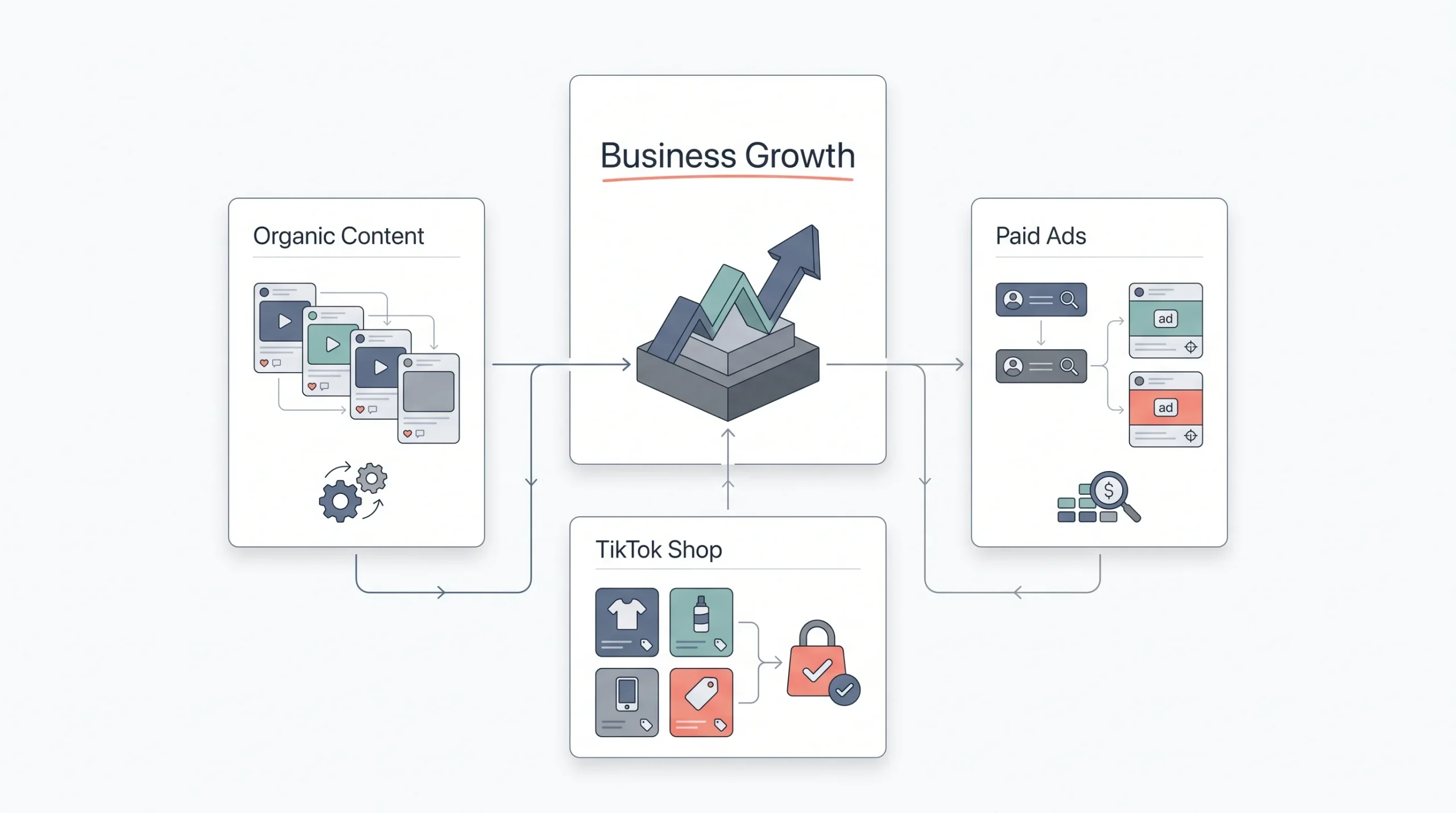
Here’s where a lot of people get tripped up before they even start. “TikTok for Business” isn’t one thing. It’s three separate lanes, and most businesses only ever try one of them, usually the wrong one first.
The first lane is organic content. Free posts, no ad spend, riding the algorithm the same way any regular TikTok user does. The second lane is paid ads, run through TikTok Ads Manager, where you’re bidding against other advertisers for placement. And the third lane, the one most beginner guides skip or bolt on as an afterthought, is TikTok Shop. That’s the native commerce layer where people can buy your product without ever leaving the app.
Nope, these aren’t interchangeable. They cost different things, move at different speeds, and honestly, they work best when you’re doing more than one at a time.
Look at what actually happens with most failed TikTok campaigns. A business jumps straight into paid ads with zero organic presence, no idea what content style resonates with their audience, and no creative library to pull from. They’re basically paying full price to learn lessons that a few weeks of free organic testing would’ve taught them anyway.
| Lane | Cost | Speed to results | Best for |
|---|---|---|---|
| Organic content | Free (time cost only) | Slow to medium, think weeks to months | Brand building, testing creative angles |
| Paid ads | $500+ minimum test budget | Fast, results within days | Scaling something that’s already proven |
| TikTok Shop | Free to list, plus commission fees | Medium | Physical product and ecommerce brands |
Here’s the thing nobody tells beginners upfront. These three lanes aren’t stacked in a hierarchy where you graduate from one to the next. They actually feed each other. Organic content builds the creative library you’ll eventually boost with paid budget. Paid ads bring in the reach that organic alone can’t guarantee, especially for brand-new accounts still finding their footing. And TikTok Shop turns all that attention into an actual transaction without forcing anyone to leave the app and lose momentum halfway through a purchase decision.
Think about it like building a house. Organic is the foundation, it’s slow, unglamorous, and nobody sees the work that went into it. Ads are the framing, they speed things up once you know what you’re building. And Shop is the part people actually walk into and use. Skip the foundation and the whole thing wobbles the second you put weight on it, which is exactly what happens when businesses launch straight into paid spend with nothing organic behind them.
There’s also a mindset shift that has to happen before any of this works. TikTok isn’t a broadcast channel the way a lot of marketing teams are used to thinking about social media. It’s closer to a conversation the algorithm is constantly evaluating. Every post is basically a fresh audition, regardless of what your last ten posts did. That’s uncomfortable for teams used to consistent, predictable reach on other platforms, but it’s also the reason small accounts can outperform bigger, more established ones here.
TikTok’s User Base in 2026: Who’s Actually There
This is usually where blog posts dump fifty stats on you and call it a day. That’s not useful. What actually matters is one question: does your customer live here.
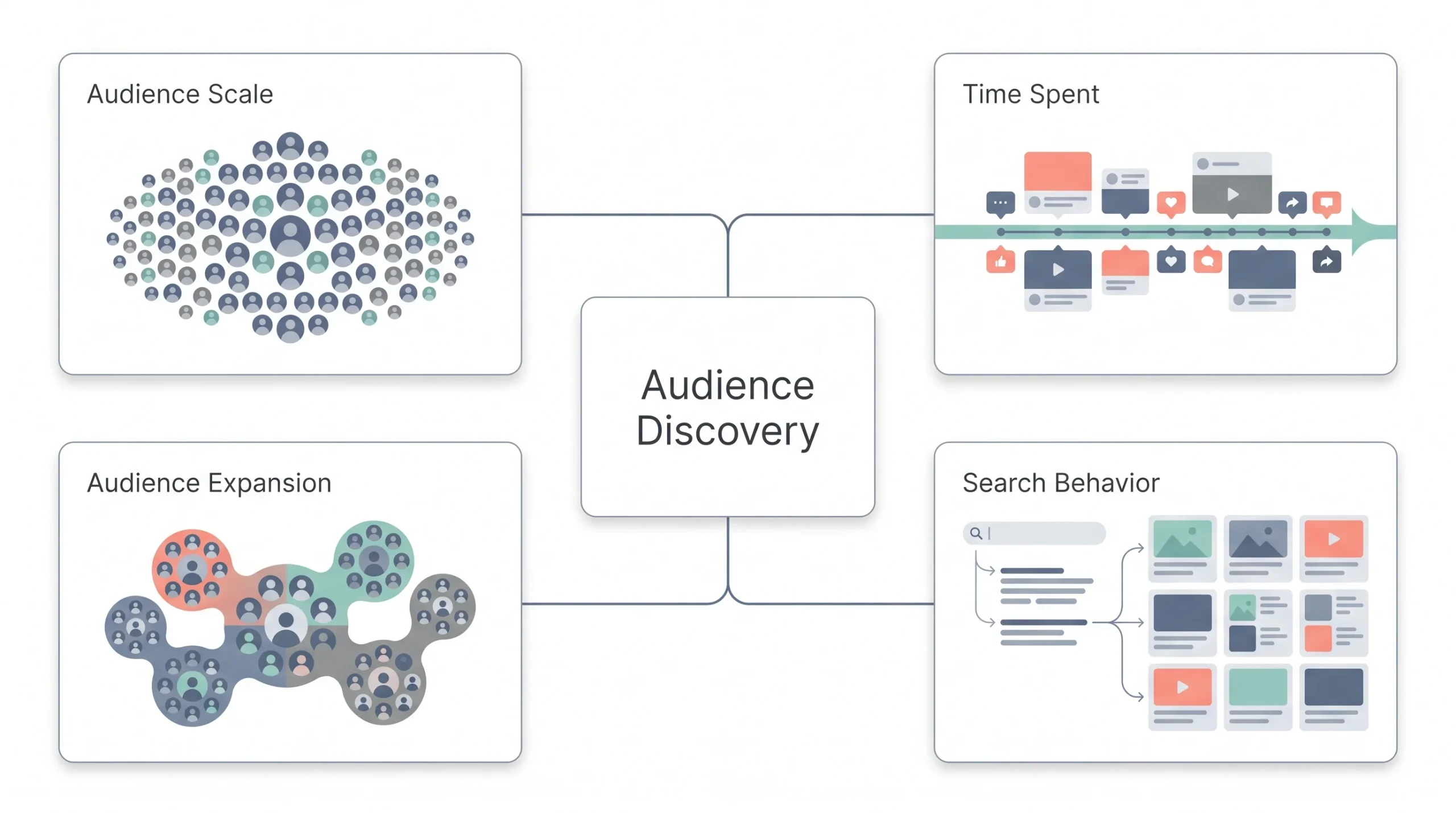
TikTok’s global monthly active user count sits somewhere around 1.9 to 2 billion people, with daily active users north of a billion. That’s not a niche platform anymore, whatever your uncle still thinks. And the time spent inside the app is honestly the number that should get more attention than it does. Depending on which tracker you look at, the average user spends somewhere between 58 and 95 minutes a day scrolling. Compare that to the session times on Facebook or Instagram and it’s not close.
Here’s the part that surprises people who wrote TikTok off years ago. It’s not a teen app anymore. The 35 to 44 age bracket is now one of the fastest-growing groups on the platform, and users over 45 make up a real chunk of the audience too. The “TikTok is just Gen Z” argument is dead. It’s been dead for a while, people just haven’t updated their assumptions.
And then there’s the search behavior shift, which honestly deserves its own conversation. Something close to half of TikTok’s user base now uses the app the way people used to use Google, typing in a question or a product name and scrolling through video results instead of blue links. That changes what “TikTok content” even needs to accomplish. It’s not just entertainment anymore. It’s discovery.
| Metric | Figure |
|---|---|
| Monthly active users | Roughly 1.9 to 2 billion |
| Daily active users | Roughly 1.1 billion |
| Average daily time in-app | 58 to 95 minutes, depending on the source |
| Fastest-growing age group | 35 to 44 |
| Users treating TikTok like a search engine | Close to half |
Nearly half of TikTok’s users are searching the platform the way older generations searched Google. That alone should change how you think about your content, not just your ads.
If your target customer doesn’t show up anywhere in that table, keep reading anyway, but recalibrate what you’re expecting. TikTok isn’t going to manufacture demand from an audience that isn’t there.
Should Your Business Be on TikTok? A Quick Fit Test
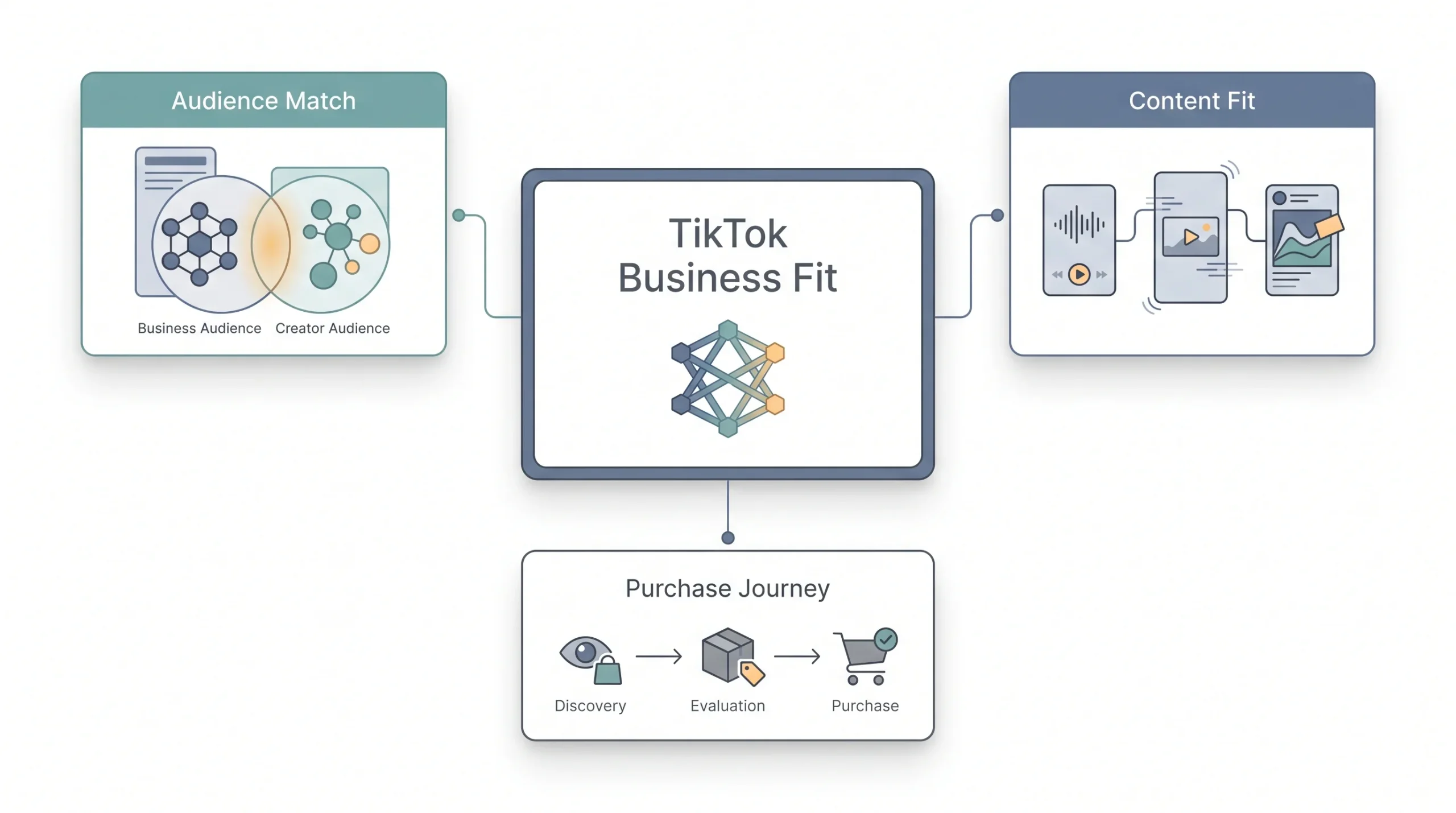
This is where most “is TikTok worth it” articles just say yes and move on. That’s not honest, and it’s not useful either. Fit comes down to three things: does your audience actually overlap with TikTok’s users, can you realistically make content that feels native to the platform, and does your price point or sales cycle match how people actually buy on TikTok.
That third one trips up more businesses than people expect. TikTok is an impulse-friendly platform. Short videos, fast decisions, low friction to buy. If your product needs a 20-minute sales call and three stakeholders to sign off, TikTok isn’t going to replace your sales process. It might still be useful for brand awareness or recruiting, but don’t expect it to close deals the way it closes a $30 skincare purchase.
| Business type | Fit | Why |
|---|---|---|
| DTC or ecommerce under $100 average order value | Strong | Visual, impulse-friendly, plugs right into TikTok Shop |
| Beauty, fashion, food and beverage | Strong | These categories consistently post the highest organic engagement |
| B2B or high-ticket, long sales cycle | Weak to moderate | Low impulse fit, but can work for brand awareness or recruiting |
| Local service businesses | Moderate | Face-forward, community-based content tends to do well |
| Highly regulated industries like finance, pharma, or legal | Weak | Content restrictions and compliance friction slow everything down |
If your product is visual, sits under $100, and solves a specific problem inside the first three seconds of a video, TikTok is worth testing. If it needs a 20-minute sales call, it’s a brand-awareness play at best, not a direct-response channel.
Honestly, this framework alone will save more businesses money than any stat in this post. Skip the fit test and you’ll find out the hard way, after you’ve already spent the budget.
Organic TikTok for Business: How It Works
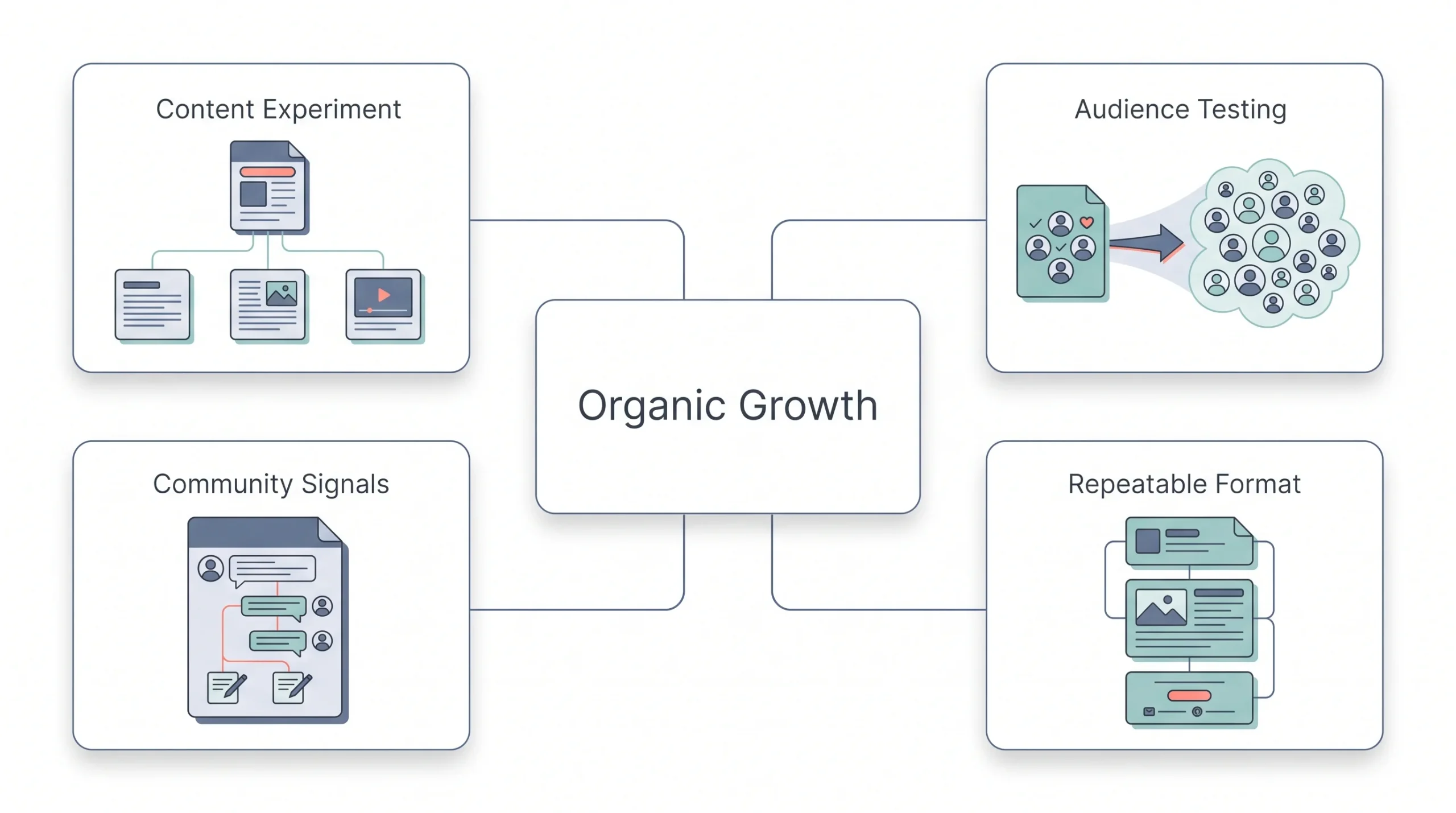
The algorithm on TikTok doesn’t care how many followers you have. That’s the single biggest difference from Instagram or Facebook, and it’s why brand-new accounts can go viral in week one while accounts with 50,000 followers post something that gets 200 views. TikTok distributes content based on interest matching, not follower count. It shows your video to a small test group first, and if that group engages, it pushes the video wider. If they don’t, it dies quietly.
That’s genuinely good news for small businesses. You’re not stuck behind a decade of someone else’s follower growth. But it also means consistency and format matter more than they do anywhere else, because the algorithm is testing every single post from scratch.
So what actually performs? Content that hooks in the first few seconds, no exceptions. Reports on high-performing TikTok content consistently point to the same pattern, the videos that communicate their point within the first two or three seconds are the ones that get watched all the way through. If your video opens with a slow logo animation or a “hey guys, welcome back” intro, the algorithm has already moved on before your point even lands.
Native-feeling content beats polished ad-style video, and that’s counterintuitive for a lot of marketing teams used to producing glossy assets. TikTok users can spot a repurposed Instagram ad from a mile away, and they scroll past it. The content that works looks like it was shot on a phone, because a lot of the best-performing content actually was.
Posting cadence matters too. There’s no magic number, but starting with something you can actually sustain, three to five times a week, beats posting once and going quiet for a month. The algorithm rewards accounts that keep showing up.
And then there’s trending audio. Using a sound that’s currently trending gives your video a discovery boost that original audio doesn’t get in the same way. It’s a small lever, but it’s one that costs nothing and takes ten seconds to pull.
One more thing worth clearing up early. A TikTok Business account isn’t the same as a personal account. Business accounts unlock analytics, ad tools, and commercial music licensing, which matters if you’re using popular songs in your content. It’s a simple switch, but skipping it limits what you can actually do later.
There’s also a testing mindset that separates the accounts that grow from the ones that stall out. Treat every post as a small experiment, not a finished statement. Change one variable at a time, the hook, the pacing, the call to action, and actually pay attention to what moves the needle instead of guessing. A lot of businesses post ten videos, see mixed results, and conclude “TikTok doesn’t work for us,” when really they never isolated what was actually failing. Was it the hook? The offer? The format? Without that breakdown, you’re just throwing content at a wall.
Comments matter more here than on most platforms too. Replying to comments with video responses is a built-in TikTok feature, and it does two things at once, it gives the algorithm another signal that your content sparks conversation, and it builds the kind of back-and-forth with an audience that turns casual viewers into actual followers. Businesses that treat their comment section as an afterthought are leaving free reach on the table.
And don’t underestimate how much a clear, repeatable format helps. Accounts that find one structure that works, say, a 3-second problem, a 10-second solution, a clear CTA, and repeat that structure with new topics tend to outperform accounts constantly reinventing their format from scratch. Consistency in structure lets the algorithm and the audience both know what to expect from you, even while the specific topic changes video to video.
| Content pillar | Purpose | Example angle |
|---|---|---|
| Educational | Builds trust, drives search discovery | “How this actually works” or myth-busting a common belief |
| Behind-the-scenes | Builds authenticity | Process footage, team moments, founder story |
| Trend participation | Reach and discovery | Native trending sound with a brand-specific twist |
| UGC and testimonials | Social proof | Real customer results, honest reviews |
| Product demo | Direct response | Problem shown and solved inside the first three seconds |
TikTok rewards content that feels native over content that feels produced. The accounts that struggle are usually the ones repurposing brochure-style video from other platforms without changing a thing.
TikTok Ads: Formats, Costs, and How the Auction Works
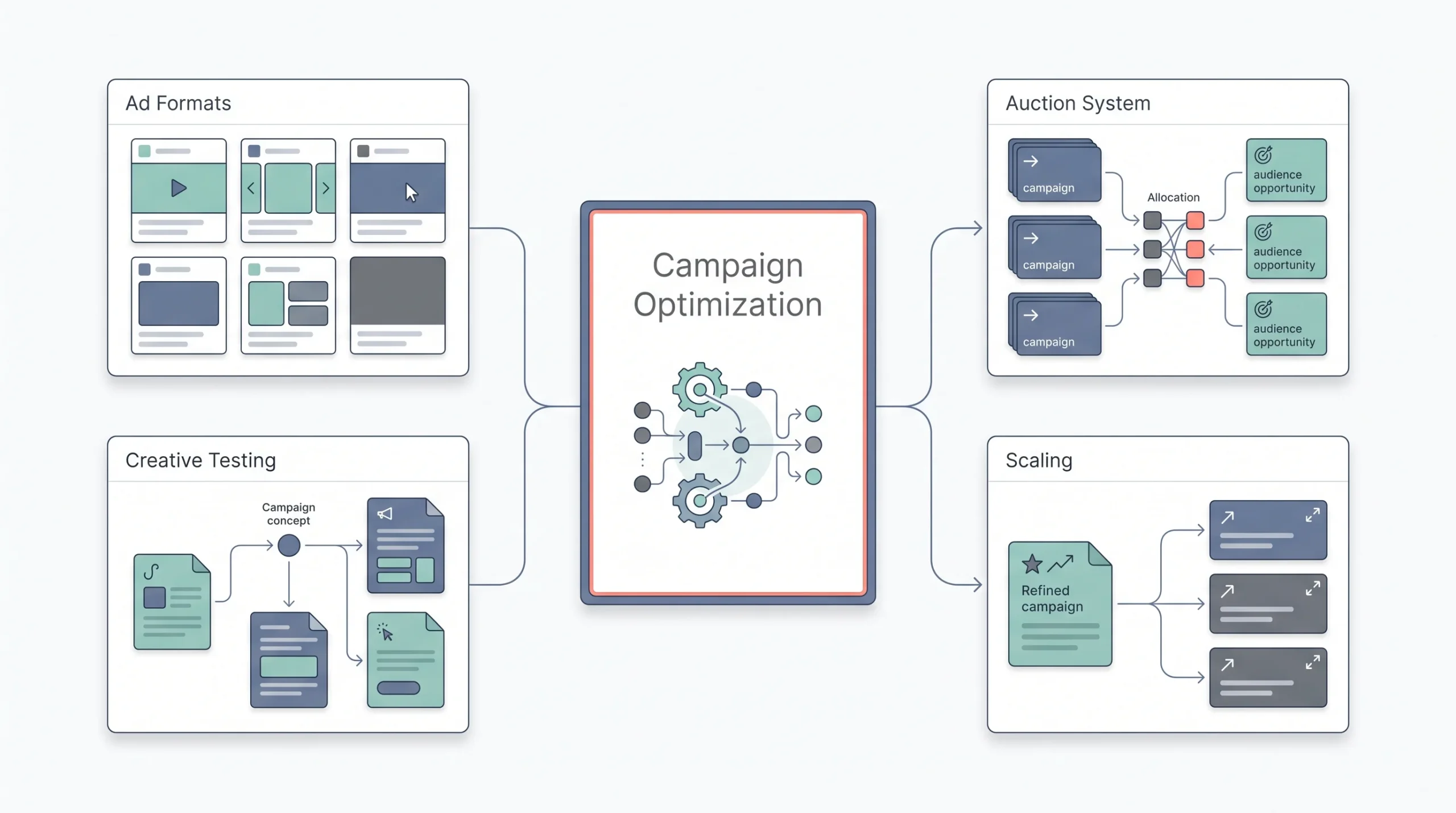
Paid TikTok has grown up fast. What used to be a scrappy, underpriced ad platform is now a real auction with real competition, somewhere around 8.7 million businesses are actively running paid campaigns on it. That number alone tells you the “TikTok ads are cheap and easy” era is fading.
There are a handful of ad formats worth knowing, and they’re not interchangeable either.
In-Feed Ads are the standard option, showing up natively in the For You feed between organic content. They’re the most cost-efficient and the most scalable, which is why most businesses start here.
Spark Ads are different. Instead of building a separate ad creative, Spark Ads boost an organic post that’s already performing, either your own or a creator’s, with your paid budget behind it. Because the content already looks native and already has some engagement behind it, Spark Ads consistently post the strongest click-through rates and the lowest cost-per-click of any major format on the platform. If you’ve got organic content that’s already working, this is usually the smartest next move, not building a new ad from scratch.
TopView ads show up the moment someone opens the app, full screen, hard to miss. They post extremely high view rates, but they come at a premium price and work best for pure awareness plays, not direct response.
Branded Hashtag Challenges are the most expensive format on this list by a wide margin, sometimes running six figures for a week-long push, and they’re built for viral reach through user participation. Realistically, this is a format for brands with serious budget, not a small business’s first campaign.
TikTok Shop Ads drive traffic directly to product listings inside the app, and they’re currently posting the lowest cost-per-purchase of the bunch for ecommerce advertisers. Makes sense. Fewer steps between seeing the ad and buying the thing.
| Format | What it is | Strength | Cost signal |
|---|---|---|---|
| In-Feed Ads | Native-style ad in the For You feed | Cost-efficient and scalable | Standard CPC and CPM |
| Spark Ads | Boosts existing organic or creator content | Highest CTR, lowest CPC of the major formats | Most cost-efficient overall |
| TopView | Full-screen ad on app open | Very high view rate, strong for awareness | Premium pricing |
| Branded Hashtag Challenge | User-generated trend campaign | Strong viral potential | High minimum spend |
| TikTok Shop Ads | Drives directly to product listings | Lowest cost-per-purchase for ecommerce | Efficient for conversion goals |
Now the actual numbers, and this is where honesty matters more than a clean headline stat. Cost data on TikTok Ads varies more than people expect depending on who’s tracking it, what industry you’re in, and how good your creative is. So treat these as ranges, not guarantees.
| Metric | Typical range |
|---|---|
| Minimum campaign budget | Around $500 to get a real test running |
| Average CPM | Roughly $9 to $10 |
| Average CPC | Roughly $0.27 to $1.00 |
| Ecommerce cost-per-acquisition | Roughly $18 to $42 |
| Average CTR | 1.8% to 3.2%, with Spark Ads pushing past 7% in some reports |
| Conversion rate | Roughly 2.1% to 4.7% |
Why the wide spread? A beauty brand with sharp creative and an engaged following isn’t fighting the same auction as a B2B SaaS company trying to force-fit a demo video into a 15-second hook. Industry, creative quality, and audience size all move these numbers, sometimes by a lot. Anyone promising you an exact CPA before you’ve run a single test is guessing.
Bidding strategy plays a bigger role here than most beginners expect too. TikTok’s auction runs on a handful of bidding models, cost cap, bid cap, and lowest cost being the common ones, and picking the wrong one for your stage of testing can quietly wreck a campaign that would’ve otherwise worked. Lowest cost is usually the right call early on, while you’re still figuring out what audience and creative combination actually converts. Cost cap makes more sense once you’ve got a proven angle and want to scale it without letting your CPA drift too far from what you know works.
Creative testing deserves more attention than most businesses give it too. Running one ad and calling it a test isn’t a test, it’s a guess with extra steps. A real test means launching several creative variations at once, same offer, different hooks or different opening few seconds, and letting the data tell you which one the algorithm wants to push. TikTok’s own creative tools make duplicating and tweaking ads fast, so there’s genuinely no excuse for launching a single ad and hoping.
And here’s something that catches a lot of businesses off guard, ad fatigue moves faster on TikTok than on most other platforms. A creative that’s crushing it in week one can drop off hard by week three simply because the same audience has seen it enough times. Budgeting for regular creative refreshes isn’t optional here, it’s part of the actual cost of running TikTok ads long-term, even if it doesn’t show up as a line item on the invoice.
Is TikTok Advertising Actually Profitable? What the ROI Data Says
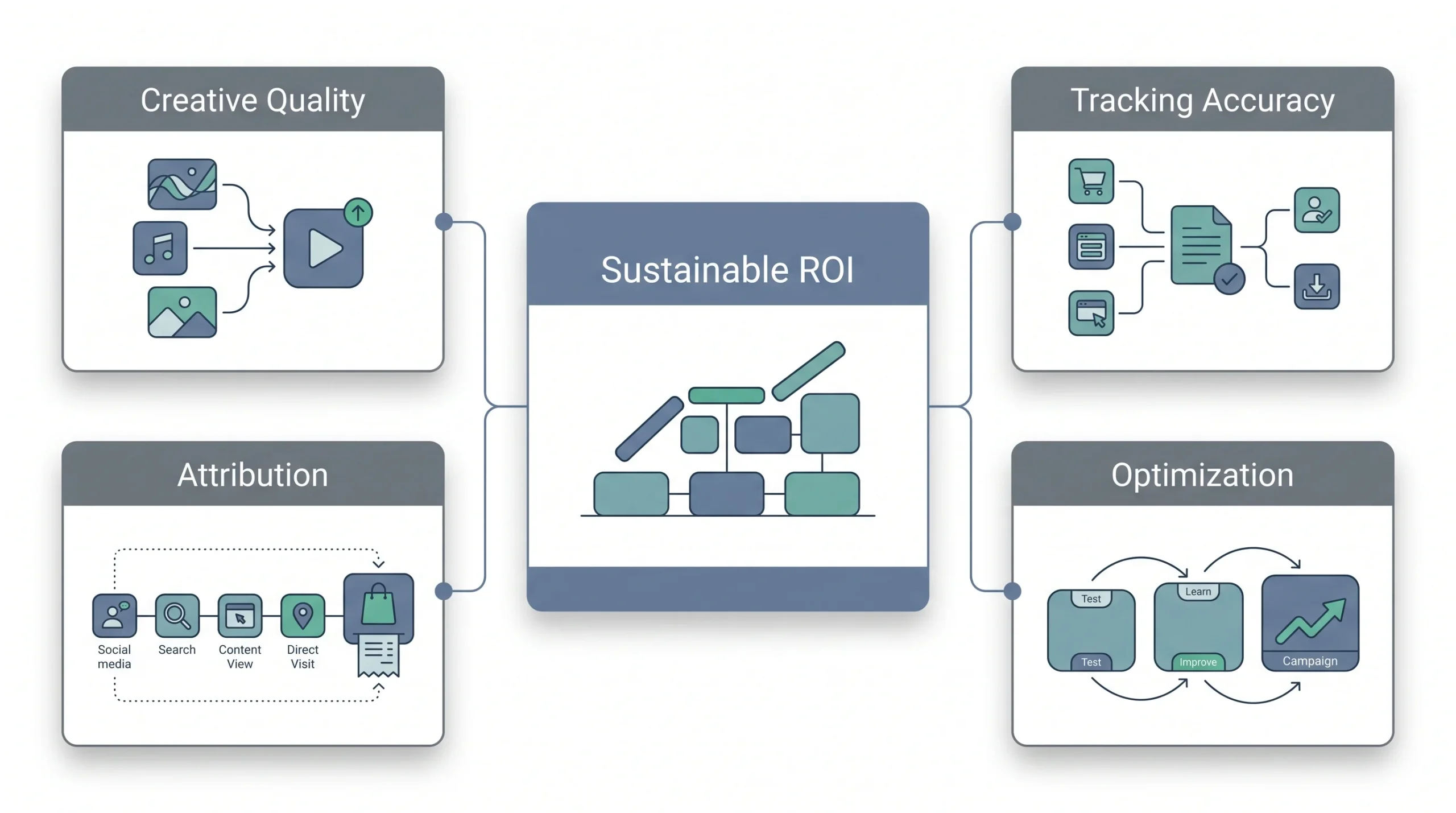
Here’s the number that gets thrown around the most: TikTok ads reportedly return somewhere around $4 for every $1 spent on average, and several reports put that ahead of the average return on Instagram in similar studies. That’s a genuinely strong number, if it holds for your business.
But “average” is doing a lot of work in that sentence. Some reports put practical ROAS windows for well-run ecommerce campaigns somewhere between 2.8x and 6.5x. Others, looking specifically at creator-driven campaigns, report short-term returns as high as 11x to 14x with long-term returns settling closer to 3x to 5x once the initial spike fades. That’s a wide range, and honestly, that’s the point. TikTok ROI isn’t one number. It’s a range shaped almost entirely by execution.
Multiple industry reports put TikTok’s average return around $4 for every $1 spent, ahead of the reported Instagram average in the same studies. Worth knowing. Also worth not betting your whole budget on before you’ve tested it yourself.
Short-term versus long-term matters here too. Short-term ROAS captures the immediate response, someone sees the ad and buys within days. Long-term ROAS captures the delayed effect, someone sees a creator talk about your product, doesn’t buy immediately, but comes back two weeks later because the brand stuck in their head. Both matter, but they get measured differently, and a lot of businesses only look at the short-term number and miss half the picture.
Brand recall data backs up that delayed effect. Independent studies have found TikTok ads driving noticeably higher recall than non-TikTok placements, and that lift gets even bigger when the ad is tied to an actual creator rather than a straight brand-produced spot. Partnering with the right creator isn’t just a nice-to-have here, it’s showing up directly in the recall numbers.
Now the caveat nobody puts in bold enough. These ROI numbers are pulled from brands that already had strong creative and correctly set up tracking. A misconfigured pixel or missing conversion events will absolutely tank your results and it’ll look like TikTok doesn’t work, when really the measurement was broken from day one. Triple-check your pixel setup before you draw any conclusions about whether the platform is “worth it” for you.
Attribution windows matter here too, and this is where a lot of businesses quietly undercount their own results. TikTok’s default attribution window is fairly short, typically a 7-day click and a 1-day view. That means a purchase happening eight days after someone saw your ad simply won’t get credited to that campaign, even though the ad probably played a real role in the decision. This is especially relevant for anything with even a slightly considered purchase, like a $150 product instead of a $15 one. If your reported ROAS looks weaker than expected, check whether the attribution window is actually capturing your real sales cycle before assuming the platform underperformed.
There’s also a difference worth naming between what a platform reports and what actually happened. TikTok’s own in-platform reporting will generally show a rosier picture than a third-party analytics tool, simply because of how each system attributes credit across touchpoints. Neither number is “wrong” exactly, they’re just measuring different things. The smart move is picking one consistent source of truth, sticking with it, and judging performance trends over time rather than obsessing over the exact number from either system.
TikTok Shop: The Commerce Layer That Changes the Math
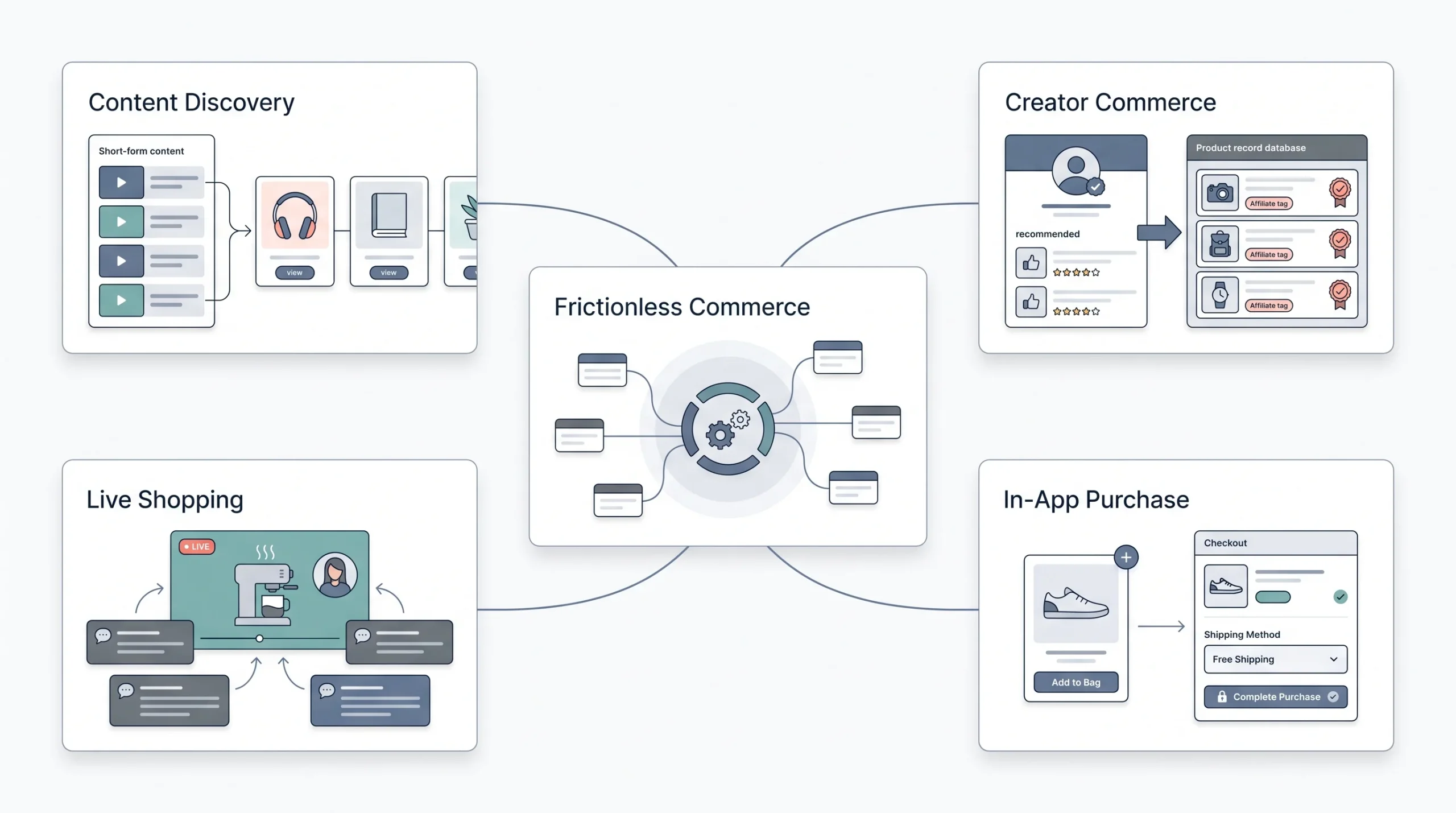
This is the part of TikTok that a lot of older “is TikTok worth it” articles either skip entirely or mention in one sentence at the bottom. That’s a mistake at this point, because TikTok Shop genuinely changes the calculation for ecommerce brands.
TikTok Shop lets people buy your product without ever leaving the app. No redirect to an external website, no extra tab, no lost momentum between seeing the video and completing the purchase. That sounds small, but friction is the enemy of impulse buying, and removing a step matters more than it sounds like on paper.
The growth numbers here are genuinely big, even accounting for the fact that different trackers report different totals depending on scope and region. US TikTok Shop sales landed somewhere around $15 to $16 billion in 2025, with year-over-year growth reported well over 100%. Some global estimates for total GMV run considerably higher than that. The exact number depends entirely on who’s counting and what they’re counting, but the direction is not in question. This thing is growing fast, and it’s not slowing down.
Live shopping is where the conversion numbers get genuinely hard to ignore. Reports put live shopping conversion rates several times higher than standard ecommerce benchmarks, somewhere in the range of 7% versus the low single digits you’d expect from a typical online store. Watching someone talk through a product in real time and answer questions on the spot just converts better than a static product page. That’s not a TikTok-specific phenomenon exactly, but TikTok has built the infrastructure to make it easy, and that’s the part that matters.
The affiliate and creator marketplace piece deserves real attention too, and it’s honestly the most underused entry point for smaller brands. Instead of paying for ads upfront, a brand can list a product and let creators pick it up, promote it, and earn a commission on sales they drive. That means a bootstrapped ecommerce brand can get product in front of an audience through actual creators before spending a single rupee on paid ads. Nobody talks about this enough.
TikTok Shop’s affiliate model means a small brand can get in front of buyers through creators before spending anything on ads. That’s the most underused entry point for a bootstrapped ecommerce business right now.
Who should actually care about this section? Mostly physical product brands, and beauty, fashion, and home goods categories in particular, since those are consistently the categories driving the biggest share of TikTok Shop sales.
Setting up the affiliate side takes a bit more thought than just flipping a switch, though. Commission rates need to actually be worth a creator’s time, too low and nobody picks up the product, too high and the margins stop making sense on lower-priced items. A lot of brands starting out set commissions somewhere in the 10 to 20 percent range and adjust from there based on how much interest they’re getting from creators browsing the marketplace. It’s genuinely a negotiation in miniature, not a fixed cost you set once and forget.
Live shopping deserves a slightly deeper look too, because it’s not just “turn on a livestream and hope.” The sellers doing well here treat it closer to a QVC segment than a casual chat, they’ve got a clear product lineup, they answer questions in real time, and they create urgency through limited-time offers during the stream itself. That structure is a big part of why conversion rates run so much higher than a static product listing. Someone watching a live demo and getting an immediate answer to “does this work for curly hair” is a lot closer to buying than someone reading a product description alone.
Average order values on TikTok Shop tend to sit lower than a typical ecommerce store too, generally in the range of $50 to $60. That’s worth planning around from the start. This isn’t the channel for pushing your highest-margin, highest-price product first. It’s better suited to accessible price points that make the impulse-buy decision easy, with room to upsell or cross-sell once someone’s already a customer.
Pros and Cons: The Honest Verdict Table
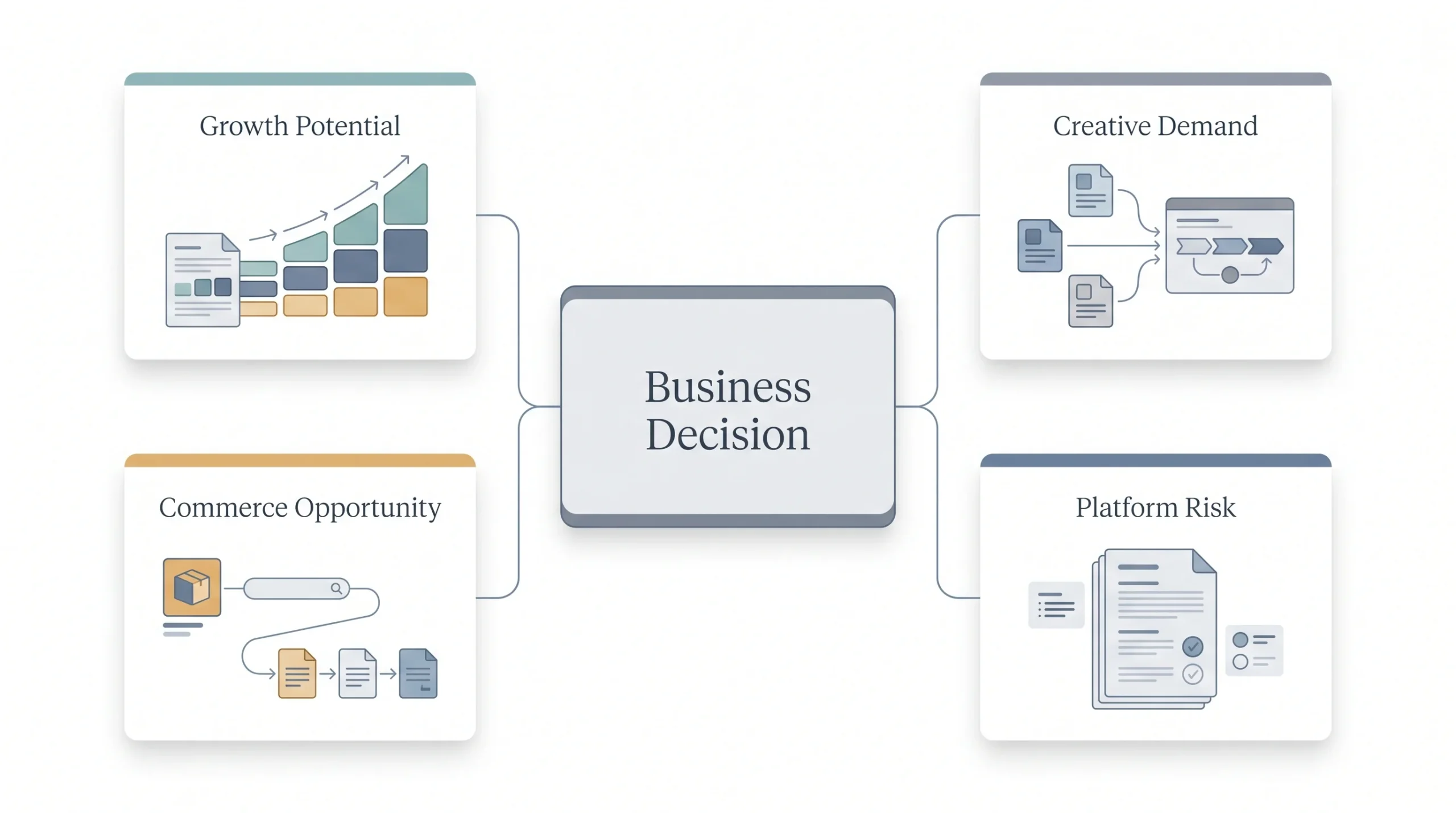
At this point you’ve got the full picture, organic, ads, and Shop. So here’s where it all nets out, laid flat, no spin either direction.
TikTok’s biggest strength is genuinely its engagement rate, which sits well above what Instagram or Facebook post on average. Pair that with TikTok Shop’s low-friction buying and the recall data from creator partnerships, and you’ve got a platform that’s punching above its weight for brands that fit it. Lower CPCs than Meta in several categories don’t hurt either.
But the cons are real, not just fine print. Content has to feel native or it flops, and that’s a genuine skill gap for teams used to producing polished, traditional ad creative. The audience skews younger, so if your customer is 55 and up, this isn’t your primary channel. Content has a short shelf life too, which means the posting frequency needs to stay high, and that’s a real time cost even when it’s not a cash cost. And there’s the platform-level uncertainty that’s followed TikTok around, ownership questions and policy shifts have created real volatility in the past, which is worth factoring into any long-term channel bet.
| Pros | Cons |
|---|---|
| Highest organic engagement rate of any major platform | Needs genuinely native content, repurposed ads underperform |
| TikTok Shop opens commerce without heavy ad spend | Real learning curve on trends and format for traditional teams |
| Lower CPCs than Meta in several categories | Audience skews younger, weak fit for older-demo or B2B offers |
| Strong brand recall lift, especially with creators | Short content shelf life demands high posting frequency |
| Search-engine-like discovery behavior among users | Platform policy and ownership uncertainty has caused past volatility |
TikTok vs Other Platforms: Where It Actually Wins
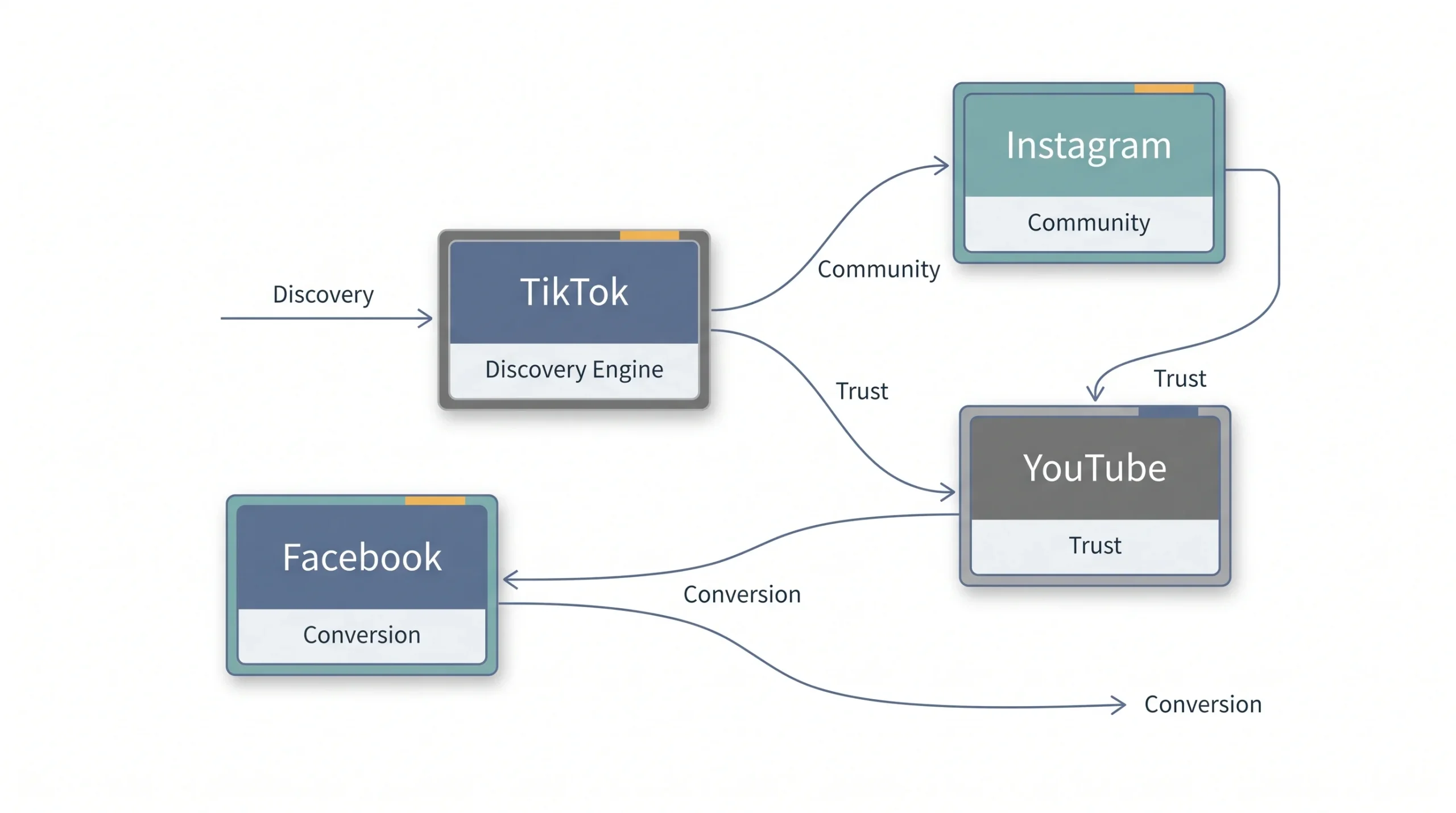
Nobody makes marketing decisions in a vacuum. The real question a lot of businesses are asking isn’t “TikTok, yes or no,” it’s “TikTok or Instagram, where does my next dollar go.”
| Platform | Best for | Engagement rate | Relative ad cost | Commerce integration |
|---|---|---|---|---|
| TikTok | Discovery, younger and mixed audiences, visual products | Highest | Low to moderate | Strong, TikTok Shop |
| Established brands, visual storytelling | Moderate | Moderate to high | Strong | |
| Broad or older demographics, retargeting | Low | Moderate | Moderate | |
| YouTube | Long-form authority, search-driven | Moderate | Moderate to high | Moderate |
Here’s the honest takeaway. TikTok isn’t really replacing these other platforms for most businesses. It’s usually the discovery engine at the top of the funnel that feeds the others, someone finds you on TikTok, follows you on Instagram, and eventually converts through a retargeting ad on Facebook. Treating TikTok as an isolated channel misses how people actually move through these platforms in the real world.
How to Get Started: A Practical First 30 Days
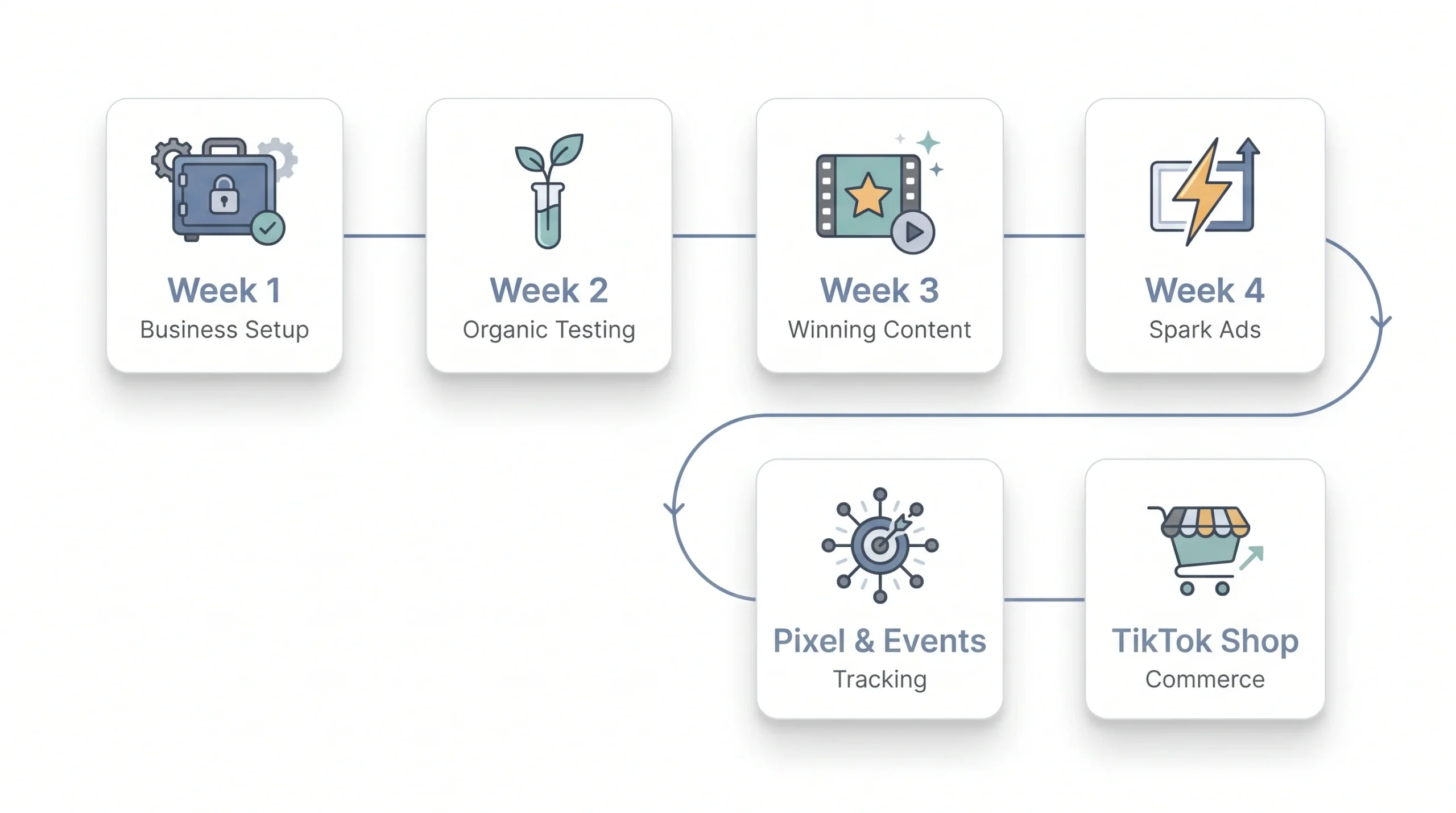
Skip the overthinking and start with a plan that fits inside a month.
First, set up a TikTok Business account and pick one clear goal before posting a single video, whether that’s awareness, leads, or direct sales. Don’t try to chase all three at once out of the gate, it just muddies your content and your metrics.
Second, post organic content consistently for two to three weeks before spending a rupee on ads. This isn’t wasted time, it’s how you find the hook and angle that actually resonates before you pay to scale it.
Third, once you’ve got one or two posts clearly outperforming the rest, boost them with Spark Ads instead of building brand-new ad creative from scratch. You’re paying to amplify something that’s already proven, not gambling on something untested.
Fourth, and this one gets skipped constantly, set up the TikTok Pixel and your conversion events correctly before running anything meant to drive sales. Skipping this step is the single most common reason campaigns look like they failed when the real problem was broken measurement.
Fifth, if you’re an ecommerce brand, get onto TikTok Shop in parallel with your organic content, don’t treat it as a later-stage add-on.
Sixth, set a realistic test budget, somewhere around $500 to $1,000, and actually commit to the full testing window before judging results. Pulling the plug after three days of a five-day learning phase tells you nothing.
Don’t launch paid ads before organic. The accounts that skip straight to spend usually end up paying to learn lessons that free organic testing would’ve taught them first.
How to Measure Whether TikTok Is Working for You
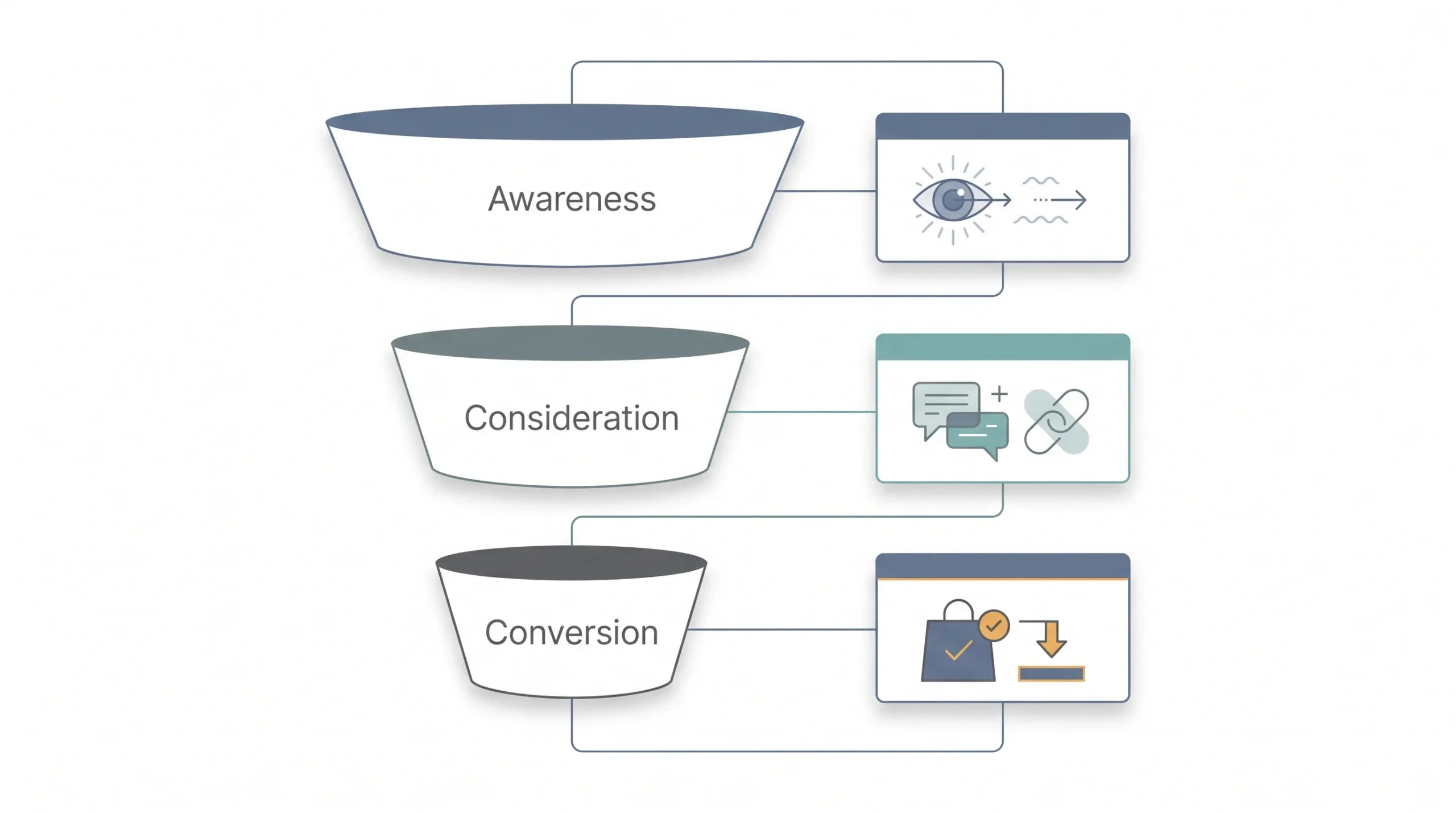
Vanity metrics are easy to chase and mean almost nothing on their own. Views feel good, but views without a clear tie to your actual funnel stage don’t tell you whether TikTok is worth the time you’re putting into it. Breaking KPIs down by funnel stage gives you a much clearer read.
| Funnel stage | Organic KPI | Paid KPI |
|---|---|---|
| TOFU, awareness | Views, reach, follower growth | Impressions, CPM, view-through rate |
| MOFU, consideration | Engagement rate, saves, shares | CTR, landing page views, hook rate |
| BOFU, conversion | Profile-to-website clicks, DMs | CPA, ROAS, TikTok Shop conversions |
Top of funnel tells you whether people are finding you at all. Middle of funnel tells you whether they’re actually interested once they land on your content. Bottom of funnel is the number that actually pays the bills, so don’t let a strong TOFU number distract from a weak BOFU one. A video with a million views and zero conversions isn’t a win, it’s a signal that something’s disconnected between your content and your offer.
Conclusion
Here’s the straight answer, no hedge. TikTok is worth it if your audience actually shows up on the platform, your product is visual enough to sell in under fifteen seconds, and you’re willing to spend a few weeks on organic content before touching a paid budget. That combination is where the $4-per-$1 numbers and the strong engagement rates actually start showing up in your own results, not just in someone else’s case study.
It’s not worth it, or at least not worth it as a priority, if your offer needs a long sales cycle, your customer skews well past 50, or your team isn’t willing to make content that feels native instead of polished. In that case, TikTok might still earn a spot in the mix for brand awareness or recruiting, but it shouldn’t be where the bulk of your marketing budget goes.
The honest version of this whole post comes down to one thing. TikTok rewards businesses that test fast, adapt to the platform instead of forcing their old playbook onto it, and treat organic and paid as one connected strategy instead of two separate bets. Do that, and the platform has genuinely earned its reputation. Skip that, and no amount of ad spend is going to save a mismatched offer.
Frequently Asked Questions
Is TikTok worth it for small businesses?
For small businesses selling visual, lower-priced products, yes, especially given how much can be done through organic content and TikTok Shop’s affiliate model before any ad spend is involved. For small businesses selling high-ticket or highly technical offers, it’s a slower, more brand-awareness-focused bet.
How much does TikTok advertising cost to start?
Realistic testing budgets start around $500, with average CPMs sitting somewhere around $9 to $10 and CPCs ranging roughly from $0.27 to $1.00 depending on industry and competition.
Do I need to be trendy or funny to succeed on TikTok as a business?
Nope. What actually matters is hooking attention in the first few seconds and making content that feels native to the app, not polished like a traditional ad. Trends can help discovery, but they’re not a requirement for success.
Is TikTok Shop worth it for ecommerce brands?
For physical product brands, especially in beauty, fashion, and home goods, TikTok Shop’s affiliate model and in-app checkout make it one of the lowest-friction ways to start selling on the platform without upfront ad spend.
How long does it take to see results on TikTok?
Organic testing usually needs two to three weeks to find a working angle. Paid campaigns can show early signals within days, but a full learning phase and honest evaluation window typically needs at least one to two weeks of consistent spend.
Is TikTok better than Instagram for business marketing?
It depends on the goal. TikTok generally wins on organic reach and engagement rate. Instagram tends to be stronger for established brands leaning on visual storytelling and existing audience relationships. Many businesses use TikTok for discovery and Instagram for retention.
Can B2B businesses succeed on TikTok?
It’s a weaker fit for direct sales given TikTok’s impulse-driven buying behavior, but it can still work for brand awareness, thought leadership, and recruiting, especially for B2B brands targeting younger decision-makers.
What’s the minimum budget for TikTok Ads?
Around $500 is generally enough to run a real initial test, though actual campaign minimums can vary by objective and bidding strategy.
Do I need a large following before running TikTok ads?
No. TikTok’s algorithm distributes based on interest matching, not follower count, so brand-new accounts with zero following can still run effective paid campaigns, especially through Spark Ads boosting content that’s already resonating.
Is TikTok safe for business long-term given ownership and policy changes?
There’s been real uncertainty here in the past tied to ownership changes and regulatory questions. That volatility is worth factoring into long-term channel planning, though advertiser confidence and platform activity have largely continued growing despite it.