

Look, everybody who has a big Instagram account right now started at zero. Every single one. The account with 400K followers posting aesthetic morning routines? Zero followers on day one. The finance guy explaining ETFs in 30 seconds? Zero followers, one video, no idea if anyone would watch it. So when people say “it’s too late to start on Instagram,” that’s just not true. It’s a different game than it was in 2016, sure. But different doesn’t mean harder. In some ways it’s actually easier, because Instagram in 2026 is pushing Reels to people who don’t even follow you yet. That never used to happen. Back in the day, if you didn’t have followers, nobody saw your stuff. Now the algorithm doesn’t care how many followers you have. It cares whether people watch your video all the way through, whether they share it, whether they save it. That’s it. That’s the whole game.
This guide is going to walk you through the entire process, start to finish, of building an Instagram account from absolute zero. Not zero-with-a-personal-brand-already, not zero-with-10K-TikTok-followers-you’re-repurposing. Actual zero. New account, no audience, no idea where to start. By the end of this you’ll know how to pick a niche that won’t bore you to death in month two, how to build a profile that converts visitors into followers, how the algorithm actually decides what to show people, and how to build a 90-day plan you can actually follow instead of one of those insane “post 3x a day for a year” plans that burns people out by week three.
One thing before we get into it: follower count is not the goal. I know that sounds like something a consultant says right before pitching you a $2,000 course, but hear me out. A guy I know has 8,000 followers and makes six figures a year from his Instagram because every single follower is a small business owner who needs his service. Meanwhile there are accounts with 500K followers running giveaways every other week to stay afloat, making basically nothing. Followers are a vanity metric until they’re attached to trust. Trust is the actual currency here. Followers are just the receipt.
What You Will Learn in This Guide
By the time you finish reading this, you’ll understand:
- Why growing from zero in 2026 is genuinely more achievable than it was five years ago
- How the Instagram algorithm actually decides what to push and what to bury
- How to pick a niche you won’t hate by month three
- How to build a profile that makes strangers hit “follow” instead of just scrolling past
- Why Reels are still your biggest growth lever, and how to make ones that don’t flop
- How carousels quietly build the kind of trust that turns into sales
- What Instagram SEO actually means and why most people are doing it wrong
- A real 90-day plan, broken down week by week, with realistic numbers attached
This guide is for creators starting their first account, business owners tired of paying for Instagram ads that stop working the second you stop paying, coaches who want inbound clients instead of cold DMing strangers, agencies managing client accounts, freelancers building a portfolio people can actually find, personal brands trying to get discovered, and ecommerce brands sick of Meta ad costs eating their margins. If you fall into any of those buckets, keep reading.
Can You Really Grow an Instagram Account from 0 in 2026?
Yes—But Only If You Understand How Instagram Actually Works
Here’s the thing nobody tells beginners: Instagram doesn’t want you to grow slowly. Instagram wants engaging content, full stop, and it doesn’t care if that content comes from an account with 12 followers or 1.2 million. That’s genuinely different from how the app worked in 2018, when your reach was basically capped by your follower count. Now your third post ever could hit 200,000 people if it’s good enough. I’ve watched it happen. A friend of mine posted her fourth Reel ever, a 40-second video about a mistake she made pricing her freelance work, and it did 380,000 views with an account that had 40 followers at the time. That kind of thing genuinely doesn’t happen on a platform that’s “saturated” and “impossible to grow on.”
Common Myths About Instagram Growth
“You need thousands of followers before anything works.” Nope. You need one good piece of content. Followers come after proof, not before it.
“You need expensive equipment.” Most viral Reels in 2026 are shot on a phone with decent lighting. I’ve seen creators with ring lights and gimbals get outperformed by someone filming on an iPhone propped against a water bottle. Content quality matters more than production value. Say something people actually want to hear, and nobody’s checking your camera specs.
“You must post every day.” This one burns people out fast, and honestly it’s not even true anymore. Three genuinely good posts a week will beat seven mediocre ones every time. Instagram rewards quality signals like watch time and saves, not sheer volume.
“Hashtags are dead.” They’re not dead, they’re just not doing the heavy lifting they used to. Think of them as a small SEO boost, not your entire discovery strategy.
“Instagram is saturated, there’s no room left.” Every niche feels saturated until you find your angle. Fitness is “saturated.” So is finance. So is cooking. And yet new accounts blow up in all three every single week because they found a specific way of saying something that hadn’t quite been said that way before.
What Actually Matters Now
Three things, really: watch time, saves, and shares. If people watch your video to the end, save it for later, or send it to a friend, Instagram treats that as a signal that your content is genuinely good, and it pushes it further. Likes barely matter anymore. Comments matter more than likes. But watch time is king.
How Instagram Growth Actually Works
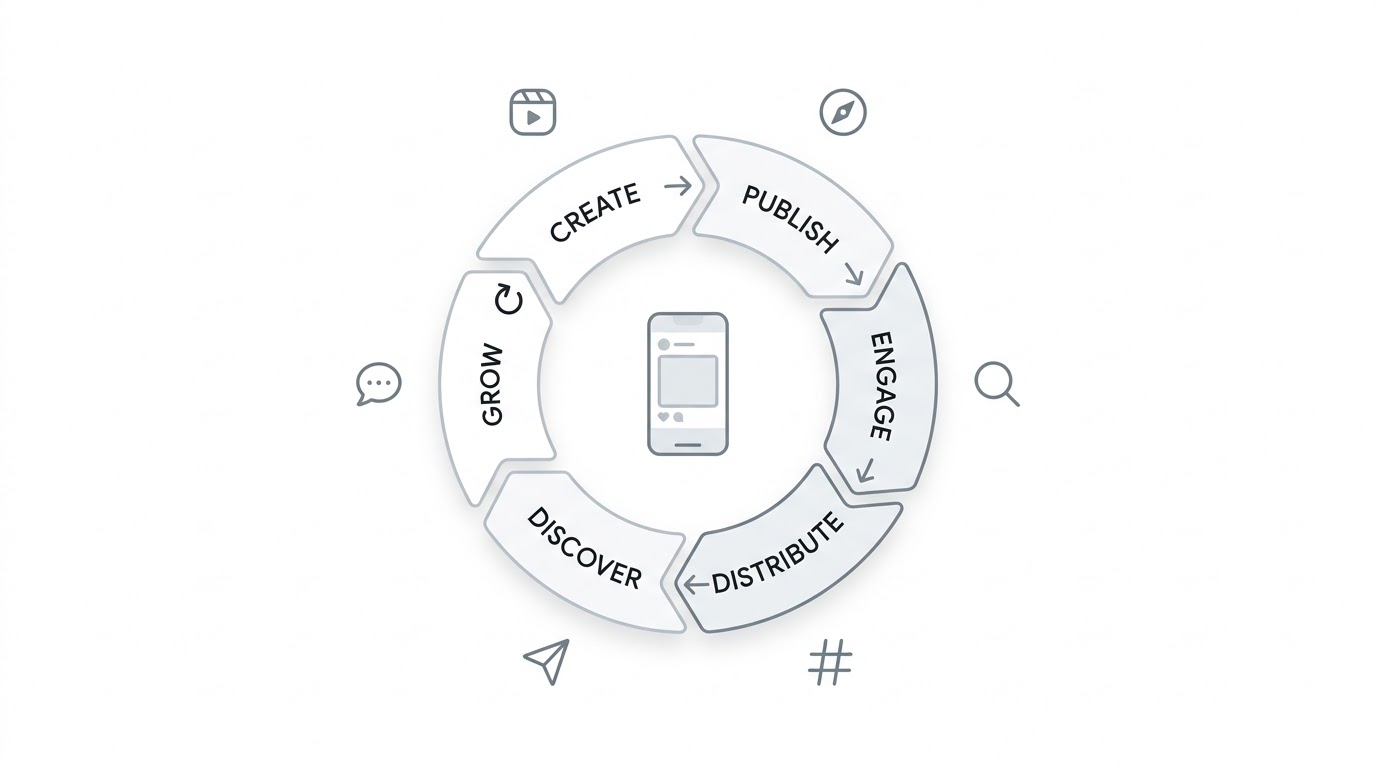
Growing on Instagram in 2026 is no longer about posting as often as possible or hoping a Reel goes viral. The platform’s algorithm is designed to reward creators who consistently produce valuable content that keeps users engaged. Growth happens when Instagram repeatedly shows your content to new audiences and those people choose to interact with it or follow your account.
Every post goes through a distribution process. Initially, Instagram shows your content to a small group of your followers and sometimes a limited number of non-followers. The platform measures how people respond by tracking metrics such as watch time, saves, shares, comments, profile visits, and follows. If the engagement is strong, Instagram expands the content’s reach to larger audiences through Feed, Reels, Explore, and suggested posts. If performance is weak, distribution slows down.
Understanding the Instagram Growth Cycle
Growth on Instagram isn’t linear, and if you go in expecting a steady climb, you’re going to get discouraged fast. It’s more like a staircase. You’ll post for two or three weeks with barely any movement, then one piece of content will hit, and you’ll jump. Then it flattens again while you build on that momentum. Then another jump. This is normal. This is how basically every account that’s ever grown has grown. The flat periods are not failure, they’re just Instagram testing your content with small audiences before deciding whether to push it wider.
How People Actually Discover Your Content
There are more discovery paths than most beginners realize:
Reels are the biggest one right now, no contest. Instagram’s own algorithm is built to surface short video to non-followers constantly.
The Explore Page is basically Instagram’s recommendation engine, showing people content based on what they’ve engaged with before, even from accounts they’ve never heard of.
Search matters more than people think, and we’ll get into Instagram SEO later, but yes, people search Instagram like a search engine now.
Hashtags still funnel some traffic, especially in niche communities.
Suggested Posts show up in people’s main feed even from accounts they don’t follow.
Shares are massive. When someone sends your Reel to a friend via DM, that’s one of the strongest growth signals there is.
DMs in general, including people sharing your content in group chats, drive a surprising amount of quiet growth.
Story recommendations put your content in front of followers of people who’ve engaged with you before.
The Four Pillars of Instagram Growth
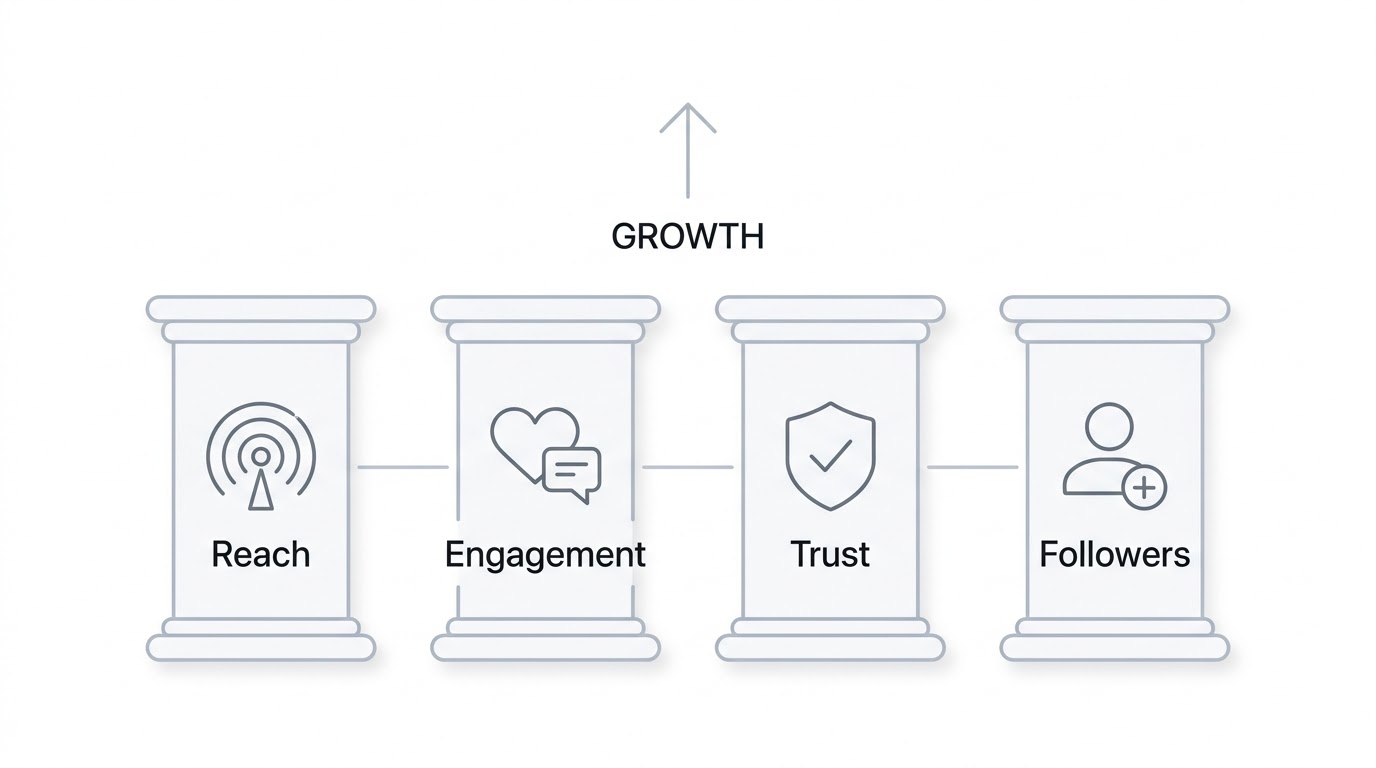
Everything you do should map back to one of these four things: reach (how many new people see your content), engagement (do they interact with it), trust (do they believe you know what you’re talking about), and conversion into followers (does that trust translate into an actual follow). Miss any one of these and growth stalls. You can have huge reach and no conversion if your profile looks sketchy. You can have great trust and no reach if your content never gets shown to new people. You need all four working together.
How to Grow Your Instagram Following from 0 in 20 Steps
Growing an Instagram account from zero followers can feel overwhelming, especially with millions of creators competing for attention. However, Instagram’s algorithm doesn’t favor accounts simply because they have a large following—it favors content that keeps users engaged. This means even a brand-new account has the opportunity to reach thousands of people if it consistently publishes valuable, original, and engaging content.
Instead of chasing shortcuts like buying followers or relying on viral trends, successful Instagram growth comes from building a strong foundation. That includes understanding your target audience, optimizing your profile, creating content people want to watch and share, and staying consistent over time. Every piece of content acts as an opportunity to reach new users through the Feed, Reels, Explore page, Search, and suggested content.
The following 20-step framework provides a complete roadmap for growing your Instagram following organically. Each step focuses on a different aspect of growth—from setting up your account correctly to creating high-performing content, increasing engagement, and using Instagram’s ranking signals to your advantage. Whether you’re a business, creator, influencer, or personal brand, these strategies will help you build a loyal audience and achieve sustainable long-term growth.
Step 1 – Choose the Right Niche
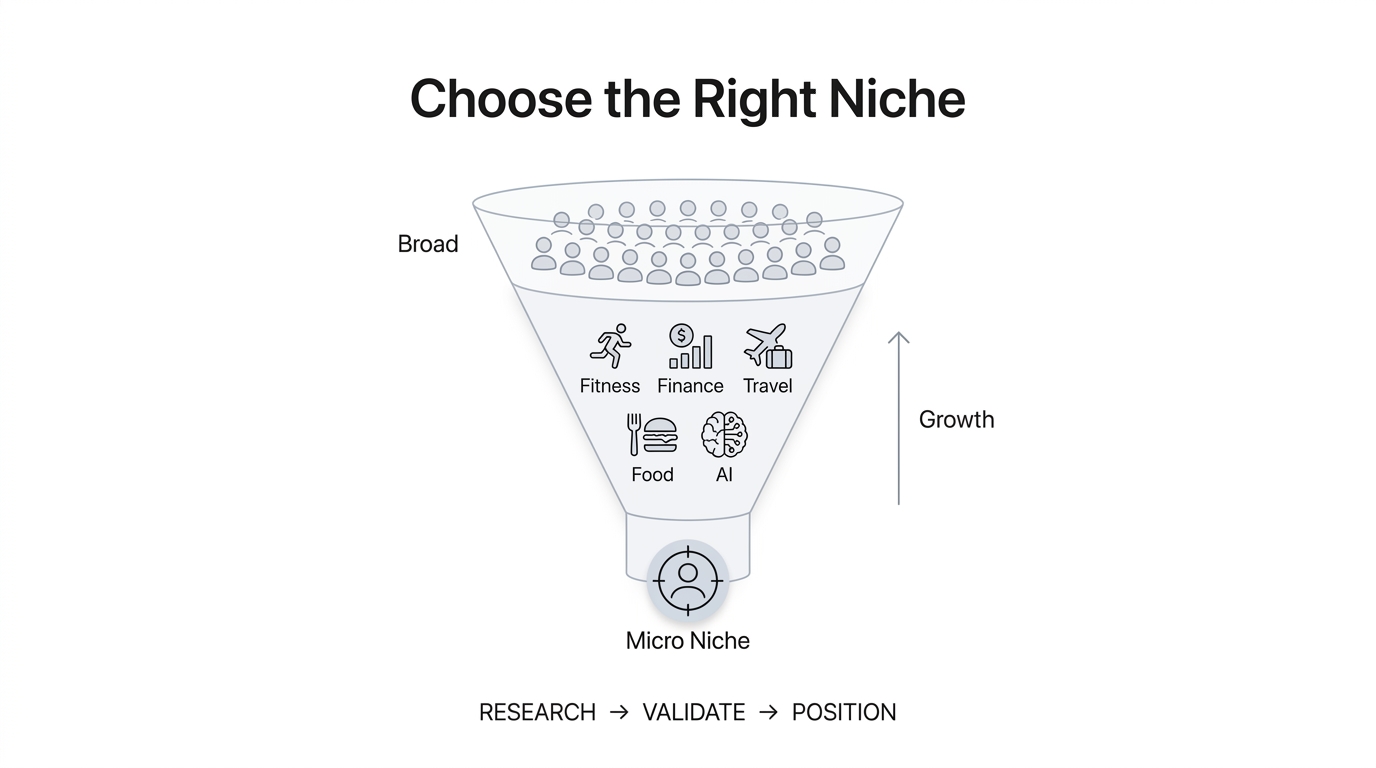
Honestly, this is where most people mess up before they’ve even posted once. They pick “lifestyle” or “motivation” because it feels safe, and then six months later they’re wondering why nothing’s working. A broad niche means Instagram has no idea who to show your content to. A specific niche gives the algorithm a clear signal, and it gives potential followers a clear reason to hit follow instead of just liking and scrolling on.
Broad vs Micro Niche
“Fitness” is broad. “Strength training for women over 40 who hate the gym” is micro. Both can work, but micro niches grow faster from zero because there’s less competition and a much clearer audience to target. You can always broaden later once you have an audience and some authority. Going the other direction, from broad to specific, is way harder because you’ve already trained your audience to expect something general.
Evergreen vs Trending Niches
Evergreen niches like personal finance, fitness, cooking, and relationships will always have an audience, and they compound over time. Trending niches, like whatever the current AI tool of the month is, can grow you fast but burn out just as quick when the trend dies. The smartest move honestly is picking an evergreen niche and using trends within it, not building your entire identity around a trend.
How to Validate Your Niche
Before committing, search the niche on Instagram and see what’s already working. Look at the top accounts. Are they growing? Are people actually commenting and engaging, or is it just bots and crickets? If an account with 5,000 followers is getting 300 comments per post, that’s a sign of a hungry, engaged audience. That’s the niche you want to be in.
Finding Your Unique Positioning
Once you’ve picked a lane, ask yourself what makes you different from the fifty other accounts already in it. Maybe it’s your background. Maybe it’s your delivery style. Maybe it’s the specific sub-audience you’re targeting. You don’t need to reinvent fitness content. You just need a reason someone would follow you instead of the guy who’s been doing it for three years.
Niche Examples
Fitness, AI tools and productivity, personal finance, marketing and business, travel, food, fashion, education and tutoring, and local business promotion are all niches with proven demand right now. Pick one that you could talk about for an hour without getting bored, because you’re going to be talking about it a lot.
Step 2 – Identify Your Target Audience
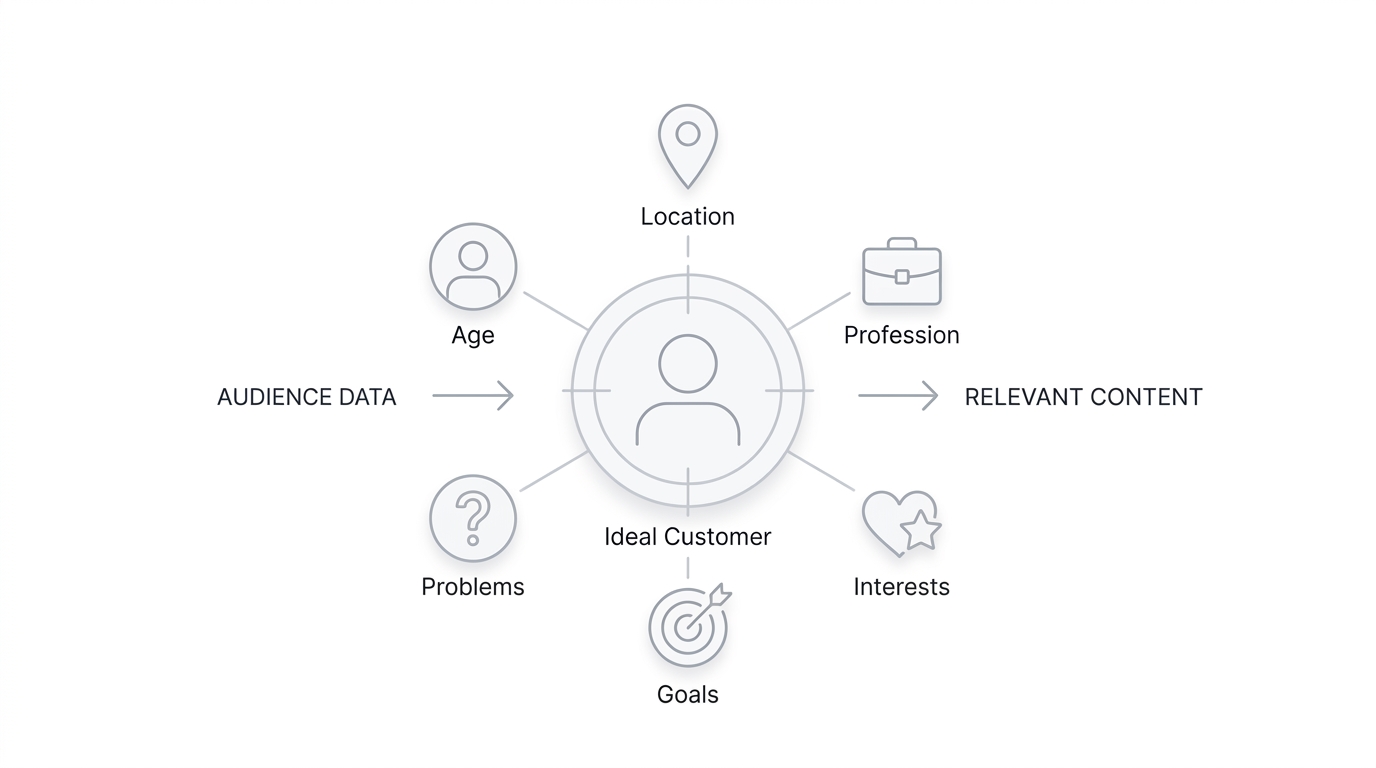
Before you start creating Instagram content, you need to understand exactly who you want to reach. Trying to create content for everyone usually results in content that connects strongly with no one. A clear target audience helps you decide what to post, how to communicate, which topics to cover, and what type of content is most likely to generate engagement.
Start by defining the basic characteristics of your ideal follower. Consider their age, location, profession, interests, problems, goals, buying behavior, and the type of content they already consume on Instagram. For example, a fitness coach targeting working professionals might focus on quick workouts, healthy meal ideas, productivity-friendly fitness routines, and realistic weight-loss strategies rather than advanced bodybuilding content.
Create Your Ideal Follower Profile
Before you post anything, get specific about who you’re actually talking to. Not “everyone interested in fitness.” Think: a 34-year-old mom who used to work out before kids, has 20 minutes a day, and feels guilty about not prioritizing herself. That’s a person you can write to. “Everyone interested in fitness” is not.
Audience Demographics
Age range, gender split, general life stage, income bracket if relevant. This shapes your tone, your examples, even your posting times, since different age groups are active on the app at different hours.
Audience Interests
What else does this person care about beyond your specific topic? A finance-focused follower might also care about entrepreneurship, minimalism, or early retirement. Knowing this helps you cross-pollinate content ideas.
Pain Points
This is the important one. What keeps your ideal follower up at night related to your niche? What are they frustrated about, confused by, embarrassed to ask? Content that names a specific pain point performs dramatically better than generic tips.
Desired Outcomes
What does this person actually want? Not “get fit,” but “feel confident in a swimsuit by summer.” Not “make more money,” but “quit the 9-to-5 within two years.” Specific desired outcomes make for specific, resonant content.
Audience Research Methods
Scroll competitor comment sections and read what people are actually saying. Look at the questions people ask in Facebook groups or Reddit threads related to your niche. Use Instagram’s own search bar and see what autocompletes. This stuff is sitting there for free, you just have to go look at it.
Step 3 – Create an Optimized Instagram Profile
Your Instagram profile is often the first place people go after discovering your content. You may get thousands of Reel views, but if your profile does not clearly communicate who you are and why someone should follow you, much of that traffic can be wasted.
Start with your username and name field. Keep your username simple, recognizable, and relevant to your brand. Your Instagram name field can also include a keyword related to your niche because it can help users understand what you do and potentially improve discoverability in Instagram search.
Choosing a Memorable Username
Keep it short, keep it spellable, and if possible keep it searchable. If your niche is dog training, having “dog” or “training” somewhere in your handle helps people find you through search, which matters more now than it used to.
Profile Picture Best Practices
Use a clear, well-lit photo of your actual face if you’re a personal brand. No sunglasses, no group photos where people have to guess which one is you. If you’re a business, a clean logo on a simple background works. This isn’t the place to get creative. People need to instantly understand what they’re looking at.
Writing an Optimized Bio
Your bio has about three seconds to answer one question: why should I follow this account? State who you help and how, in plain language. Skip the inspirational quote. Nobody’s following you because of a quote.
Using Keywords in Your Bio
Instagram indexes bio text for search now, so if you’re a “vegan meal prep coach,” actually write those words in your bio instead of something vague like “food is my love language.” It sounds less cute, sure, but it gets you found.
Link in Bio Optimization
Whether you’re using a single link or a link-in-bio tool with multiple destinations, make sure whatever you’re sending people to loads fast and gets to the point immediately. Don’t send someone to a cluttered homepage when they just want to book a call or grab a freebie.
Story Highlights Strategy
Highlights are basically your homepage. Someone lands on your profile, they’re not going to scroll through 200 posts, they’re going to tap a highlight. Have one that explains who you are, one that shows proof or results, one that answers FAQs, and one that’s a clear call to action.
Professional vs Creator Account
Business accounts give you access to analytics and contact buttons, which matters if you’re selling something. Creator accounts are built more for personal brands and influencers, with slightly different analytics focus. Either works, just pick the one that matches how you’ll actually use the account.
Profile Examples
Look at accounts in your niche with strong follow-through rates, meaning lots of profile visits converting into follows. Study what their bio says, how their grid looks at a glance, and what their first highlight is. You’re not copying them, you’re learning the pattern.
Step 4 – Understand the Instagram Algorithm Before Posting
You do not need to “beat” the Instagram algorithm to grow. Instead, you need to understand what signals Instagram uses to determine which content is valuable to users.
Instagram does not operate with one single ranking system for every part of the platform. Feed posts, Stories, Reels, and Explore content can be ranked differently depending on how people interact with them and what Instagram believes they want to see.
How Instagram Ranks Content
Instagram doesn’t have one algorithm, it has several, one for each surface: Feed, Reels, Explore, Stories. But they all lean on similar signals. It’s essentially predicting how likely you are to engage with a piece of content based on your past behavior, then ranking accordingly.
Signals That Increase Reach
Watch time is the big one, especially completion rate and rewatches. Shares are huge because they mean someone found it valuable enough to send to another human. Saves signal “I want to come back to this,” which tells Instagram it’s useful, not just entertaining. Comments, especially longer ones, matter more than likes. Profile visits after watching a Reel, and follows that happen right after, are strong positive signals too.
Signals That Reduce Visibility
People scrolling past quickly, or worse, tapping away within the first second or two. Getting reported or blocked. Reusing watermarked content from other platforms, which Instagram actively suppresses because they want original content on their app, not recycled TikToks.
Watch Time
This deserves its own section honestly because it’s the single biggest ranking factor for Reels right now. If people watch your 30-second video for 28 seconds, that’s a massive positive signal. If they bail at second three, Instagram assumes your content isn’t good and stops showing it.
Shares, Saves, Comments, Profile Visits, Follows
Think of these as a funnel. Shares and saves get you wider distribution. Comments build community signals. Profile visits mean people are curious enough to check you out. Follows are the final conversion. Every piece of content should be built with at least one of these in mind, not just “post something.”
Step 5 – Build Your Content Strategy
Randomly posting whenever you have an idea can make Instagram difficult to manage. A strong content strategy gives you a clear direction and makes it easier to maintain consistency.
Start by defining your content pillars. These are the major topics your account will consistently talk about. Most brands and creators can build an effective strategy around three to five core pillars.
Content Pillars
Pick three to five recurring themes you’ll rotate through. This keeps you consistent without forcing you to reinvent your content every single day. For a fitness account that might be workout tutorials, nutrition myths, mindset content, and personal progress updates.
Educational Content
This is the “teach me something” content, tips, how-tos, breakdowns. This is usually your highest-save content because people bookmark it to actually use later.
Entertaining Content
Skits, relatable moments, trends adapted to your niche. This builds reach and personality, and it’s usually your highest-share content.
Inspirational Content
Transformation stories, mindset shifts, behind-the-scenes struggle. This builds emotional connection and trust.
Personal Storytelling
People follow people, not just information. Sharing your actual journey, mistakes included, builds a kind of loyalty that pure how-to content never does.
Promotional Content
Yes, you’re allowed to sell. Just don’t make it the majority of your content. This is usually the smallest slice of your content mix, but it’s the one that actually pays the bills.
The 80/20 Rule
Roughly 80% of your content should give value or entertain, 20% can promote or sell. Flip that ratio and people start unfollowing because it feels like a constant sales pitch.
Content Planning
Batch your content instead of scrambling daily. Film four or five Reels in one sitting once a week, and you’ll never have that panicked “what do I post today” feeling.
Monthly Content Calendar
Map out your content pillars across the month in advance, leaving room to jump on trends as they come up. Structure with flexibility, that’s the balance.
Step 6 – Master Instagram Reels (Biggest Growth Driver)
Reels can be one of the most effective formats for reaching people who do not already follow you. Their short-form, highly visual nature makes them particularly suitable for discovery and audience growth.
However, simply creating a Reel does not guarantee results. The first few seconds are critical because viewers can quickly swipe to the next piece of content.
Why Reels Dominate Discovery
Reels get shown to non-followers by default in a way feed posts and even carousels just don’t anymore. If growth is your goal in the first 90 days, Reels should be the majority of what you’re posting.
Anatomy of a Viral Reel
There’s an actual structure to this, and once you see it, you’ll notice it in almost every video that blows up: a hook in the first three seconds, a clear payoff, and a reason to share or save.
The First Three Seconds
This is everything. If someone doesn’t stop scrolling in the first three seconds, the rest of your video doesn’t matter because they’ll never see it. Open with the most interesting thing you’ve got, don’t build up to it.
Strong Hooks
“Nobody talks about this” or “I made this mistake for two years before I figured it out” work better than “hey guys, welcome back to my channel.” Say something that creates a small information gap the viewer needs closed.
Visual Storytelling
Even when you’re just talking to camera, movement, text overlays, and quick cuts keep the eye engaged. A static talking head for 45 seconds straight is going to lose people fast.
Captions
On-screen captions are non-negotiable at this point. A huge chunk of people watch with sound off, especially scrolling in public. If your video only makes sense with audio, you’re losing a big chunk of your potential audience.
Text Overlays
Use them to reinforce your hook and key points, not to repeat every word you’re saying. They should add clarity, not clutter.
Trending Audio vs Original Audio
Trending audio can give you a small reach boost early on, but original audio, meaning your own voice, builds long-term recognition and is required if you want to be findable through Instagram search later.
Reel Length
Shorter isn’t always better anymore. What matters is whether the length matches the content. A 15-second video that says everything it needs to will outperform a 60-second video that drags. But don’t cut valuable content short just to hit an arbitrary time.
CTA Strategies
Tell people exactly what to do. “Follow for more” is weak. “Follow if you want part two of this tomorrow” gives a reason.
Common Reel Mistakes
Slow hooks, no captions, low lighting, background noise, and trying to cram too many ideas into one video. Pick one point per Reel and make it land.
Step 7 – Create Carousel Posts That Get Saved
Carousels are particularly useful when you need more space to explain an idea. Instead of delivering everything in a single image, you can divide the information across multiple slides and create a natural reason for people to continue swiping.
The first slide is extremely important because it determines whether someone will stop and engage with the carousel.
Why Carousels Perform Well
Carousels are the save machine of Instagram. People swipe through, and if the content’s genuinely useful, they save it to reference later, which is one of the strongest ranking signals there is.
Designing the First Slide
This works exactly like a Reel hook. If the first slide isn’t interesting, nobody swipes to slide two. Bold text, a clear promise, minimal clutter.
Storytelling Framework
Slide one sets up a problem, the middle slides walk through the journey or the solution, the last slide wraps it up with a takeaway or CTA.
Educational Frameworks
Numbered lists work well here: “5 mistakes,” “3 steps,” that kind of structure gives people a reason to keep swiping to see the rest.
Swipe Optimization
Add a small arrow or “swipe” prompt on the first slide. It sounds small but it genuinely increases completion rate.
Ending with CTA
Your last slide should either summarize the key point or push people toward following, saving, or checking your bio link. Don’t just let it end abruptly.
Step 8 – Use Instagram Stories to Build Loyal Followers
Reels and feed posts can help you reach new people, but Stories are particularly useful for developing relationships with the people who already follow you.
Stories provide a more immediate and informal way to communicate. They can show the personality behind your brand and give followers a reason to return to your profile regularly.
Why Stories Matter
Stories are where the actual relationship gets built. Reels bring strangers in, Stories keep them close. This is where your existing followers see the real, unpolished version of you daily.
Daily Story Ideas
Polls get quick, easy engagement and give you audience insight at the same time. Questions let followers ask you things directly, which is gold for future content ideas. Quizzes are underused and add a fun interactive layer. Countdowns build anticipation for launches or events. Link stickers drive direct traffic when you have something to promote. Behind-the-scenes content shows the human side of your brand, which is exactly what builds loyalty over time.
Step 9 – Instagram SEO: Get Found Through Search
Instagram is not only a social networking platform; it also functions as a search engine. Users can search for people, businesses, topics, products, and content directly within the platform.
This makes Instagram SEO an important part of your growth strategy.
Start by identifying keywords that your target audience is likely to search for. If you are a digital marketing consultant, relevant terms might include SEO consultant, digital marketing, SEO tips, social media marketing, and business growth.
What Is Instagram SEO?
It’s the practice of using keywords strategically across your profile and content so people find you when they search Instagram directly, not just through the algorithm’s recommendations. This is a genuinely underused growth lever in 2026.
Keyword Optimization
Think about what your ideal follower would actually type into the Instagram search bar and work those phrases naturally into your bio, captions, and even your username where possible.
Username Optimization
If it fits, include a searchable term in your handle. “sarahfit_coach” gets found by fitness searches way more than “sarahxo22.”
Name Field Optimization
The “name” field under your username is searchable too and separate from your username. Use it to include a keyword, like “Sarah | Fitness Coach for Busy Moms.”
Caption Keywords
Write your captions the way you’d write a search-friendly blog post: use the actual words your audience searches for, naturally, not stuffed in.
Alt Text
Most people never touch this setting and it’s a missed opportunity. Adding descriptive alt text to your posts helps Instagram understand and categorize your content for search and accessibility.
Location Tags
Tagging a relevant location, especially for local businesses, plugs you into local search and Explore results tied to that area.
Search Ranking Factors
Instagram weighs keyword relevance in your profile and captions, engagement on your content, and how closely your content matches what the searcher is actually looking for.
Step 10 – How to Write Captions That Convert Viewers into Followers
A great image or Reel can capture attention, but your caption can provide additional context and encourage people to take action.
The first line of your caption is especially important because Instagram may truncate longer captions in the feed. Use the opening to create curiosity, communicate a benefit, or introduce the problem you are solving.
Caption Formulas
Storytelling captions open with a specific moment, not a summary. Educational captions lead with the tip, then explain why it works. Problem-solution captions name the exact frustration before offering the fix.
CTA Examples
“Save this for your next grocery run.” “Tag someone who needs to see this.” “Comment ‘GUIDE’ and I’ll send you the full breakdown.” Specific asks outperform vague ones like “let me know what you think” every time.
Formatting Tips
Short paragraphs, line breaks, and a strong first line since Instagram cuts captions off after a couple lines before people tap “more.” Front-load the value.
Step 11 – Hashtag Strategy in 2026
Are Hashtags Still Useful?
Yes, just not as your primary growth engine anymore. Think of them as a minor discovery boost layered on top of everything else, not a strategy on their own.
How Many Hashtags Should You Use?
Somewhere around 3 to 8 relevant ones tends to perform better than stuffing in 30. Quality and relevance beat quantity here.
Broad vs Niche Hashtags
Mix a couple of broader ones for reach with several specific ones that match your exact content, so you’re not just competing against a million other posts under a giant generic tag.
Branded Hashtags
If you’re building a business or community, a branded hashtag helps you track user-generated content and gives your audience an easy way to tag themselves as part of your world.
Hashtag Mistakes
Using totally irrelevant hashtags just because they’re popular, or reusing the exact same set on every single post, which can look spammy to the algorithm over time.
Step 12 – Posting Frequency and Best Times
How Often Should Beginners Post?
Three to five times a week is a realistic, sustainable target. Posting daily sounds impressive but burns most beginners out within a month, and burnout kills more accounts than bad content ever does.
Ideal Weekly Schedule
A mix works best: two to three Reels, one carousel, and daily Stories. That combination hits discovery, saves, and relationship-building all at once.
Best Posting Times
This varies by niche and audience time zone, but generally early morning, lunch break, and evening hours see the highest activity. Check your own analytics after a few weeks and adjust based on when your specific audience is actually online.
Consistency vs Volume
A steady three posts a week for six months will always outperform an intense two weeks of daily posting followed by silence. Instagram rewards accounts it can predict and rely on.
Scheduling Tools
Tools that let you batch-plan and auto-post content save enormous time and keep you consistent even during busy weeks. Just don’t let scheduling replace actually engaging live with your audience.
Step 13 – Build Engagement That the Algorithm Loves
Replying to Comments
Respond to as many comments as you realistically can, especially in the first hour after posting. Early engagement tells Instagram to keep testing your content with wider audiences.
Replying to DMs
People who DM you are your warmest audience. Ignoring them is basically ignoring your most likely customers or superfans.
Community Building
Treat your comment section like an actual conversation, not a broadcast. Ask follow-up questions, respond genuinely, let people feel heard.
Conversation Starters
End captions with a question that’s actually easy to answer. “What’s your biggest struggle with this?” gets way more responses than “thoughts?”
Asking Better Questions
Specific beats generic. “Would you rather save time or save money on this?” gets more replies than “what do you think of this post?”
Engagement Loops
Reply to comments in a way that invites another reply. A back-and-forth in the comments signals strong engagement to the algorithm and keeps that post alive longer.
Step 14 – Collaborate to Grow Faster
Collaboration Posts
Instagram’s Collab feature lets a post show up on both accounts’ feeds simultaneously, doubling your reach instantly for zero extra cost.
Creator Partnerships
Team up with creators in adjacent niches, similar audience size, and do a joint Reel or a shoutout swap. This is one of the fastest ways to grow from zero because you’re borrowing trust from someone else’s audience.
Brand Collaborations
Once you have some traction, even small brands may want to work with you. Early on, focus on collabs that build your credibility, not just your paycheck.
Influencer Exchanges
Two accounts around the same size promoting each other works better than reaching out to someone ten times your size expecting them to notice you.
User-Generated Content
Encourage your audience to create content featuring you or your product, then reshare it. This builds social proof and gives you free content.
Cross-Promotions
Mention your Instagram on other platforms you’re active on, and vice versa. Don’t silo your audiences.
Step 15 – Leverage Instagram Features Most Creators Ignore
Broadcast Channels
A one-to-many messaging feature that lets you talk directly to your most engaged followers. Most creators haven’t touched this yet, which makes it a quiet edge.
Notes
The little text bubble above DMs. Underused, but a fun, low-effort way to stay visible to your closest followers throughout the day.
Collaborative Posts
Beyond creator collabs, you can co-post with fans or customers, which strengthens community and extends reach.
Add Yours Sticker
A Story feature that invites followers to respond with their own version of a prompt, creating a small viral loop within your own community.
Story Mentions
Resharing when someone tags you builds social proof fast and costs nothing.
Remixes
Duetting or remixing trending Reels within your niche can plug you into existing momentum instead of starting from scratch.
Templates
Reusable Reel and Story templates keep your content consistent in style while saving you serious production time.
Step 16 – Grow Without Spending Money
Organic Growth Strategies
Everything in this guide can be done for free. Growth doesn’t require ad spend, it requires consistency and genuinely good content.
Comment Marketing
Leave thoughtful, specific comments on larger accounts in your niche. Not “great post!” but something that adds real value, so people click your profile out of curiosity.
Community Engagement
Show up consistently in Facebook groups, subreddits, or Discord servers related to your niche and mention your Instagram naturally when relevant, not spammy.
Trend Hijacking
Take a trending audio or format and adapt it to your specific niche fast, while it’s still hot, not two weeks after everyone else already did it.
Educational Authority
Consistently teaching your audience something real builds a reputation that compounds. People start seeing you as the go-to source, which drives word-of-mouth growth you can’t buy.
Consistency
This is honestly the least exciting answer but the truest one. Accounts that show up reliably for months, even with imperfect content, outperform accounts that post brilliantly for two weeks and then vanish.
Step 17 – Mistakes That Keep Instagram Accounts Stuck
Buying Followers
This tanks your engagement rate and actively signals to Instagram that your account isn’t trustworthy, which hurts your reach with real people too. Never worth it.
Posting Random Content
Jumping between unrelated topics confuses both the algorithm and potential followers about what you’re actually about.
Ignoring Analytics
If you’re not checking what’s working, you’re just guessing. Your analytics tell you exactly what your audience wants more of.
Weak Hooks
Most accounts stuck at low view counts have a hook problem, not a content problem. Fix the first three seconds before you fix anything else.
Inconsistent Branding
Different fonts, colors, and vibes on every post make an account feel unprofessional and forgettable.
Overusing Automation
Auto-DMs and bot comments feel exactly like what they are, and people notice. Use automation to save time, not to replace genuine interaction.
Low-Quality Visuals
You don’t need expensive gear, but bad lighting and blurry footage will tank watch time no matter how good your content actually is.
Step 18 – Analytics You Should Track Weekly
Reach and Accounts Reached
This tells you how far your content is actually traveling beyond your existing followers.
Engagement Rate
Comments and saves relative to reach give you a better read on content quality than raw likes ever will.
Saves and Shares
These are your strongest indicators of genuinely valuable content, track them closely.
Profile Visits
A spike here after a specific post tells you that content is doing the work of driving curiosity.
Follow Conversion Rate
Profile visits that turn into follows. If visits are high but follows are low, your profile itself needs work, not your content.
Audience Retention and Watch Time
For Reels specifically, this tells you exactly where people drop off, which helps you fix future hooks and pacing.
Step 19 – 90-Day Instagram Growth Plan
Week 1–2
Set up your profile completely, post your first five to seven pieces of content, and focus purely on finding your voice. Don’t expect big numbers yet, this phase is about testing.
Week 3–4
Start doubling down on whatever format got the best response in weeks one and two. Begin engaging actively in your niche’s comment sections daily.
Month 2
Aim for consistent posting, three to five times weekly, and start reaching out for your first collaborations. This is usually when the first real growth spike happens for accounts that stayed consistent.
Month 3
Refine based on analytics, cut what’s not working, double down on what is. Start layering in light promotional content if you have something to sell.
Milestones to Expect
Realistically, most consistent accounts hit somewhere between 500 and 3,000 followers in 90 days, though a single viral Reel can push that number way higher. Don’t measure success purely by follower count though, watch your engagement rate and DM inquiries too.
Realistic Follower Goals
Anyone promising guaranteed massive numbers in 30 days is selling you something. Steady, engaged growth beats a fast, hollow spike every time.
Step 20 – How Different Types of Accounts Should Grow
Personal brands should lean heavily into storytelling and behind-the-scenes content, since people are following a person, not a product. Small and local businesses benefit most from location tags, community engagement, and showcasing real customers. Coaches should focus on educational content that proves expertise before ever pitching a program. Agencies grow best by showing actual client results and behind-the-scenes process content. Ecommerce stores should prioritize product-in-use content and user-generated reviews over polished studio shots. SaaS companies do well with quick educational Reels solving specific user problems. Content creators should focus on consistency and personality above all else. Freelancers grow fastest by publicly sharing their actual work and process, which doubles as a live portfolio.
Recommended Tools for Instagram Growth
For content creation and video editing, phone-based editing apps handle most beginner needs without expensive software. For analytics, Instagram’s native Insights tab is genuinely enough starting out, no need to pay for a third-party tool immediately. For scheduling, several free and low-cost tools let you batch and plan content in advance. AI caption generators and design tools can speed up your workflow, just don’t let them replace your actual voice, people can tell. For keyword research, simply typing terms into Instagram’s own search bar and watching what autocompletes gives you free, direct insight into what your audience is actually searching for.
Case Studies: How Accounts Grew from 0
A personal brand account in the productivity niche went from zero to 15,000 followers in four months by posting daily Stories and three Reels a week focused entirely on one specific pain point: procrastination for people with ADHD. The specificity is what did it.
An ecommerce skincare brand grew from zero to 8,000 followers in ninety days almost entirely through user-generated content reshared to Stories and a consistent “ingredient breakdown” carousel series that built trust before ever pushing a sale.
A local coffee shop grew its Instagram from 50 to 4,000 followers in six months just by posting daily behind-the-scenes content and tagging its city consistently, pulling in foot traffic from people discovering it through local search and Explore.
A creator in the finance niche hit 100,000 followers in under a year by leading every single Reel with a specific dollar number in the hook, “I lost $12,000 doing this,” that kind of thing, then delivering genuinely useful breakdowns.
The lesson across all four: specificity, consistency, and leading with real value beat polish and perfection every single time.
Frequently Asked Questions (FAQs)
How long does it take to grow from 0 followers?
Honestly, it varies a lot, but most consistent accounts start seeing real traction somewhere between month two and month three. Some get lucky earlier with a viral Reel, some take a bit longer. What matters is staying consistent through the flat periods.
How many followers can you gain in 30 days?
It depends heavily on niche and content quality, but anywhere from a few hundred to a few thousand is realistic for a genuinely consistent beginner. Viral outliers can hit tens of thousands, but don’t plan around that as your baseline.
Should you buy Instagram followers?
No. It tanks your engagement rate, makes the algorithm trust your account less, and doesn’t bring in anyone who actually wants to engage with or buy from you. It’s a shortcut that actively hurts you long-term.
Are hashtags still important?
They still help a bit with discovery, but they’re a minor factor now compared to watch time, saves, and shares. Use a handful of relevant ones, don’t obsess over them.
Is Instagram better than TikTok for growth?
They’re different tools, honestly. TikTok often has faster viral potential, but Instagram tends to convert better into actual followers, sales, and long-term relationships because of features like Stories, Highlights, and a more built-out profile experience.
How many Reels should beginners post?
Two to three a week is a solid, sustainable starting point. More matters less than making sure each one actually has a strong hook and clear point.
Can one Reel make an account go viral?
Yes, genuinely. It happens constantly, even to accounts with almost no existing following. But don’t build your entire strategy around chasing one lucky hit, build consistent habits instead.
How often should you post Stories?
Daily, if you can manage it. Stories are low-pressure and low-production, and they’re what actually keeps your existing followers engaged between bigger posts.
Should you use AI for captions?
It can help you get past writer’s block or speed up your workflow, but don’t let it write your entire voice for you. People can tell when a caption sounds generic, and it hurts the personal connection that actually drives follows.
Can businesses grow organically without ads?
Absolutely, and a lot of the strongest business accounts right now do exactly that. It takes more time than paid ads, but the audience you build organically tends to be more loyal and convert better long-term.
What’s the biggest mistake beginners make?
Trying to appeal to everyone. The accounts that grow fastest from zero are almost always the ones that get specific about who they’re for and what problem they solve, not the ones trying to be broadly likable.
How important is niching down really?
Very. A specific niche gives the algorithm a clear signal about who to show your content to, and it gives potential followers an obvious reason to hit follow instead of just scrolling past.
Conclusion
Key Takeaways
Growing an Instagram account from zero in 2026 comes down to a handful of things done consistently: a clear niche, a profile that builds instant trust, content built around watch time and saves, and showing up reliably even during the flat weeks when nothing seems to be moving.
Focus on Systems Instead of Hacks
Chasing the newest growth hack every week is exhausting and rarely works long-term. Build a repeatable system, content pillars, a posting rhythm, an engagement routine, and let that system do the work over time.
Stay Consistent and Data-Driven
Check your analytics weekly, not obsessively daily, and let the data guide what you make more of, rather than guessing.
Your First 1,000 Followers Are the Hardest, But Also the Most Valuable
They’re the people who followed you before you had any proof you’d be worth following. Treat them well. They’ll become your biggest advocates as you grow.
Next Steps to Continue Growing Your Instagram Account
Pick your niche this week if you haven’t already. Set up your profile properly. Post your first Reel using everything in this guide about hooks and watch time. Then just keep showing up. That’s genuinely most of it.