


Somebody on your team is probably arguing about this right now. One person wants to hire an SEO agency and fix the technical stuff. Another wants to double down on blog content and social videos because “that’s where the audience actually is.” Both of them think they’re right, and honestly, they’re both a little wrong, because the question itself is broken. It’s not content marketing versus SEO. It never was. It’s more like asking whether an engine or a steering wheel matters more in a car. Try driving anywhere with just one of those and see how far you get.
This debate keeps coming back because both sides have a real point buried in there somewhere. The SEO person has watched brilliant content sit unread because nobody bothered to check what people were actually searching for. The content person has watched keyword-stuffed pages rank for two weeks and then quietly disappear because there was nothing underneath the optimization worth reading. Both of them are describing the same failure from opposite sides. This piece is going to walk through what each discipline actually does, where people get the differences wrong, why running them separately usually backfires, and then get into the part most articles skip entirely: an actual working system for running both together instead of fighting about which one deserves the bigger budget this quarter.
What Is Content Marketing, Really?
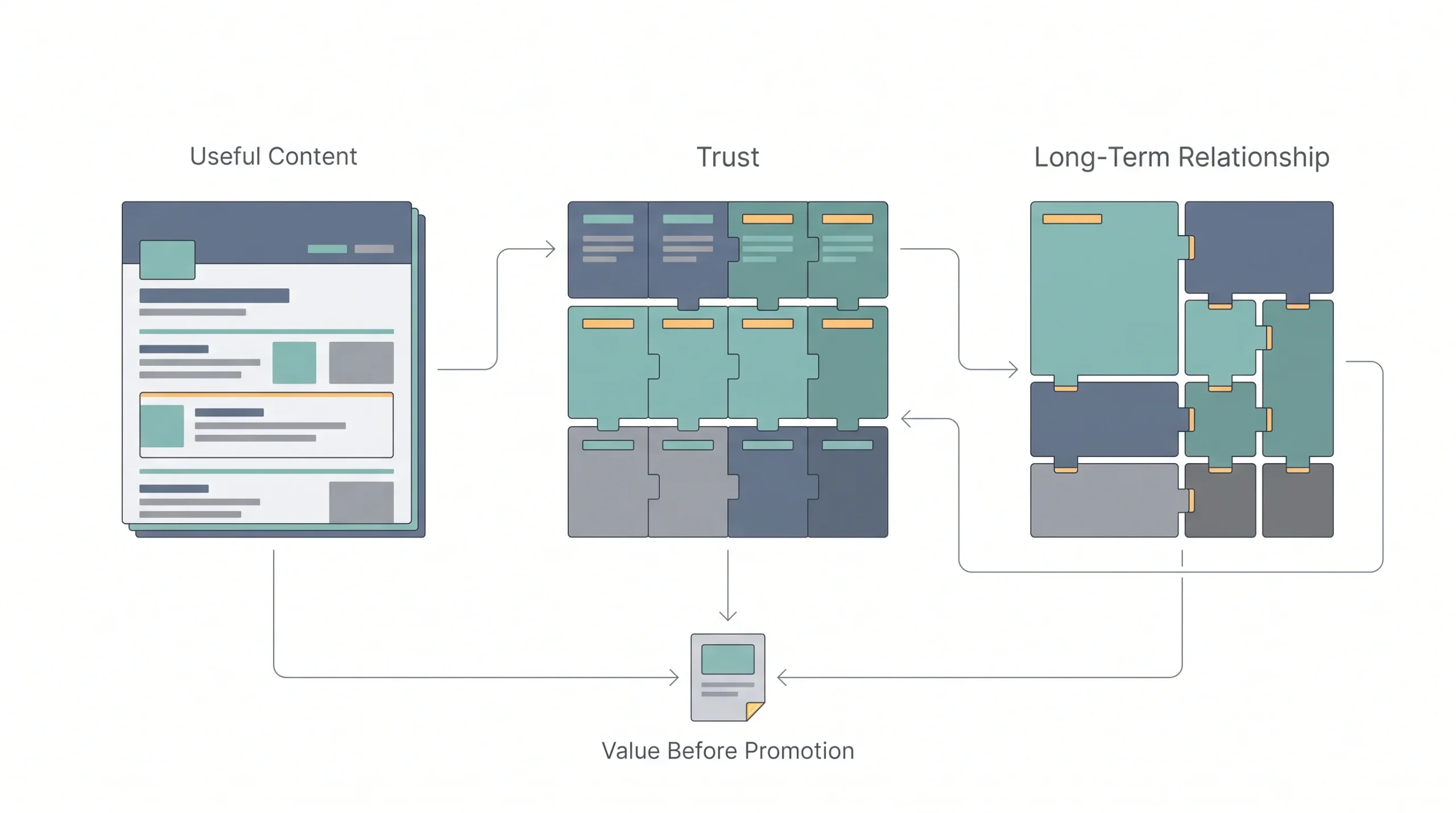
Content marketing gets thrown around so loosely that half the people using the term couldn’t tell you what it actually means if you asked them directly. So let’s be specific. Content marketing is the practice of creating and publishing material, blog posts, videos, email newsletters, podcasts, social content, downloadable guides, with the goal of attracting and keeping an audience. Not converting them immediately. Attracting them. There’s a difference, and it’s the whole point.
Think about the last time a brand actually earned your trust before asking for your money. Maybe it was a YouTube channel that taught you how to fix something instead of just selling you the part. Maybe it was a newsletter that gave away genuinely useful advice for free, week after week, with no pitch attached. That’s content marketing doing its job. It’s playing a longer game than a sales page ever could.
The core idea is simple even if the execution isn’t: give people something valuable enough that they start to trust you, and eventually some of them will buy from you because of that trust. Nobody wakes up wanting to read a 3,000 word blog post about payroll software. But if that post actually answers their question better than the five other posts they skimmed through, they remember who wrote it. That’s the whole mechanism, and it works precisely because it doesn’t feel like a pitch while it’s happening.
Compare that to a display ad interrupting a video, or a cold email showing up uninvited. Both of those are asking for attention before they’ve earned any trust. Content marketing flips the order. It earns attention first, quietly, without asking for anything in return, and only later does the relationship turn into a sale, if it ever does at all. Some readers never buy anything. They still matter, because they might share the post, mention the brand to a colleague, or come back six months later when the actual need finally shows up.
Content marketing includes a lot more than blog posts too. Video series, case studies, original research, email sequences, even a well-run podcast, all of that counts. The format changes. The underlying job doesn’t: build trust with a specific audience over time, so that when they’re ready to buy, your name is already in their head.
There’s also a timing element people underestimate. Content marketing rarely pays off on the first piece. It’s closer to a savings account than a paycheck. One good post won’t move the needle much on its own. Twenty good posts, published consistently over a year, start compounding into something that looks a lot like an audience. That’s part of why content marketing gets abandoned so often. Someone publishes for six weeks, sees modest results, and pulls the plug right before the compounding was about to kick in. It’s a genuinely frustrating pattern to watch happen, because the math on content almost always works in your favor eventually, just not on week three.
It also helps to be honest about what content marketing isn’t. It’s not advertising wearing a disguise. The moment a blog post reads like a thinly veiled pitch, readers feel it immediately and bounce. The whole value proposition of content marketing collapses the second it stops being genuinely useful and starts being promotional. That tension, staying useful instead of salesy, is honestly the hardest part of doing this well, harder than any keyword research or writing skill.
What Is SEO, Really?
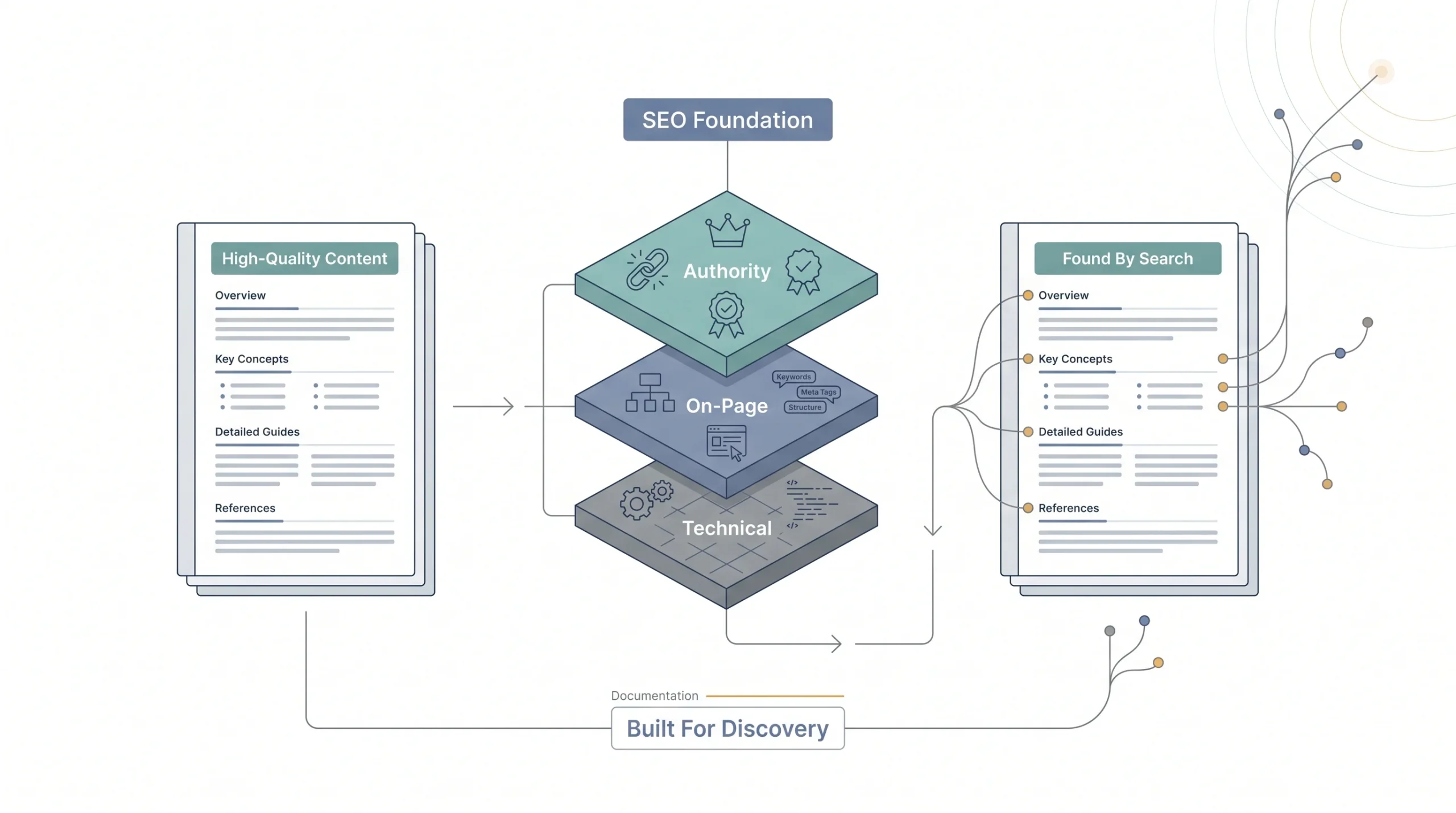
SEO stands for search engine optimization, and if you’ve read even three articles about it, you’ve probably seen it described as “getting your website to rank higher on Google.” True, but that’s like describing surgery as “using knives carefully.” Technically correct, missing basically everything useful.
SEO is really three different jobs stacked on top of each other, and beginners usually only hear about one of them.
Technical SEO is the plumbing. It’s making sure Google can actually crawl your site, that pages load fast, that your site works on a phone screen without falling apart, that you’re not accidentally blocking search engines from seeing your own content. Nobody gets excited about technical SEO. It’s unglamorous. It’s also the reason a lot of genuinely good content never ranks, because the site it lives on is broken in ways nobody bothered to check.
On-page SEO is what most people picture when they hear the word SEO. Keywords, title tags, header structure, meta descriptions, internal links, image alt text. This is the layer where content and SEO physically touch each other, which is exactly why the two disciplines get confused so often.
Off-page SEO is everything that happens outside your own website that still affects your rankings. Mostly this means backlinks, other sites linking to yours because your content is worth citing. It also includes brand mentions, reviews, and general online reputation. Google treats this as a trust signal. If other credible sites vouch for you by linking to you, that carries weight.
Here’s the table that makes this easier to hold in your head.
| Pillar | What It Covers | Example Task |
|---|---|---|
| Technical SEO | Site speed, crawlability, indexing, mobile experience | Fixing broken redirects, improving page load times |
| On-Page SEO | Keywords, headers, meta tags, internal linking | Optimizing a blog post’s title tag and subheadings |
| Off-Page SEO | Backlinks, brand mentions, authority signals | Earning a link from an industry publication |
So SEO, at its core, isn’t a content strategy at all. It’s a discovery mechanism. It’s the reason a stranger searching Google at 11pm actually finds the page you spent three weeks writing.
Here’s the part that trips beginners up the most: SEO isn’t a one-time task you finish and move on from. It’s more like maintaining a garden than building a house. You don’t optimize a page once and walk away forever. Competitors publish new content, search engines update how they evaluate pages, user behavior shifts, and a page that ranked comfortably last year can slide down the results without a single thing on it changing. That’s usually not because the page got worse. It’s because everything around it kept moving.
There’s also a habit worth breaking early: treating SEO as something you bolt onto content after it’s written. Going back and sprinkling keywords into a finished draft is the SEO equivalent of trying to season a dish after it’s already been plated and served cold. It can help a little. It’s nowhere near as effective as building the structure in from the start, when the research actually shapes what gets written in the first place.
Content Marketing vs SEO: The Real Differences
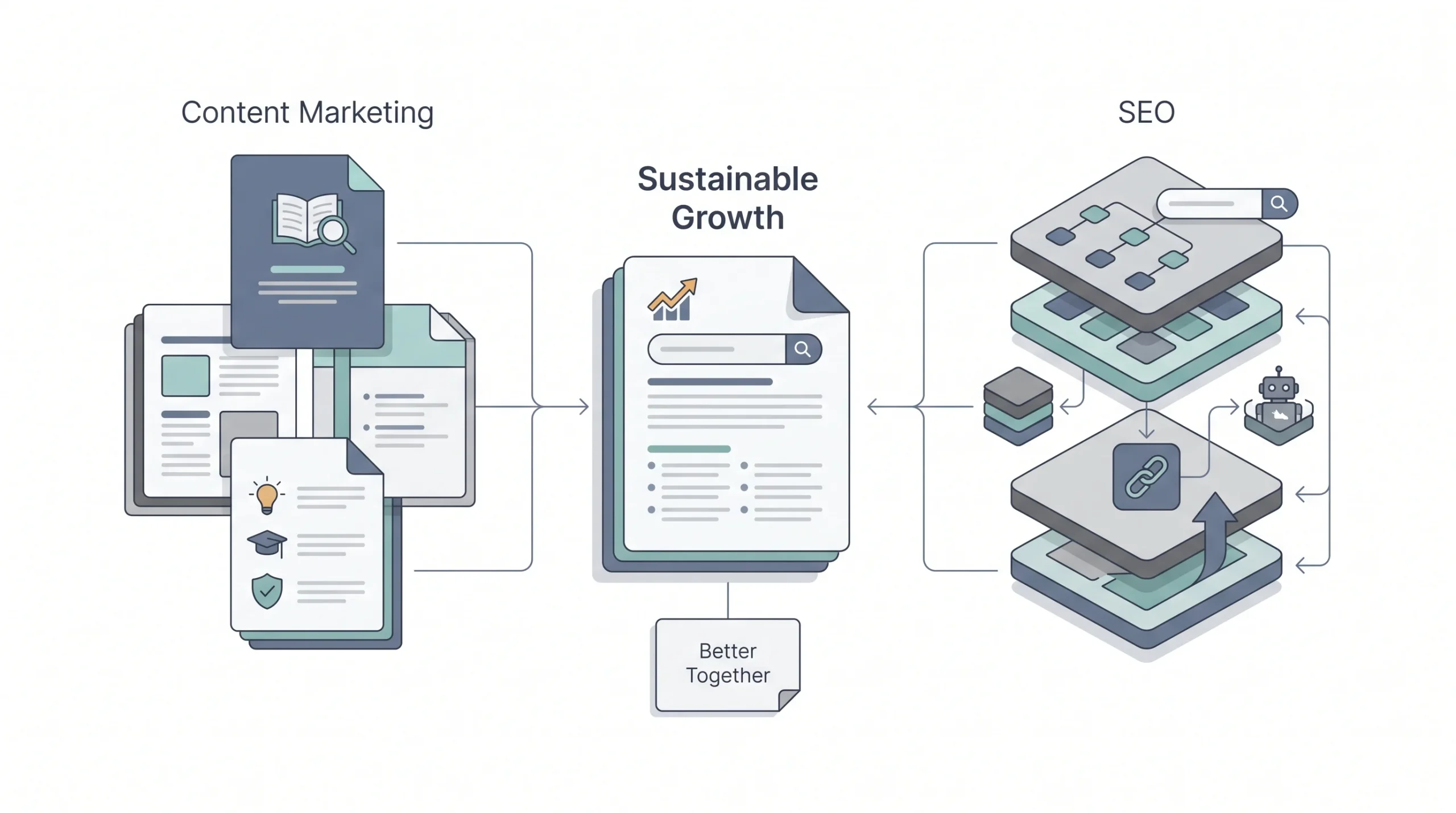
Alright, here’s where most articles on this exact topic get lazy. They’ll say something like “content creates, SEO optimizes” and call it a day, throw a bullet list under it, move on. That’s true but it’s surface level, and it skips the parts that actually matter if you’re trying to run both well inside a real team with real budgets and real deadlines.
The goals are different. Content marketing is chasing trust, engagement, brand recall, sometimes even entertainment. SEO is chasing visibility. Pure and simple. A piece of content can be beautifully written, deeply useful, and still invisible if SEO never gets involved. Meanwhile, a page can rank number one for a keyword and still fail completely if nobody who reads it actually trusts what they’re reading.
The timelines don’t match either. Good SEO compounds. A page you optimize well today might still be pulling in traffic two or three years from now, quietly, without you touching it again. Content marketing’s timeline is messier. Some pieces spike and die in a week. Others build an audience slowly through consistency, like a podcast that takes eighteen episodes before anyone notices it exists.
Ownership is where a lot of companies actually mess this up structurally. Content usually sits with an editorial or marketing team. SEO often sits with a technical or growth team, sometimes even reporting somewhere completely different in the org chart. When those two teams don’t talk to each other, you get exactly the mess described in the next section.
The skill sets barely overlap either, which is worth saying out loud because it’s part of why the confusion persists. A great content writer knows how to hold a reader’s attention, build an argument, tell a story that lands. A great SEO person knows how search engines crawl, index, and rank pages, how to read a backlink profile, how to diagnose why a page dropped six positions overnight. Ask a talented copywriter to explain canonical tags and you’ll probably get a blank stare. Ask a technical SEO specialist to punch up a paragraph so it actually sounds human and you might get something worse than what you started with. Neither gap is a knock on either person. It’s just proof these are genuinely different disciplines that happen to live on the same page.
Here’s the comparison in full.
| Dimension | Content Marketing | SEO |
|---|---|---|
| Primary Goal | Build trust, authority, engagement | Improve visibility and discoverability |
| Time Horizon | Medium to long term | Long term, compounding |
| Core Output | Blog posts, videos, guides, emails | Rankings, organic traffic, crawlability |
| Success Metric | Engagement, shares, time on page, leads | Rankings, organic sessions, click-through rate, backlinks |
| Typically Owned By | Content or editorial team | SEO or technical team |
| Fails Without | Distribution and discoverability | Substance worth ranking in the first place |
Look at that last row for a second, because that’s honestly the entire argument for why this article exists. SEO fails without content. Content fails without SEO. Neither one is optional if you actually want results. They’re not competing philosophies. They’re two failure points on the same system.
Somebody’s going to ask which one to prioritize with a limited budget, and that’s a fair question, but it usually comes from a false premise: that you can get meaningfully good results investing seriously in only one. In reality, a little bit of both, done properly and in coordination, tends to beat a lot of money thrown at just one side. That’s not a cop-out answer either. It’s just what actually happens when you watch enough sites try it both ways.
Why Treating Them as Separate Strategies Backfires
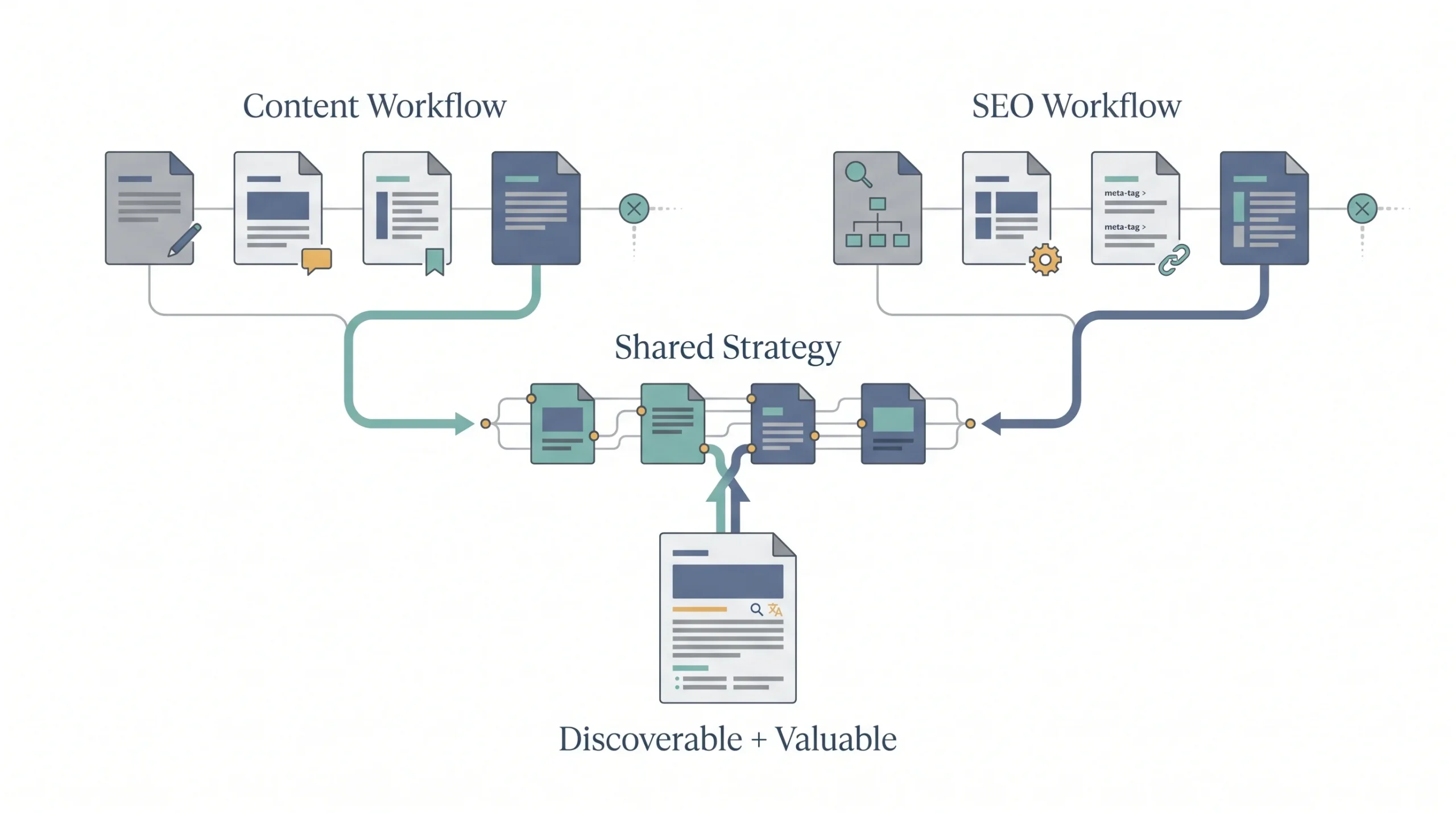
This is the part most guides skip entirely, and it’s honestly the more useful section if you’re trying to fix something that’s already broken. Everybody nods along to “SEO and content should work together” and then goes right back to running two separate calendars in two separate tools with zero overlap. So let’s actually walk through what breaks when that happens, because the failure pattern is more specific than people expect.
Picture a content team that’s genuinely talented. Good writers, sharp editors, a real voice, the kind of team that could easily write for a magazine. They publish twice a week, consistently, for six months. And the traffic barely moves. What happened? Nine times out of ten, it’s because nobody did keyword or intent research before writing. The team picked topics they found interesting, or topics leadership assumed customers cared about, not topics people were actually typing into a search bar. You end up with fifty genuinely good articles that nobody ever finds, because they were never built around a real question someone was searching for in the first place. It’s a strange kind of failure, because on paper everything looks like it’s working. The calendar’s full. The writing’s strong. The team feels productive. And the traffic graph just sits flat, quarter after quarter, because productivity and visibility turned out to be two completely different things.
Now flip it. Picture an SEO-led team that treats content like a keyword-stuffing exercise instead of an actual craft. They pull a list of high-volume keywords, hand them to a writer with instructions to hit the keyword a set number of times per thousand words, and publish on a tight deadline. That content might actually rank for a few weeks, sometimes even a couple months if competition is light. Then it drops, because it’s thin, repetitive, and doesn’t actually answer the question well enough to keep someone reading past the first paragraph, let alone convince them to trust the brand behind it. Search engines have gotten a lot better at spotting that pattern over the years. Tactics that used to scrape by on keyword matching alone get buried now, replaced by pages that actually took the time to be useful.
The symptom in both cases looks the same from the outside: high publish volume, flat or declining organic traffic. Everyone’s busy. Nothing’s working. And usually nobody in the room can tell you why, because the content team blames “the algorithm” and the SEO team blames “the writing.”
There’s a newer wrinkle here too, worth being honest about. Search itself is changing. AI-generated answer boxes and overviews are sitting right at the top of results now, answering a lot of basic questions before anyone even clicks through to a website. That raises the bar. Thin content that used to scrape by on keyword matching alone has even less room to survive now, because if your page isn’t genuinely more useful than what the AI summary already gave someone, why would they click further?
What’s interesting is that both failure modes, the content-heavy silo and the SEO-heavy silo, end up in roughly the same place: a site full of pages that technically exist but don’t actually work for anyone. Not for the reader, who either can’t find the page or finds it and leaves unsatisfied. Not for the business, which is spending real time and real budget producing something that isn’t moving any number that matters. The fix isn’t picking a side harder. It’s getting the two functions to actually share a table, literally and figuratively, before anything gets published.
How SEO and Content Marketing Actually Work Together
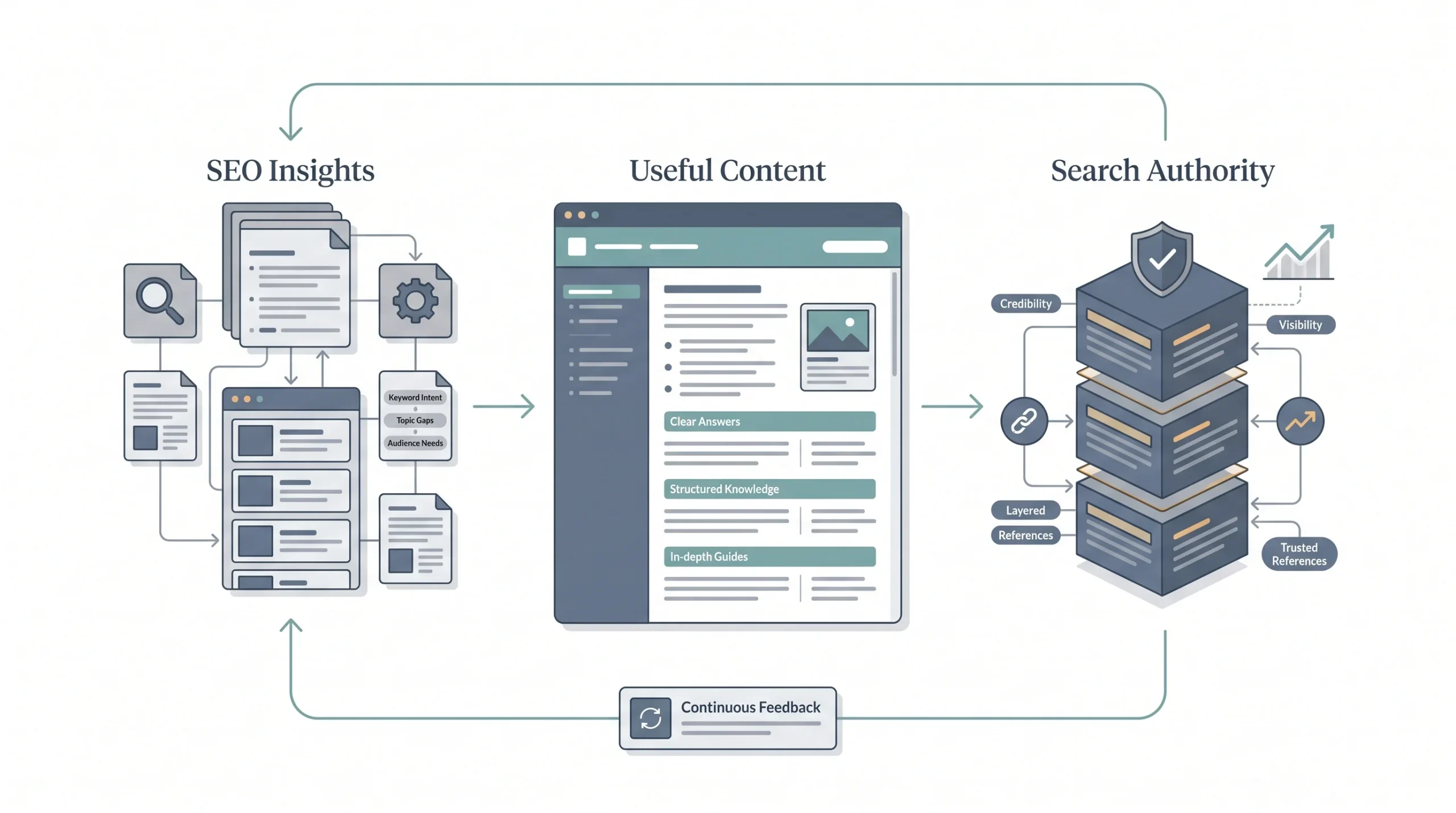
So here’s the actual mechanics, not just the vibes.
SEO feeds content in a very specific way: it tells you what to write about and why. Keyword research isn’t just about volume numbers, it’s about intent. Someone searching “how to fix a leaking faucet” wants a step-by-step guide. Someone searching “best plumber near me” wants a service page, not a blog post. Good SEO research hands the content team a map of what people actually want to know, ranked by how many people are asking and how hard it’ll be to compete for that answer.
Content feeds SEO back in a different way: it gives search engines something worth ranking. You can have a technically flawless website, fast, mobile-friendly, perfectly crawlable, and it means nothing if there’s no substance on the page. Google isn’t ranking empty shells. It’s ranking usefulness. Content is the thing that actually earns backlinks too, because nobody links to a page that says nothing. They link to the guide that actually solved their problem, the original research nobody else had, the article that explained something better than the ten other pages they’d already read.
Here’s the exchange laid out plainly.
| SEO Gives Content | Content Gives SEO |
|---|---|
| Keyword and search intent data | Substance actually worth ranking |
| Competitive gap analysis | Dwell time and engagement signals |
| Technical framework for indexing | Link-worthy, shareable material |
| Search volume and opportunity sizing | Topical authority built through depth |
Neither column works in isolation. That’s honestly the whole argument in one table.
Think about a mid-sized business selling project management software. SEO research turns up a cluster of people searching for things like “how to run a sprint retrospective” or “best way to track team capacity.” Nobody’s typing in branded terms yet, they’re not ready to buy anything, they’re just trying to solve a problem. Content picks up that research and builds genuinely useful guides around those exact questions, not thin 400-word answers, but the kind of piece that actually walks someone through the process step by step. Those guides start ranking because they’re the best answer available. They start earning links from other sites because people reference them. Months later, some percentage of those readers come back when they’re finally ready to evaluate software, and this brand is already the one they trust because that guide actually helped them once. That entire loop only exists because both functions did their job and handed off cleanly to the other.
The Content Pillar and Topic Cluster Model
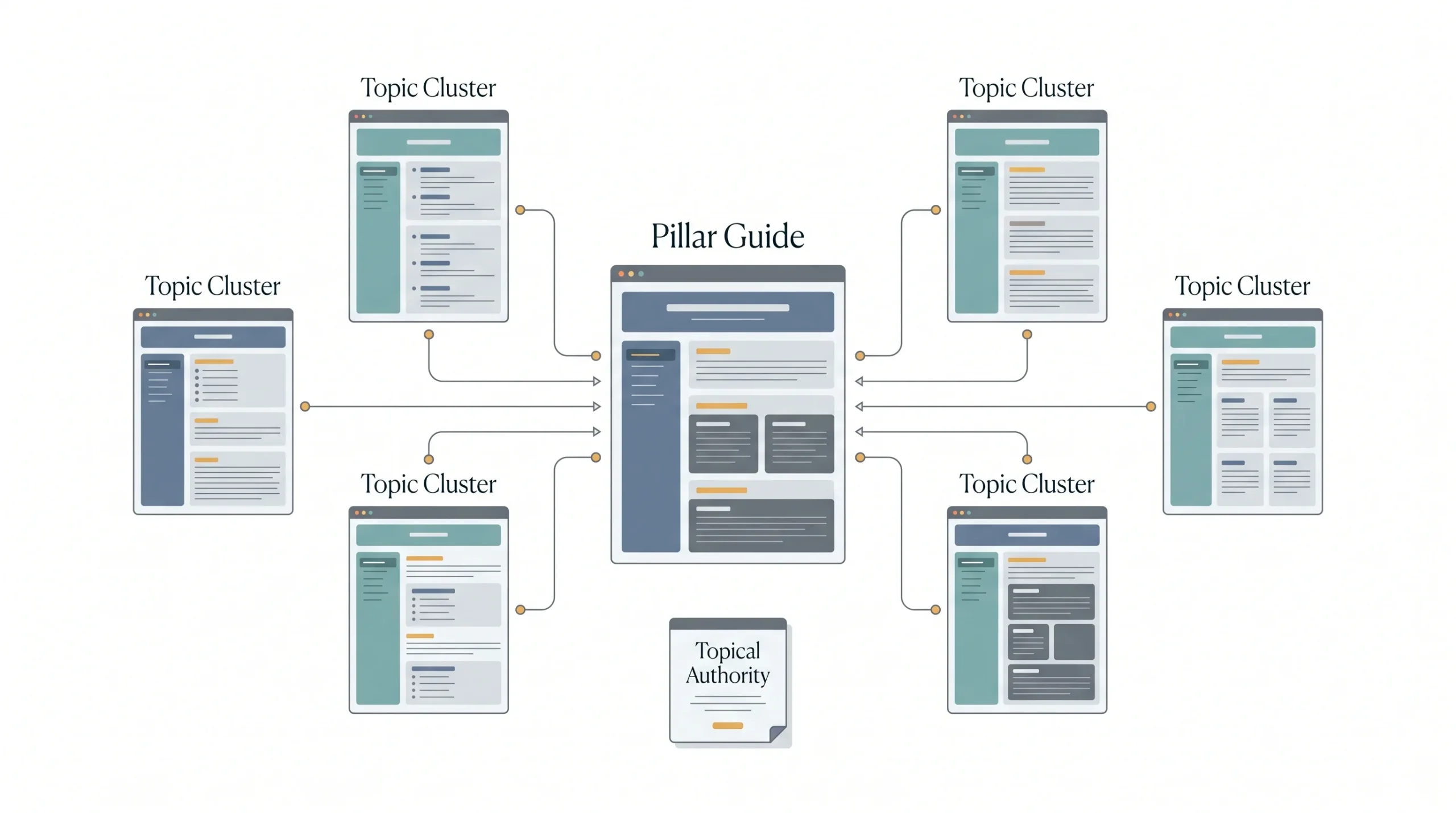
Here’s proof that this isn’t just theory, it’s baked into how modern sites are actually structured. The pillar and cluster model is basically the physical evidence that content and SEO were never two separate systems.
A pillar page, like this one you’re reading right now, covers a broad topic in real depth. Around it sit cluster pages, narrower posts that go deep on specific subtopics related to the pillar. A pillar on digital marketing might sit above cluster posts on email marketing, paid social, SEO basics, and content strategy. Each cluster page links back to the pillar. The pillar links out to each cluster. That’s not a content decision or an SEO decision. It’s both at once.
Why does this matter to Google? Because it demonstrates topical authority. A site with one decent article about a subject looks thin. A site with a strong pillar page surrounded by a dozen well-connected cluster posts looks like it actually knows what it’s talking about. That’s the whole idea behind what’s often called E-E-A-T, experience, expertise, authority, and trust. You don’t build that reputation with one great post. You build it with a structure that shows depth across an entire topic, connected in a way that makes sense to both a human reader and a crawler.
There’s a practical reader-side benefit too, one that gets lost when people talk about clusters purely as an SEO tactic. Someone landing on a cluster post about, say, email subject lines, might actually want the bigger picture on email marketing as a whole. The link back to the pillar gives them that path without forcing them to open a new search tab and start over. That’s not a trick aimed at crawlers. It’s just good navigation, and it happens to be exactly what search engines reward, because it’s exactly what keeps a reader on the site longer instead of bouncing back to the results page.
This is also where a lot of the earlier confusion about content versus SEO quietly dissolves. Nobody sits down and asks whether a pillar page structure is “a content decision” or “an SEO decision.” It’s obviously both, built by both, maintained by both. Trying to draw a hard line between the two disciplines gets harder the closer you actually look at how modern websites are built, and the pillar and cluster model is probably the clearest example of that line simply not existing in practice.
Building this structure takes patience, honestly more than most teams expect going in. A pillar without any cluster support underneath it looks incomplete, and clusters published with no pillar to anchor them look scattered and disconnected, like a bunch of standalone answers with no home base tying them together. The two need each other to actually function as a system, which is really just the content-and-SEO relationship playing out again at a smaller scale, inside a single topic instead of across an entire strategy.
It’s also worth saying plainly that this model doesn’t demand everything get built at once. A pillar can launch with just two or three supporting cluster posts and grow from there over months, as long as the linking structure gets updated every time something new gets added. Waiting for a “complete” cluster before publishing anything is usually the wrong call. Momentum matters more than completeness here, and search engines reward consistent expansion of a topic over time just as much as they reward a fully built-out library on day one.
A Practical Framework for Integrating Both
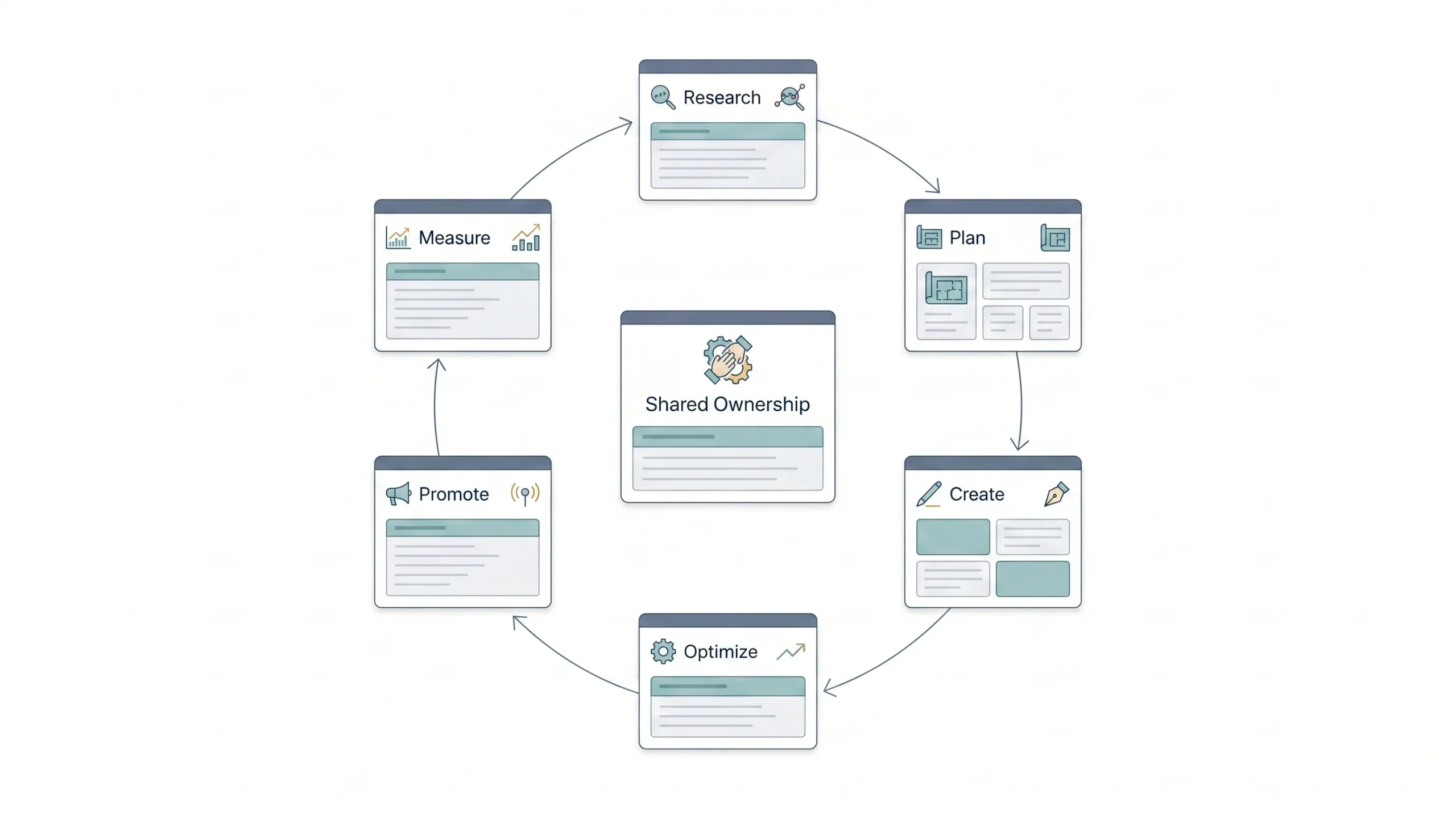
This is where most articles on this topic just stop, right after telling you both things matter. Great, thanks, now what do you actually do on a Monday morning? Here’s a process that holds up in practice, not just on a whiteboard.
Start with SEO research before a single word gets written. Pull keyword data, look at search intent, check what’s already ranking and figure out where the gap actually sits. If five articles already answer a question well, your job isn’t to write a sixth version of the same thing dressed up in slightly different words. It’s to find what none of them covered, the angle they all missed, the example they didn’t bother including, the depth they skipped past. Skipping this step is the single most common reason content gets written and then goes nowhere. It’s not that the writing is bad. It’s that nobody checked whether the target was even worth aiming at.
Build a content calendar around clusters, not around whatever feels interesting that week. If you’re planning a pillar on email marketing, map out the cluster topics before you start writing any of them, subject lines, send-time optimization, list segmentation, deliverability, whatever the research turned up as real gaps. That way every piece has a home and a purpose from day one, instead of getting written in isolation and then awkwardly retrofitted into a structure later, which almost never works as cleanly as planning it up front.
Write for the person first. Structure for the crawler second. This order matters more than people think, and it’s genuinely the easiest thing to get backwards under deadline pressure. A piece that reads like it was written for an algorithm, stuffed with awkward keyword repetition, forced phrasing, unnatural headers just to hit a target, gets abandoned by real readers fast. And that abandonment, someone landing on the page and leaving within seconds, becomes a bad signal search engines actually notice over time. Writing well isn’t the soft, secondary concern here. It’s load-bearing.
Optimize the on-page elements without wrecking the readability. Title tags, header structure, meta descriptions, these all matter, and skipping them leaves easy visibility on the table. But none of them are worth sacrificing a sentence that actually reads well. If a keyword doesn’t fit naturally into a sentence, don’t force it. Find another spot, a subheading, a later paragraph, an image caption. There’s almost always a natural home for it somewhere on the page if you’re not in a rush.
Build internal links while you’re publishing, not months later as a cleanup project that never actually happens. Every new piece should link to relevant existing content, and older pieces should get updated with links to the new one the moment it goes live. This is the step that gets skipped constantly, mostly because it feels like an afterthought compared to the “real” writing work, and it’s genuinely one of the cheapest, fastest wins available in this entire process. It costs almost nothing and it directly helps both the reader and the crawler navigate the site.
Promote what you publish. Content doesn’t earn backlinks by sitting quietly on a site hoping someone stumbles onto it. Share it where your audience actually spends time, pitch it to relevant sites or newsletters, mention it where it’s genuinely useful to mention rather than spamming it everywhere. This is the off-page SEO layer, and it only works if there’s something worth promoting in the first place, which loops right back to why the writing quality matters so much upstream.
Measure both sides together every month, not separately, and not just whenever someone remembers to check. Traffic numbers without engagement numbers tell you half a story, you might be attracting the wrong audience entirely. Rankings without conversion data tell you the other half, you might be visible to plenty of people who never had any real intent to act. Reviewing both together, on a set schedule, is what actually catches problems early instead of six months in when the damage is harder to reverse.
Here’s what that looks like as an actual operating rhythm.
| Task | Owner | Frequency |
|---|---|---|
| Keyword and SERP gap research | SEO | Monthly |
| Content calendar planning | Content and SEO, jointly | Monthly |
| Draft writing and on-page optimization | Content | Per post |
| Internal linking pass | Content and SEO | Per post |
| Backlink outreach | SEO | Ongoing |
| Performance review across traffic and engagement | Both teams | Monthly |
Notice how many of these rows say “both” or require handoff between teams. That’s the point. The moment either team works in isolation, this whole system starts leaking.
When Content Should Lead vs When SEO Should Lead
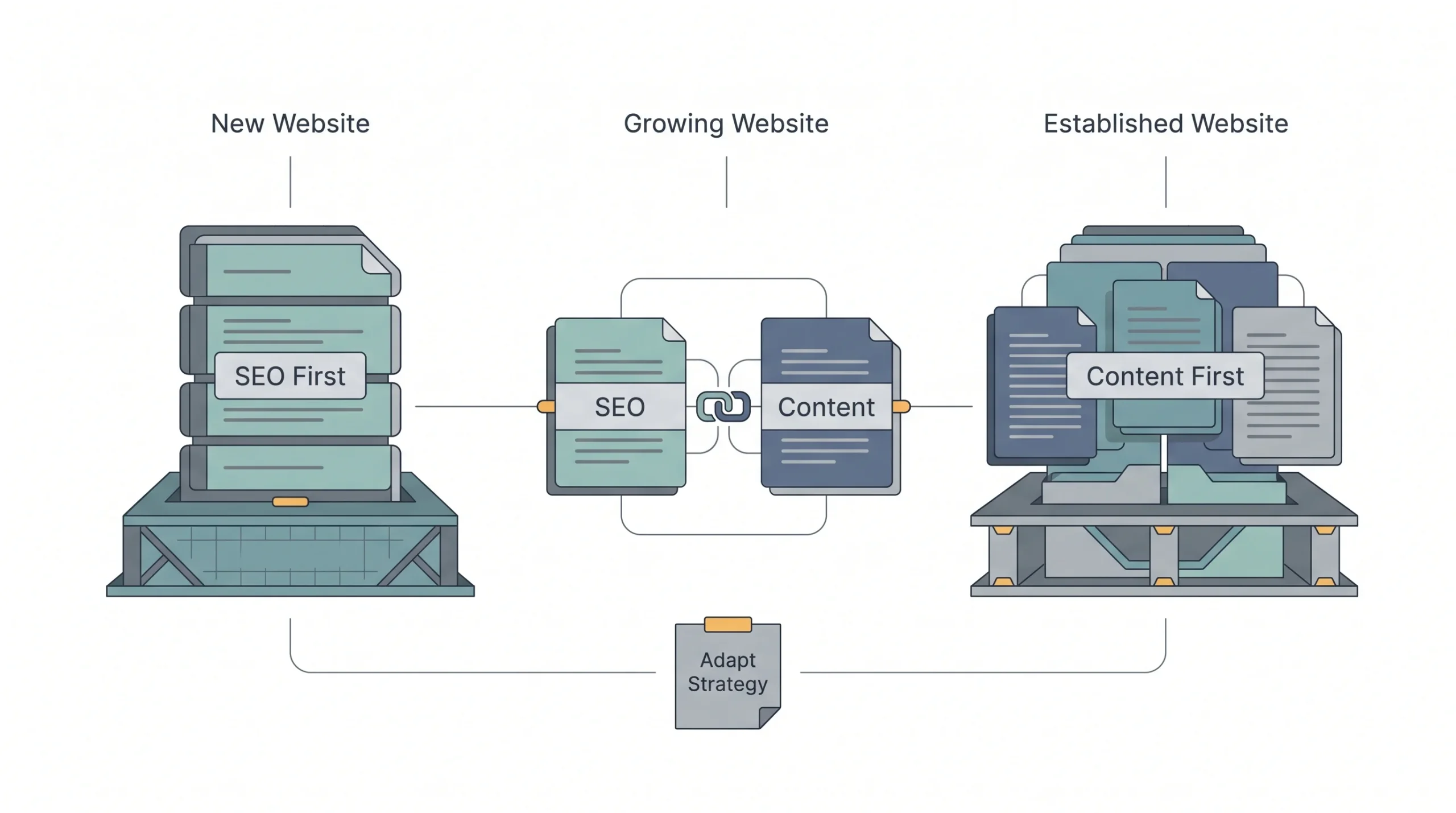
Not every situation calls for the exact same balance, and pretending otherwise is where a lot of advice falls apart. Context matters here, maybe more than anywhere else in this whole conversation, because applying the wrong emphasis at the wrong stage wastes real time.
A brand new site with zero authority should lean SEO-led early on. There’s no point writing a sprawling, ambitious content library if the technical foundation is broken, pages load slowly, mobile experience is clunky, basic crawlability issues are quietly blocking search engines from even seeing what’s published, or if you’re chasing keywords so competitive that a brand new domain has genuinely no shot at ranking for them any time soon. Fix the basics first. Go after realistic, lower-competition keywords where a new site actually has a fighting chance. Build some early wins, however modest, before scaling up ambition. Trying to compete for the biggest keywords on day one, before there’s any authority behind the domain, usually just burns time and morale.
An established site sitting on decent domain authority but a thin content library should flip the balance toward content-led. The SEO groundwork is probably already reasonably solid. What’s missing is depth, coverage, the actual substance that turns existing traffic and existing trust into a real audience instead of a trickle of one-time visitors. This is where building out pillar and cluster structures pays off fastest, because the domain already has enough credibility for new, well-researched content to start ranking relatively quickly once it goes live.
Highly competitive, high-volume keyword spaces need both running at full strength simultaneously, and honestly this is the hardest scenario to execute well. You can’t out-content your way past a technically superior competitor whose site simply loads faster and crawls cleaner. And you can’t out-optimize thin content against a competitor who’s published genuinely deep, well-researched material that actually earns links and engagement. This usually means a phased approach: shore up technical SEO fast so nothing’s holding the site back structurally, while content builds depth in parallel on realistic supporting topics, then push hardest on the truly competitive terms once both foundations are actually solid enough to compete.
How to Measure Success: Combined KPIs
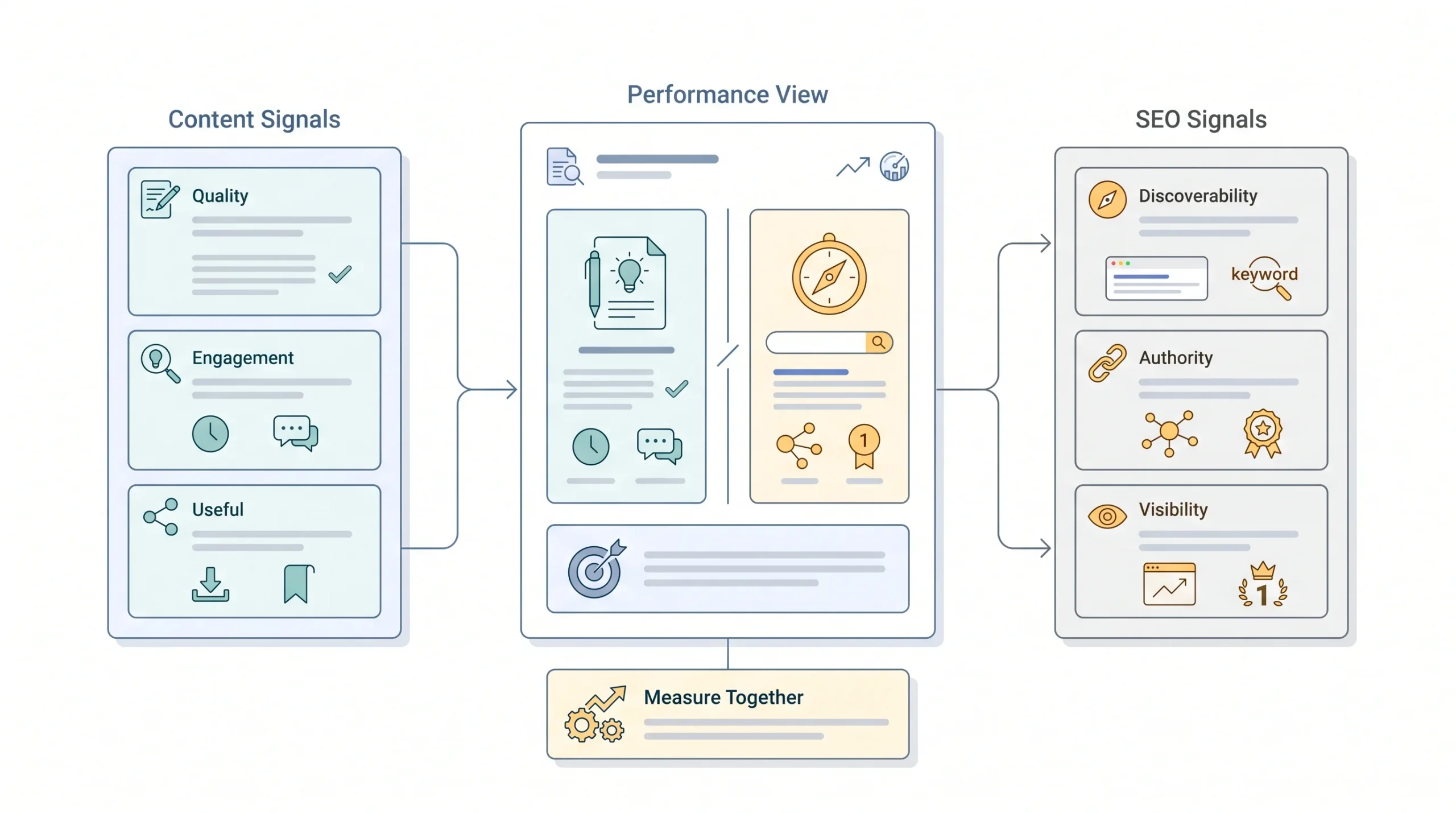
Metrics get more useful the moment you stop looking at them through only one lens. Organic traffic alone doesn’t tell you if the traffic is any good. Engagement alone doesn’t tell you if anyone’s actually finding the page. You need both readings at once.
| Metric | Content Lens | SEO Lens |
|---|---|---|
| Organic traffic | Is the content actually reaching people | Is it ranking well enough to be found |
| Time on page | Is the content genuinely engaging | Signals content quality back to search engines |
| Backlinks | Is the content worth linking to | Direct authority and trust signal |
| Conversion rate | Is the content persuasive enough to move someone | Confirms the traffic quality, not just the volume |
| Keyword rankings | Not applicable directly | Core measure of visibility |
A page that ranks number one but has a conversion rate near zero isn’t a win, it’s a warning sign that the content doesn’t match what the searcher actually wanted, even if it technically satisfies the keyword. A page with great engagement but almost no traffic is a warning sign the other direction, that nobody can find it in the first place, no matter how good the content actually is once someone lands on it. Reading these together is the only way either number means anything on its own.
It’s worth setting a real cadence for this too, rather than checking numbers only when something feels off. A monthly review, looking at both traffic and engagement side by side for the pages published or updated that month, catches problems while they’re still small and fixable. Waiting until a quarterly or yearly review means a page could be quietly underperforming for months before anyone notices, and by then the fix usually takes longer than it would have if it got caught early.
Tools That Bridge Both Disciplines
You don’t need a shelf full of software to run this well, but a few tool categories genuinely help bridge the gap between the two teams, and skipping any one of them tends to leave a blind spot somewhere in the process.
Keyword research tools handle the SEO research layer, surfacing search volume, intent, and competitive gaps before anyone starts writing. This is the input every other step depends on, so it’s worth doing properly rather than treating it as a five-minute box to check before jumping straight to drafting.
Content optimization tools sit in the middle ground, checking readability, keyword placement, and structure while a draft is still in progress. Used well, these catch awkward phrasing or missing structural elements early. Used badly, they turn into a scorecard people chase for its own sake, forcing keywords into places they don’t belong just to satisfy a number on a dashboard. The tool should be a guide, not the boss of the sentence.
Analytics platforms close the loop, tracking both traffic and engagement in one place so nobody’s stuck stitching together two separate dashboards, one from the SEO side and one from the content side, just to understand what actually happened after something went live. Having that data live in one place makes the monthly joint review from earlier in this piece far easier to actually run consistently instead of skipping it because pulling the numbers is a hassle.
The specific tool matters less than the habit of actually using all three categories together instead of picking one and ignoring the rest. A team with great keyword research and no analytics is flying blind after publish. A team with great analytics and no upfront research is just measuring guesses.
Conclusion
None of this was ever really a fight between two departments or two philosophies. It’s one system, built out of two parts that only work when they’re actually talking to each other. SEO without content is a road nobody’s driving on. Content without SEO is a car nobody can find. The businesses that get real, compounding growth out of this aren’t the ones that picked a side and defended it in every planning meeting. They’re the ones that stopped treating research, writing, and optimization as three separate jobs handed off in sequence, and started running them as one loop, with shared calendars, shared research, and shared numbers everyone actually looks at together.
Getting there usually takes less reorganizing than people expect. It’s rarely about hiring more people or buying more tools. Most of the time it just takes one shared calendar, one monthly meeting where both sides look at the same numbers, and a habit of doing keyword research before the first sentence gets written instead of after the last one. And with search itself shifting toward AI-driven answers sitting right at the top of the page, that gap between genuinely useful, well-structured content and everything else thin or half-finished is only going to matter more from here, not less.
Frequently Asked Questions
Is content marketing part of SEO, or is SEO part of content marketing?
Neither, really. They’re separate disciplines that happen to overlap on the same page. Content marketing is about creating something worth reading. SEO is about making sure the right people can actually find it. Trying to file one under the other just muddies how each one should be measured and who should own the work.
Which one should a small business with a limited budget invest in first?
Honestly, a small amount of both beats a large amount of just one. Even a modest SEO effort, fixing basic technical issues and doing light keyword research, makes whatever content gets written far more likely to actually get found. Skipping SEO entirely and pouring everything into content usually means good writing sitting on page four of the search results, unseen.
How long does it take to see results from combining SEO and content?
Longer than most people want to hear. Early wins on low-competition keywords can show up in a couple of months. Real, compounding traffic from a well-built content library usually takes closer to six months to a year of consistent publishing. Anyone promising overnight rankings for competitive terms isn’t being straight with you.
Do I need separate SEO and content teams, or can one person handle both?
Depends entirely on size and budget. Smaller teams often have one person wearing both hats, and that can work fine as long as they’re disciplined about doing the research before writing. Larger teams tend to split the roles, but the split only works if both sides are actually talking to each other regularly instead of working from separate calendars.
Can content rank well without any SEO work at all?
Occasionally, if the topic has almost no competition and the content happens to answer the question clearly. But that’s luck, not a strategy. Most competitive topics have dozens of pages already fighting for the same searches, and without keyword research and on-page optimization, even great writing gets lost in that crowd.
Does publishing more content automatically improve SEO?
No, and this is one of the more common mistakes teams make. Volume without depth or research just produces more thin pages, which can actually hurt overall site quality in the eyes of search engines. A handful of genuinely deep, well-researched pieces will usually outperform a much larger pile of shallow ones.
How often should old content get updated for SEO?
There’s no fixed schedule that works for every page. A better approach is checking performance every few months and updating anything that’s dropped in rankings or gone stale on facts, examples, or screenshots. Content that’s still ranking well and still accurate doesn’t need to be touched just for the sake of touching it.
Do backlinks matter more than the content itself?
Not more, but they don’t happen without decent content either. Backlinks are basically other sites vouching for a page, and nobody vouches for something thin or unoriginal. The content has to be good enough to earn the link in the first place, so in a real sense the content comes first and the backlinks follow.
Is SEO becoming less important now that AI answers a lot of search queries directly?
It’s shifting, not disappearing. AI overviews are absorbing some of the simplest, most basic questions, which does cut into a bit of click-through traffic. But that actually raises the value of content that goes deeper than a quick answer, the kind of piece someone still needs to click through for. SEO fundamentals like crawlability and relevance still matter, they’re just being tested against a higher bar for usefulness.
What’s the biggest sign that content and SEO are being run in silos at a company?
Flat or declining traffic despite a full publishing calendar is usually the clearest tell. Another one is a content team that can’t explain why they picked a given topic beyond “it seemed relevant,” or an SEO team optimizing pages after they’re already written instead of shaping the topic beforehand.
Should keyword research happen before or after the content is written?
Before, every time. Research after the fact means retrofitting keywords into a structure that wasn’t built around them, which rarely works as well as planning the piece around real search intent from the start.
Is it possible to do content marketing without ever thinking about SEO?
Technically yes, plenty of newsletters and social-first brands build real audiences with almost no formal SEO behind them. But that route depends heavily on already having distribution somewhere else, an email list, a following, a paid channel. For a website expecting organic search traffic to be a real growth driver, skipping SEO usually means leaving the biggest possible audience undiscovered.