

A client once ran a Facebook ad for three straight weeks. Decent budget, clean creative, a landing page that didn’t look like it was built in 2009. Zero sales. Not “low conversion.” Zero. Turned out the ad set was targeting “all adults, India, interested in shopping” for a ₹4,500 skincare product mostly bought by working women in their late twenties living in cities like Jaipur and Indore. The algorithm was happily showing it to college students in towns with no intent to spend that kind of money on skincare. That’s not a creative problem. That’s not even a bidding problem. That’s a “nobody figured out who this was for” problem, and it’s the most common, most expensive mistake in digital marketing, mostly because it’s invisible until the invoice shows up.
Most businesses skip this step. Not because they’ve never heard of it, they just assume they already know their audience because they’ve been in the business a few years, or because a competitor is doing something similar and it seems to be working. That assumption is quietly the most expensive thing in a marketing budget, because everything downstream depends on it being right. Platform choice, creative tone, landing page copy, even the bidding strategy, all of it sits on top of one question answered correctly at the start: who, exactly, is this for.
This isn’t going to hand over a fill-in-the-blank persona template and call it done. That’s what most articles on this topic do, and honestly, that’s exactly why so many businesses end up with a “persona” sitting in a Google Doc nobody’s opened since the day it was written. What follows instead is a working process, the actual steps to go from “we think our audience is young professionals” to a set of real, data-backed segments a campaign can be built around, plus a look at where this plays out differently in the Indian market, where a Tier-1 city buyer and a Tier-3 city buyer can behave like they’re from two different countries entirely.
Here’s the road ahead: what a target audience actually is, and how it’s different from three terms people mix up constantly. Why getting this wrong costs more than most people realize. The real building blocks of audience data. A seven-step process for finding an audience. How to break that data into usable segments. A full walkthrough of building one persona from scratch, not shown finished, built live. How audience shifts by platform. What’s genuinely different about doing this in India. The mistakes that trip up almost everyone doing this for the first time. And how to keep validating what’s found instead of locking it in once and never checking again.
What Does “Target Audience” Actually Mean?
Here’s something that happens in nearly every marketing meeting: someone says “target audience,” someone else hears “buyer persona,” and a third person is quietly thinking “target market.” All three nod. All three are picturing something different. That mismatch is where campaigns start going sideways before a single rupee gets spent, because a media buyer working off “target market” thinking and a copywriter working off “persona” thinking end up building two pieces of the same campaign for two different imaginary people.
So this needs separating properly, because the distinction changes how a campaign actually gets planned, not just how it gets described in a strategy deck.
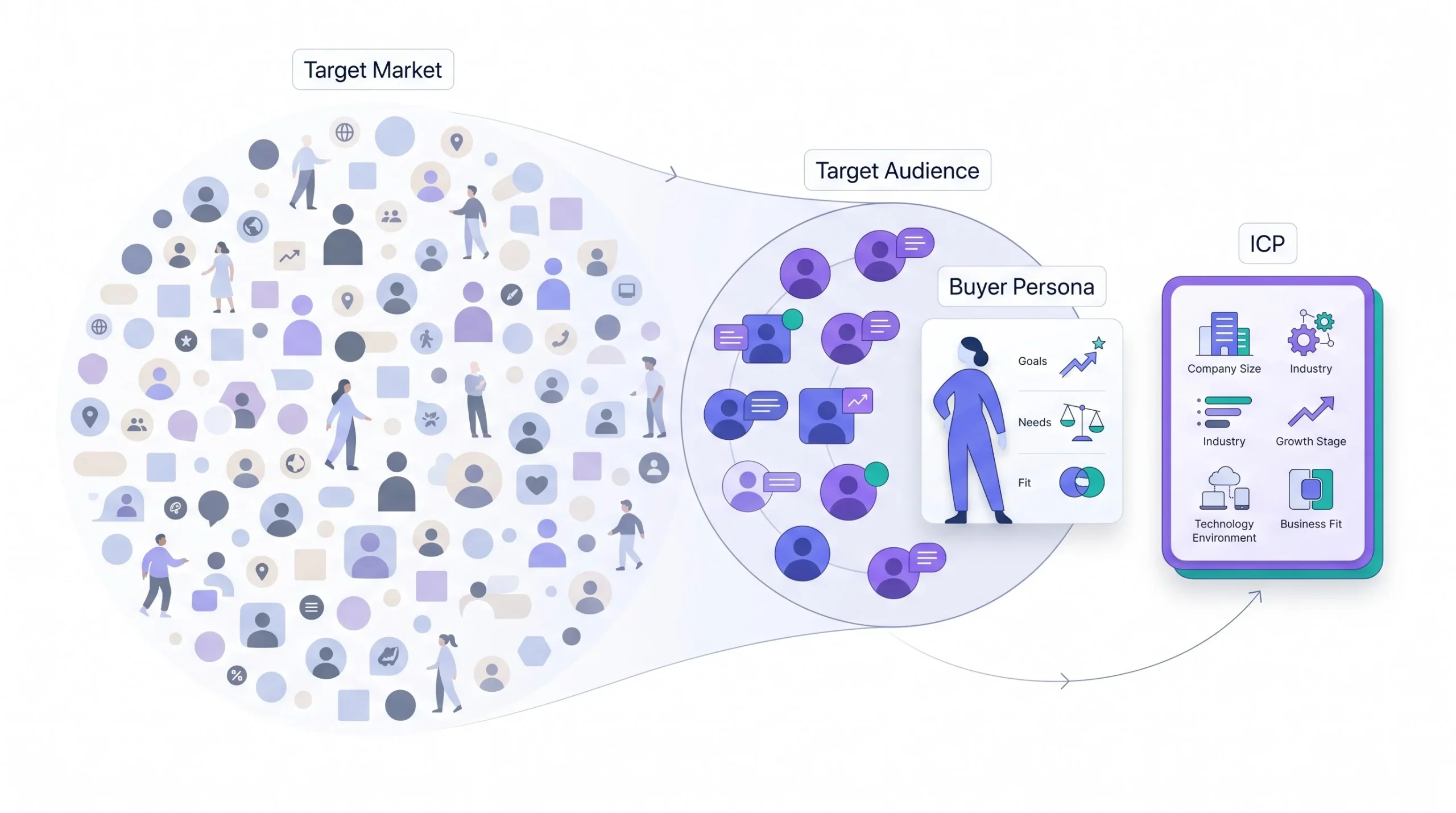
Target market is the big picture. It’s the broad category of people or businesses who could realistically want what’s being sold. Think “working professionals in India aged 25 to 45” or “small D2C brand owners running their own Shopify stores.” It’s wide on purpose. Nobody runs an ad set at this level, it’s too broad to act on directly, it exists to define the outer boundary of who could ever be a customer.
Target audience is narrower, and usually tied to a specific campaign or product rather than the business as a whole. It’s a slice of the market defined by traits that actually matter for that campaign, things like age, location, interest, or where someone sits in the buying journey. “Women aged 28 to 35 in Tier-2 cities currently researching anti-aging skincare” is a target audience. That’s something a media buyer can actually build an ad set around.
Buyer persona goes one level deeper. It’s a semi-fictional, detailed profile of one representative person inside that audience, built from real research rather than a guess about what a typical customer might look like. Persona work gives that audience a name, a face, specific frustrations and specific goals, so a copywriter is writing to “Riya” instead of writing to a row in a spreadsheet labeled “Segment 3.”
ICP, Ideal Customer Profile, is the B2B version of this whole exercise. Instead of describing one person, it describes the perfect-fit company. Employee count, revenue band, industry, existing tech stack, growth stage. B2C businesses generally don’t need one of these. B2B businesses can’t run a serious campaign without one, because in B2B the company itself is often as important a filter as the individual buyer inside it.
| Term | Scope | Example |
|---|---|---|
| Target Market | Broad category | Working professionals in India, 25-45 |
| Target Audience | Segment within market for a specific campaign | Women aged 28-35 in Tier-2 cities researching skincare |
| Buyer Persona | Semi-fictional detailed profile | “Riya, 30, HR manager in Jaipur, budget-conscious but willing to spend on proven results” |
| ICP | B2B-specific, the perfect-fit company | SaaS companies with 50-200 employees, ₹5Cr+ annual revenue |
Why does any of this matter beyond terminology? Because mixing these up leads to real decisions going wrong in ways that are hard to trace back later. Someone building a landing page off “target market” data ends up writing copy so generic it convinces nobody in particular, because it was written for the whole ocean instead of one specific fish. Someone picking a platform based on a “persona” that’s really just demographic guesswork, an age range and a made-up name, ends up on the wrong platform entirely and blames the platform when the real problem was never fixed. Get the vocabulary straight first. The rest of this process only works cleanly once everyone involved is talking about the same thing.
Why Audience Identification Is the Foundation of Every Campaign
Look at what actually happens when a business skips this step. Platform gets picked because “that’s where everyone advertises.” Ad copy gets written based on what sounds good to whoever’s writing it, not what actually resonates with the buyer. Landing page goes up with a stock photo of a laughing woman on a laptop and a vague benefit statement like “grow your business faster.” Three weeks in, cost per lead has crept up every single week, and nobody can quite say why.
That’s not bad luck. That’s a chain reaction, and it starts at the exact same point every time: nobody defined who this was for before anything got built.
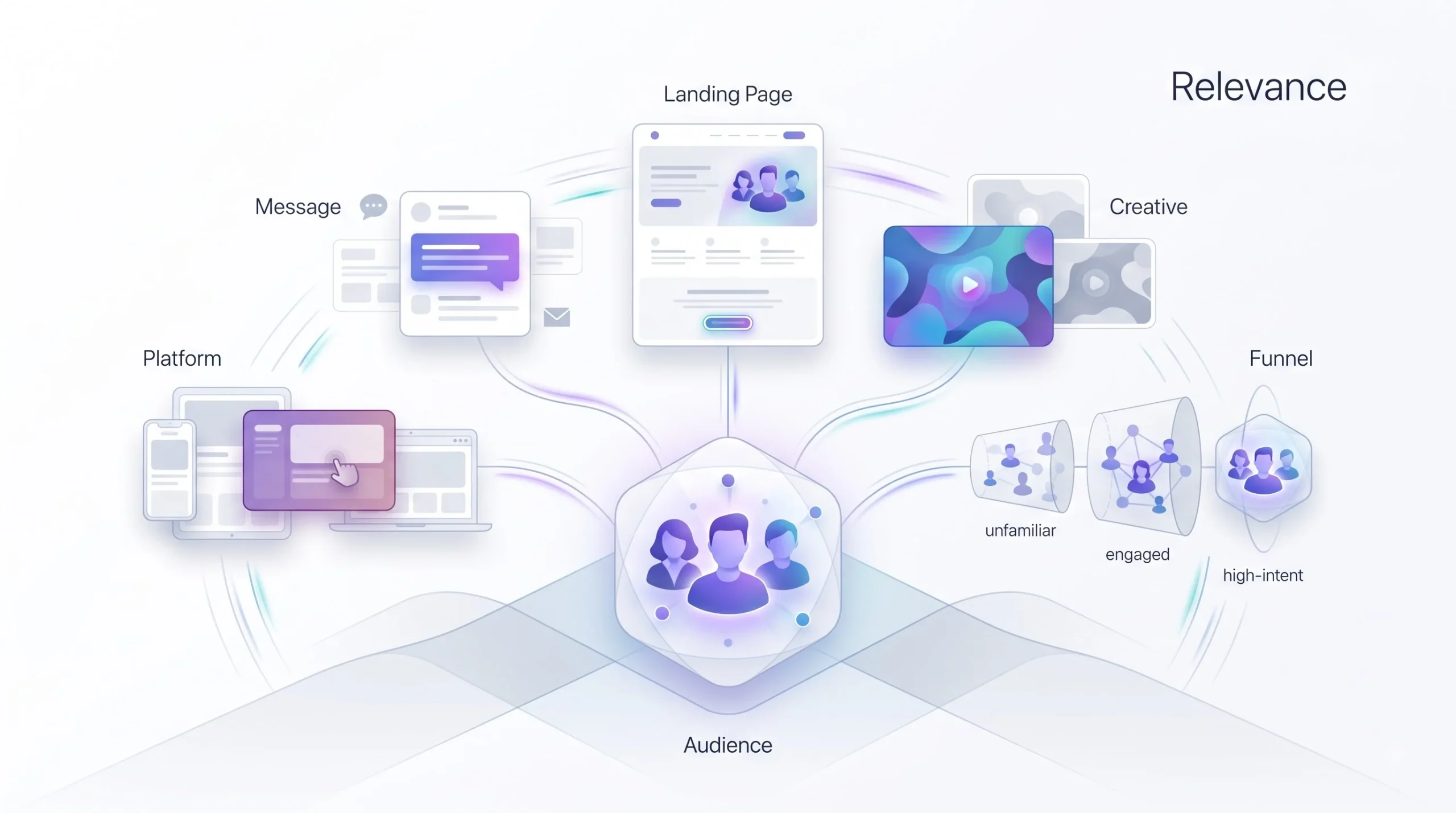
Here’s the mechanism, laid out step by step. Audience clarity is what determines whether a platform choice even makes sense in the first place. A B2B software company selling to CFOs has no business treating Instagram Reels as its primary channel, LinkedIn is where that audience actually spends attention with buying intent attached to it. Skip the audience work and platform gets picked on vibes instead of behavior, and vibes don’t show up on an invoice, wasted spend does.
Audience clarity also shapes tone, and tone is not a small thing, it’s often the difference between an ad that gets scrolled past and one that gets a click. A brand talking to Tier-1 city millennials with disposable income can afford to be witty, fast-paced, a little irreverent, maybe even a bit self-aware. That same tone falls flat with a Tier-3 city audience that responds far better to straightforward, trust-building messaging without the cleverness getting in the way. Get the audience wrong and the tone will be wrong no matter how talented the copywriter is, because talent can’t fix a message aimed at the wrong person.
Then there’s Quality Score and Relevance Score, which most people treat as some mysterious algorithm thing happening behind a curtain rather than what it actually is: a direct, ongoing measurement of how well an ad matches the person seeing it. Google and Meta reward relevance because relevant ads keep users engaged on the platform longer, that’s the whole incentive structure. Broad, poorly targeted campaigns get penalized with higher costs per click, not because the algorithm is being unfair, but because it’s detecting, correctly, that the ad isn’t landing with most of the people it’s being shown to. Audience research is quite literally what keeps Quality Score healthy and CPCs lower over time.
And here’s the part that stings the most: this compounds. A campaign built on a fuzzy audience doesn’t just underperform once and stay flat, it gets more expensive as it runs, because the algorithm keeps testing that fuzzy audience against people who were never going to convert, burning through budget on impressions that were dead on arrival. Meanwhile a campaign built on a sharp, well-researched audience actually gets cheaper the longer it runs, because the algorithm finds its footing fast and stops wasting spend chasing dead ends. Same platform, same budget tier, completely different trajectory, and the only variable that changed is how well the audience was understood before launch.
This is also exactly why audience research has to happen before landing pages and ad creative get built, not after, and definitely not as a fix once performance is already bad. A landing page written for “everyone” convinces no one in particular. A landing page written for a specific, well-understood segment reads like it was written by someone who actually gets the reader’s problem, because it was. The same logic runs through funnel planning too. Knowing the audience is what makes it possible to map out what a cold, top-of-funnel visitor needs to see versus what a warm, bottom-of-funnel, ready-to-buy visitor needs to see. Skip the audience step and the whole funnel gets built on guesswork stacked on top of more guesswork.
Audience research isn’t a “nice to have” phase before the real marketing starts. It IS the real marketing. Everything else is just execution built on top of it.
The Core Building Blocks of Audience Research
Before getting into the actual process, it helps to be honest about what an audience profile is actually made of. Most beginners think “audience research” means age and gender, maybe income if they’re being thorough. That’s maybe twenty percent of the picture, and it’s honestly the least useful twenty percent, because it tells a business almost nothing about why someone would actually buy.
Demographic Data
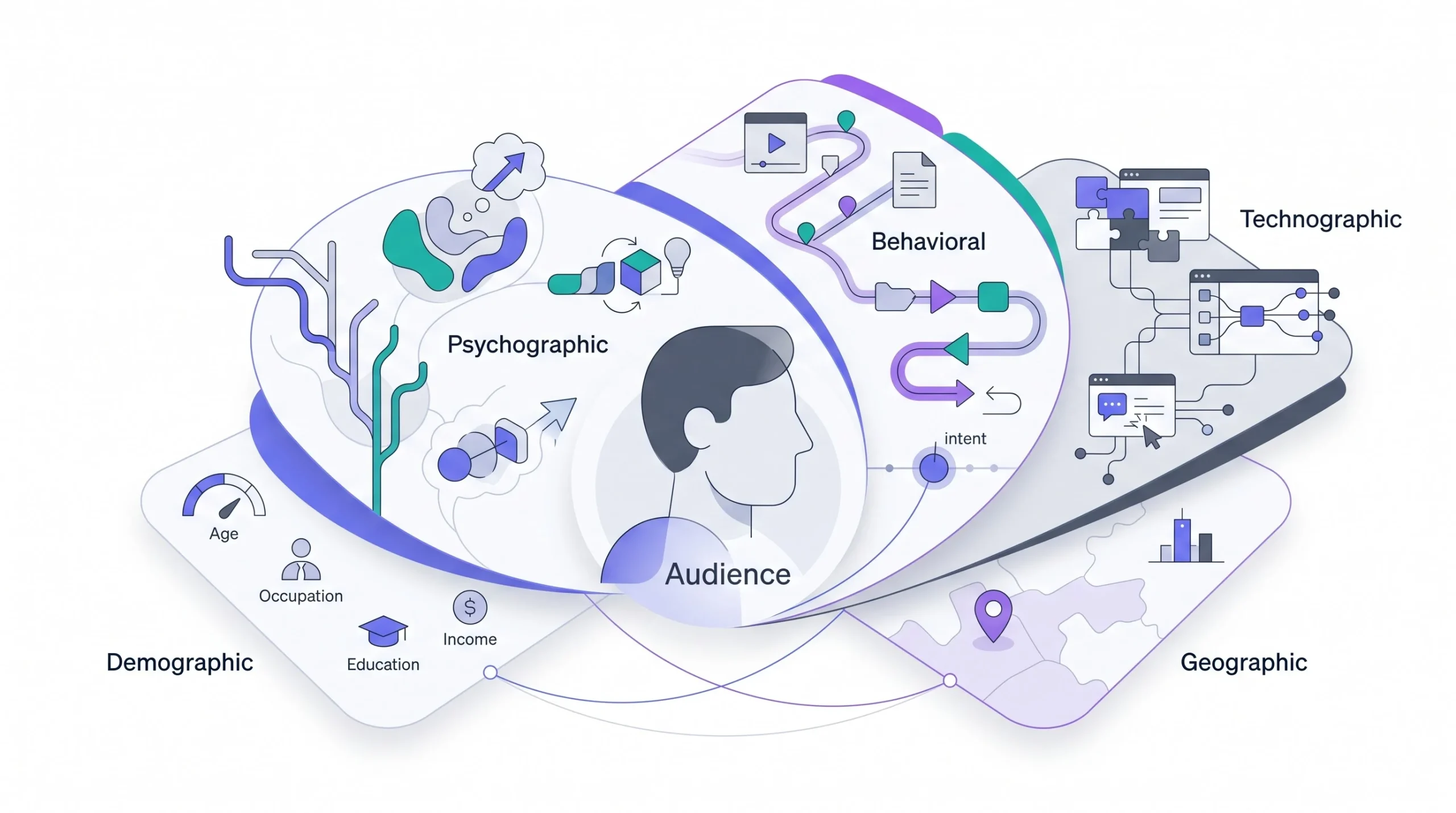
This is the starting point everyone’s familiar with: age, gender, income, education level, occupation, marital and family status. Useful, but only as a filter, not as a full picture of anything. Two 30-year-old women with an MBA and a similar income can behave completely differently as buyers depending on what they value, where they live, and what stage of life they’re currently in. Demographics tell you who could theoretically buy. They don’t tell you who actually will, or why.
The mistake beginners make constantly, and it’s an easy one to fall into, is stopping right here. “Our audience is women 25 to 40” isn’t an audience. It’s a demographic slice of a market, a starting filter and nothing more, and treating it as the finished answer is how campaigns end up speaking to no one in particular.
Geographic Data
Country, state, city, and in India specifically, city-tier, matter enormously. Metro, Tier-1, Tier-2, Tier-3, urban versus rural. This isn’t just a shipping-logistics detail. Location shapes language preference, income-to-spending ratios, and buying cycles tied to regional festivals, none of which show up if geography only gets treated as a delivery-address field.
Someone in Mumbai and someone in Indore might look identical on an income spreadsheet, but their cost of living, their spending priorities, and even the trust signals that convince them to buy can differ enough to require entirely different messaging strategies. A campaign that treats “India” as one geographic blob is leaving performance on the table before the first ad even goes live.
Psychographic Data
This is where things get genuinely interesting, and it’s the layer most businesses skip entirely, mostly because it’s harder to measure than a checkbox on a form. Psychographics cover values, interests, lifestyle choices, attitudes, and aspirations, the internal stuff that never shows up on a customer intake form but drives almost every buying decision anyway.
Here’s why this matters more than demographics for actually getting someone to care: two people can share identical age, income, and location, and still buy for completely different reasons. One buys a premium skincare product because status matters to them, they want to be seen using something exclusive at a friend’s dinner party. Another person with the exact same profile on paper buys the same product because they’re anxious about aging and want reassurance, not status, not visibility, just relief from a worry. Same demographic slice. Two entirely different messages needed to convert them, and a campaign speaking only to one will lose the other every time. Demographics tell you who they are. Psychographics tell you why they buy.
Behavioral Data
This layer looks at what people actually do, not what category they fall into or what they’d say if asked. Purchase history, brand loyalty, frequency of use, device preference, content consumption habits, and price sensitivity all live here, and this is the layer that’s usually sitting untouched in an analytics dashboard nobody’s opened in months.
Behavioral data is the strongest predictor available for paid ad targeting because intent shows up in behavior long before it shows up anywhere else. Someone who abandoned a cart yesterday is a completely different targeting opportunity than someone who’s never visited the site at all. Someone who’s read three blog posts about “how to choose a CRM” is meaningfully closer to buying than someone who bounced off the homepage in four seconds. This is the layer that separates a cold audience from a warm one, and more often than not it’s already sitting in Google Analytics or the ad platform’s own reporting, quietly ignored while budget gets spent chasing brand-new cold traffic instead.
Technographic Data (for B2B)
This one’s specific to B2B and it’s badly underused. Technographic data looks at what tools, software, and platforms a company already has running in its stack. Selling a Slack integration, and knowing which prospects already use Slack versus Microsoft Teams, changes everything about who gets targeted and how the pitch gets framed. This connects directly to how B2B and B2C targeting diverge in general, B2B buying decisions often involve a whole existing stack of tools that either supports a new purchase or actively blocks it, and technographic data is the only way to know which situation a given prospect is actually in.
Demographics tell you who they are. Psychographics tell you why they buy. Behavioral data tells you when they’re ready.
Step-by-Step Process to Identify Your Target Audience
Here’s the actual process. Seven steps, in order, each one building on the last, none of them skippable without losing something important further down the chain.
Step 1: Analyze Your Existing Customers
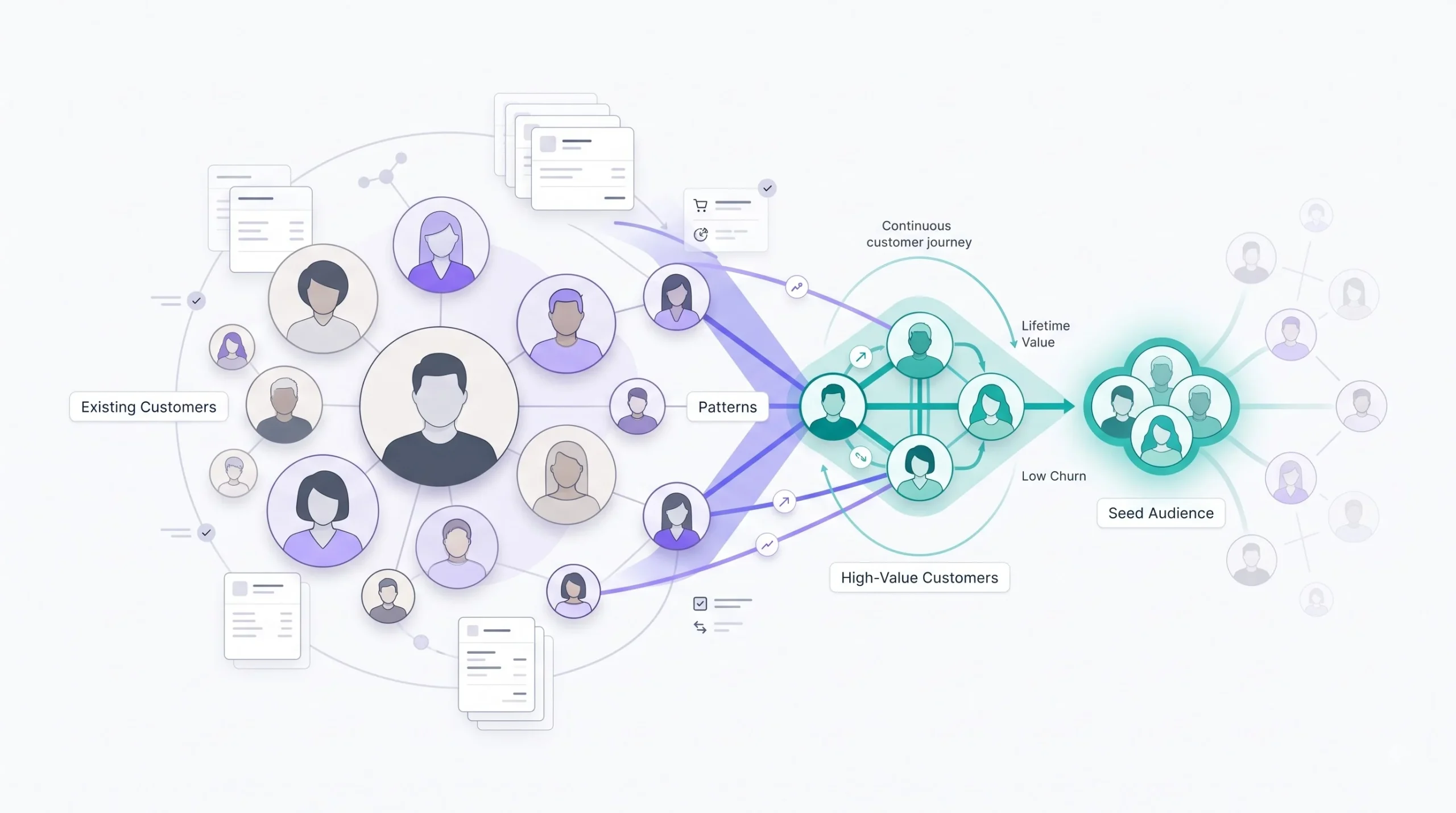
Start here, not with guesswork, not with a competitor’s audience, with the people who already bought something. This is the fastest, cheapest, most accurate data source available to any business with even a small sales history, and it sits unused in most CRMs, which is honestly a bit of a waste given how much easier this makes everything after it.
Pull past sales records and look for patterns instead of just totals. Who are the repeat buyers? Who has the highest lifetime value? Who churned fast after one purchase and never came back, and is there anything those churned customers had in common? The customers with the highest LTV and lowest churn are the seed audience, the group most worth building lookalike targeting around. If a SaaS company notices that customers who came from a specific industry, say, education institutions, stick around three times longer than everyone else, that’s not a coincidence worth shrugging off, that’s the audience worth doubling down on before spending another rupee chasing anyone else.
Step 2: Study Your Competitors’ Audience
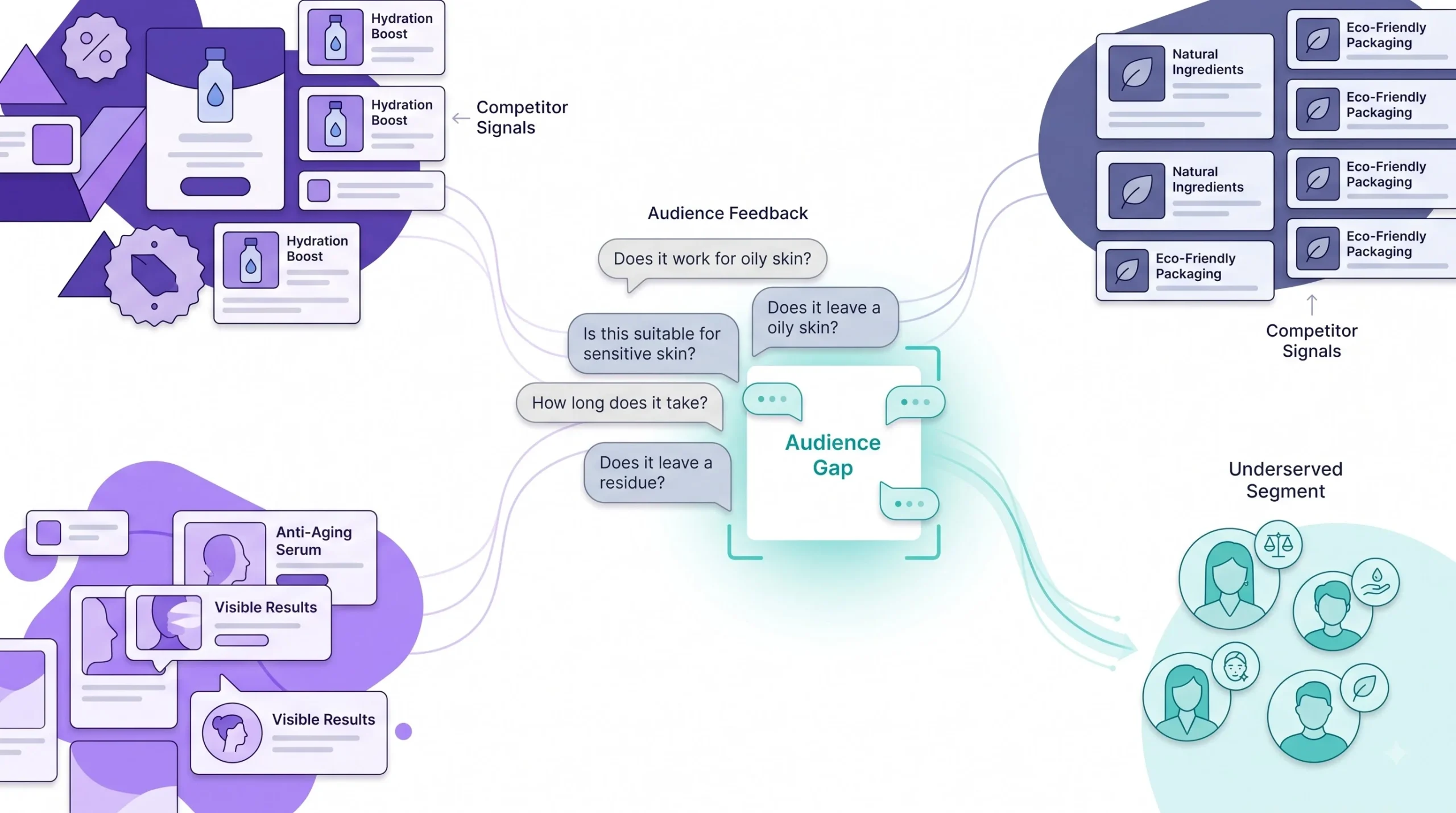
Nope, this doesn’t mean copying a competitor’s targeting blindly, that’s a fast way to inherit their mistakes along with whatever’s working for them. It means observing who they’re clearly built for and figuring out what gap exists that they’re leaving unaddressed.
Look at their ad creative, the tone being used, the imagery, the offers being pushed repeatedly, since repeated offers usually mean something’s converting. Look at the comment sections on their social posts too, that’s often the most honest place on the internet to see what real customers actually think, complain about, or ask over and over without getting an answer. If a competitor’s comment section is full of people asking “does this work for oily skin?” and the brand never once addresses it in their content, that’s a signal about an underserved segment sitting right there in public, free to act on.
Step 3: Use Analytics Data You Already Have
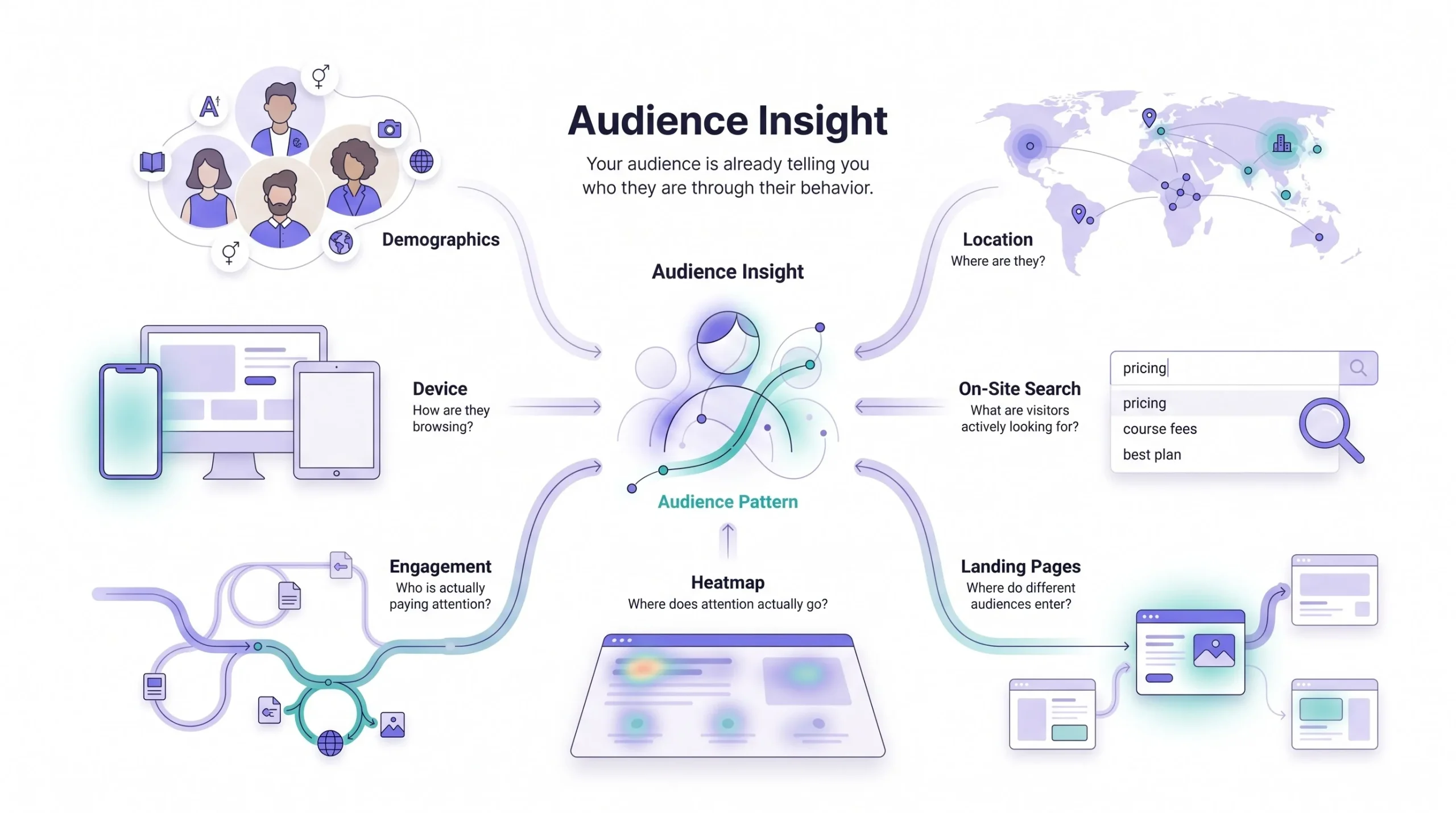
Most businesses are sitting on a pile of audience data they’ve genuinely never opened. Google Analytics audience reports show age, location, device, and interest categories for actual website visitors, not guesses, real people who actually showed up and did something. Meta Ads Manager has its own audience insights layer showing who’s engaging with existing content already. On-site search queries reveal exactly what people are looking for, in their own words, no interpretation needed. Heatmaps show where attention actually goes on a page versus where a business assumes it goes, and those two things are almost never the same.
A few specific things worth checking rather than just skimming the dashboard: session duration broken down by demographic segment, since whichever segment sticks around longest is usually the one finding the content genuinely relevant. Top landing pages by demographic, because different segments often gravitate toward different entry points into the same site without anyone planning it that way. And device split, because a segment that’s eighty percent mobile needs a completely different page experience than one that’s mostly browsing on desktop, and a lot of underperforming pages are underperforming simply because nobody checked which device the audience was actually using.
Step 4: Conduct Direct Research (Surveys & Interviews)
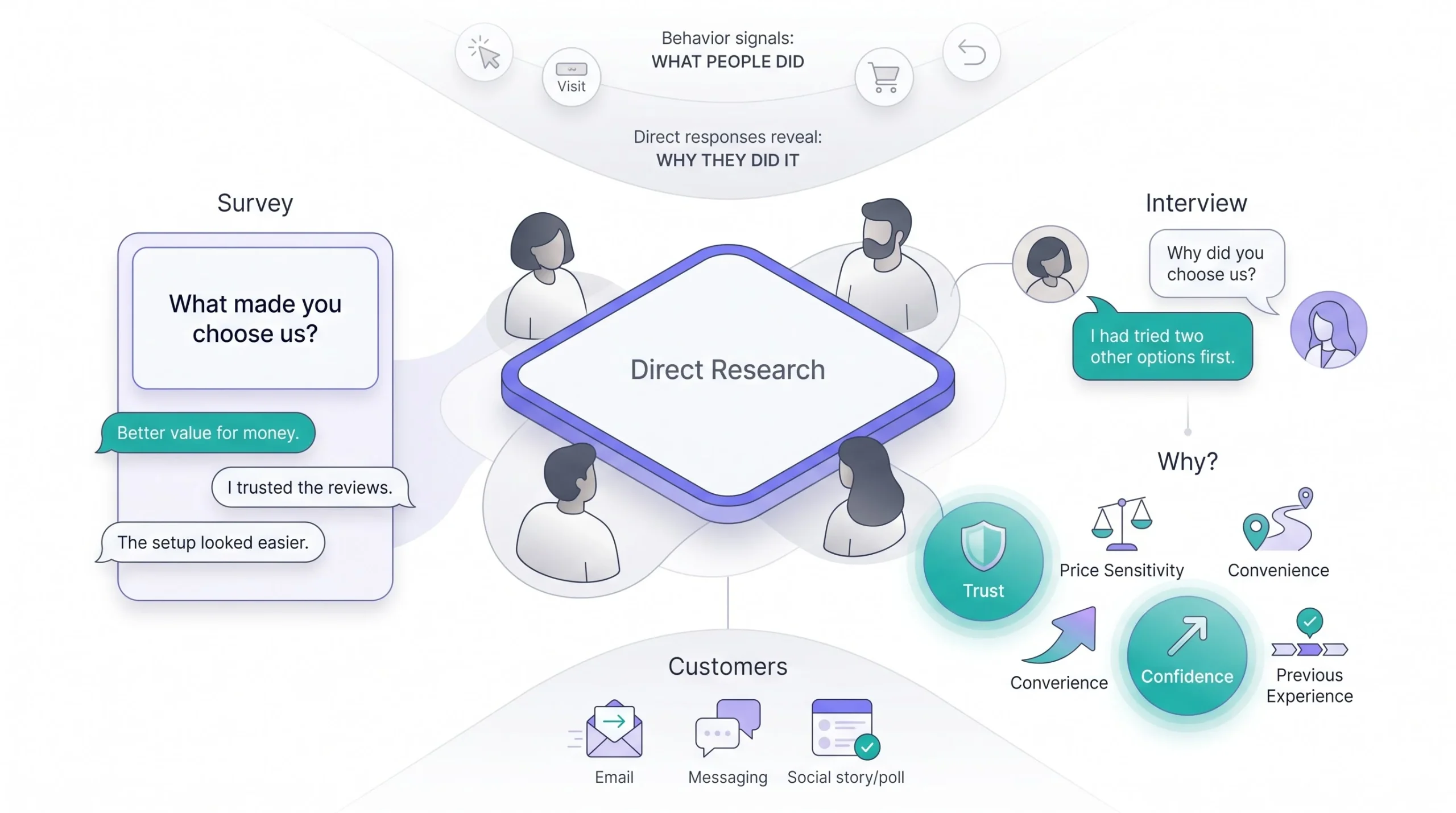
Analytics data tells you what people did. Surveys and interviews tell you why, and that “why” is usually the missing piece that turns a persona from a description into something actually useful.
Here’s the trap almost everyone falls into with surveys: writing leading questions that confirm what’s already believed instead of questions that could genuinely surprise the person asking them. “Do you agree that convenience is the most important factor when choosing a product like ours?” is going to get a yes from most people regardless of what they actually think, because the question already handed them the answer. A better version, something like “What made you choose us over other options?” left fully open-ended, lets the real answer surface instead of the answer the question was fishing for.
For sourcing real respondents cheaply in the Indian context, existing customer email lists, WhatsApp broadcast groups, and even short incentivized polls on Instagram Stories tend to get honest, fast responses without needing a research budget that most small and mid-sized businesses simply don’t have lying around.
Step 5: Study Social Media & Community Behavior
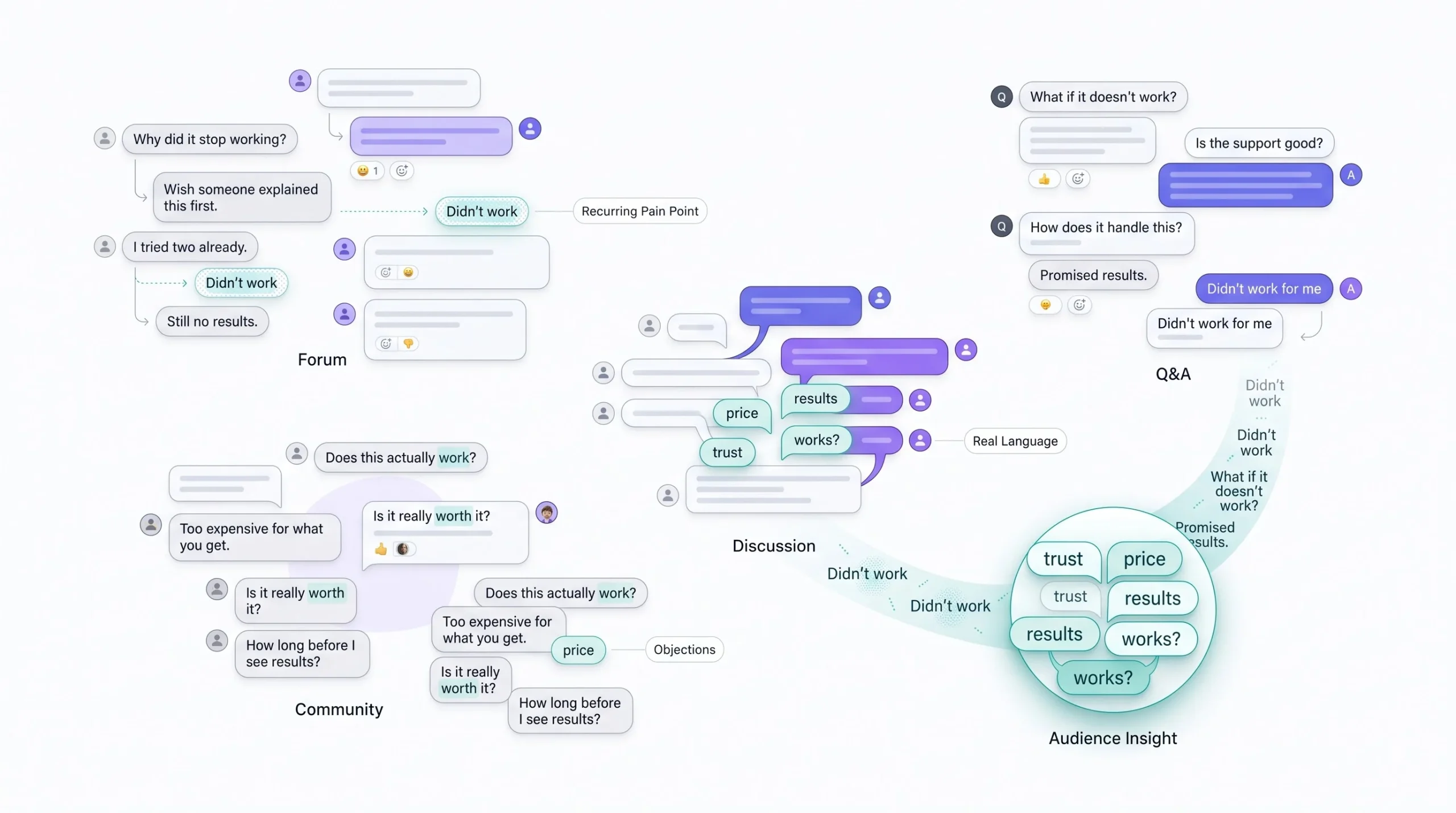
This step gets skipped constantly, and it shouldn’t, because it’s where people talk the most honestly, usually without ever realizing a business is reading along.
Relevant Facebook groups, Reddit threads, Quora answers, and industry forums are full of unprompted opinions, complaints, and questions, none of it filtered through a survey format or softened for politeness. What’s actually worth extracting here: the specific language people use, not marketing language, real language, the exact phrases they type when they’re frustrated or genuinely curious about something. Recurring pain points that show up again and again across completely different threads, which is a strong signal, not a one-off complaint. And objections people voice unprompted, without anyone asking them to. If five different people in a skincare thread mention getting burned by a product that “promised results in a week and did nothing,” that’s a real, specific objection worth addressing head-on in ad copy, not a guess dressed up as a research finding.
Step 6: Map Search Intent & Keyword Data
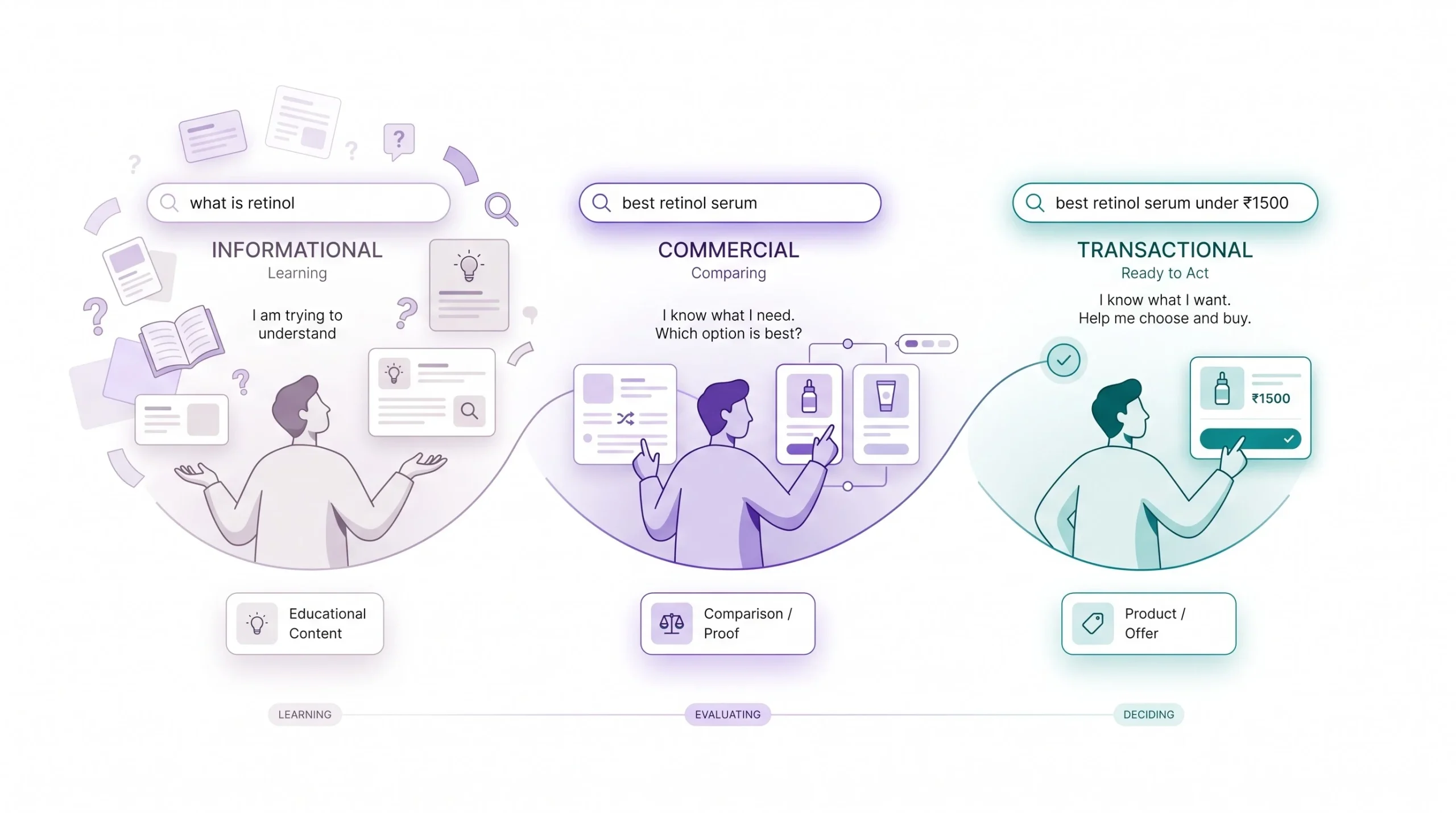
Keyword research usually gets filed under “SEO stuff” and left there, but it’s honestly one of the clearest audience-intent signals available to any business, and most only use it for ranking purposes, missing half of what it’s actually telling them.
The distinction that matters most here: informational intent versus transactional intent. Someone searching “what is retinol” is early, curious, not remotely ready to buy anything yet, and hitting them with a hard sell at this stage usually backfires. Someone searching “best retinol serum under ₹1500” is close to a decision, actively comparing specific options with a budget already fixed in their head. These aren’t just different keywords sitting on a spreadsheet, they’re different audience stages entirely, and treating them the same way in messaging wastes an opportunity that keyword data is handing over for free, no survey required.
Step 7: Segment the Data Into Distinct Audience Groups
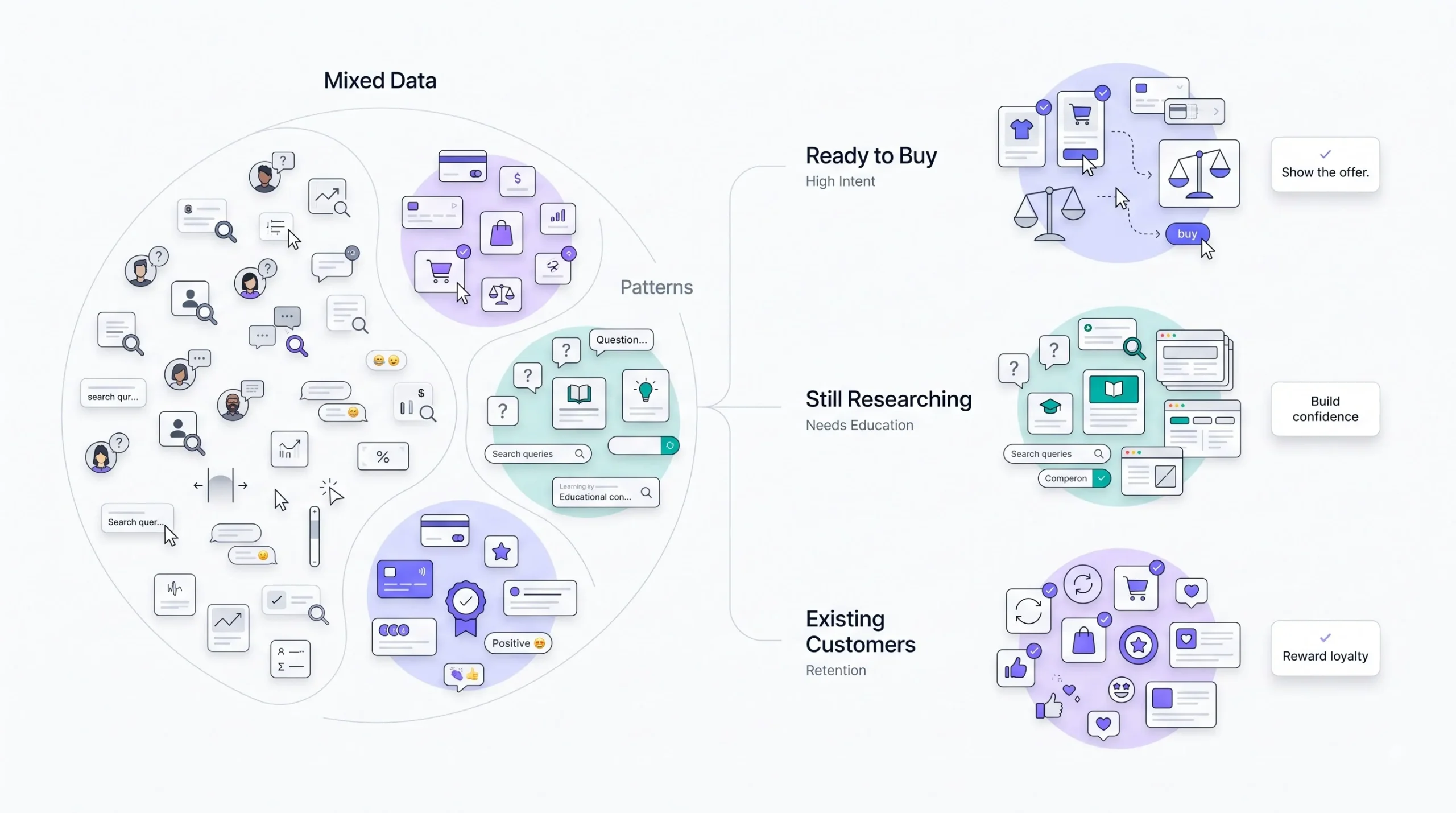
By this point there’s a genuine pile of data: customer records, competitor observations, analytics numbers, survey answers, community language, and search behavior. The final step in this process is refusing to treat all of that as one giant blob labeled “our audience,” which is exactly what happens if this step gets skipped.
The trap here is obvious once someone points it out: trying to build one single audience definition that covers everyone who’s ever bought or shown a flicker of interest. That’s not an audience, that’s just “everyone we’ve ever talked to,” and messaging built to speak to everyone convinces no one specifically, it just gets scrolled past by all of them equally. The real work in this step is pulling distinct, meaningful groups out of that pile, each one different enough from the others to genuinely deserve its own message rather than a slightly reworded version of the same one.
You’re not looking for one audience. You’re looking for 3 to 5 meaningful segments, each deserving its own message.
Audience Segmentation: Going From Data to Actionable Groups
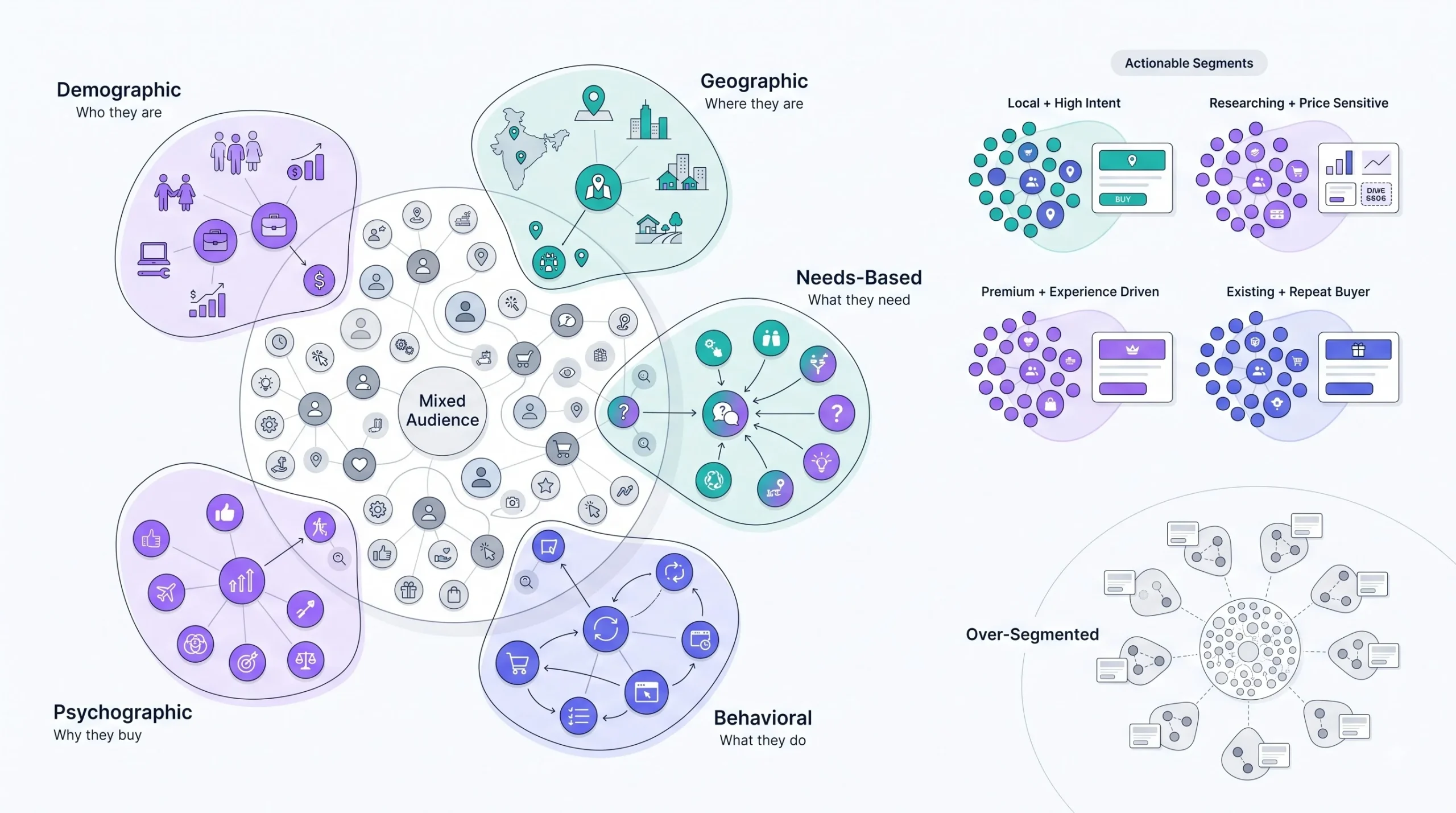
Segmentation is where raw research actually turns into something a campaign can use. There are five main ways to slice audience data, and each one serves a genuinely different purpose, which is why relying on just one of them usually leaves gaps somewhere else.
Demographic segmentation groups people by age, income, occupation, and similar traits. It’s the broadest and most commonly used cut, and it works reasonably well for early-stage product-market fit testing or basic ad set targeting when there isn’t much else to go on yet.
Geographic segmentation groups by location, city-tier, or region. This matters enormously for local SEO work and for region-specific offers, especially around festival seasons in India, where buying behavior shifts hard depending on where a date falls on the calendar that year.
Psychographic segmentation groups by values, lifestyle, and attitude. This one shapes brand positioning and creative tone more than any other segmentation type does, because it’s addressing why someone buys rather than just who they happen to be on paper.
Behavioral segmentation groups by actions actually taken: past purchases, engagement level, on-site behavior. This is the backbone of retargeting and lifecycle campaigns, cart abandonment sequences being the most obvious and honestly the highest-return example of it in practice.
Needs-based segmentation groups people by the specific problem they’re trying to solve, regardless of their demographic profile sitting underneath it. This one’s underused but genuinely powerful for product lines that end up solving different problems for different people even when the product itself is basically the same thing.
| Segmentation Type | Best For | Example Application |
|---|---|---|
| Demographic | Broad product-market fit | Age-targeted ad sets on Meta |
| Geographic | Local SEO, region-specific offers | Diwali sale messaging by city-tier |
| Psychographic | Brand positioning, creative tone | Aspirational messaging for premium SaaS |
| Behavioral | Retargeting, lifecycle campaigns | Cart abandonment email sequences |
| Needs-based | Product line differentiation | Different landing pages per pain point |
Here’s the part that doesn’t get said enough: over-segmentation is also a mistake, and it’s one that shows up more often in businesses that have actually gone through this exercise seriously, ironically enough. Splitting an audience into fifteen micro-segments feels thorough and looks impressive in a strategy deck, but it fragments budget across too many small ad sets, and on platforms like Meta and Google, each ad set needs enough volume flowing through it to exit the learning phase and start optimizing properly. An ad set stuck permanently in the learning phase because it’s too narrow will always underperform a slightly broader one that has enough data moving through it to let the algorithm actually do its job. Three to five well-defined segments, each with a real, provable behavioural difference between them, beats fifteen technically accurate but tiny slices every single time.
Building a Detailed Buyer Persona (Worked Example)
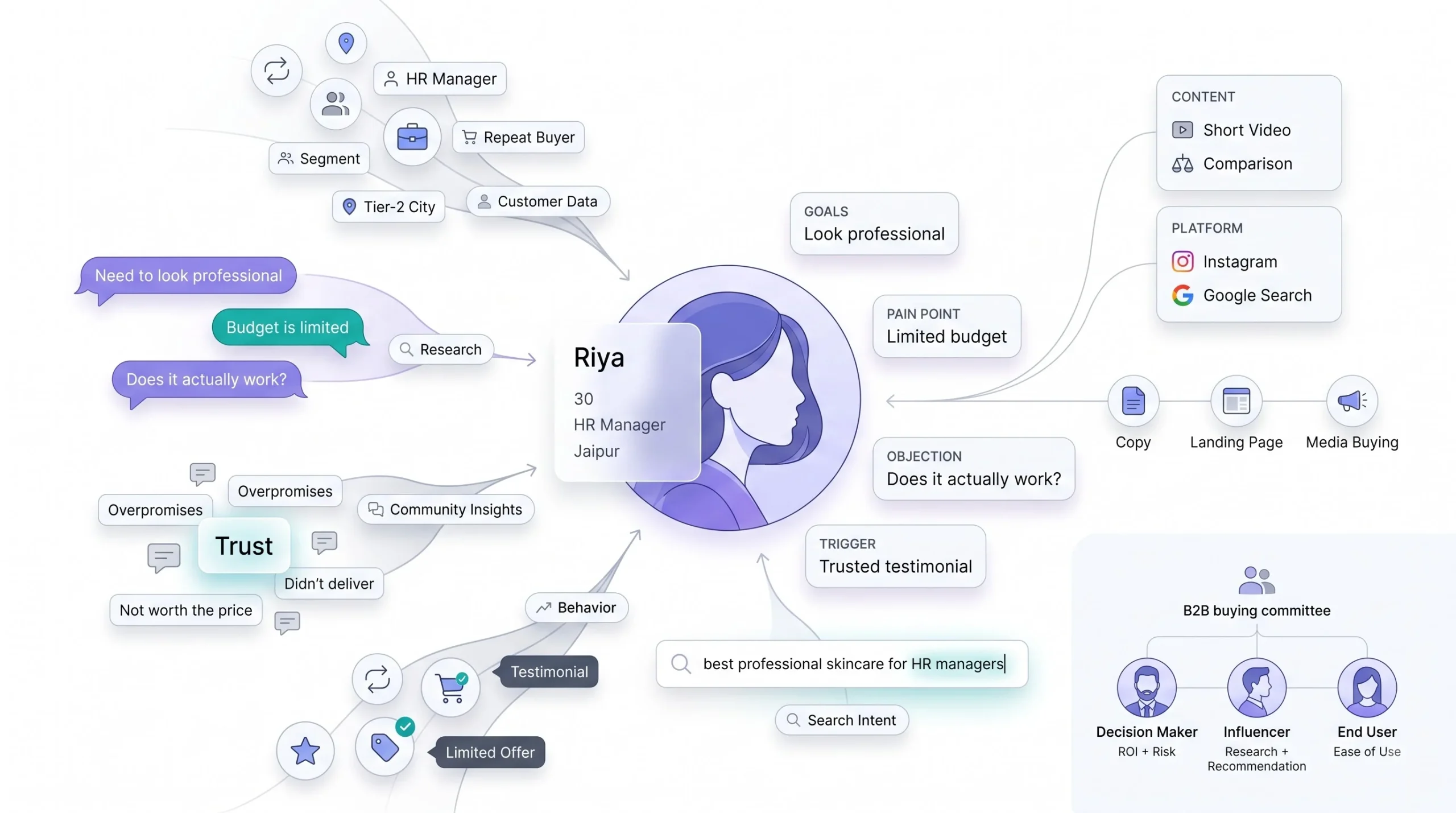
Templates are everywhere online, a name, a stock photo, a few bullet points, done in ten minutes. That’s not really how this works in practice, and it’s exactly why so many personas end up ignored the moment they’re finished. Here’s what building one actually looks like, step by step, using the data types already covered above, not shown as a finished product but built live, the way it actually happens.
Start with role and demographics, pulled straight from Step 1 and Step 3 data, not invented from a guess. Say the customer records show a cluster of repeat buyers who are HR managers at mid-sized companies, mostly in Tier-2 cities, aged 28 to 35. That’s the seed, not an assumption, an actual pattern pulled from real records. Give this person a name, not because it’s a cute exercise, but because “Riya” gets written to differently than “Segment 3” ever will. Riya, 30, HR Manager, Jaipur.
Next, layer in goals and frustrations, pulled from Step 4 and Step 5, the survey answers and the community language collected earlier. Maybe the research shows Riya is under real pressure to look polished and professional at work but has limited budget flexibility for anything considered a personal indulgence, and she’s frustrated specifically by products that overpromise in their marketing and underdeliver once she’s already paid for them. That frustration, pulled word for word from real feedback rather than assumed from a hunch, becomes the exact objection the ad copy needs to meet head-on instead of dancing around.
Then add buying triggers, whatever actually pushes her from “interested” to “bought,” pulled from behavioral data gathered in Step 3. Maybe it’s a testimonial from someone in a similar role at a similar-sized company, or a limited-time offer that lands right around a specific festival or pay-cycle date. And objections, the specific hesitations that keep showing up repeatedly across the research, whether that’s price, trust in an unfamiliar brand, or genuine uncertainty about whether results will actually show up.
Finally, preferred content format and platform, pulled from Step 6 and from the platform-behavior thinking covered further down. Does Riya respond better to a short video, or does she prefer reading a detailed comparison before deciding on anything? Is she scrolling Instagram during her commute between meetings, or searching Google directly, alone, at night, once she’s finally decided she has a specific need to solve?
Once every layer here is filled in with real research instead of assumptions dressed up as research, the persona actually starts changing decisions instead of just sitting in a document. It tells the copywriter what tone to reach for. It tells the media buyer which platform deserves the budget first. It tells whoever’s building the landing page what kind of page will actually land with this specific person instead of a generic one built for nobody in particular. That’s the real difference between a persona that gets built once and forgotten, and one that quietly shapes every campaign built around it going forward.
One more layer worth mentioning, specific to B2B: a single persona often isn’t enough, because B2B buying usually runs through a committee, not one decision-maker sitting alone with a credit card. There’s the decision-maker who signs off on budget and carries the risk if it goes wrong, the influencer who researches options and makes the actual recommendation, and the end-user who’ll be stuck using the product day to day regardless of who chose it. These three roles frequently have different priorities entirely, the end-user cares most about ease of use, the decision-maker cares most about ROI and risk exposure, the influencer cares most about how the option compares against alternatives they’ve already looked at. Building one persona and assuming it quietly covers the whole buying committee is a mistake that shows up constantly in B2B campaigns that underperform despite what looks, on paper, like reasonably solid targeting.
A persona built only from demographic guessing doesn’t change a single marketing decision. A persona built from real behavioral and psychographic research changes almost every decision that follows it.
Identifying Audience by Platform (Where They Actually Are)
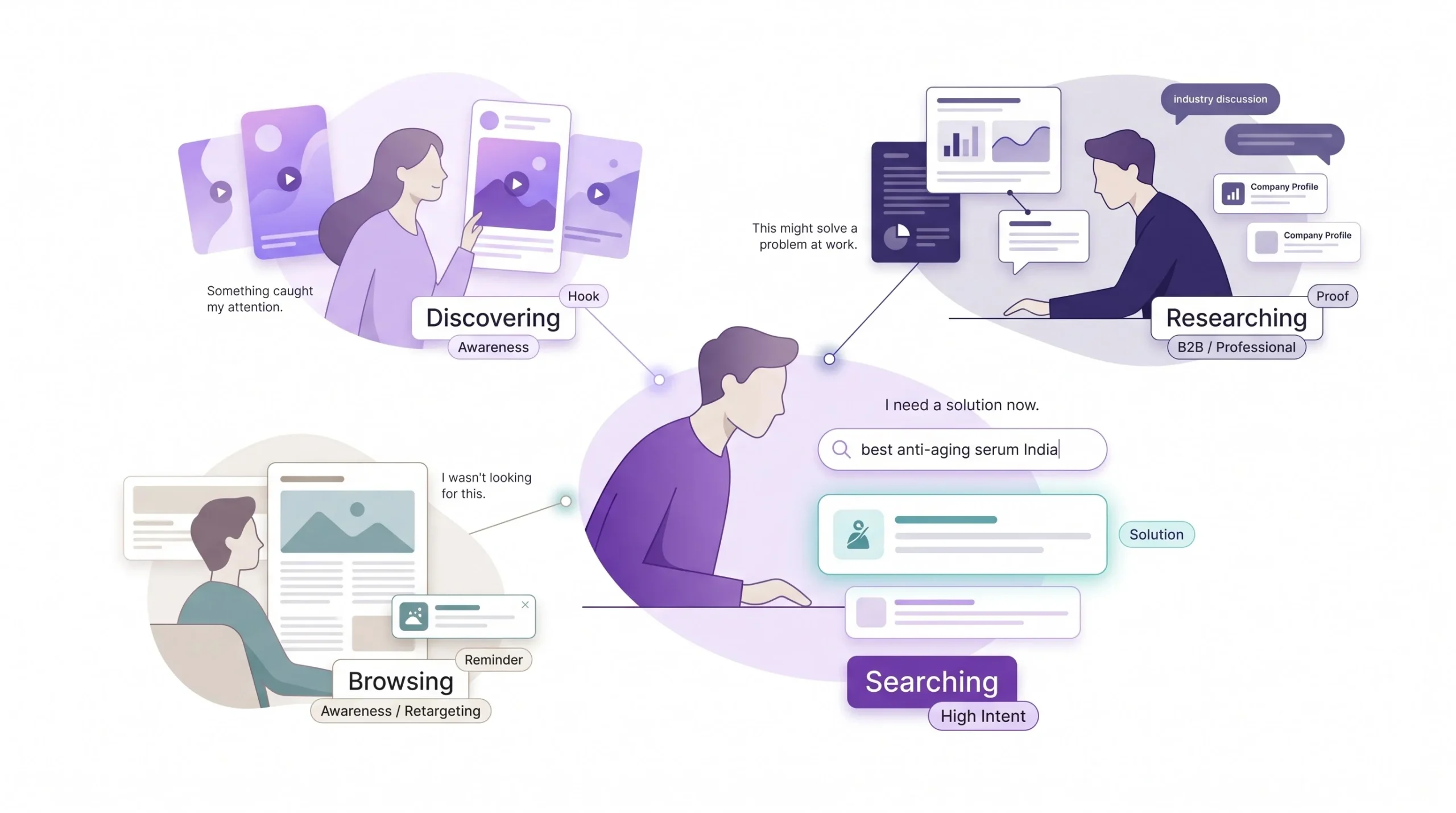
Here’s something that trips people up constantly: target audience isn’t one fixed thing sitting still, it shifts depending on the platform and on which funnel stage someone happens to be in at that exact moment. The Riya researching skincare on Instagram during a lunch break is in a completely different headspace than the Riya searching “best anti-aging serum India” on Google at eleven at night because she’s finally decided she’s ready to buy something.
Instagram and other short-form platforms tend to reach audiences earlier in their decision process, browsing, discovering, not necessarily looking for anything specific in that exact scrolling moment. Content here needs to interrupt attention and build interest from a cold start, it’s an awareness and consideration play more than a direct-response one, though retargeting on these same platforms works genuinely well once someone’s already shown initial interest and just needs a nudge back.
LinkedIn and other B2B-leaning platforms reach a completely different mindset, people who are there in a professional capacity, often actively researching a solution to a specific work problem sitting on their desk right now. This is where the ICP thinking and the buying-committee thinking from the last section actually get put to use, not the broader psychographic persona work that’s better suited to consumer platforms.
Google Search reaches high-intent audiences almost by definition, since someone typing a specific query has already decided they want information or a solution, they’re just deciding where to get it from. This is bottom-of-funnel gold when the keyword shows clear transactional intent, and it’s where landing pages need to be sharpest of anywhere in the funnel, because the audience arriving here is ready to act, not just browse around casually.
Display advertising, on the other hand, reaches low-intent audiences who weren’t actively looking for anything in particular, they’re just browsing a website that happens to be running an ad network in the background. This works for awareness and for retargeting warm traffic, not for expecting immediate conversions out of cold traffic that never asked to see the ad in the first place.
The mistake that shows up constantly here: defaulting to whichever platform is easiest to set up, usually Meta, instead of matching the platform to where the actual researched audience spends time with real intent attached to that attention. A campaign selling enterprise software running primarily on Instagram Reels is fighting the platform’s own nature the entire way through, and no amount of clever creative fixes a fundamental mismatch like that.
Indian Market Considerations for Audience Identification
Everything covered so far applies globally, but doing this work specifically in India adds a few layers that get missed constantly, usually because most audience-research advice floating around online is written with a US or UK market in mind and just quietly assumed to translate.
Language layering matters more than most businesses account for. A campaign running purely in English might perform fine in Mumbai or Bangalore but fall flat in a Tier-2 or Tier-3 city where a Hindi or regional-language mix connects far better, not because the audience doesn’t understand English, plenty of them understand it fine, but because comfort and trust shift noticeably when someone’s being addressed in the language they actually think in day to day.
Income tier nuance changes price sensitivity in ways raw income numbers alone don’t capture. Someone earning ₹40,000 a month in a metro city has a genuinely different discretionary spending pattern than someone earning the same amount in a Tier-3 city, where cost of living runs lower but price sensitivity on non-essential purchases can actually run higher, because the local expectation for what counts as “reasonable pricing” is calibrated completely differently there.
Festival and seasonal buying cycles aren’t a nice-to-have consideration tucked into a footnote, they’re a major targeting variable in their own right. Diwali, Rakhi, wedding season, back-to-school periods, these create predictable, sizeable spikes in specific buying categories, and audience messaging that ignores this calendar entirely is leaving obvious, well-timed opportunities sitting on the table untouched.
Mobile-first behavior shapes creative format decisions more in India than in many other markets, given how much of the country accesses the internet primarily, sometimes exclusively, through a mobile device rather than a desktop. A landing page or ad creative designed desktop-first and adapted for mobile as an afterthought is going to underperform badly against one built mobile-first from the very first sketch.
Trust signals carry different weight depending on city tier, and this is one of the more overlooked pieces of the whole picture. In Tier-2 and Tier-3 markets specifically, testimonials, local-language proof, and WhatsApp-based conversion paths tend to build trust faster than the polished, aspirational brand messaging that tends to work better in metro markets. A buyer in a smaller city who can message a real person on WhatsApp before committing to a purchase often converts faster and with less friction than one being pushed through a generic checkout flow with zero human touchpoint anywhere in it.
How to Validate and Continuously Refine Your Target Audience
Audience identification isn’t something to do once and file away in a folder. Markets shift, competitors change their positioning without warning, and the assumptions that were accurate a year ago quietly stop being true while nobody’s checking in on them.
The feedback loop here runs through campaign performance data. Click-through rate, conversion rate, and cost per lead, broken down by segment rather than looked at in aggregate, tell a business whether its original audience assumptions were actually correct or just felt correct on paper at the time. A segment that looked promising during the research phase but consistently underperforms once campaigns are live is a signal to challenge that original assumption directly, not a reason to keep pushing more budget at it out of sunk-cost stubbornness.
A/B testing audience segments against each other is one of the most direct ways to validate any of this. Running the same creative and the same offer against two different segments and comparing performance removes guesswork from the equation entirely, the data either confirms the research or it contradicts it, and either outcome is genuinely useful information either way.
Setting an actual review cadence matters here too, quarterly works well for most businesses, tied to seasonal and market shifts rather than left open-ended with no fixed check-in point at all. This is also exactly where ROAS measurement and social media analytics come back into the picture, since they’re the ongoing data sources that reveal whether an audience definition still holds up months after it was first built, or whether it’s quietly drifted out of date without anyone noticing.
Conclusion
Getting this right isn’t about following a checklist once and moving on with life. It’s a shift in how campaigns get built from the very start, from “let’s guess who might like this” to “here’s what the data actually shows about who buys, why, and when.” That shift alone fixes more underperforming campaigns than any creative overhaul or bigger budget ever will, because it fixes the thing everything else was quietly built on top of.
If there’s one thing worth taking away from all of this, it’s a simple three-step habit: look at existing customer data before assuming anything new, break findings into distinct segments instead of one broad blurry audience, and keep checking that data against live campaign performance instead of setting it once and forgetting about it entirely. That loop, run consistently, is what separates campaigns that get cheaper and sharper over time from ones that just keep quietly bleeding budget on guesswork nobody ever went back to question.
Frequently Asked Questions
What’s the difference between target audience and target market?
Target market is the broad category of people who could buy from a business overall. Target audience is a narrower slice of that market, defined for a specific campaign or product, based on traits that actually matter for that particular push, not the business as a whole.
How many buyer personas should a business have?
Most businesses do fine with two to four well-researched personas. More than that usually means the personas aren’t distinct enough to matter in practice, or the research behind them wasn’t specific enough to actually separate one from another.
How do you identify a target audience with a small budget or no existing data?
Start with direct conversations, even five or ten real customer interviews reveal more than a generic survey blasted out to a few hundred strangers who barely remember filling it in. Community research on forums and social groups is free and often more honest than any paid research tool anyway.
How often should a target audience be updated?
A quarterly review works for most businesses, tied to actual campaign performance data rather than a fixed calendar picked arbitrarily. Any time a major shift happens, a new competitor entering the space, a pricing change, a product update, that’s worth an off-cycle review too, not something to wait on until the next quarter rolls around.
How is target audience different for B2B versus B2C?
B2C audience work usually centers on one individual buyer’s demographics and psychographics. B2B audience work has to account for a buying committee, decision-makers, influencers, and end-users, each with different priorities, plus company-level data like industry and technographics that simply don’t apply to individual consumers making a personal purchase.
What are the best free tools to research an audience?
Google Analytics audience reports and Meta Ads Manager audience insights are both free and pull from real behavioral data rather than guesses dressed up as insight. On-site search data and social media comment sections cost nothing and often reveal more honest signals than any paid research tool ends up delivering anyway.
How do you find a target audience on Instagram or Facebook?
Meta’s own audience insights tools show engagement patterns on existing content already published. Beyond that, studying which posts get the most genuine comments, not just likes, and actually reading what people say in them, reveals more about audience fit than the platform’s demographic filters ever will on their own.
What is a negative or exclusion audience?
It’s a defined group deliberately excluded from targeting, usually people who’ve already converted, or a segment that historically never buys despite matching other targeting criteria on paper. Excluding them saves budget that would otherwise get spent showing ads to people who were never realistically going to act on them.
How do you identify a target audience for a brand new business with zero customers?
Lean on competitor research, community listening, and direct interviews with people who match the intended market, since there’s no internal customer data yet to analyze or pull patterns from. Early assumptions should be treated as hypotheses worth testing, not settled facts carved in stone from day one.
What are the signs that a current target audience definition is wrong?
Rising cost per lead over time despite stable creative that hasn’t changed, low engagement on content built specifically for that supposed audience, and a growing gap between who the business assumes it’s serving and who’s actually showing up to buy, are all signals worth investigating seriously rather than waving away as a temporary dip.