

Look, if you’re still treating Instagram Reels like some optional extra thing you do when you have spare time, you’re already behind. Not in a “the sky is falling” way, but in a real, measurable way. Brands that leaned into Reels early are sitting on follower counts and engagement numbers that took their competitors years to build through feed posts alone. And here’s the thing nobody tells you upfront: it’s not because Reels are magic. It’s because Instagram’s algorithm is quietly begging you to make them, and most brands still aren’t listening.
I’ve watched small accounts with 200 followers post a single Reel that pulled in 40,000 views in three days. I’ve also watched huge, established brands post polished, expensive-looking Reels that get maybe 300 views and die a quiet death in someone’s feed. The difference usually isn’t budget. It’s understanding how this format actually works, what Instagram rewards, and what real humans stop scrolling for.
So why do Instagram Reels dominate organic reach right now? Simple. Instagram wants to compete with TikTok, and short-form video keeps people on the app longer than static posts ever did. When Instagram wants something, it feeds it more distribution. That means the algorithm is currently biased toward showing Reels to non-followers, which is exactly the kind of discovery brands used to pay for through ads. You’re getting a temporary gift, and honestly, gifts like this don’t last forever, so use it while it’s here.
Short-form video isn’t a trend anymore either. It’s just how people consume content now. Attention spans didn’t get shorter because people got dumber. They got shorter because there’s more competing for that attention than ever before, and video that respects someone’s time wins. A well-made 20-second Reel can build more trust than a 2,000-word blog post because people get to see your face, hear your voice, watch how you move. That’s harder to fake than a polished paragraph.
And the numbers back this up. Reels regularly get 2x to 3x more reach than standard feed posts for the same account. Some creators report reach numbers that are 10x higher on their best-performing Reels compared to their average photo post. That’s not a small bump. That’s the difference between 500 people seeing your brand and 5,000.
This guide is for founders posting their own content, social media managers juggling five client accounts, and marketing teams trying to figure out why their Reels strategy isn’t working yet. Whether you’re starting from zero or you’ve been posting for a year with mediocre results, there’s something here for you.
What You Will Learn in This Guide
- How the Reels algorithm actually decides what to push and what to bury
- How to build a real content strategy instead of just “posting stuff”
- The types of Reels that consistently perform well for brands
- Where to find endless ideas so you never run out of things to say
- How to script, shoot, and edit Reels that keep people watching
- The optimization steps most people skip that quietly kill their reach
- How often to post and when, without burning yourself out
- Growth tactics that go beyond just hoping something goes viral
- How to use AI tools without making your content feel robotic
- What metrics actually matter and which ones are vanity traps
- Common mistakes that are probably costing you reach right now
- Industry-specific approaches so this isn’t generic advice
- A 30-day plan you can actually follow
What is Instagram Reels
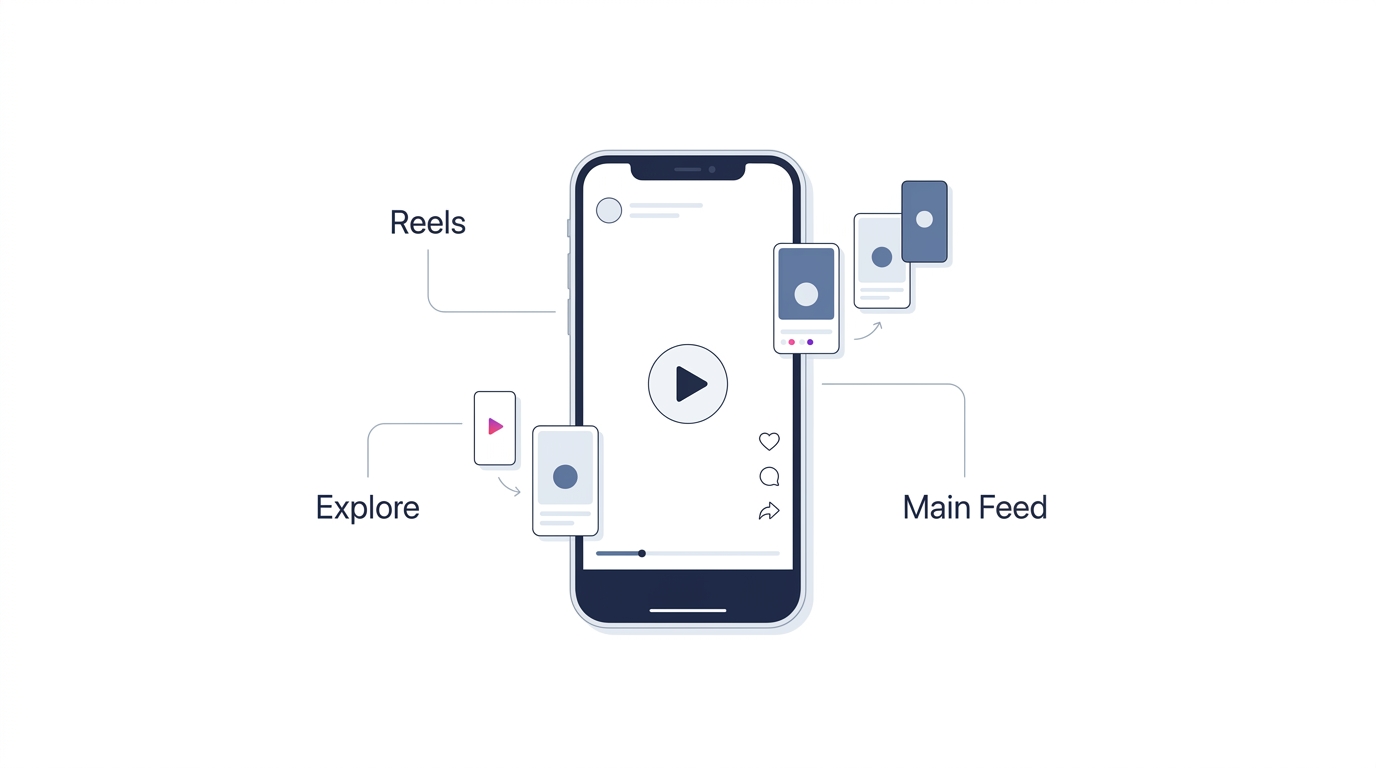
Reels are Instagram’s short-form vertical video format, built to be watched full-screen, one after another, in a feed that never really ends. They can run anywhere from a few seconds up to three minutes, though the sweet spot for most brands sits way shorter than that. Think of them as Instagram’s answer to TikTok, except with the added bonus of tapping into an audience that’s often a bit older, a bit more purchase-ready, and already following your brand for a reason.
What makes Reels different from just “a video you posted” is where they live. They don’t just sit on your profile grid waiting to be found. They get pushed out into the Reels tab, into Explore, into people’s main feeds even if they’ve never heard of you. That distribution is the whole point. Nobody discovers a static photo post the way they discover a Reel.
How Reels Have Changed Since Their Launch
When Reels first launched, they were basically Instagram’s panic response to TikTok’s explosion. Early Reels leaned hard on trending audio, dance trends, and lip-syncing. Fast forward to now, and Reels have matured into a full content format that supports education, storytelling, product demos, and business marketing just as easily as entertainment.
The algorithm has matured too. Early on, trending sounds could carry a mediocre video pretty far. That’s less true now. Instagram has gotten better at understanding content itself, not just riding the coattails of a popular audio clip. Which honestly is good news for brands, because it means quality and relevance matter more than just jumping on whatever dance is trending this week.
Why Instagram Prioritizes Reels
Instagram makes money by keeping people on the app. Every minute someone spends watching Reels is a minute they’re seeing ads, and Reels keep people scrolling longer than photo posts do. So Instagram has every incentive to push Reels into more feeds, recommend them to more strangers, and reward creators who keep making them.
That’s why you’ll notice Reels often get shown to people who don’t follow you at all, while feed posts mostly stay within your existing audience. Instagram is essentially subsidizing your reach right now because it needs the content. That won’t last forever at this rate, so brands that build habits and audiences now will have a real head start once the algorithm tightens up.
Reels vs Feed Posts
Feed posts are for your existing audience. They show up mostly to people who already follow you, and engagement tends to come from people who already trust your brand. Reels flip that. They’re built for discovery, meaning strangers are your primary audience, not your existing followers.
If your goal is nurturing an existing community, feed posts still have a place. But if your goal is growth, new followers, new reach, Reels are doing the heavy lifting almost every single time.
Reels vs Stories
Stories disappear in 24 hours and live in a completely separate part of the app that requires someone to already follow you (or be checking your profile) to see them. They’re great for quick updates, polls, behind-the-scenes moments, and staying top of mind with people who already know you.
Reels are permanent, searchable, and shown to strangers. Totally different jobs. Stories keep the relationship warm. Reels bring in new people to start a relationship with in the first place.
Reels vs Carousel Posts
Carousels are Instagram’s slideshow format, and honestly, they still perform really well for saves and educational content. People love swiping through a well-designed infographic-style carousel. But carousels rarely get the same explosive reach that Reels can get, because they don’t have that same discovery-first placement.
If you’re teaching a concept that’s genuinely easier to explain with text and static visuals, a carousel might beat a Reel. But for pure reach and new audience growth, Reels usually win.
Reels vs Live Videos
Live videos are great for real-time connection, Q&As, and urgency-driven moments like product launches. But they’re ephemeral in a different way, and the discovery mechanics just aren’t built the same way Reels are. Live tends to work best for warming up an audience you already have, not building a brand new one.
Which Content Type Should Businesses Prioritize?
Honestly? Reels first, always. Not because other formats don’t matter, but because Reels are currently the single best tool for reaching people who’ve never heard of your brand. Once you’ve built an audience through Reels, feed posts, carousels, and Stories all become more effective because you’ve got more eyeballs to work with in the first place.
Why Instagram Reels Matter for Brand Growth
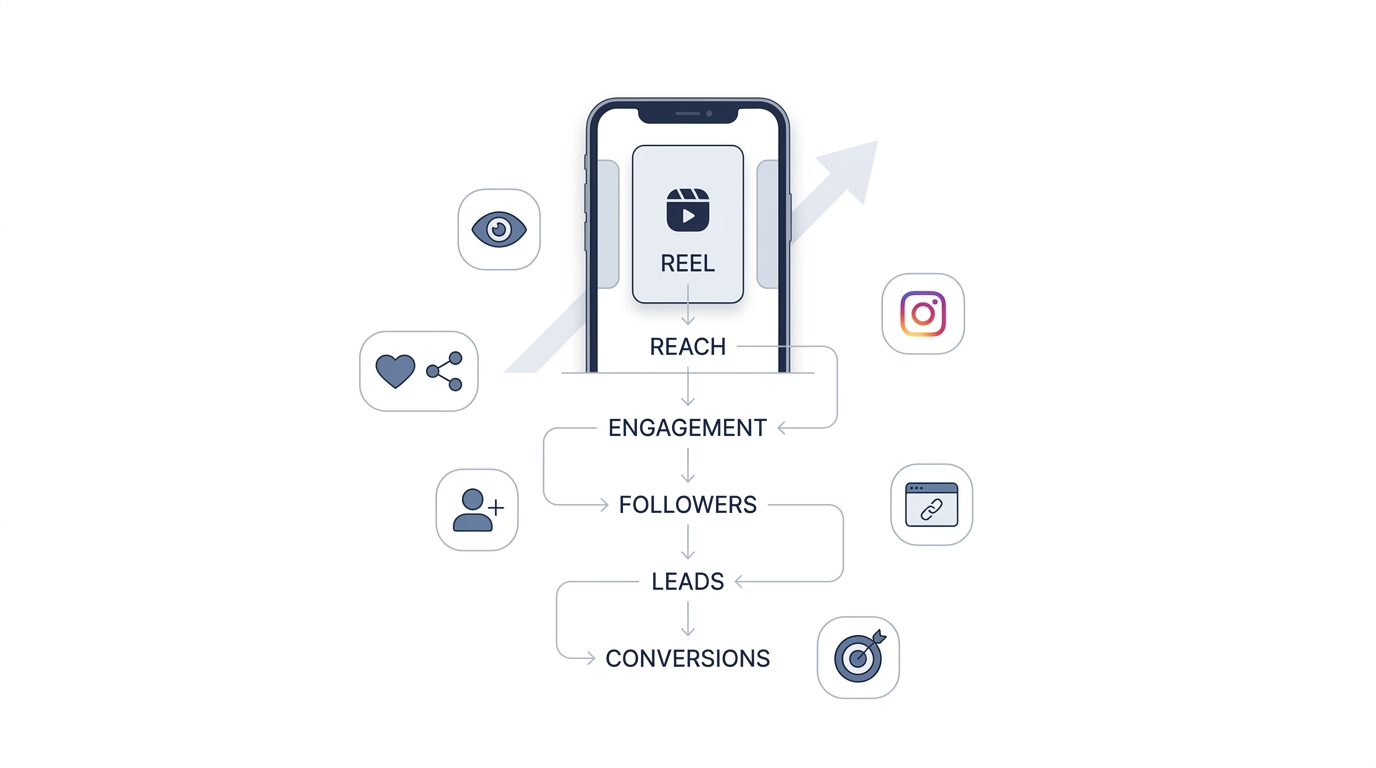
This section explains why Instagram Reels have become one of the most powerful growth channels for businesses, creators, and personal brands. Discuss how Instagram prioritizes short-form video because it keeps users engaged longer and encourages content discovery beyond followers. Explain that unlike traditional Feed posts, Reels are distributed across multiple discovery surfaces such as the Reels tab, Explore page, hashtag pages, location pages, and recommended content feeds, giving brands the opportunity to reach thousands—or even millions—of new users organically.
Cover how Reels help brands increase visibility, build trust through consistent face-to-camera content, educate potential customers, demonstrate products, showcase company culture, and create stronger audience relationships. Explain why brands using Reels consistently often experience faster follower growth, higher engagement rates, better website traffic, and more qualified leads. Also discuss how Reels support every stage of the marketing funnel, from awareness to conversions.
Massive Organic Reach
This is the headline reason brands can’t ignore Reels. A single Reel from a small account can outreach months of feed posts combined. That’s not hype, that’s just how the distribution currently works. Instagram wants to test your content with strangers, and if it performs, it keeps showing it to more strangers.
Increased Discoverability
Reels show up in the Explore tab, the dedicated Reels tab, hashtag pages, and audio pages. That’s a lot of doors for new people to walk through and find you. A feed post has basically one door: your own followers’ feeds.
Higher Engagement Rates
Video naturally pulls more engagement than static images because it holds attention longer and creates more emotional response. People comment on Reels more, they share them to friends more, and they save them for later more. All of that tells Instagram your content is worth pushing further.
Better Brand Recall
Seeing a founder’s face, hearing their voice, watching a product actually get used, that sticks in someone’s memory way better than a static graphic ever could. Video builds recognition faster because it engages more senses at once.
Faster Audience Growth
Because of that reach advantage, follower growth through Reels tends to be dramatically faster than growth through any other content type. Brands that were stuck at a few thousand followers for years have jumped into the tens of thousands within months once they committed to consistent Reels.
More Followers
More reach naturally converts to more follows, especially when your profile is optimized to convert a curious viewer into a follower (more on that later). Reels essentially act as free advertising for your account, showing your best work to people who’ve never seen it.
Better Website Traffic
Reels with clear calls to action, whether that’s “link in bio” or a direct product tag, drive real traffic. People who discover you through a Reel and like what they see are far more likely to click through and check out your website or shop.
More Leads
For service-based businesses, Reels build the kind of trust that turns a stranger into a lead. Someone watches you explain a concept clearly three or four times, and suddenly they’re DMing you asking how to work with you.
More Sales
E-commerce brands especially benefit here. Product demo Reels, before-and-afters, and unboxings drive direct purchase intent in a way product photos rarely do. Seeing something in motion, being used, answers questions a static image just can’t.
Community Building
Comments sections on Reels tend to be more active and more personal than on feed posts. People react to video content emotionally, and that emotional reaction shows up in the comments, building a real sense of community around your brand.
Authority Building
Consistently showing up with useful, confident, well-explained content builds authority fast. People start to see you as the go-to source in your niche, not just another account posting pretty pictures.
Long-Term Content Assets
Unlike Stories, Reels don’t disappear. A good Reel can keep getting views, comments, and shares for months, sometimes years, after you post it. That means your best content keeps working for you long after you’ve moved on to other things.
How the Instagram Reels Algorithm Works
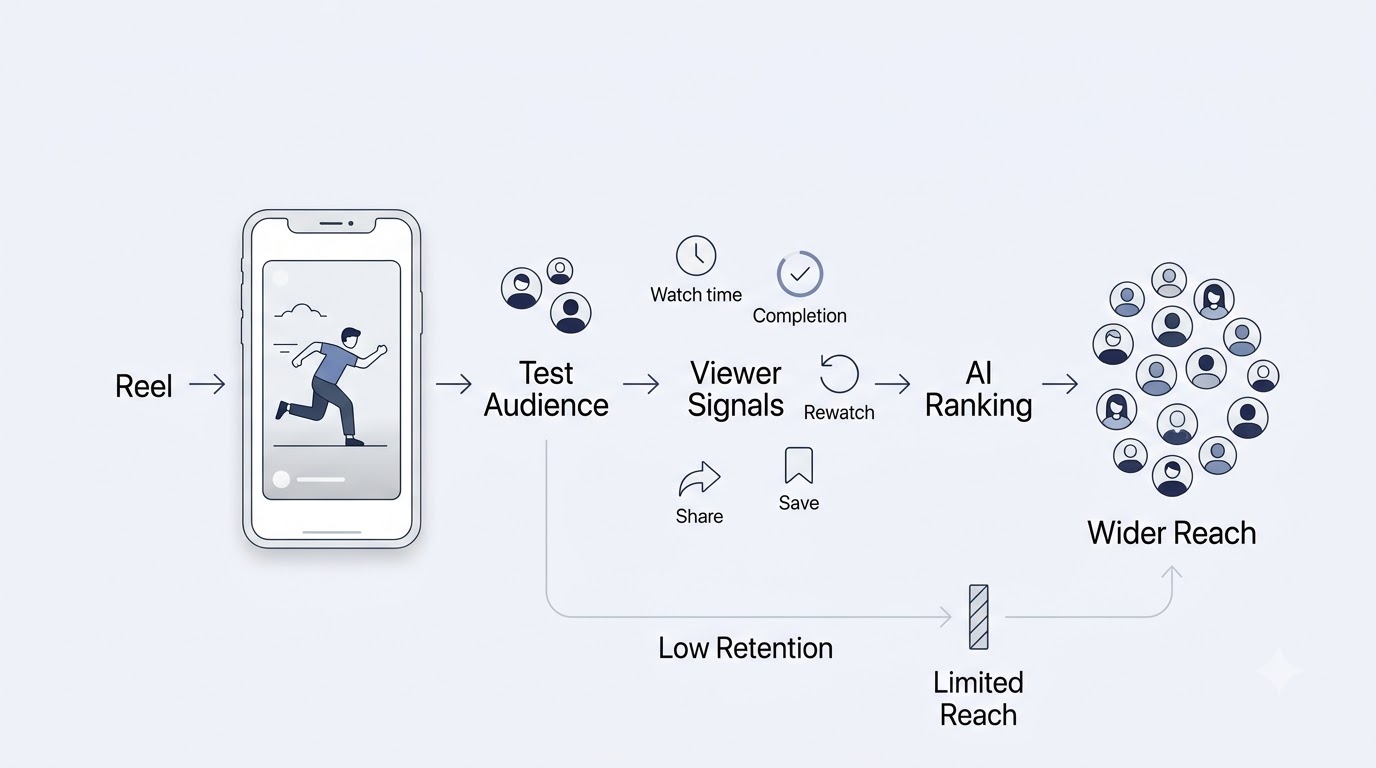
Explain how Instagram ranks Reels using machine learning models that predict what users are most likely to watch, engage with, and share. Describe the major ranking signals including watch time, completion rate, rewatches, shares, saves, comments, profile visits, follows after viewing, and user interaction history.
Discuss how the algorithm first tests every Reel with a small audience before expanding distribution if engagement metrics remain strong. Explain negative ranking factors such as low retention, clickbait, recycled TikTok videos with watermarks, poor video quality, misleading captions, engagement bait, and content that users quickly scroll past. Help readers understand that Instagram rewards viewer satisfaction rather than follower count.
What the Algorithm Wants
The algorithm wants one thing above all else: to keep people on the app. Every ranking decision comes back to that. It’s trying to predict which Reels will keep someone watching, keep them engaged, and keep them coming back for more. Understanding that single motivation explains almost every ranking signal below.
Ranking Signals
Watch Time — How long someone actually watches your Reel matters more than almost anything else. A 15-second Reel that gets watched in full beats a 60-second Reel that gets abandoned at the 5-second mark, every time.
Completion Rate — Related but distinct from watch time, this measures what percentage of your Reel people actually finish. High completion rates tell Instagram your content delivers on its promise.
Replays — When someone watches your Reel more than once, that’s one of the strongest positive signals you can get. It tells Instagram the content was genuinely worth a second look.
Shares — Someone sending your Reel to a friend is basically them vouching for your content outside the app. That carries huge weight in the algorithm.
Saves — Saves indicate long-term value. Someone’s planning to come back to this later, which tells Instagram this isn’t just entertainment, it’s useful.
Comments — Comments show active engagement, not passive scrolling. The more genuine conversation your Reel sparks, the more Instagram pushes it further.
Likes — Still a signal, but honestly one of the weaker ones on this list now. Likes are easy to give and don’t require much effort, so they carry less weight than saves or shares.
Follows — If someone follows you directly after watching a Reel, that’s about as strong a signal as it gets. It means your content converted a stranger into someone invested in your brand.
Profile Visits — Even without a follow, someone clicking through to your profile after a Reel tells Instagram you sparked enough curiosity to make them want more.
Sends in DMs — When people send your Reel directly to friends via DM, that’s a private, high-intent signal that the algorithm weighs heavily, even though it’s less visible than a public share.
User Behavior Signals
Instagram tracks what kind of content a specific user tends to watch fully, engage with, and come back to. It uses that pattern to decide whether your Reel is a good match for them specifically, not just whether your Reel is good in general.
Creator Signals
Your account’s overall history matters too. Accounts that consistently produce watch-worthy content get a bit of a trust boost on new uploads. This is part of why consistency compounds over time instead of resetting with every single post.
Video Quality Signals
Clear audio, decent lighting, stable footage, none of this needs to be Hollywood-level, but genuinely poor quality does hurt performance. Instagram can detect low-resolution or heavily compressed video, and it tends to deprioritize it.
Caption Signals
Instagram reads your captions and uses the text to understand context, topic, and relevance. A caption that’s just emojis tells the algorithm nothing. A caption with real, keyword-relevant language helps Instagram know exactly who to show your Reel to.
Audio Signals
Trending audio can give you a small discovery boost, especially early in a Reel’s life, because Instagram is testing that audio across multiple videos at once. But don’t lean on it as your entire strategy. Original audio, especially voiceover explaining your point, often performs just as well once your account has some authority built up.
Hashtag Signals
Hashtags matter less than they used to for pure discovery, but they still help Instagram categorize your content correctly. Use them like context clues, not magic keys.
Interest Prediction
Instagram builds a profile of every user’s interests based on what they engage with, then matches your content against that profile before showing it to them. This is why niching down your content actually helps: it makes it easier for Instagram to predict exactly who wants to see it.
Why Some Reels Go Viral Weeks Later
This trips people up constantly. A Reel sits quiet for two weeks, then suddenly explodes. That happens because Instagram is continuously re-testing content with small batches of new viewers. If your Reel performs well with a new test batch weeks later, maybe because a trend caught up to your topic, or the algorithm found a better-matched audience, it can get a second life out of nowhere.
Common Ranking Mistakes
Posting low-quality footage, ignoring captions entirely, using irrelevant trending audio just because it’s popular, and abandoning a Reel that “flopped” in the first hour instead of giving it time. These are the mistakes that quietly tank performance and get blamed on “the algorithm” when really it’s a fixable content issue.
How to Build an Instagram Reels Strategy
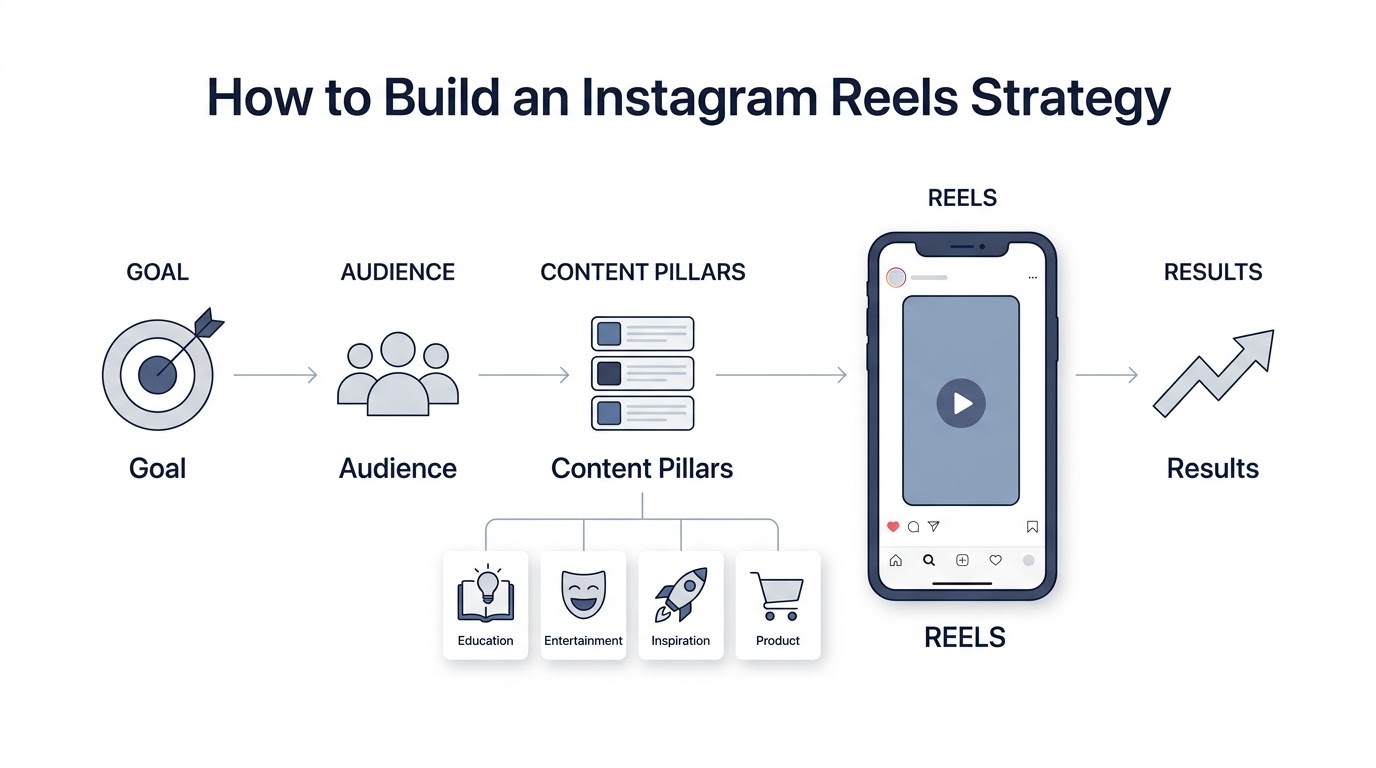
Introduce the importance of having a structured content strategy instead of posting random videos. Explain how brands should define their objectives first brand awareness, lead generation, community building, sales, or authority.
Describe how to identify the target audience by understanding demographics, interests, pain points, buying intent, and frequently asked questions. Cover content pillars that organize ideas into categories such as education, entertainment, inspiration, behind-the-scenes content, product demonstrations, customer stories, FAQs, trends, and industry news.
Explain how every Reel should align with business goals and fit into an overall marketing strategy rather than chasing viral trends alone.
Define Your Brand Goals
Before you film a single second of footage, get honest about what you actually want. Growth? Sales? Community? Authority? Trying to do all of it at once with every single Reel is how you end up with content that doesn’t clearly do anything well.
Identify Your Target Audience
Vague targeting like “women aged 25-45” doesn’t help you write a single script. Get specific. What do they scroll past? What stops them? What are they actually struggling with at 9pm when they’re mindlessly on their phone?
Build Customer Personas
Give your ideal viewer a name if it helps. Picture them literally. What’s their day like? What content do they already follow? The more real this person feels to you, the easier it becomes to write hooks that actually land.
Competitor Analysis
Go look at what’s working for accounts in your space. Not to copy them, but to understand what your audience is already responding to. Look at their top-performing Reels specifically, not just their overall vibe.
Research Audience Interests
Dig into comments on competitor content, relevant subreddits, and Google’s autocomplete suggestions. People are literally telling you what they want to know. You just have to go read it.
Define Your Content Pillars
Pick 3-5 core topics you’ll consistently create around. This keeps your content focused enough that Instagram can categorize you clearly, and it keeps you from staring at a blank screen every week wondering what to post.
Choose Brand Voice
Decide how you sound. Funny and irreverent? Calm and educational? Direct and no-nonsense? Consistency in voice builds recognition just as much as consistency in visuals does.
Plan Weekly Themes
Assigning loose themes to different days (Monday tips, Wednesday behind-the-scenes, Friday trends) takes the guesswork out of what to post and when.
Create Monthly Content Calendar
Batch your planning monthly so you’re never scrambling the night before. This also helps you spot gaps, like realizing you haven’t posted a single testimonial Reel in six weeks.
Set KPIs
Decide what success actually looks like before you post. Is it follower growth? Saves? Website clicks? Without a clear KPI, you’ll end up chasing whatever number feels good that day instead of the one that actually matters for your business.
Types of Instagram Reels That Grow Brands
This section should explain the different categories of Reels that consistently perform well for businesses. Cover educational tutorials, quick tips, product demonstrations, before-and-after transformations, customer testimonials, storytelling, myth-busting, industry insights, trend adaptations, behind-the-scenes videos, founder stories, team introductions, process videos, case studies, user-generated content, and entertaining skits.
Explain which formats work best for B2B companies, SaaS businesses, eCommerce stores, coaches, consultants, agencies, local businesses, healthcare providers, and creators. Help readers understand when to use each format throughout the customer journey.
Educational Reels
Teach something specific and useful in under 30 seconds, and don’t overcomplicate it. Pick one idea, explain it clearly, and stop. These build trust fast because you’re handing someone a genuine answer before ever asking for anything in return. People remember who taught them something. That’s brand recall you can’t buy with an ad budget, honestly.
Entertaining Reels
Not everything needs a lesson attached to it. Sometimes a genuinely funny or relatable moment builds more brand affection than ten how-to videos combined, because it makes people feel something instead of just learning something. The trick is keeping it connected to your brand somehow, so the laugh doesn’t just float away without leaving your name attached to it.
Behind-the-Scenes
People love seeing how the sausage gets made, and honestly, most brands are way too polished for their own good. Show your workspace, your process, the mess behind the final product, the mistakes that happened along the way. It humanizes your brand instantly and makes you feel like a real business run by real people, not some faceless logo.
Product Demonstrations
Show your product actually being used, solving a real problem, in real time, not sitting pretty under studio lighting doing nothing. This is one of the highest-converting Reel types for e-commerce because it answers the exact question a buyer has in their head: does this actually work the way they say it does? Show it, don’t just claim it.
Tutorials
Step-by-step walkthroughs work great when the steps are genuinely clear and quick enough to follow on a phone screen. Nobody wants a 10-step tutorial crammed into 15 seconds that flies by too fast to absorb. Slow down where it matters, speed up the boring parts, and make sure someone could actually replicate what you’re showing them.
Before and After
Visually satisfying and instantly understandable, no explanation needed really. These work incredibly well for fitness, home services, beauty, and pretty much anything with a transformation element built into it. The contrast does the selling for you. You don’t need a clever script when the visual difference speaks loud enough on its own.
Customer Stories
Real people talking about real results builds more trust than any ad copy you could write yourself, no matter how good you are at writing. There’s something about hearing an actual customer describe their experience, in their own words, with their own hesitations, that a brand’s polished messaging just can’t fake convincingly.
Testimonials
Similar to customer stories but more direct and to the point. A quick, honest clip of someone praising your product carries serious weight, especially if it feels unscripted. Skip the overly rehearsed version. A little rough around the edges actually makes it more believable, not less.
Myth vs Fact
Great hook format, and it works because it challenges what people already assume to be true. “Everyone thinks X, but actually Y” pulls people in immediately because nobody wants to keep believing something wrong. It creates that little itch of curiosity that keeps someone watching to see if they’ve been misled.
Tips and Tricks
Quick, actionable, easy to save for later. These perform really well because people bookmark them fully intending to use them, which tells Instagram this content has lasting value. Keep each tip genuinely useful, not obvious filler dressed up to look like advice.
FAQs
Turn the questions you get asked constantly into content instead of answering them one-on-one over and over again in your DMs. You’re already doing the work anyway, so might as well answer it once, publicly, in a format that keeps helping new people long after you’ve forgotten you even posted it.
Industry News
Reacting to what’s happening in your industry positions you as someone paying attention, someone worth following for updates instead of just product pitches. It shows you’re plugged into what’s going on, not just selling in a vacuum, and that credibility rubs off on how people see your brand overall.
Founder Stories
People buy from people, not from logos. Sharing your own journey, including the mistakes, the doubts, the moments things almost fell apart, builds a connection that a polished brand voice alone simply can’t replicate. Vulnerability, used right, is one of the most underrated growth tools on this entire platform.
Employee Spotlights
Shows the humans behind the brand, which matters more than people realize. Great for building trust, especially for service businesses and agencies where clients want to know exactly who they’ll be working with. It also makes your team feel seen, which tends to show up in how they represent the brand elsewhere too.
Process Videos
Similar to behind-the-scenes but more focused specifically on how something gets made or done, step by step, from start to finish. People are naturally curious about process. Watching raw materials turn into a finished product satisfies something almost primal, and it builds appreciation for the actual work involved.
Day in the Life
A classic format for a reason, and it still works because it’s low effort to film and genuinely high in relatability. People love glimpsing into someone else’s routine, especially if there’s some contrast, chaos, or unexpected moment mixed into an otherwise ordinary day.
Case Studies
Break down a real result with real numbers, not vague claims about “great outcomes.” These build credibility fast, especially for B2B and service brands where trust has to be earned before anyone signs a contract. Specificity is what makes a case study convincing instead of forgettable.
User-Generated Content
Reposting or featuring content your customers made about you builds social proof without you lifting a camera yourself. It also signals to other potential customers that real people, not paid actors, actually use and like what you’re selling. That kind of trust is hard to manufacture any other way.
Trend-Based Reels
Jumping on a relevant trend at the right moment, with your own spin added, can get you in front of a much bigger audience than usual because Instagram is actively pushing that trend’s momentum. Just make sure your version actually connects to your brand, or it reads as random noise instead of clever timing.
Meme Reels
Light, funny, shareable, and genuinely enjoyable to make once you get the hang of it. Just make sure it still connects back to your brand somehow, whether through a product tie-in or an industry-specific joke, or it’s just noise that entertains without building anything lasting for your account.
Seasonal Content
Timely content tied to holidays, seasons, or events taps into what people are already thinking about that week anyway. It’s easier to catch attention when you’re riding an existing wave of relevance instead of trying to create interest completely from scratch.
How to Find Reel Ideas That Never Run Out
Explain methods for generating endless content ideas instead of struggling every week. Show how to extract ideas from customer questions, sales calls, FAQs, Google search suggestions, Reddit discussions, Quora questions, competitor analysis, YouTube comments, blog posts, podcasts, industry reports, online communities, reviews, and support emails.
Discuss content repurposing by converting blogs into multiple Reels, turning webinars into short clips, breaking podcasts into educational snippets, and transforming case studies into storytelling videos. Explain how maintaining an idea database helps ensure a consistent publishing schedule.
Competitor Research
Look at what’s genuinely working in your space, not just what your competitors are posting the most of, because volume doesn’t equal success. Check their top-performing Reels specifically and ask yourself why those particular ones landed. That’s where the real insight is hiding, not in the average stuff nobody remembers.
Customer Questions
Every question a customer asks you is a Reel idea sitting right there waiting to be filmed. Keep a running note in your phone every time someone asks something, even something that feels obvious to you. What’s obvious to you is often exactly what your audience is quietly wondering about too.
Reddit Communities
Subreddits related to your niche are goldmines for real language, real problems, and real questions people are asking anonymously, without the polish they’d use talking to a brand directly. That raw honesty is exactly what makes for scroll-stopping hooks, because you’re speaking the way people actually think, not the way marketers write.
Quora Questions
Similar idea to Reddit, but often a bit more direct. People ask blunt, honest questions on Quora that they might not ask a brand directly out of embarrassment or hesitation. Answering those questions publicly, in Reel form, positions you as the source that finally gave them a straight answer.
Google Search Suggestions
Type your topic into Google and look at the autocomplete suggestions that pop up. That’s literally what people are typing into a search bar right now, unfiltered and honest. It’s one of the fastest, easiest ways to find exactly what your audience wants explained.
Instagram Search
Search your core topics directly inside Instagram and see what’s already ranking well for those terms. This gives you a real sense of what the algorithm is currently rewarding around your niche, and it often reveals gaps nobody else has covered yet that you could fill.
Comments Analysis
Go back through your old comments and actually read them slowly. What are people confused about, excited about, asking for more of? Comments are basically free market research sitting right there on your own content, and most brands scroll right past them without mining the ideas hiding inside.
Customer Support Queries
Whatever your support team gets asked repeatedly is content waiting to happen, full stop. If five customers asked the same thing this month, there are probably fifty more who wondered the same thing and never asked. Turn that repeated question into a Reel and solve it at scale.
AI Idea Generation
Tools like ChatGPT or Claude can help brainstorm angles fast when you’re genuinely stuck staring at a blank page. But treat the output as a starting point, not the finished script. It still needs your voice, your specific examples, your tone, or it’ll sound like everyone else using the same tool.
Trend Research
Check the Reels tab regularly just to see what formats and sounds are gaining traction right now, even outside your niche. Sometimes the best ideas come from noticing a structure that’s working elsewhere and figuring out how to adapt it to fit what your brand actually does.
Repurposing Existing Content
Old blog posts, podcast clips, webinar moments, all of it can become several Reels if you slice it right and pull out the most interesting, standalone moments. You’ve probably already created more usable content than you realize. It’s just sitting there unrepurposed, waiting for someone to cut it up.
How to Plan Instagram Reels Like a Professional
Describe the importance of planning content in advance rather than creating videos at the last minute. Explain how professionals organize monthly content calendars around campaigns, launches, seasonal events, promotions, and audience interests.
Discuss batch planning, scripting, filming multiple Reels in one session, editing in batches, scheduling content, organizing assets, and maintaining consistency in branding. Cover editorial calendars, production workflows, approval processes for teams, and balancing evergreen content with trending topics.
Content Batching
Film five or ten Reels in one sitting instead of trying to film one at a time whenever inspiration strikes, because inspiration is unreliable and setup time adds up fast. Batching saves you from constantly resetting lighting, changing outfits, and mentally switching gears, and it keeps you consistent even during genuinely busy weeks.
Weekly Planning
Set aside 30 minutes each week to map out what’s going up and when, even if it feels like a small, almost pointless task in the moment. It sounds minor, but it removes so much daily decision fatigue that would otherwise eat into the actual time you should be spending creating.
Monthly Planning
Zoom out monthly to check you’re actually covering all your content pillars evenly, and not accidentally posting the same type of Reel five times in a row without noticing. This bigger-picture view catches gaps and repetition that’s nearly impossible to spot when you’re only planning week by week.
Content Calendar
Whether it’s a spreadsheet, a notes app, or a fancy scheduling tool, having a visual calendar keeps everything organized and easy to review at a glance. It also makes collaboration way easier if anyone else is involved in your content, since everyone can see the plan without needing a separate meeting about it.
Scripts
Even a rough script, just bullet points really, keeps your message tight and prevents rambling on camera when the pressure of recording kicks in. You don’t need word-for-word dialogue memorized. You just need to know your key points cold so you’re not fumbling for what to say next mid-take.
Storyboards
For anything with multiple shots or scenes, sketch it out first before you start filming, even a rough sketch on paper works fine. It saves filming time and prevents that “wait, what was I supposed to shoot next” moment that wastes far more time than the planning itself ever would.
Hook Planning
Write your hook before anything else, before you even think about the rest of the Reel. If the first line doesn’t work, nothing after it matters because nobody’s still watching to see it. Spend disproportionate time here. It’s genuinely the highest-leverage sentence in the entire video.
CTA Planning
Decide what action you want people to take before you film, not as an afterthought tacked on during editing. Are you asking for a follow, a comment, a save, a click? Know the answer going in, so you’re not scrambling to figure out the ending mid-edit with a vague, forgettable close.
How to Create High-Performing Instagram Reels
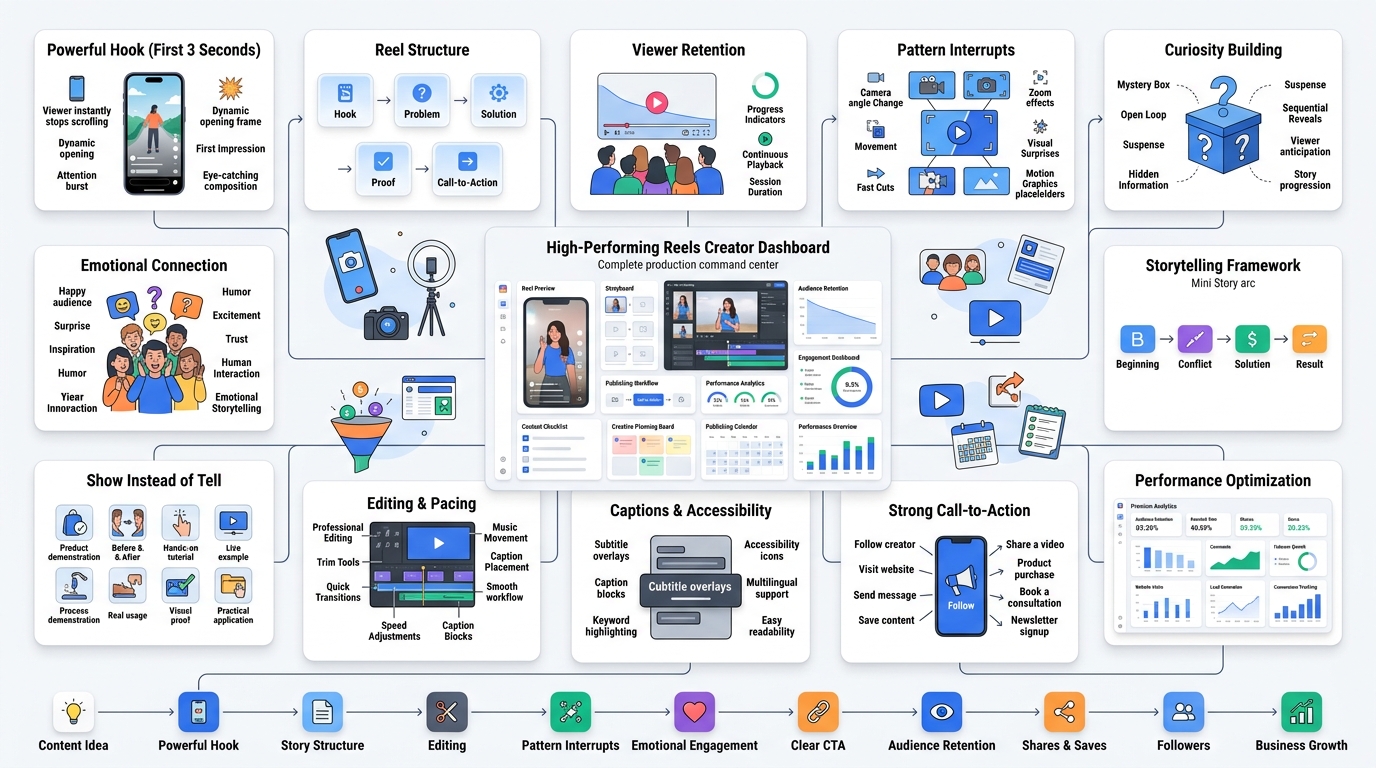
Explain every element involved in creating engaging Reels that maximize watch time and engagement. Cover choosing strong hooks, maintaining viewer curiosity, using storytelling techniques, varying camera angles, incorporating motion, using captions, pacing edits correctly, adding pattern interrupts, and ending with a clear call-to-action.
Discuss optimal Reel length depending on content type and explain why audience retention matters more than total video duration. Include recommendations for creating content that encourages rewatches and shares.
Hook Viewers in the First Three Seconds
This is the single most important three seconds of your entire Reel, no exaggeration. If you don’t earn attention immediately, the algorithm notices people scrolling past, and it stops showing your content to more people. Start with the most interesting thing you’ve got. Don’t build up to it slowly, because most people won’t wait around for the payoff.
Structure Every Reel
Hook — grab attention immediately, no slow intro, no throat-clearing before you get to the point.
Problem — name the pain point your audience actually feels, specifically, in language they’d use themselves.
Solution — show or explain your answer clearly, without burying it under unnecessary detail.
Proof — back it up with a result, example, or demonstration so it doesn’t sound like an empty claim.
CTA — tell people exactly what to do next, plainly, without being vague about it.
Keep Viewers Watching
Fast pacing, quick cuts, and getting straight to the point matters more than production polish ever will. Nobody’s grading you on cinematography here. They’re deciding, in real time, second by second, whether to keep watching or scroll away, and that decision happens faster than most people realize.
Use Pattern Interrupts
A sudden change in angle, tone, or pace resets attention and keeps people from zoning out halfway through, which happens more often than you’d think even in short Reels. A quick cut, a change in energy, a visual surprise, all of it works to re-hook someone who was drifting.
Use Curiosity
Open a loop early, something like “wait until you see what happened next,” and people will stick around just to see it close because unresolved curiosity is genuinely uncomfortable to sit with. That tension is what keeps thumbs from scrolling away before the payoff arrives.
Build Emotional Connection
Whether it’s humor, frustration, relief, or excitement, tapping into a real emotion makes your content memorable in a way pure information rarely manages on its own. Facts get forgotten. Feelings stick around, and they’re what people associate with your brand long after the specific details fade.
Add Storytelling
Even a 15-second Reel can have a beginning, middle, and end if you’re deliberate about the structure. Structure beats randomness every single time, because a story, even a tiny one, gives people a reason to stay until it resolves instead of drifting off partway through.
Show Instead of Tell
Don’t just say your product works, show it working in real conditions. Don’t just say your process is simple, show the actual steps happening in front of the camera. Seeing something demonstrated builds far more confidence than hearing someone describe it in words ever could.
End With Strong CTAs
Be specific about what you’re asking for. “Follow for more tips like this” beats a vague “let me know what you think” every single time, because specific asks are easier to act on than open-ended ones that require the viewer to think about what you actually want from them.
Video Production Best Practices
Focus on production quality without requiring expensive equipment. Explain proper lighting techniques, clear audio, stable camera positioning, framing, background selection, composition, vertical video requirements, resolution settings, frame rates, and exporting videos for Instagram.
Discuss smartphone filming tips, microphone recommendations, editing consistency, branding elements, thumbnail selection, on-screen text readability, and accessibility features like captions. Explain how professional-looking videos improve viewer trust and retention.
Camera Settings
You don’t need expensive gear to make this work, but shoot in the highest resolution your phone allows, and lock your focus so it doesn’t hunt around and blur while you’re talking. Small technical details like this quietly separate content that looks intentional from content that looks accidental.
Lighting
Natural light near a window beats almost any ring light you could buy, honestly. If you’re filming indoors without much natural light available, invest in one decent light source facing you directly. Bad lighting is one of the fastest ways to make otherwise good content look cheap and unwatchable.
Audio
Clear audio matters more than clear video, full stop. People will forgive slightly blurry footage without thinking twice about it. They won’t forgive audio they can’t understand, and they’ll scroll away the second they have to strain to hear what you’re saying.
Background
Keep it clean and relevant to what you’re talking about. A cluttered, chaotic background pulls attention away from you and looks unintentional, like you didn’t think about the shot at all. A simple, tidy setup signals that you actually put thought into how this would look.
Framing
Leave enough headroom, keep yourself roughly centered, and remember Reels are vertical from the start, so shoot vertical instead of cropping a horizontal shot down later and losing quality. Framing sounds minor but it’s one of those things viewers notice subconsciously even if they can’t name why something feels off.
Resolution
Export at the highest quality your platform allows, because compression happens automatically once you upload anyway. Starting higher keeps the final result sharper after Instagram does its own compression pass, and the difference is noticeable, especially on larger screens.
Editing
Cut out dead air ruthlessly, even the pauses that feel natural in the moment of filming. Every second someone isn’t engaged is a second closer to them scrolling away, and Reels genuinely don’t have room for filler the way longer content might tolerate.
Transitions
Use them to keep pacing snappy and add a bit of visual interest between scenes, but don’t overdo it to the point they become distracting instead of helpful. A transition should serve the content, not become the whole point of the edit.
Text Placement
Keep on-screen text away from the areas where Instagram places its own UI elements, like captions and buttons, or it’ll get covered up and become unreadable. Test how your Reel actually looks in the app before posting, not just in your editing software’s preview.
Brand Colors
Consistent color grading and brand colors across your Reels build recognizability over time, even before someone consciously reads your name or logo. People start to recognize your content just from the visual style alone, which is a subtle but powerful form of brand building.
Captions
Auto-generated captions are non-negotiable at this point, genuinely. Most people watch with sound off, especially early in a scroll session on public transit or at work. Skip captions and you’re losing a huge chunk of your potential audience before your message even has a chance to land.
Accessibility
Beyond captions, clear speaking pace and good contrast between text and background help everyone, not just people watching without sound or people with visual impairments. Accessible content is simply better content, full stop, and it widens your potential audience without much extra effort.
How to Write Better Instagram Reel Scripts
Explain how scripting improves clarity, engagement, and retention. Cover different scripting frameworks such as Hook–Problem–Solution–CTA, PAS (Problem–Agitate–Solution), AIDA (Attention–Interest–Desire–Action), storytelling frameworks, and educational frameworks.
Discuss writing conversationally, eliminating filler words, creating curiosity gaps, using emotional triggers, speaking directly to the audience, and structuring scripts to keep viewers watching until the end. Explain how scripts should remain concise while delivering clear value.
Hook Templates
Lines like “nobody tells you this about X” or “I wish someone told me this before I started Y” work because they promise insider knowledge immediately, right from the first second. People are drawn to the feeling that they’re about to learn something others don’t already know.
Storytelling Frameworks
A simple setup, conflict, resolution structure works in even the shortest Reels if you’re deliberate about applying it. You don’t need a complex plot. Just a clear beginning that sets the stage, a problem that creates tension, and a resolution that satisfies the viewer for sticking around.
AIDA Framework
Attention, Interest, Desire, Action. Grab attention with your hook, build interest by adding specific details, create desire by showing the actual payoff or transformation, then ask clearly for the action you want. It’s an old framework, but it still holds up well for short-form video structure.
PAS Framework
Problem, Agitate, Solve. Name the problem your audience is dealing with, make it feel a bit more urgent or real by digging into the frustration of it, then offer your solution as genuine relief. This works especially well for content that needs to create a sense of urgency fast.
Problem–Solution Framework
A simpler, more direct version of PAS without much agitation built in. Straight to the point: here’s the problem, here’s the solution. Great for quick educational content where you don’t need to build tension, just deliver a clear, useful answer efficiently.
Educational Scripts
Lead with the takeaway first, then explain why it’s true afterward. People remember the conclusion better when they hear it right at the start, rather than having to wait through a long explanation to finally arrive at the point you were trying to make all along.
Sales Scripts
Focus on the transformation your product creates for someone, not just its features listed out mechanically. Features tell, transformation sells. People don’t buy a blender, they buy the smoothie habit they imagine themselves having once they own it.
Personal Brand Scripts
Lean into your own specific experience rather than generic advice that could apply to literally anyone. Generic advice is everywhere online already. Your specific story, your specific mistakes and wins, isn’t, and that specificity is exactly what makes people remember you over the next account.
CTA Examples
“Save this for later,” “Follow for part two,” “Comment your biggest struggle below,” all of these work because they’re specific and genuinely low-effort for the viewer to actually do. The easier the ask, the more likely someone follows through with it instead of just scrolling past.
How to Optimize Every Reel for Maximum Reach
Explain optimization techniques beyond creating the video itself. Cover writing compelling captions, selecting relevant hashtags, adding keywords naturally for Instagram SEO, choosing attractive cover images, tagging locations when appropriate, mentioning collaborators, adding product tags, and selecting suitable audio.
Discuss accessibility through captions and alt text, posting at consistent times, encouraging meaningful engagement, and avoiding spammy optimization tactics. Explain how metadata helps Instagram understand the content and recommend it to the right audience.
Caption Optimization
Write real sentences, not just a hashtag dump with no actual context attached. Instagram reads this text to understand what your content is about, so use it to reinforce your topic clearly and naturally, the same way you’d write a genuinely useful caption for a human reader, not just an algorithm.
Keyword Optimization
Include the actual terms your audience searches for, naturally worked into your caption and even spoken out loud in your video if it fits the flow. This helps Instagram match your content with people actively looking for exactly what you’re offering, instead of relying purely on chance discovery.
Instagram SEO
Instagram search has genuinely grown into its own discovery engine over the past couple years, closer to how people use Google than most brands realize. Treat your captions and on-screen text like you’d treat a blog post title, with real, searchable language people would actually type in.
Hashtag Strategy
Use a handful of relevant hashtags, mixing broader, high-volume tags with more niche, specific ones. Skip the temptation to stuff in thirty unrelated ones hoping for extra reach, because that approach mostly just looks spammy now and doesn’t move the needle the way it used to years ago.
Cover Image Optimization
Your Reel’s cover is what shows on your profile grid, and it’s often the first impression someone gets of your whole account. Choose a frame that looks intentional and makes someone want to click, not a random mid-motion blur that happened to be the default thumbnail.
Trending Audio
Use it when it genuinely fits your content, not just because it’s popular that particular week. Mismatched audio feels off, and audiences notice that disconnect immediately, even if they can’t quite explain why something feels slightly wrong about the pairing.
Geotags
Adding a location tag helps local businesses show up for people nearby who are searching or browsing content tied to that specific area. It’s a small, easy step that meaningfully boosts local discoverability, especially for brick-and-mortar businesses relying on foot traffic.
Alt Text
Improves accessibility for people using screen readers, and it also gives Instagram one more context clue about what your content is actually about. It’s an easy, often-overlooked step that takes seconds but adds real value on both fronts.
Tagging Accounts
Tag collaborators, brands you feature, or relevant partners whenever it makes sense within the content. It extends your reach into their followers’ notifications too, essentially giving your Reel a second audience it wouldn’t have reached otherwise, at no extra cost to you.
Product Tags
For e-commerce, tagging products directly in your Reel removes friction between someone getting interested and actually buying, cutting out extra steps that might otherwise lose them along the way. The shorter the path from curiosity to purchase, the higher your conversion rate tends to be.
How Often Should You Post Instagram Reels?
Discuss the relationship between publishing frequency and sustainable content quality. Explain that consistency generally matters more than posting excessively. Cover recommended posting frequencies for beginners, growing brands, creators, and larger businesses based on available resources.
Explain how to test different schedules, monitor audience response, avoid creator burnout, and adjust posting frequency according to engagement, production capacity, and business goals. Emphasize maintaining quality over simply increasing volume.
Daily Posting
Aggressive, but genuinely effective for accounts trying to grow fast, especially during the first few months of really committing to Reels as a primary strategy. It’s demanding, and not sustainable forever for most people, but the early momentum it builds can be worth the short-term intensity.
Weekly Posting
More sustainable for smaller teams or solo creators without a full content team behind them. Three to five Reels a week is a solid, realistic target for most brands that still allows for consistency without burning out whoever’s actually doing the filming and editing.
Posting Frequency by Business Size
Solo founders might realistically manage 3-4 a week without sacrificing quality or their sanity in the process. Bigger teams with dedicated content resources can push daily without burning anyone out, simply because the workload gets distributed across more people instead of resting on one person’s shoulders.
Best Time to Post
Test this for your own audience specifically rather than blindly trusting generic advice, but generally early evenings and lunch breaks tend to catch people scrolling on their phones. Your specific audience might behave differently, so treat any “best time” advice as a starting point, not a rule.
Consistency vs Quantity
Five great Reels a week beats fourteen mediocre ones every single time, no contest. Don’t sacrifice quality chasing a number just because you read somewhere that posting daily is the secret. Quality content posted consistently will always outperform rushed content posted constantly.
Instagram Reels Growth Strategies
This section should combine advanced tactics for accelerating growth. Cover audience research, collaboration Reels, influencer partnerships, employee advocacy, community engagement, trend adaptation, content series, cross-promotion across platforms, leveraging user-generated content, strategic calls-to-action, giveaways, and interactive content.
Discuss methods for increasing shares, saves, profile visits, and follows while building long-term brand authority rather than relying solely on viral success. Explain how consistent experimentation and performance analysis contribute to sustainable growth.
Trend Jacking
Spot a trend early, adapt it to your niche fast, and you can ride its algorithmic momentum before it fully saturates and everyone’s already done their version of it. Timing matters a lot here. The same trend two weeks later just won’t hit the same way.
Collaboration Reels
Partner with another account in a complementary niche that shares a similar audience but isn’t a direct competitor. You both get exposed to each other’s followers instantly, essentially trading reach for free in a way that benefits both accounts equally.
Influencer Partnerships
Even smaller influencers with a genuinely engaged niche audience can drive real, relevant traffic your way, often more effectively than a huge influencer with a broad but disengaged following. Engagement quality matters more than raw follower count when picking who to work with.
Employee Advocacy
Get your team posting Reels about your brand from their own personal accounts too, not just the official brand account. It multiplies your reach without multiplying your workload much, since you’re essentially borrowing each team member’s existing network for free.
UGC Campaigns
Encourage customers to create content featuring your product, then feature the best of it on your own account. Free content, built-in trust, and it shows potential customers that real people are genuinely using and enjoying what you sell, not just paid actors reading a script.
Giveaway Campaigns
Reels announcing giveaways with clear entry requirements, like following your account and tagging a friend, can spike follower growth fast in a short window. Just make sure the prize is relevant to your actual audience, or you’ll attract followers who never cared about your brand to begin with.
Community Challenges
Start a simple challenge people can participate in and tag you when they do. It builds momentum and generates content simultaneously, since every participant is essentially creating free promotional content for you while having fun doing it themselves.
Remix Strategy
Use Instagram’s Remix feature to respond directly to trending Reels in your niche, putting your take right next to the original for anyone watching to compare. It’s a fast way to insert yourself into a conversation that’s already gaining traction without starting completely from scratch.
Series Content
A recurring format or theme gives people a genuine reason to come back specifically for your next installment, building anticipation instead of just hoping they stumble across your next post randomly. Series content builds habitual viewers over time, not just one-off viewers.
Evergreen Reels
Content that stays relevant long-term keeps working for you well after the initial posting window closes, unlike trend-based content that has a short shelf life. These are the Reels quietly generating views and follows months, sometimes years, after you first posted them.
Content Repurposing
Turn one long-form piece of content into five or six Reels covering different angles or points from it, instead of letting a podcast episode or blog post do its job once and disappear. This stretches the value of content you’ve already created far further than most brands bother to.
How to Use AI to Create Better Instagram Reels
Explain how artificial intelligence streamlines every stage of Reel creation. Cover AI-powered idea generation, audience research, script writing, hook creation, caption generation, subtitle creation, voice enhancement, video editing, background removal, thumbnail creation, content repurposing, translation, and performance analysis.
Discuss responsible AI usage, emphasizing that AI should support creativity rather than replace authentic brand voice. Include practical workflows that combine AI tools with human editing to improve efficiency while maintaining originality.
AI Script Writing
AI tools can get you a solid first draft fast when you’re staring at a blank page with no idea where to start. But honestly, the raw output usually sounds a little stiff and generic. Use it as a starting point, then rewrite in your actual voice so it doesn’t sound like every other account using the same prompt.
AI Video Editing
Tools now handle cuts, captions, and pacing suggestions automatically, cutting editing time down significantly for solo creators who don’t have hours to spend fine-tuning every frame. An AI video maker like MagicHour takes this further by generating complete video content from prompts, letting creators produce polished Reels without filming a single frame themselves. It’s not perfect, but it gets you most of the way there faster than editing entirely by hand.
AI Voiceovers
Useful for faceless accounts or quick explainer content where showing your face isn’t necessary or desired. Though they still sound a bit robotic if you’re not careful with tone settings, so test a few options before committing to one for your whole content strategy.
AI Captions
Auto-caption tools have gotten genuinely good and save real time compared to typing everything out manually word by word. Still worth a quick proofread pass, since they occasionally mishear specific terms, names, or industry jargon that a human would catch instantly.
AI Thumbnail Design
Some tools can generate cover image variations to test which one gets the best click-through on your profile grid, taking the guesswork out of picking a single frame manually. It’s a small optimization, but small optimizations add up across dozens of posts.
AI B-Roll Generation
Handy for filling gaps in footage you didn’t get a chance to film, especially when you realize mid-edit that you’re missing a key visual. Though it should stay a supplement, not a replacement for real footage, since authenticity still matters more than polish to most viewers.
AI Analytics
Some third-party tools now use AI to spot patterns in what’s working across your account faster than manually digging through Instagram’s own native Insights tab. This can surface trends you’d otherwise miss simply because you don’t have time to analyze every single post by hand.
AI Content Planning
AI can help brainstorm a month’s worth of ideas quickly when you’re running low on inspiration, but you still need to filter for what’s genuinely relevant to your actual audience. Not every generated idea will fit your brand, so treat it as a starting list, not a final one.
AI Content Repurposing
AI can help slice long-form content into Reel-sized chunks fast, saving hours of manual editing decisions about where exactly to cut. It’s especially useful for podcasters and long-form creators trying to squeeze more value out of content they’ve already recorded once.
How to Measure Instagram Reels Performance
Explain how to evaluate success using Instagram Insights and other analytics tools. Cover key performance indicators such as reach, plays, watch time, average watch duration, completion rate, rewatches, engagement rate, profile visits, follows gained, shares, saves, comments, website clicks, and conversions.
Teach readers how to identify winning content patterns, conduct A/B testing, compare performance across content types, calculate ROI, and use analytics to refine future Reel strategies. Explain the importance of tracking trends over time rather than focusing on a single viral video.
Reach
How many unique accounts saw your Reel, regardless of how many times each person watched it. This tells you how far your content actually traveled beyond your existing followers, and it’s usually the clearest early signal of whether a Reel is catching on or falling flat.
Impressions
Total views including repeat views from the same person, which makes this number naturally higher than reach. It’s useful for spotting replay behavior specifically, since a high impressions-to-reach ratio often means people are watching your Reel more than once, which is a strong positive signal.
Watch Time
Total combined time people spent watching your Reel across all viewers. A strong indicator of how genuinely engaging your content is, since this number reflects real attention, not just a passive glance before scrolling away within the first second or two.
Average Watch Duration
Shows you where people are dropping off throughout the video, which helps you fix pacing issues in future Reels. If most people bail at the five-second mark, that tells you something specific about your hook or the section right after it that needs work.
Completion Rate
The percentage of people who watched all the way to the end of your Reel. A strong signal of how well your hook and pacing worked together to hold attention from start to finish, which is exactly what the algorithm is trying to reward.
Shares
A direct indicator of how much your content resonated enough for someone to actually pass it along to a friend or repost it themselves. Shares carry serious weight because they represent genuine endorsement, not just passive engagement someone did without much thought.
Saves
Shows real perceived value, especially for educational or how-to content that people plan to revisit later when they actually need the information. A high save rate tells you your content delivered something genuinely useful, not just momentarily entertaining.
Comments
Engagement depth beyond a simple like or scroll-past. More comments usually means your content sparked a genuine reaction or opinion strong enough that someone stopped to type something out, which is a meaningfully higher bar than just tapping a heart icon.
Profile Visits
Shows curiosity beyond the Reel itself, people wanting to know more about who actually made it and what else you post. A high profile visit rate after a Reel suggests it did its job of sparking interest in your brand as a whole, not just that single piece of content.
Website Clicks
A direct measure of how well your Reel drove action outside the app itself, connecting your content to actual business outcomes rather than just in-app engagement numbers that look good but don’t necessarily translate to revenue.
Followers Gained
The clearest sign your content converted casual viewers into an actual, ongoing audience who wants to see more from you. This is often the metric that matters most for long-term brand building, since followers become the base for every future post you make.
Conversion Tracking
Connect your Reels performance back to actual leads or sales where possible, using UTM links or platform-specific tracking tools. This is where you find out whether your content is actually moving the business forward, not just generating likes that don’t translate to anything concrete.
ROI Measurement
Weigh the time and resources spent creating Reels against the actual business results they’re driving, not just vanity metrics that feel good but don’t pay the bills. This honest accounting helps you decide where to keep investing effort and where to pull back.
Industry-Specific Instagram Reels Strategies
Show how different industries should adapt their Reel strategy based on audience behavior and buying cycles. Cover eCommerce, SaaS, local businesses, healthcare, education, real estate, finance, agencies, hospitality, restaurants, fitness, beauty, fashion, travel, manufacturing, and B2B companies.
Explain which content formats, posting frequencies, storytelling techniques, and calls-to-action work best for each industry. Include examples of successful campaign concepts and discuss how businesses can tailor their Reels to attract qualified customers instead of just views.
E-commerce Brands
Lean hard into product demos, unboxings, and before-and-afters that show the product actually being used in real conditions, not just sitting pretty in a studio shot. Buyers want proof the product delivers on its promise, and demonstration does that far better than description ever could.
SaaS Companies
Quick feature walkthroughs and problem-solution formats work well here, since most software buyers just want to see the tool actually doing the thing they need done. Show the software solving something specific, in real time, rather than describing features in abstract marketing language.
Coaches
Personal story content and quick tips build trust fast in a field where people are essentially buying access to your judgment and experience. People hire coaches based on connection as much as credentials, so let your personality and perspective come through clearly.
Agencies
Case studies and behind-the-scenes process content show prospective clients exactly how you work before they ever get on a discovery call. It sets expectations early and filters in clients who already resonate with your approach, saving everyone time in the sales process.
Restaurants
Food prep, plating shots, and general atmosphere content drive foot traffic in a way a static menu photo never could manage. People eat with their eyes first, and watching food actually being made builds appetite and curiosity that translates directly into visits.
Real Estate
Property walkthroughs and neighborhood tours give buyers a real feel for a space before they ever schedule an in-person viewing, saving time for both the agent and genuinely interested buyers. It also reaches people who wouldn’t have found the listing through traditional channels.
Healthcare
Educational myth-busting and clear explainer content build trust in a field where misinformation spreads fast and patients often feel overwhelmed by conflicting advice. Being the clear, credible voice cutting through confusion positions you as a resource people actually want to follow.
Education
Quick concept breakdowns and study tips work well, especially formatted as bite-sized lessons people can actually retain in the time it takes to watch a single Reel. Breaking complex topics into digestible pieces makes learning feel less intimidating and more approachable.
Finance
Simplifying complex topics into digestible, jargon-free explanations builds authority and trust simultaneously, especially in a field most people find confusing or intimidating. Being the account that finally explains something clearly earns loyalty that generic financial content never manages to build.
Fitness
Form demonstrations, quick workouts, and transformation content are practically built for the Reels format, since movement and visual progress translate so naturally to short video. This is one of the easiest niches to create consistently engaging content in, honestly.
Beauty
Tutorials and before-and-afters drive both engagement and direct purchase intent extremely well, since viewers can immediately picture the result on themselves. Showing application technique alongside the finished look answers both the “how” and “will this work for me” questions at once.
Travel
Destination highlights and quick guides tap into pure aspirational scrolling behavior, the kind where people watch even if they have no immediate plans to travel there. That aspirational pull is powerful for building an engaged following that returns for more content regularly.
Local Businesses
Community-focused content and genuine local personality build the kind of loyalty that keeps people coming back in person, not just engaging online. Showing up as a real part of the neighborhood, not just a business trying to sell something, matters a lot here.
B2B Brands
Educational content and founder-led thought leadership humanize what’s often a more formal, relationship-driven sales process that can otherwise feel cold and transactional. Reels let B2B brands show personality and expertise in a format that’s far more engaging than a typical LinkedIn post or whitepaper.
30-Day Instagram Reels Growth Plan
Week 1: Research and Planning — Study competitors closely, define your content pillars clearly, and build out your first two weeks of scripts and ideas so you’re not starting from zero once filming begins. This foundational week sets the direction for everything that follows.
Week 2: Content Creation — Batch film as many Reels as you can manage in one or two focused sessions, aiming for at least 8-10 pieces of content ready to go before you start publishing anything. Having a buffer built up early takes pressure off the following weeks.
Week 3: Publishing and Optimization — Start posting consistently, testing different hooks, captions, and posting times to see what your specific audience actually responds to. This is where theory meets reality, and you start collecting real data instead of guessing based on general advice.
Week 4: Analytics and Scaling — Review what performed best across the previous three weeks, double down on those specific formats, and plan your next month based on real data instead of guesswork. This closes the loop and turns the whole month into a repeatable system going forward.
Recommended Posting Schedule — Aim for a minimum of 4-5 Reels per week during this initial push, spacing them out rather than dumping them all at once in a single day, which tends to overwhelm followers instead of building steady engagement over time.
KPI Tracking Template — Track reach, saves, shares, and follower growth weekly in a simple spreadsheet so you can spot patterns over time instead of judging each individual Reel in isolation. Trends across weeks tell you far more than any single post ever could on its own.
Instagram Reels Tools and Resources
Conclude by introducing the essential tools that simplify the entire Reels workflow. Cover content planning tools, AI writing assistants, video editors, graphic design platforms, subtitle generators, scheduling tools, analytics dashboards, hashtag research tools, stock media libraries, music resources, teleprompter apps, collaboration tools, and project management software.
Explain how each category supports planning, production, optimization, publishing, and analysis. End the section by recommending that brands build a repeatable workflow using a carefully selected tool stack to produce high-quality Reels consistently while saving time and improving overall performance.
Video Editing Tools
CapCut remains one of the most popular free options with strong caption and transition tools built right in, making it a solid starting point for anyone without a dedicated editing budget. It handles most of what a brand actually needs without requiring a steep learning curve.
AI Tools
Tools like ChatGPT and Claude help with scripting and idea generation when you’re stuck, while dedicated AI editing tools speed up post-production significantly. Together, they can cut the time it takes to go from idea to published Reel by a meaningful margin.
Caption Tools
Instagram’s built-in auto-captions have improved a lot over the past couple years, but dedicated caption apps offer more style customization if you want that extra polish and brand-specific look to your on-screen text.
Scheduling Tools
Later and Buffer let you plan and schedule Reels in advance, keeping your posting consistent even during genuinely busy weeks when you might otherwise forget to post at all. Scheduling removes one more decision from your daily plate.
Analytics Tools
Instagram’s native Insights tab covers the basics well enough for most brands, though tools like Metricool offer deeper cross-platform comparisons if you’re managing content across multiple channels and want everything in one place.
Thumbnail Tools
Canva remains a solid, simple option for designing cover images that stand out on your grid, even for people with zero design background. It’s intuitive enough to get a polished-looking result without much of a learning curve.
Trend Discovery Tools
Keeping an eye on the Reels tab itself, plus TikTok, often surfaces trends before they fully peak on Instagram, giving you a small window to adapt something early instead of jumping on it after everyone else already has.
Stock Video Resources
Pexels and Unsplash offer free stock footage for filling gaps when you’re short on original B-roll, which comes in handy when you’re missing a specific shot but don’t want to reshoot everything from scratch.
Royalty-Free Music Resources
Instagram’s own audio library covers most needs for brands just getting started, but Epidemic Sound is worth the investment if you want more variety and creative control over the audio backing your content.
Conclusion
Growing a brand through Reels isn’t about chasing one lucky viral hit. That’s the trap a lot of people fall into, waiting around for lightning to strike instead of building something that compounds over time. The brands actually winning at this are the ones showing up consistently, testing what works for their specific audience, and treating every Reel as one small brick in a much bigger wall.
Consistency really does beat virality here. A brand posting solid, useful, well-made Reels four times a week for six months will almost always outperform a brand that got one lucky viral moment and then went quiet for two months. Instagram rewards accounts it can trust to keep showing up, and audiences do too.
So don’t overthink your first ten Reels. Get a repeatable system going, film in batches, plan loosely, and pay attention to what your specific audience responds to. The data will tell you more than any generic playbook ever could. Start posting, keep adjusting, and give it time to compound.
Frequently Asked Questions
How many Reels should I post each week?
Somewhere between 3 and 5 is realistic for most brands. More than that and quality tends to drop unless you’ve got real production support behind you.
What is the ideal Reel length?
Shorter usually wins for pure reach, somewhere around 15 to 30 seconds tends to get the best completion rates. Longer Reels can work for deeper educational content, but only if every second earns its place.
Do hashtags still matter?
A little, mostly for categorization rather than pure discovery. Don’t obsess over them, but don’t skip them entirely either.
Can small accounts go viral?
Yes, honestly this happens all the time. Reels get shown to strangers regardless of your follower count, so a great Reel from a brand new account genuinely has a shot.
Should businesses follow trends?
Only when the trend actually fits your brand naturally. Forcing a mismatched trend just confuses your audience.
What time should I post Reels?
Test it yourself, but early evenings and lunch hours tend to work well across most industries as general starting points.
How long does it take for a Reel to go viral?
Sometimes hours, sometimes weeks. Instagram keeps re-testing content, so don’t write off a Reel just because it’s quiet in the first 24 hours.
Why do some Reels get no views?
Usually a weak hook, poor topic-audience match, or low video quality. Occasionally it’s just algorithmic bad luck, but that’s rarer than people assume.
Should I delete low-performing Reels?
Nope, leave them up. Deleting cuts off any chance of a delayed pickup later, and it doesn’t hurt your account to have a few quieter Reels mixed in.
Can I repost TikTok videos?
You can, but Instagram tends to deprioritize content with visible TikTok watermarks. Re-export clean versions without the watermark if you’re repurposing across platforms.
Do Reels help increase sales?
Yes, especially product demos and testimonials, which build the kind of trust that moves someone from curious to ready-to-buy.
How can I measure Reel ROI?
Track follower growth, website clicks, and conversions tied back to specific Reels using link tracking, then weigh that against the time and cost of producing the content.