


Every marketer has stared at a content calendar at 11pm wondering the same thing. Am I posting too much? Too little? Is that gap last week going to tank the whole month? Nobody tells you the answer, so you just keep guessing and hoping the algorithm doesn’t notice.
Here’s the thing though. There isn’t one number that works everywhere, and anyone who tells you “post once a day, every day, no exceptions” hasn’t actually looked at how these platforms behave differently from each other. Instagram doesn’t reward the same thing X does. LinkedIn doesn’t punish silence the way TikTok does. Treating them all the same is why so many small teams burn out chasing a frequency that was never right for their platform in the first place.
So this is going to be the straight answer. Real numbers for Instagram, Facebook, LinkedIn, X, TikTok, YouTube, and Pinterest, plus the reasoning behind each one so it’s not just a number you’re copying blindly. And by the end, there’s a way to actually build a weekly schedule around all of it without losing your mind or your weekends.
Quick-Answer Table (Read This First)
Not everyone wants the full breakdown right away. Fair enough. Here’s the cheat sheet. Everything below this table gets explained in detail, but if all you need is the number to put in your calendar right now, start here.
| Platform | Minimum to stay visible | Sweet spot | High-output ceiling |
|---|---|---|---|
| 2–3x/week | 3–5x/week + daily Stories | 1–2x/day | |
| 3x/week | 1x/day | 2x/day | |
| 2x/week | 3–5x/week (weekdays only) | 1x/day | |
| X (Twitter) | 3–5x/week | 1–2x/day | 3–5x/day |
| TikTok | 2–3x/week | 4–7x/week | 1–2x/day |
| YouTube (long-form) | 1x every 2 weeks | 1x/week | 2–3x/week |
| 3–5 Pins/week | 1 Pin/day | 4–10 Pins/day |
Sprout Social’s own data shows something interesting here. Back in 2022, brands were posting around 11 times a day across all their platforms combined. That number has been dropping steadily since. Not because brands got lazier. Because they figured out quality moves the needle more than volume does, and chasing a daily quota was burning people out for nothing.
One more thing before diving in. These numbers are starting points, not laws carved into stone. A one-person shop and an enterprise team with five people on content are not going to hit the same frequency, and they shouldn’t try to. More on that in a minute.
Why “How Often Should I Post” Doesn’t Have One Universal Answer
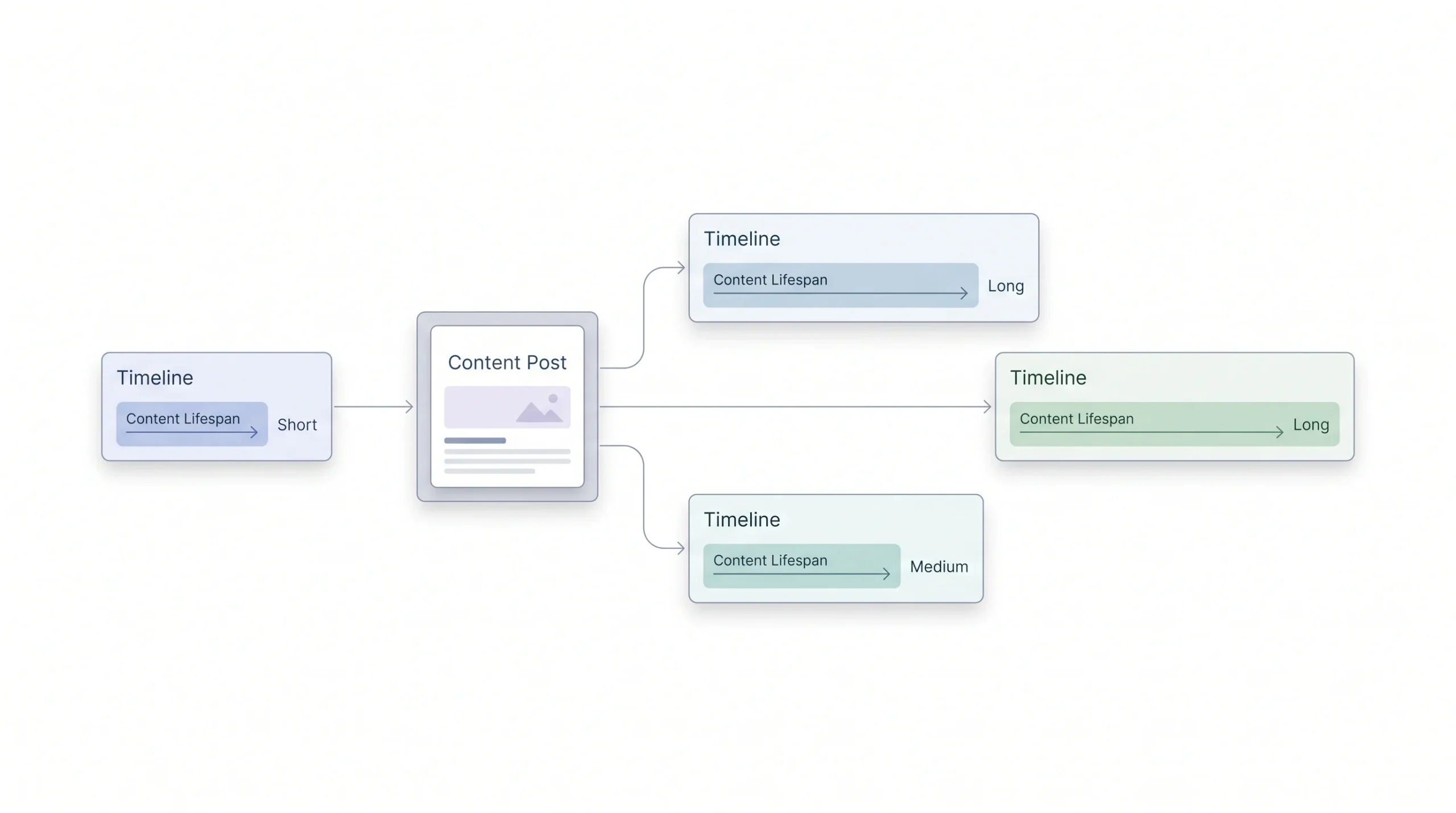
Look, if there was one magic number, this post would be three sentences long. There isn’t, and here’s why.
Every platform’s algorithm is built to reward a different kind of behavior. Some reward how often you show up. Some reward how long people stick around on your post after they see it. Some reward how fast you reply to comments. A “post” doesn’t cost the same effort on every platform either, and it definitely doesn’t live the same length of time once it’s out there.
That last part is the whole ballgame, honestly. Think about how long a post actually stays alive once you hit publish. A Tweet on X might be relevant for twenty minutes before it’s buried under the next thousand posts in someone’s feed. A LinkedIn post can keep pulling in views and comments for two or three weeks after you published it. A Pinterest Pin can still be driving traffic a year later. Same effort to create, wildly different lifespan.
This is the mental model that explains almost every frequency difference in this whole guide. Before asking “how often should I post,” ask “how long does a post on this platform actually stay alive.” The answer to that second question basically answers the first one. Platforms where content dies fast need more frequent posting just to stay in front of people. Platforms where content has a long tail don’t need nearly as much volume, because one good post is still working for you weeks later.
Keep that idea in your back pocket. It’ll come up again in almost every platform section below.
The 4 Factors That Should Actually Set Your Frequency
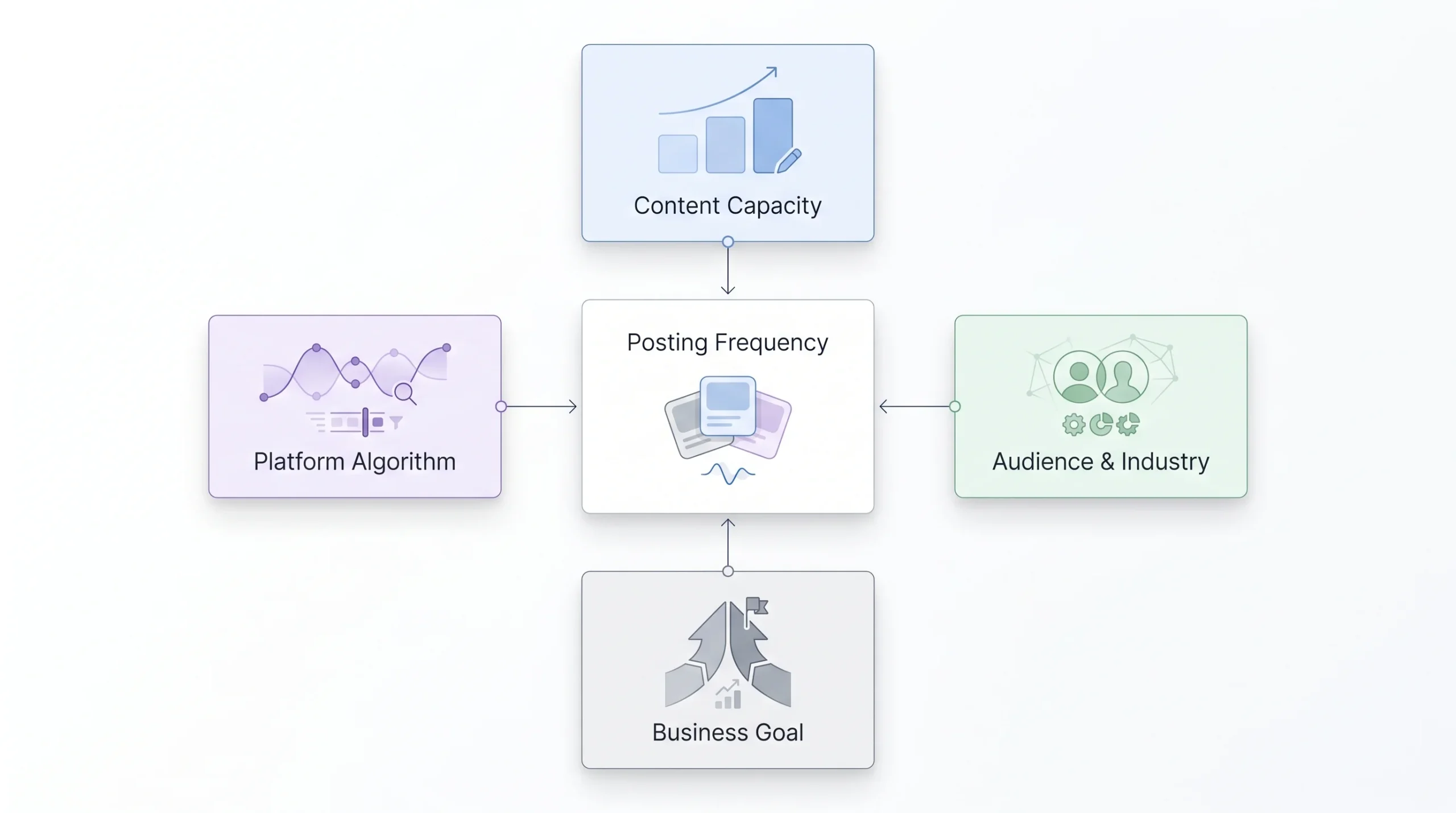
The benchmark table up top is a starting point. It’s not custom-built for your business, because it can’t be, it’s a general average. Four things nudge that number up or down depending on your actual situation, and understanding them matters more than memorizing the table.
Content capacity. This is the honest one nobody wants to talk about. How much genuinely good content can you or your team produce in a week without the quality falling off a cliff? A team with a repurposing pipeline, someone who can turn one long video into a Reel, a carousel, a Tweet thread, and a Pin, can sustain a much higher frequency than a solo founder writing every caption themselves between client calls. There’s no shame in either situation. There is shame in posting seven times a week with content that looks like it took five minutes, because your audience notices that faster than you think.
Audience size and industry. Enterprise brands post noticeably more than mid-size companies, and it’s not because bigger is automatically better. They have bigger teams and bigger budgets to sustain it. If you’re in ecommerce, news, or entertainment, your audience genuinely expects a higher volume because that’s the nature of what you’re selling or covering. If you’re in B2B services, consulting, or anything niche and expertise-driven, your audience isn’t scrolling for volume. They want fewer, sharper posts.
Your actual goal. A brand awareness push, think a product launch or a seasonal campaign, benefits from higher frequency because the whole point is reach and repetition. But if the goal is building real community or positioning someone as a genuine expert, cramming the feed with posts works against you. Depth beats frequency there, every time.
How the platform’s algorithm actually behaves. Some platforms genuinely punish you for going quiet. TikTok and X are like this, disappear for a week and you’ll feel it in your reach. Others, like LinkedIn and YouTube, care more about the quality and depth of engagement than raw volume, and a quieter week doesn’t tank you the same way.
| Factor | Post MORE than the benchmark if… | Post LESS than the benchmark if… |
|---|---|---|
| Content capacity | You’ve got a repurposing pipeline or a team behind you | You’re a team of one with limited time and assets |
| Audience/industry | You’re in ecommerce, news, or entertainment | You’re in B2B, professional services, or a niche field |
| Goal | Running an awareness or reach campaign | Building deep community or thought leadership |
| Algorithm behavior | The platform rewards raw volume (TikTok, X) | The platform rewards depth and dwell time (LinkedIn, YouTube) |
Run your business through that table honestly before locking in a number. It’ll save you from copying a frequency that was never built for you.
Here’s a way to actually use this instead of just nodding along. Take the sweet spot number from the benchmark table for whichever platform matters most, then walk it through all four factors one at a time. If content capacity is tight, drop toward the minimum instead of the sweet spot. If the goal right now is a specific campaign push, nudge toward the ceiling for a few weeks, then pull back to the sweet spot once the campaign wraps. Nobody’s frequency should stay frozen forever. It should flex a little around what’s actually happening in the business, as long as the baseline stays predictable the rest of the time.
It’s also worth saying plainly that these four factors don’t carry equal weight for every business. For a solo founder, content capacity is going to dominate the decision almost every time, there’s simply a hard ceiling on what one person can produce without the quality dropping. For an agency managing a client account, goal and industry usually matter more, since the client’s audience and campaign calendar dictate the cadence more than any internal resourcing question does. Knowing which factor actually drives the decision for a specific situation saves a lot of second-guessing later.
Platform-by-Platform Breakdown
This is the meat of the whole thing. Same structure for every platform below: the number first, then why that’s the number, what actually counts as “a post” on that platform (this trips up more beginners than you’d think), a quick table where it’s useful, and one real mistake to avoid.
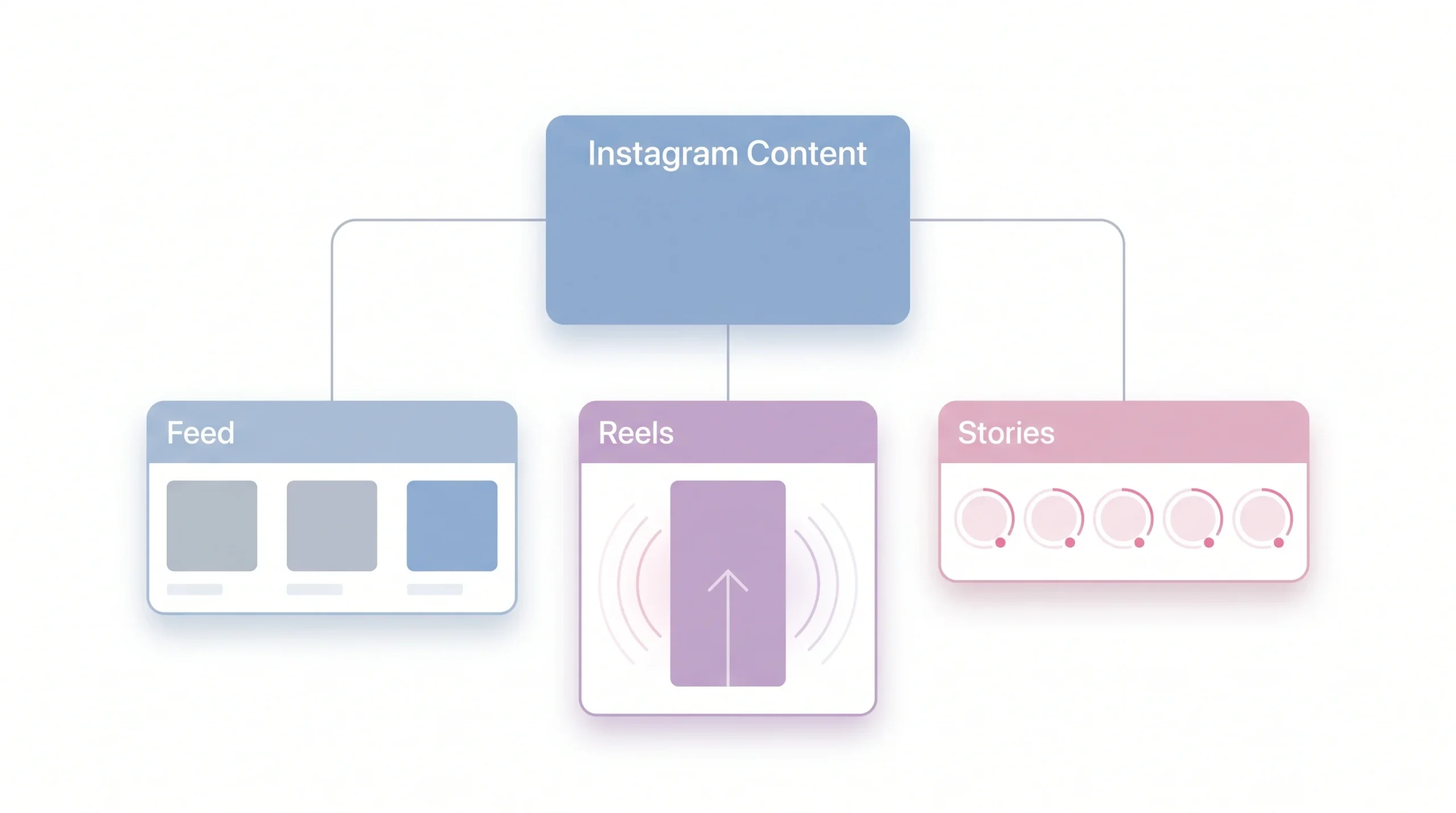
Three to five feed posts a week is the sweet spot for most brands. Stories can run daily, sometimes multiple times a day, because they don’t compete with your feed for the same real estate.
Here’s why that split exists. Instagram’s feed algorithm is still judging your Reels, carousels, and single-image posts against each other for space in someone’s home feed, which means posting too many of them too fast just means they’re competing with each other for the same eyeballs. Stories work differently. They sit in their own separate lane at the top of the app, they’re expected to be more frequent and more casual, and posting five Stories in a day doesn’t dilute your feed presence the way five feed posts would.
One thing worth knowing, and Sprout Social’s own data backs this up: enterprise brands post noticeably more on Instagram than mid-size companies do, mostly because they’ve got more hands on deck. That’s not a signal you need to match them. It’s a signal that their frequency reflects their resources, not some universal truth about what Instagram “wants.”
What actually counts as a post also matters here. Feed posts, Reels, carousels, and Stories are all judged somewhat separately by the algorithm. A carousel with strong swipe-through behavior can outperform a single image even if you’re posting less often overall, because Instagram is watching how long people engage with each piece, not just counting your output.
| Content type | Recommended weekly frequency | Notes |
|---|---|---|
| Feed posts (image/carousel) | 3–5x/week | Carousels tend to get longer engagement time |
| Reels | 2–3x/week | Reels get extra algorithmic push right now |
| Stories | Daily, multiple/day is fine | Doesn’t compete with feed frequency |
Common mistake here: treating Stories like an afterthought because they vanish in 24 hours, then wondering why engagement feels flat. Stories are often where the real, casual connection with an audience happens. Skipping them to “save energy” for feed posts is backwards.
There’s also a timing layer worth knowing about, since it plays directly into frequency decisions. Wednesday and Thursday tend to be the strongest days for Instagram engagement, with a solid secondary window most weekday evenings. Saturday is consistently the weakest day for the platform. That matters because if the plan is only three feed posts a week, spreading them evenly across the calendar isn’t actually the smart move. Loading the stronger posts into the Wednesday-Thursday window and treating the weekend as light Stories territory gets more out of the same three posts than scattering them randomly ever would.
And one honest note on Reels specifically. They’re still getting extra algorithmic push right now, which is exactly why two to three a week shows up as the recommendation instead of zero. But that push isn’t permanent for any given format, it shifts as Instagram tweaks what it wants to promote. Worth checking back on this every few months rather than assuming today’s format priority holds forever.
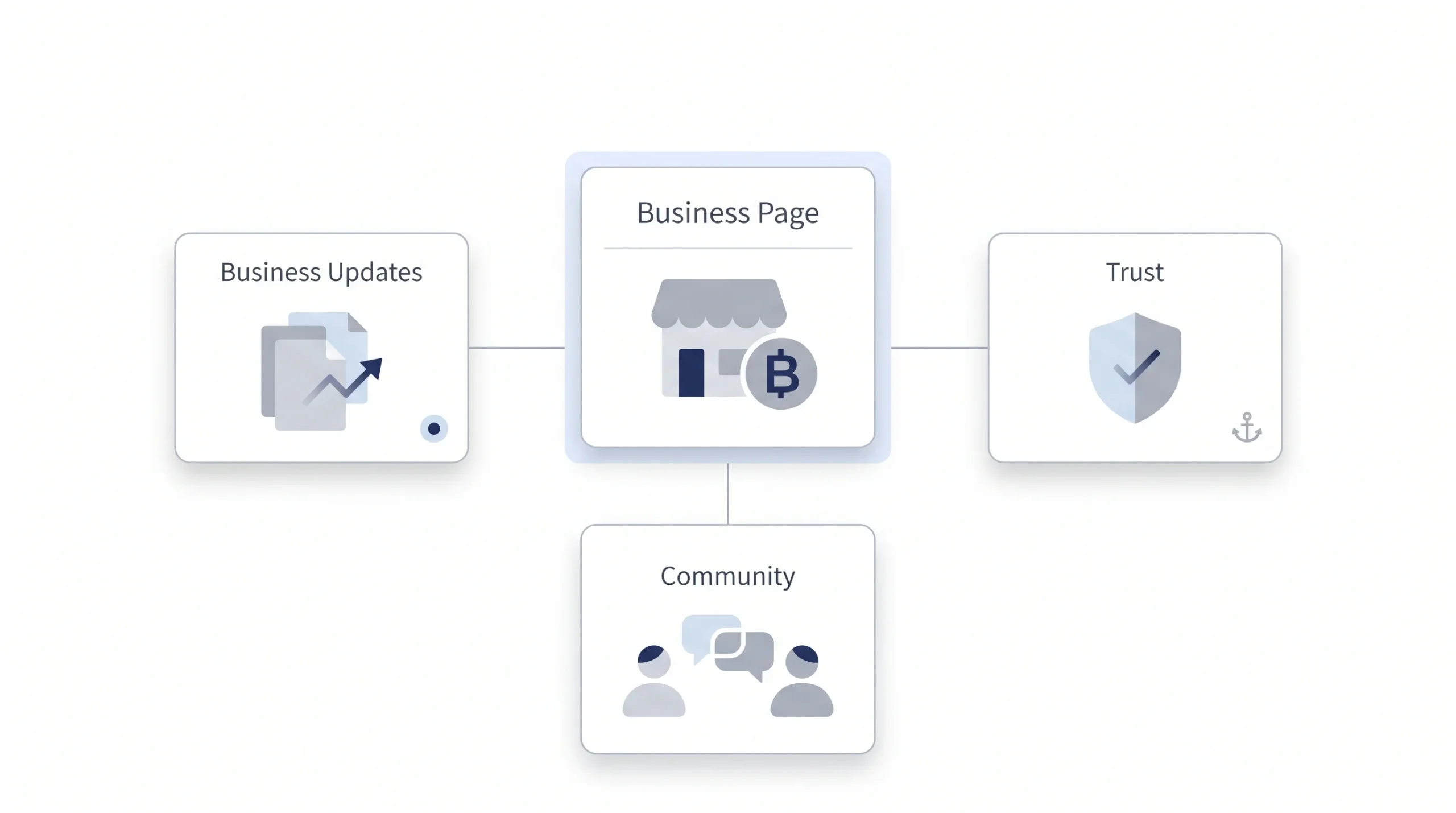
One post a day is the realistic sweet spot for most brands on Facebook. Three times a week is the floor if you want to stay visible at all, and two posts a day is about where you hit the ceiling before it starts working against you.
Facebook’s audience skews older and the feed algorithm moves slower than Instagram’s or TikTok’s. People aren’t scrolling Facebook the same frantic way they scroll a For You Page. A HubSpot study looking at over 13,500 Facebook profiles found the ideal frequency actually sits at one to two posts a day, and that lines up with what most brands are seeing in practice too.
The oversaturation risk is real and specific to Facebook in a way it isn’t everywhere else. People use Facebook to keep up with actual friends and family, not just brands, so when a business page starts flooding the feed, it competes directly with content people care about more. That’s a fast way to get muted or unfollowed. Posting more than twice a day tends to backfire here specifically because of that competition for attention, not just generic “fatigue.”
What counts as a post on Facebook is pretty straightforward compared to Instagram, images, videos, links, and text updates all sit in the same feed and get judged together, so there’s less need to think about format-specific cadence the way you do elsewhere.
Common mistake: treating every post like it needs to sell something. Facebook audiences respond better to posts that feel human, a customer story, a quick update, something timely, rather than a constant stream of promotional pushes. Save the second daily post for when there’s actually something worth saying, an event, a launch, a real update, instead of posting just to hit a number.
Worth adding here, since it’s the thing most small businesses get wrong first: Facebook is still one of the top platforms people go to when they want to contact a business directly or check whether one’s even still active. That changes what “not posting enough” actually costs. It’s not just a reach problem, it’s a trust problem. Someone checking a business’s Facebook page and seeing the last post was four months ago reads that as a red flag, even if the business itself is doing fine. The three-times-a-week floor exists as much for that trust signal as it does for the algorithm.
It’s also worth separating organic posting frequency from paid activity, since a lot of small businesses conflate the two. Boosting a post or running an ad doesn’t change how often the organic page should post. The daily-post recommendation here is strictly about keeping the page feeling alive to anyone who visits it directly, separate from whatever’s happening in the ads side of things.
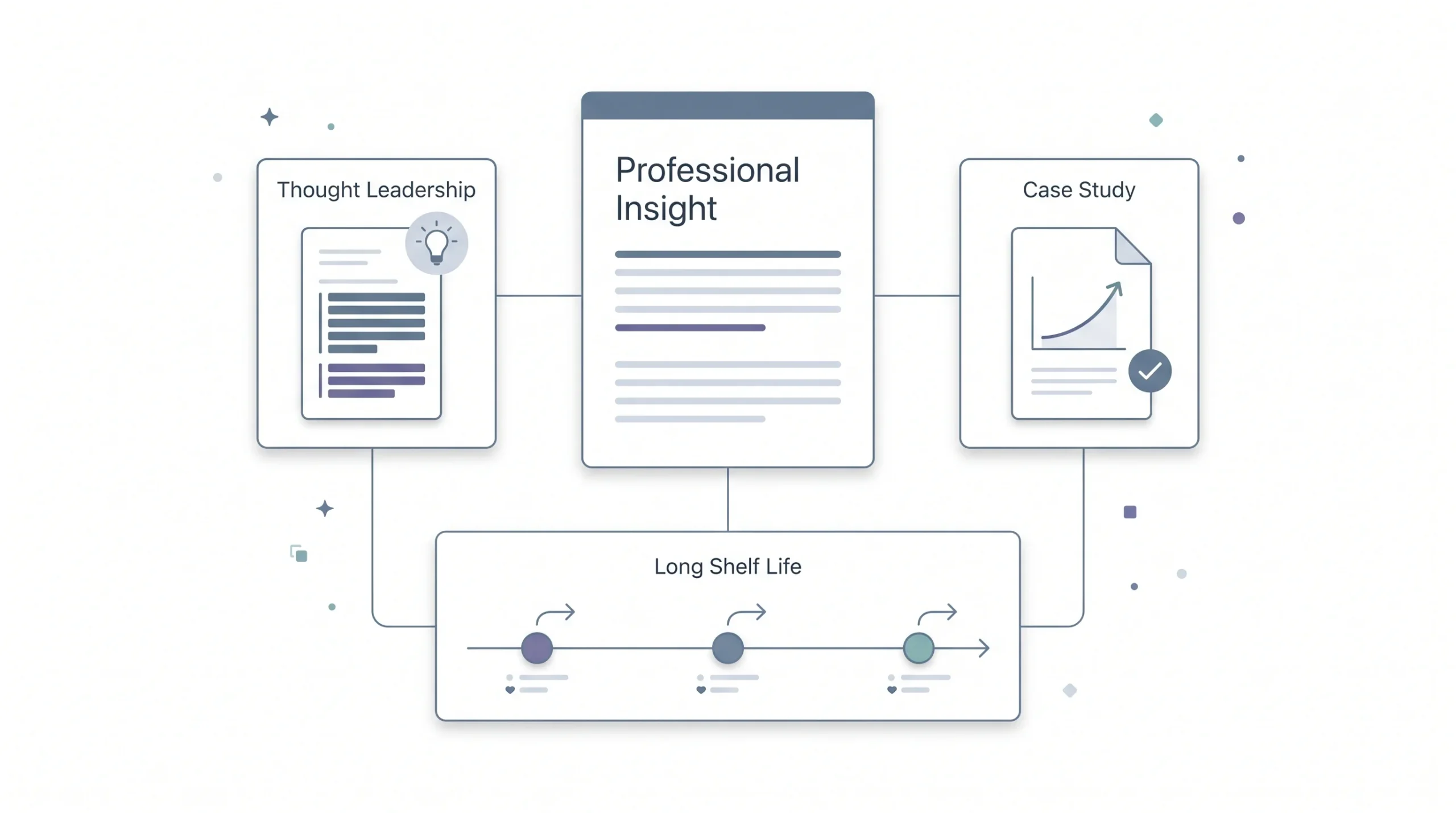
Three to five times a week, weekdays only, is the sweet spot. Even once a day is more than enough for most brands and individual professionals, and posting on weekends is close to wasted effort.
This is the best example of the “content shelf life” idea from earlier. A LinkedIn post doesn’t die in an hour like a Tweet does. It can keep collecting impressions, comments, and shares for two or three weeks after you hit publish, because LinkedIn’s feed algorithm keeps resurfacing posts that are still generating engagement long after they went live. That changes the whole math. You don’t need to post constantly to stay visible, because your last good post might still be working for you.
Copyblogger’s research on this found that 91% of LinkedIn creators publish at least once every three days, and most brands don’t go past once a day even when they’re posting consistently. That tells you something. The people who actually do well here aren’t out-posting everyone else. They’re being consistent and picking their moments carefully.
Weekend posting specifically underperforms on LinkedIn. People are on the platform for work, so their attention drops off hard once the weekday professional headspace disappears. If the plan is five posts a week, that’s a five-day work week, not a seven-day spread.
What counts as a post here is worth knowing too. Native LinkedIn posts, especially text posts and carousels, tend to get pushed further by the algorithm than posts with outbound links, because LinkedIn wants to keep people on the platform. If the goal includes driving traffic elsewhere, that’s a real trade-off to think through.
Common mistake: writing every post like a press release. LinkedIn has shifted a lot over the past couple years toward posts that mix professional insight with a real, personal voice, a clear opinion tied to actual work experience beats a polished corporate update almost every time now.
For anyone posting for a brand rather than a personal profile, there’s an extra wrinkle worth knowing. Company Page posts on LinkedIn generally get less organic reach than posts from an individual employee sharing the same idea, because LinkedIn’s feed still leans toward people over pages. A lot of B2B teams get better mileage having a founder or a couple of team members post consistently under their own names, three to five times a week, rather than pushing everything through the brand’s Company Page and wondering why reach feels flat. It’s not a hard rule, but it’s a pattern that shows up often enough to be worth testing.
A simple weekly rhythm also makes this easier to sustain without overthinking it every day. Something like a Monday insight post, a Wednesday quick case study or lesson learned, and a Friday takeaway or opinion, gives structure to what would otherwise be a blank page three times a week. That kind of repeatable format is a big part of why some accounts manage five posts a week without it feeling like a grind, while others struggle to hit two.
X (Twitter)
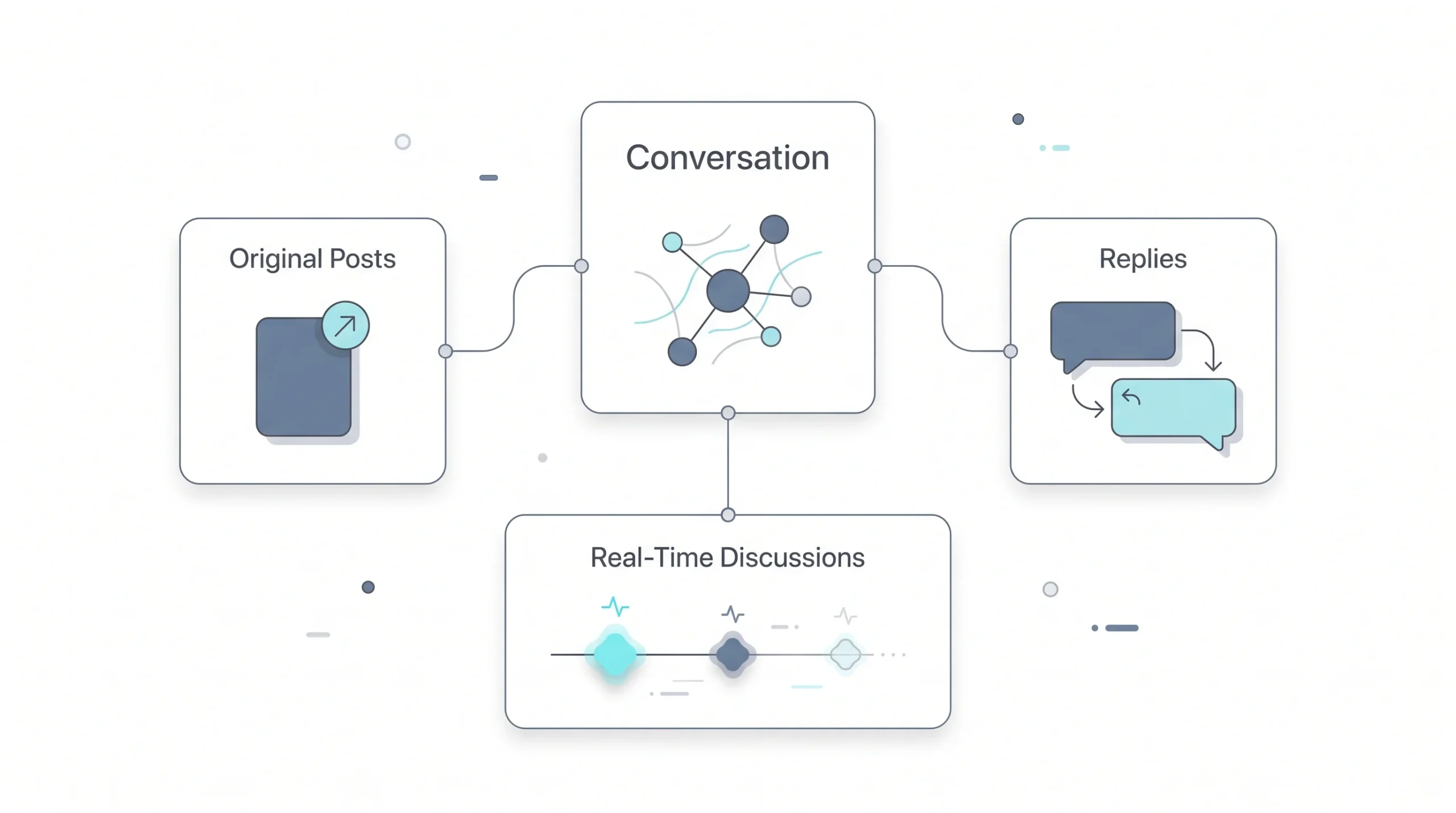
One to two posts a day is the sweet spot, and replying to and engaging in other conversations counts for just as much as posting original content, sometimes more.
X is the one platform where the content shelf life is genuinely short, and that’s not an exaggeration. A Tweet can be relevant for twenty minutes before it’s buried under everything else happening in real time. That’s the whole nature of the platform, it’s built around now, not around a slow-building feed. Which means X is really the one platform in this whole guide where higher frequency isn’t just tolerated, it’s actually necessary if staying visible matters.
That said, “necessary” doesn’t mean unlimited. Posting more than a couple times a day without engaging back tends to read as noise, and X users are quick to mute accounts that only broadcast and never reply. Independent replies to other people’s posts often outperform scheduled original content here, because they put you directly into a conversation that’s already getting attention instead of hoping someone finds your standalone Tweet.
What counts as a post matters a lot on X specifically. Original Tweets, quote-posts, and replies are treated somewhat differently by the algorithm, and a strong reply thread can do more for visibility than a scheduled post that goes out into a quiet timeline.
Common mistake: scheduling everything in advance and never showing up live. X rewards being in the room when something’s happening. A brand that only posts pre-written content and never jumps into a real-time conversation is leaving a lot of the platform’s actual value on the table.
Unlike some of the other platforms in this guide, X doesn’t swing hard between weekdays and weekends the way LinkedIn does. Engagement stays fairly steady across the whole week, which actually makes it easier to plan around, there’s no single “dead zone” to avoid the way there is with LinkedIn on Saturdays. What does matter more here is time of day, since the feed is largely chronological for people you follow rather than a slow-cooked algorithmic ranking. Posting when the target audience is actually awake and scrolling matters more on X than almost anywhere else in this guide.
There’s also a practical reason the one-to-two-times-a-day range works better than pushing higher. Beyond that point, a brand’s own posts start crowding its own timeline, and followers start seeing the same account repeatedly instead of a healthy mix. That’s a fast way to get muted, which is different from an unfollow, the account stays followed but stops showing up, and there’s no easy way to know it’s happening until engagement quietly drops.
TikTok
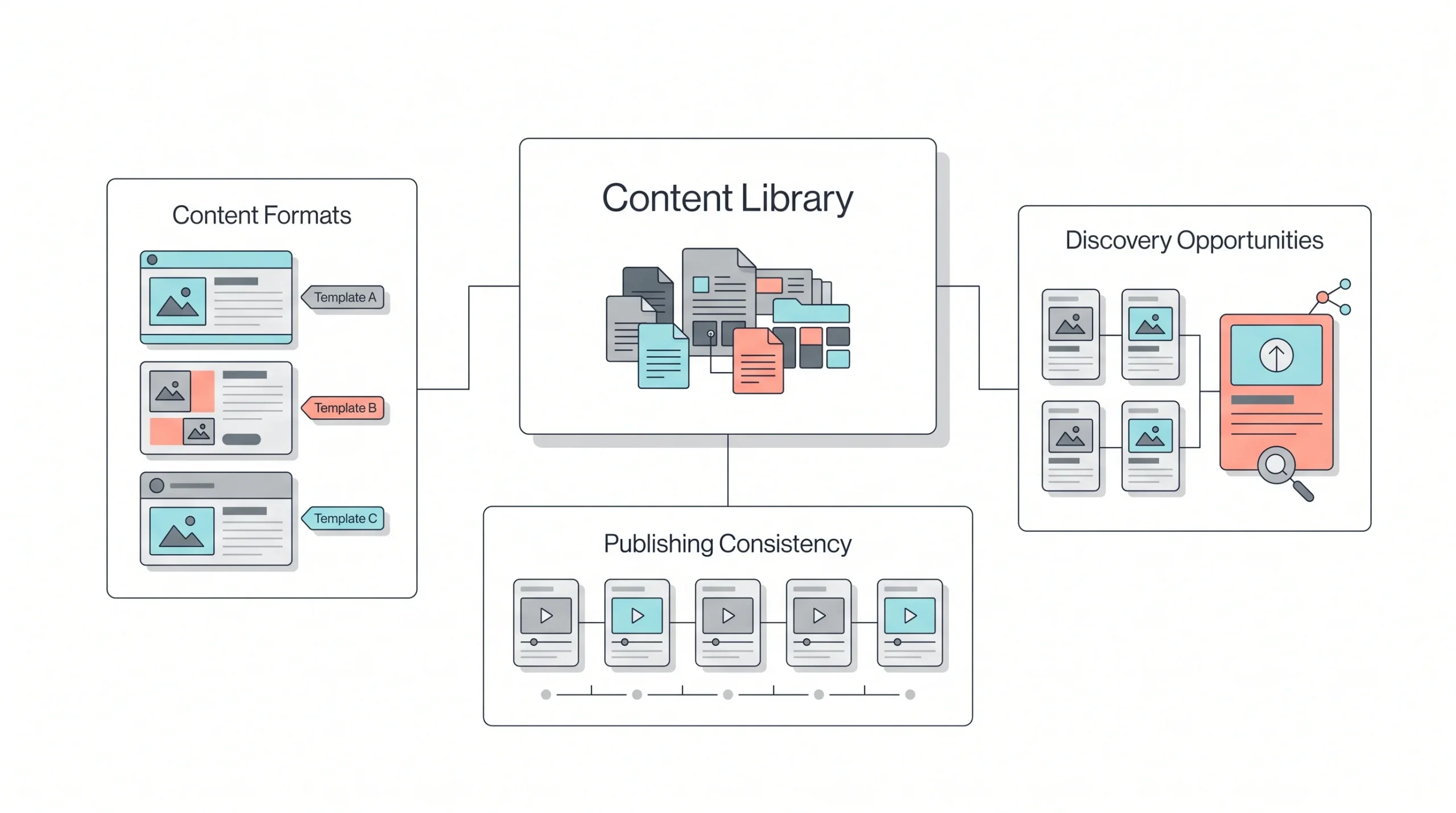
Four to seven times a week is the realistic sweet spot for most brands. High-output creators go up to one or two times a day, and the floor to stay visible at all is around two to three times a week.
TikTok’s For You Page works differently than almost every other feed, and this is worth actually understanding instead of just accepting the number. It doesn’t rely heavily on your follower count to decide who sees your content. A brand new account with zero followers can still get pushed to thousands of people if the content itself performs. That changes the incentive completely. Frequency matters here not because the algorithm rewards raw volume for its own sake, but because more attempts means more chances for something to catch and get pushed out wide.
TikTok’s own business guidance suggests one to four uploads a day is workable for brands trying to keep up with the constantly refreshing feed, though most small teams land closer to the four-to-seven-times-a-week range because that’s what’s actually sustainable without the quality cratering.
And that’s the real tension on this platform specifically. TikTok is the easiest platform to get tempted into overposting weak content, because the barrier to publishing feels so low. But a feed full of low-effort videos gets scrolled past just as fast as it gets posted, and TikTok’s audience is famously quick to bounce off anything that feels phoned in.
Common mistake: chasing volume without a repurposing plan and burning out in three weeks. A smart approach here is building two solid filming sessions a month and editing a bank of content from that footage, rather than trying to film something fresh every single day.
Something else worth being honest about. TikTok doesn’t reward consistency of topic the same way it rewards consistency of posting. An account can post daily and still struggle if every video is trying to be a different thing, one day a product demo, next day a trend, next day a talking-head opinion. The algorithm is looking for signals about what kind of audience to serve the content to, and a scattered content mix confuses that signal even at high frequency. Picking two or three recurring content formats and rotating through them tends to outperform posting more often with no clear pattern.
Repurposing footage from other platforms into TikTok also comes with a catch. Content that’s clearly been reformatted from a polished Instagram Reel or a YouTube Short tends to underperform native TikTok content, because the platform’s audience can tell, and the algorithm seems to pick up on lower completion rates for anything that feels foreign to the app. Repurposing the raw footage or the idea works fine. Repurposing the exact finished edit usually doesn’t.
YouTube
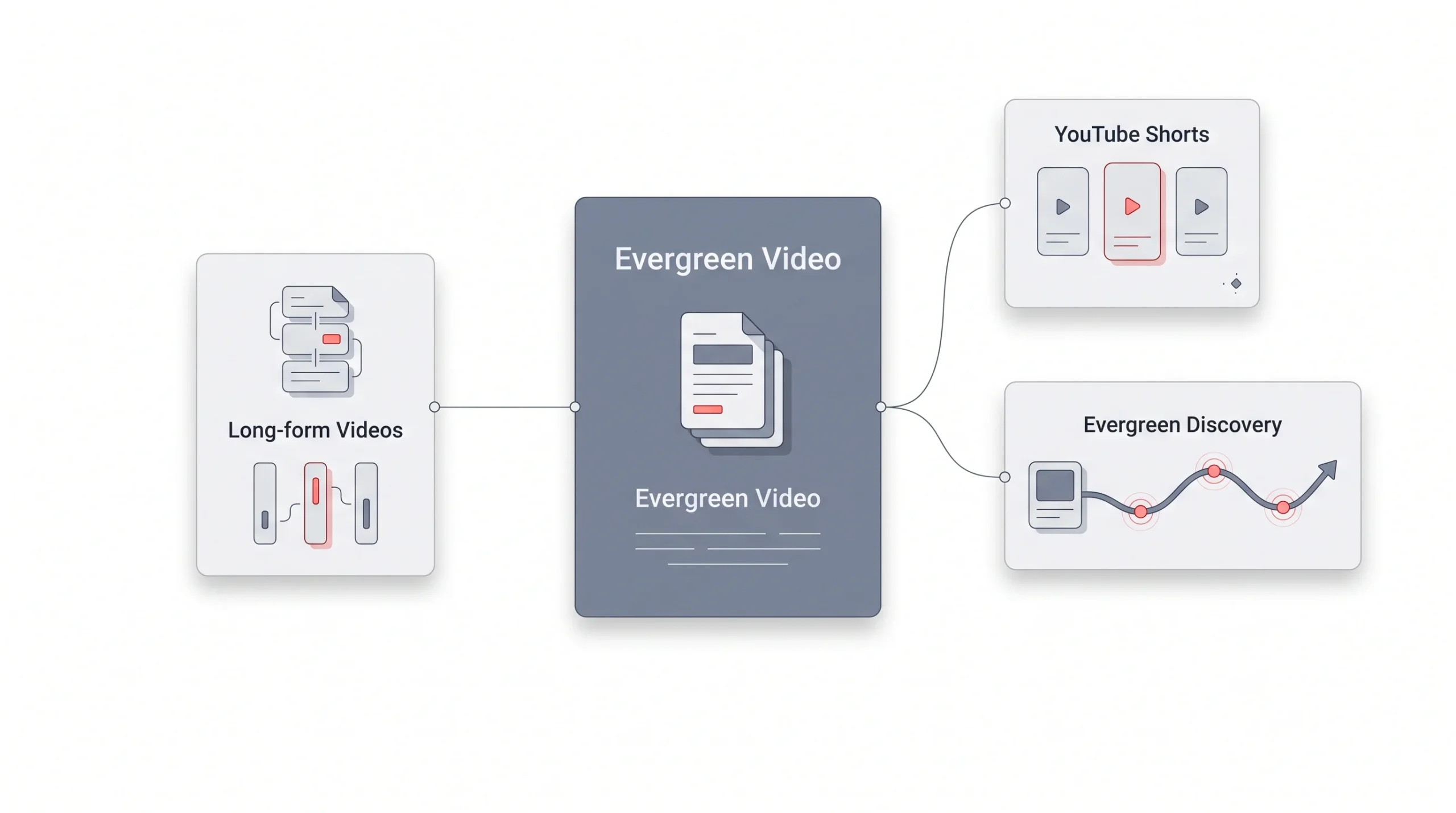
Once a week is the sweet spot for long-form videos. Once every two weeks is an acceptable floor if the quality stays genuinely high, but irregular gaps hurt more than a slightly lower overall volume does.
YouTube plays a longer game than almost every platform in this guide. A single well-made video can keep pulling in views for months, sometimes years, through search and suggested content, so the pressure to post constantly just isn’t there the same way it is on TikTok or X. What YouTube does punish is inconsistency. A channel that posts weekly for two months, then disappears for six weeks, then comes back, sends a confusing signal about whether it’s even active, and that hurts recommendations more than simply posting less often on a predictable schedule would.
Shorts change this math though. YouTube Shorts can run at a much higher frequency, closer to what you’d do on TikTok, without hurting the main channel’s long-form cadence, because they’re judged somewhat separately in how they get distributed.
| Format | Recommended frequency |
|---|---|
| Long-form video | 1x/week (every 2 weeks minimum) |
| YouTube Shorts | 3–5x/week, can go daily |
Common mistake: treating a missed upload week as a minor thing, then letting it turn into a month. The gap itself is what does the damage on YouTube, not the lower total volume. A predictable, even if modest, schedule beats a burst-and-disappear pattern every time.
YouTube also plays a different game when it comes to what a “post” is actually worth. A single well-optimized long-form video can keep getting discovered through search and suggested content for years, not weeks, which is the longest shelf life of any platform covered in this guide. That’s exactly why the frequency stays so low compared to something like TikTok. The return on one video compounds over a much longer window, so the pressure to constantly refresh the channel just isn’t there in the same way.
That said, low frequency only works if the quality bar stays high. A channel posting once a week with strong retention numbers will always beat a channel posting three times a week with videos people click away from in the first thirty seconds. Retention, not upload count, is what actually drives YouTube’s recommendation engine, and it’s worth remembering that before assuming more uploads automatically means more growth.
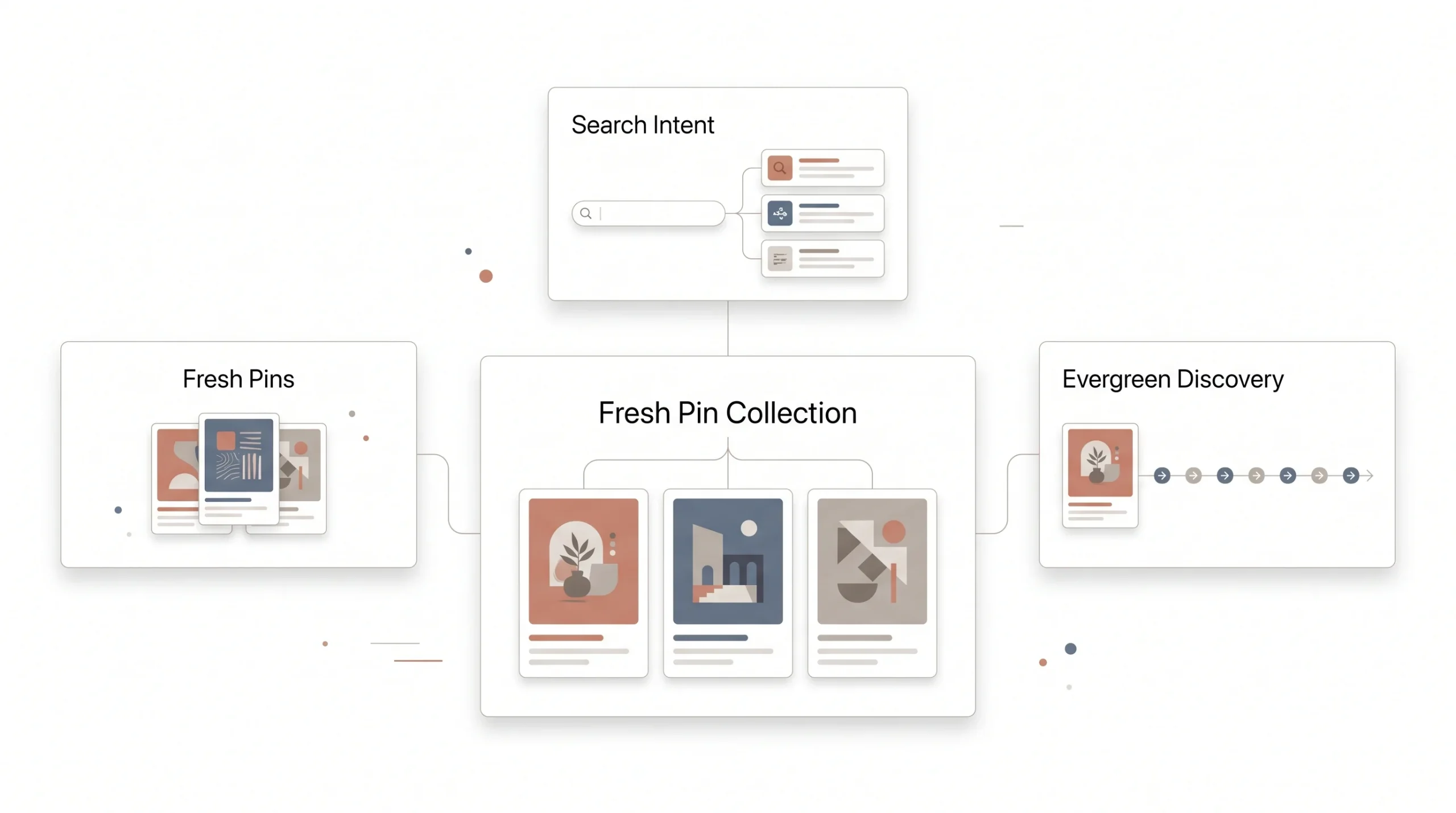
Aim for at least three to five fresh Pins a week as a floor, with one Pin a day being a strong steady baseline. Higher-capacity accounts can push up to four to ten Pins a day without much downside.
Pinterest doesn’t behave like a social feed at all, really, it behaves more like a search engine. People aren’t scrolling Pinterest the way they scroll Instagram, hunting for what friends are up to right now. They’re searching for ideas, planning something, looking for inspiration months in advance of actually needing it. That’s why frequency here matters less for immediate reach and more for building a long-tail library of content that keeps surfacing in search results long after it was published.
This is actually the platform where the “content shelf life” idea stretches the furthest. A Pin published today can still be driving clicks a year from now if it’s well-optimized, which is wildly different from X where a post is basically dead within the hour.
Fresh Pins specifically get favored by Pinterest’s algorithm over repins of the same old content. That’s a distinction beginners miss constantly. Simply repinning existing content over and over doesn’t carry the same weight as creating and uploading genuinely new Pins, even if they link to the same destination.
Common mistake: building a Pinterest strategy entirely around repinning instead of creating fresh visuals regularly. It’s more work upfront, but it’s the difference between a Pinterest presence that actually compounds over time and one that plateaus fast.
Because Pinterest behaves like search, keyword thinking matters here in a way it barely does on the other platforms in this guide. A Pin’s title, description, and even the text overlaid on the image all get read the way a search engine reads a webpage. That means a higher posting frequency without any thought toward what people are actually searching for doesn’t compound the way it should. Ten Pins a day targeting the same vague topic does less than three Pins a day each targeting a genuinely different search intent.
It’s also worth pointing out that Pinterest rewards patience in a way most other platforms don’t. A new Pin might take weeks to start gaining real traction, since it has to work its way through Pinterest’s own testing and ranking process before it gets shown widely. That’s a hard adjustment for anyone used to Instagram or TikTok, where a post either catches on in the first few hours or it doesn’t. On Pinterest, judging a Pin’s performance after two days is basically pointless.
What Happens If You Post Too Often (or Not Enough)
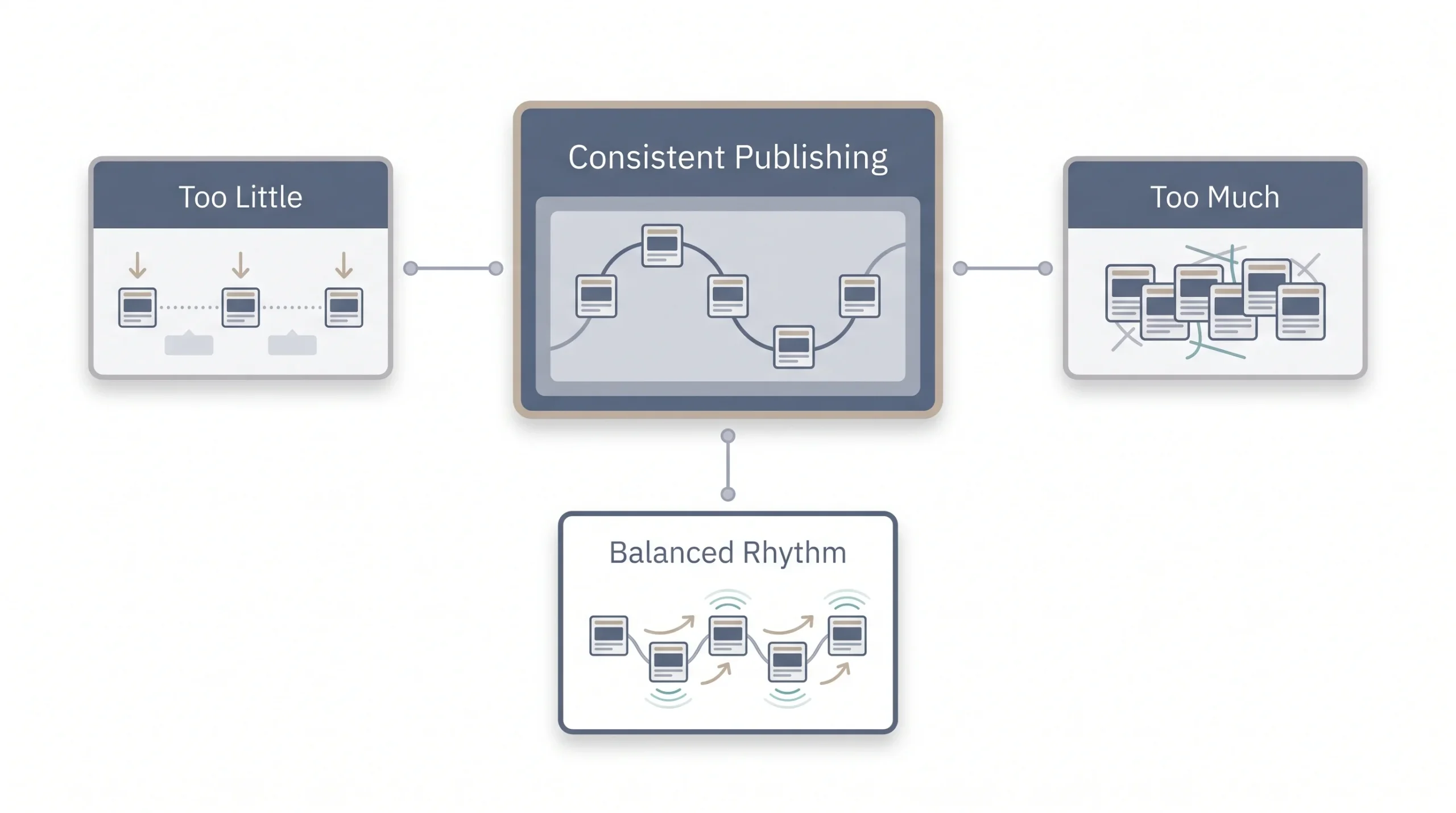
Most people worry about one direction here and completely ignore the other. Usually it’s the “not enough” fear that gets all the attention, since that’s the one that feels like obvious neglect. But posting too much has real, measurable downsides too, and it’s worth understanding both failure modes instead of just defaulting to “more is always safer.”
Posting too little. Platforms use consistency as a trust signal. An account that goes quiet for stretches at a time tends to get deprioritized, because the algorithm has less recent data to work with and starts showing your content to fewer people by default. That’s how accounts end up in a slow spiral, less visibility leads to lower engagement, which leads to even less visibility next time, and it becomes genuinely hard to climb back out of that hole without a real reset in strategy.
Posting too much. This one’s counterintuitive for a lot of people, but it’s real. Every platform has a finite amount of attention to hand out to any given account. Flooding the feed with more posts than your audience can meaningfully engage with means those posts start competing with each other for the same limited attention instead of adding up. Per-post engagement drops, which sends its own negative signal back to the algorithm, and some brands have actually seen better overall results after cutting their posting volume down, not up, because the quality and focus of what remained went up along with it.
Silence gets you buried. Noise gets you muted. Consistency is really the only lever that works in both directions, and it’s the one thing every platform in this guide agrees on even when nothing else about their algorithms lines up.
There’s a third failure mode worth naming too, since it’s less obvious than the first two. Posting at a frequency that’s technically fine but wildly inconsistent week to week, seven posts one week, one post the next, two the week after, does damage that’s separate from either overposting or underposting on their own. Algorithms are reading for a pattern they can trust, and an erratic pattern reads about as poorly as no pattern at all. This is really the argument for picking a number that’s sustainable over one that looks impressive on paper for a week or two before collapsing.
Worth remembering too that these two failure modes don’t cost the same thing. Underposting mostly costs reach, fewer people see the account, but the relationship with existing followers stays mostly intact. Overposting costs something harder to win back, actual trust and attention from people who already chose to follow. Losing a follower who mutes or unfollows because of fatigue is a slower, quieter kind of damage than simply not showing up enough, and it’s worth weighing that difference when deciding which side of the benchmark range to lean toward.
How to Build a Realistic Weekly Posting Schedule
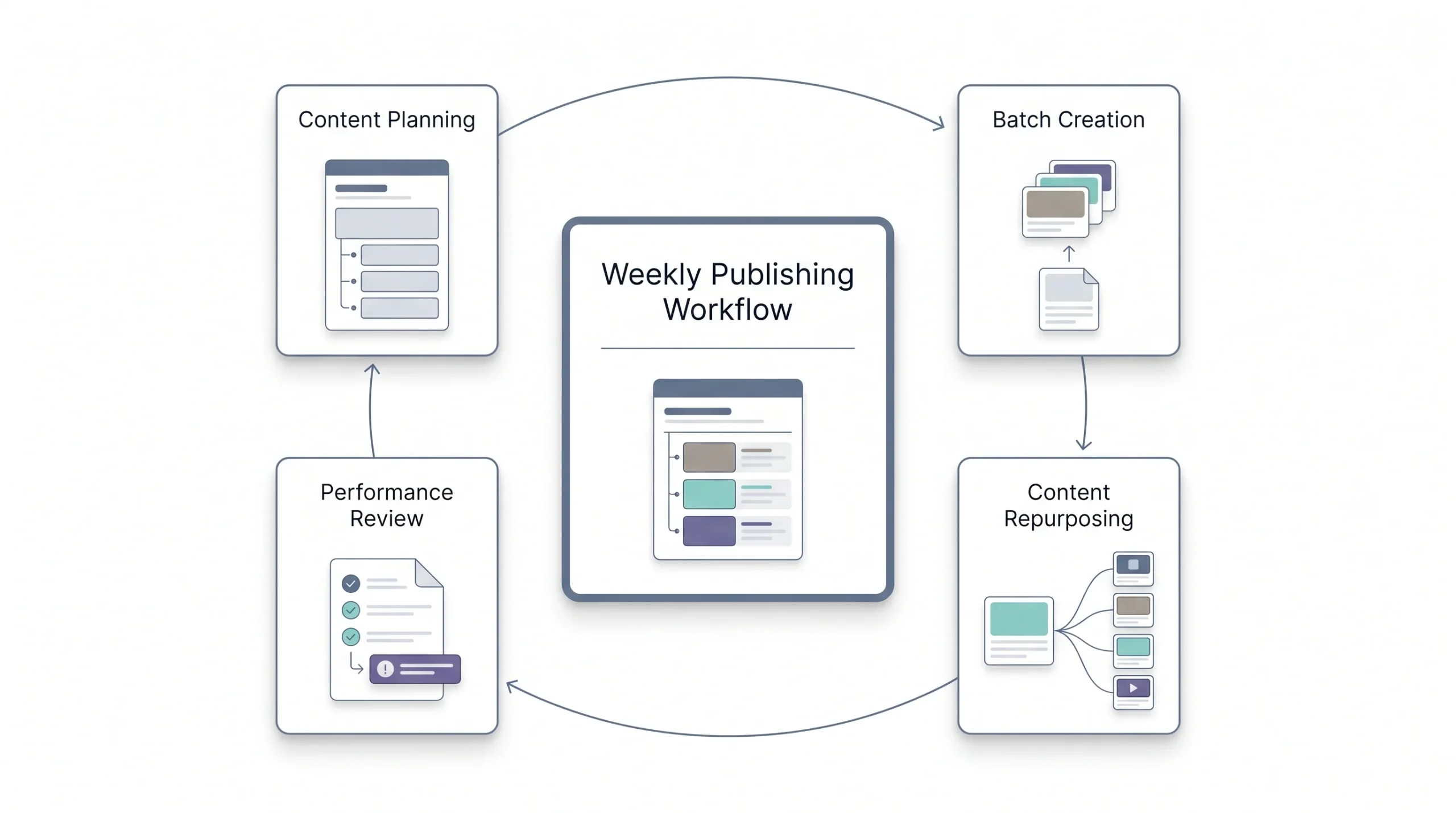
Knowing the numbers is one thing. Actually building a schedule around them without losing an entire week to content creation is a different problem, and it’s the one most guides skip entirely.
Start by picking two or three priority platforms based on where the actual audience spends time, instead of trying to maintain a real presence everywhere at once. Spreading thin across six platforms usually means doing all six badly. Two platforms done well beats four platforms neglected, every single time.
From there, set the actual frequency using the benchmark numbers from earlier, then adjust up or down using the four factors, content capacity, audience and industry, goal, and how that specific platform’s algorithm behaves. This is where the earlier sections actually pay off instead of staying theoretical.
Batch the content creation into one sitting a week rather than trying to create something fresh every single day. A two to three hour block, once a week, to draft, film, and design everything, then schedule it out across the week, is far more sustainable than daily scrambling, and the quality holds up better too.
Build in an actual repurposing pass. One solid long-form idea, a video, an article, a case study, can get reshaped into a Reel, a carousel, a LinkedIn text post, a Tweet thread, and a Pin. This single habit is what makes higher frequency actually sustainable without burning out, because the creation cost gets spread across multiple pieces instead of starting from zero every time.
And whatever frequency gets chosen, commit to it for at least six to eight weeks before judging the results. Algorithms need a consistency signal before they start rewarding it, and changing the schedule every two weeks means never actually finding out if a cadence was working.
| Day | X | |||
|---|---|---|---|---|
| Monday | Feed post | Post | — | 1–2 posts |
| Tuesday | Story | — | Post | 1–2 posts |
| Wednesday | Reel | Post | Post | 1–2 posts |
| Thursday | Story | Post | — | 1–2 posts |
| Friday | Feed post | Post | Post | 1–2 posts |
| Weekend | Story (optional) | — (skip) | Optional | Light |
That table isn’t a rule, it’s a starting template. Swap in whichever platforms actually matter for the specific business and adjust the days around when the audience is genuinely active.
A quick sanity check that helps before locking anything in: count up the actual weekly total across every platform in the plan and compare it honestly against real available hours. A team trying to hit five LinkedIn posts, five Instagram posts, daily Stories, and one to two X posts a day in the same week, on top of everything else already on their plate, is setting up a schedule that looks great in a spreadsheet and falls apart by week three. Better to commit to a smaller, fully sustainable plan across two platforms than a bigger plan across four that quietly stops happening after the first busy week.
One last piece worth building into the schedule from day one: a short weekly review, even fifteen minutes, to check what actually got posted against what was planned, and glance at which posts did better than others. This isn’t about obsessing over every metric. It’s about catching drift early, noticing a platform quietly dropped off the calendar for two weeks straight before it turns into two months, and noticing which content formats are worth doing more of before the next planning session rolls around.
Conclusion
Come back to the one idea that ties this whole guide together. How long a post actually stays alive on a given platform tells you almost everything about how often you need to show up there. Fast-moving platforms like X need frequent posting just to stay visible. Platforms with a longer shelf life like LinkedIn and Pinterest don’t, because good content there keeps working long after it’s published.
And the second idea worth holding onto: consistency beats volume in either direction. Posting too little gets an account buried. Posting too much just means fighting your own content for the same limited attention. Pick two or three platforms that actually matter, apply the benchmark numbers from this guide, adjust for the four factors that fit the actual business, and commit to it for six to eight weeks before touching the schedule again. That’s really the whole strategy. Not chasing a perfect number, just showing up reliably enough for the algorithm and the audience to trust that the account is actually there.
FAQs
How often should a small business post on social media?
Most small businesses do fine posting two to five times a week on their main platform, rather than trying to hit daily on everything. The floor matters more than the ceiling here, staying under three times a week on any platform is where visibility usually starts dropping off.
Is it better to post once a day consistently or multiple times occasionally?
Consistency wins over bursts almost every time. A steady, predictable cadence, even a modest one, builds more trust with both the algorithm and the audience than sporadic bursts of high activity followed by silence.
Does posting frequency actually affect the algorithm?
Yes, but not in isolation. Frequency combined with consistency and engagement quality is what platforms are actually reading. Posting a lot with weak engagement doesn’t outperform posting less with content that genuinely holds attention.
How often should I post if I’m a solo creator or one-person team?
Aim for the lower end of the benchmark range on two platforms max, rather than the sweet spot across five. A repurposing habit, one piece of content reshaped for multiple platforms, matters more for a solo team than raw output does.
Should posting frequency be the same every week or can it change seasonally?
It can flex around real business moments, launches, seasonal campaigns, major announcements, but the baseline should stay steady the rest of the time. Big swings up and down without a clear reason tend to confuse the algorithm’s read on how active the account actually is.
What’s the difference between posting frequency and posting consistency?
Frequency is how many times a week something gets posted. Consistency is whether that number holds steady over time. A brand posting three times a week every single week is more consistent, and usually performs better long-term, than one bouncing between one post and seven posts depending on how busy the week got.
How long should I test a new posting frequency before changing it?
Six to eight weeks minimum. Algorithms take time to read a new pattern as the norm, and judging a frequency change after a week or two almost always leads to the wrong conclusion.
Should I post the same content across every platform to keep up the frequency?
Nope, and this is where a lot of teams shortcut themselves into worse results. Cross-posting the exact same video or caption everywhere ignores that each platform judges format and shelf life differently, a native LinkedIn text post and a straight-up TikTok caption dump are not the same thing wearing different outfits. Reshaping one idea for each platform, even lightly, tends to outperform identical copy-paste posts, and it’s really the only way higher frequency stays sustainable without the content feeling recycled.
Does the best time of day to post matter as much as frequency?
It matters, but less than frequency does, and it’s easy to get that backwards. Posting at the “perfect” hour with an inconsistent weekly cadence still underperforms a slightly less optimized time slot posted reliably. Get the frequency and consistency right first, then fine-tune timing using actual account analytics once there’s enough posting history to read.
What if I can’t keep up with the sweet spot for my main platform?
Drop to the minimum floor rather than abandoning the platform or burning out trying to hit a number that was never realistic. A steady two to three posts a week that actually happen every week beats a five-post plan that quietly falls apart after a month. The floor numbers in this guide exist specifically for this situation, they’re the lowest frequency that still keeps an account from getting buried, not a failure state.
Do algorithm changes mean these numbers will be different next year?
Almost certainly some of them will shift, that’s just the nature of these platforms. What tends to hold up longer than any specific number is the underlying logic behind it, how long content stays alive on a given platform, and how much that platform rewards raw volume versus depth. Revisiting the actual benchmark numbers every six months or so is a reasonable habit, since platforms tend to announce or quietly roll out algorithm shifts often enough that last year’s numbers can go stale.