


Look, here’s something that happened to basically every brand over the last decade. You spent good money on a slick ad campaign, hired a photographer, wrote clever copy, and then watched it get less engagement than some random customer’s blurry photo of your product on their kitchen counter. Annoying, right? But also kind of the whole story of modern marketing.
People don’t trust brands the way they used to. They trust other people. A stranger’s honest review on Amazon carries more weight than a full-page magazine ad ever will. A TikTok from someone who actually bought the thing beats a polished commercial nine times out of ten. That’s not a trend anymore, it’s just how buying decisions get made now.
This shift didn’t happen overnight. Social media flattened the relationship between brands and customers. Suddenly everyone had a platform, a camera, and an audience of their own, even if that audience was just 40 friends and family members. And when those people started posting about products they liked, something interesting happened: other people paid attention. Way more attention than they paid to the brand’s own posts.
That’s the whole idea behind user-generated content, or UGC as most marketers call it now. It’s content made by real customers, fans, and everyday users instead of your internal team or an agency. Photos, videos, reviews, tweets, unboxing clips, that random guy on Reddit explaining why your product changed his life. All of it counts. And all of it, when used right, does something your paid ads simply can’t: it makes people believe you.
Social proof is the engine here. Humans are wired to look at what other humans are doing before they decide what to do themselves. That’s why restaurants with a line outside seem more appealing than the empty one next door, even if the food is identical. UGC is basically that line outside the restaurant, except it’s happening on Instagram, TikTok, review sites, and community forums all at once.
There’s also a cost angle that doesn’t get talked about enough. Producing content in-house is expensive. Photographers, video editors, ad spend to get eyeballs on it, and then you have to do it all again next month because content burns out fast. UGC flips that. Your customers are already creating content, for free, because they want to. Your job isn’t to make more content, it’s to notice the content that already exists and put it to work.
And the numbers back this up. Studies from Nielsen, Stackla, and other research groups have shown for years that consumers trust peer content significantly more than branded content, sometimes by a margin of 2 to 1 or more. Brands that lean into UGC see higher engagement rates, better conversion numbers, and lower customer acquisition costs compared to brands running purely branded campaigns. This isn’t a nice-to-have anymore. It’s become table stakes.
What You Will Learn in This Guide
- What user-generated content actually means and how it’s different from influencer marketing or employee content
- Why UGC works on a psychological level, not just a marketing level
- The different types of UGC you can collect and use
- How to build a UGC strategy from the ground up, even if you’re starting with zero submissions
- Practical ways to get customers actually creating content for you
- Where to collect UGC and how to repurpose it across your marketing
- Legal stuff you genuinely need to know before you republish anyone’s content
- Real examples from brands that got this right
- Tools that make managing UGC less of a headache
- How to measure whether any of this is actually working
- A 30-day action plan you can start using today
Alright, let’s get into it properly.
What Is User-Generated Content (UGC)?
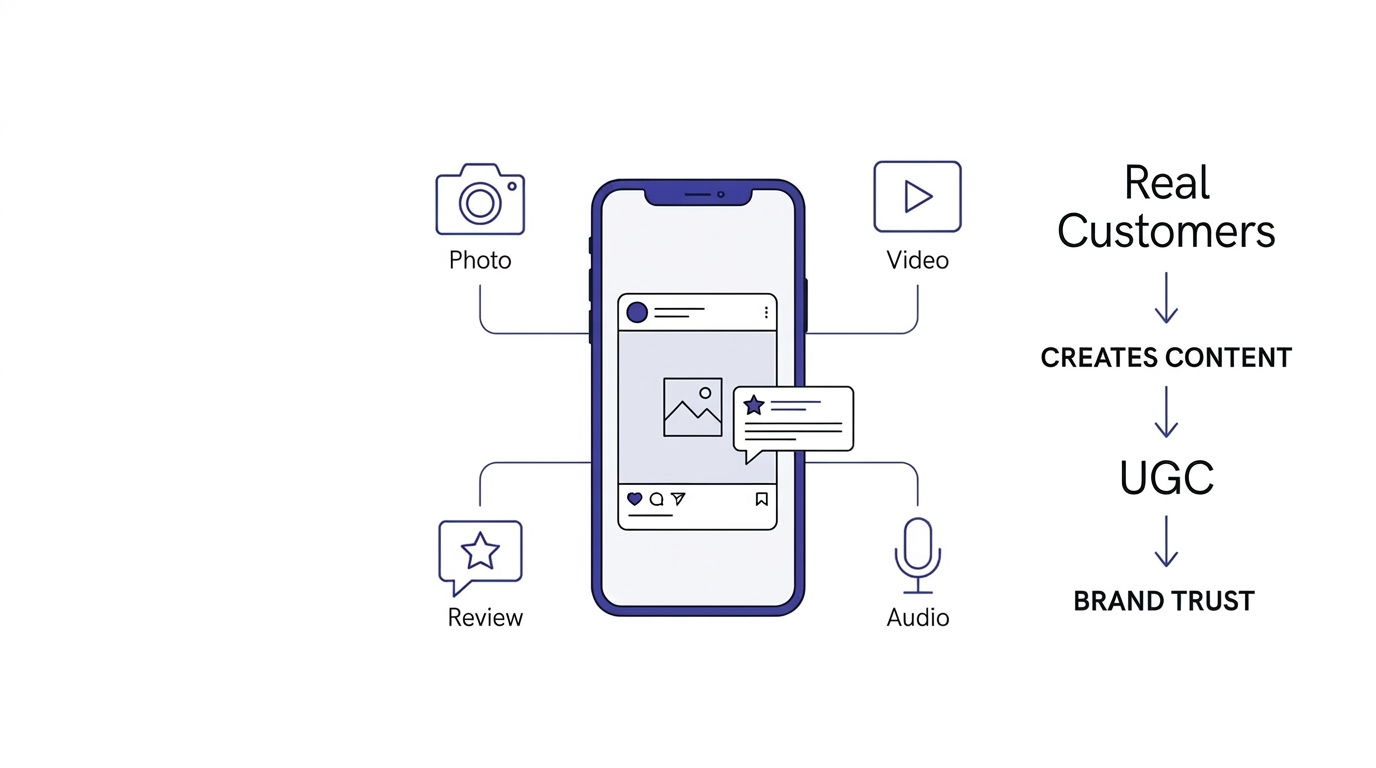
User-generated content is any content, text, photo, video, review, or audio, created by regular people rather than a brand or its hired professionals. It’s unpaid, unscripted (mostly), and it comes from real experiences people had with a product or service. Think of the photo someone posts of their new sneakers, or the three-paragraph review someone leaves after a bad hotel stay. That’s UGC. It’s raw, it’s honest, and that’s exactly why it works.
Why UGC Has Become a Marketing Necessity
A few years ago, UGC was a nice bonus. Now it’s closer to a requirement. Ad costs on platforms like Facebook and Instagram have climbed steadily, organic reach for branded posts has dropped, and audiences have gotten better at spotting and ignoring polished ads. UGC cuts through that noise because it doesn’t look like an ad. It looks like a person. Brands that ignore this are basically fighting an uphill battle with one hand tied behind their back.
How UGC Differs from Traditional Brand Content
Brand content is controlled. Every word, every frame, every color choice goes through approval, usually more than once. UGC is messy by comparison, and that messiness is the point. A customer’s shaky phone video with bad lighting often outperforms a studio shoot because it feels real. Traditional content sells a lifestyle. UGC sells proof that the lifestyle is actually achievable, because someone just like the viewer already got there.
UGC vs Influencer Marketing
People mix these up constantly, but they’re not the same thing. Influencer marketing usually involves payment, a contract, and agreed deliverables. It’s still authentic-feeling content, sure, but there’s a transaction behind it. UGC, in its purest form, comes from regular customers who weren’t paid to post. Some brands blur the line by gifting products in exchange for content, which sits somewhere in the middle. Both have value. They’re just different tools.
UGC vs Employee-Generated Content
Employee-generated content is exactly what it sounds like: your own staff posting about the company, the culture, behind-the-scenes stuff. It’s useful for employer branding and humanizing a company, but it’s not the same as UGC because employees have an obvious incentive to say nice things. Genuine UGC comes from people with nothing to gain by praising you, which is exactly why audiences trust it more.
Organic UGC vs Paid UGC
Organic UGC happens naturally, someone loves your product and posts about it without being asked. Paid UGC is when brands hire creators specifically to make content that looks and feels like organic UGC, even though there’s a payment involved. Paid UGC has become huge, especially for ecommerce brands running ads, because that “made by a real person” style converts better than studio ads, even when it’s technically sponsored. Both have a place in a smart strategy.
Why Consumers Trust User-Generated Content More Than Advertisements
Ads are designed to sell. Everyone knows this, which is why people’s guard goes up the second they see one. UGC doesn’t trigger that same defense mechanism because it doesn’t read as a sales pitch. It reads as one person telling another person about something they tried. That’s the oldest form of marketing there is, word of mouth, just happening on a much bigger stage now.
Why User-Generated Content Matters More Than Ever
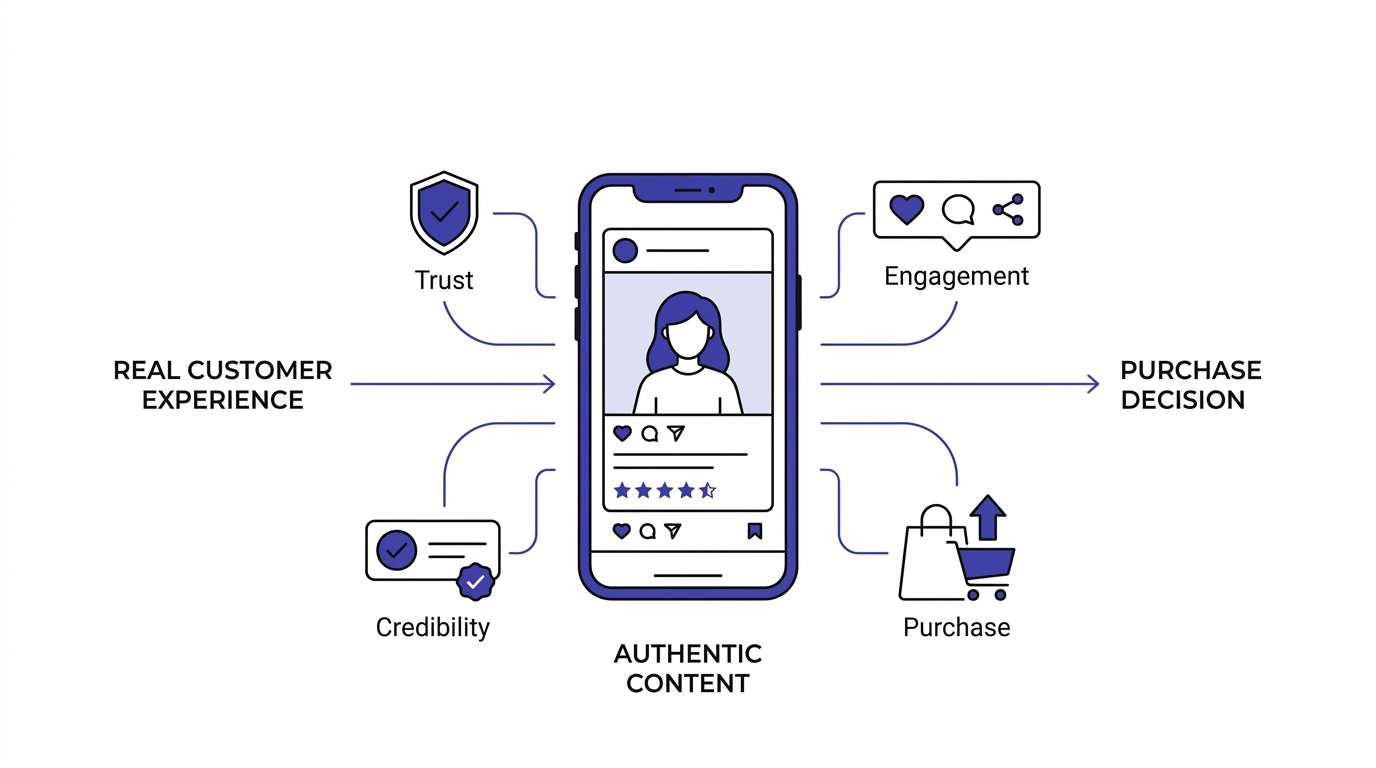
User-generated content has become one of the most trusted forms of marketing because consumers value authentic experiences over branded promotions. It builds credibility, strengthens customer relationships, increases engagement, improves search visibility, and influences purchasing decisions more effectively than traditional advertising.
Builds Instant Trust
Trust used to take years to build. A brand had to prove itself repeatedly before people believed in it. UGC speeds that process up dramatically. When a new visitor lands on your product page and sees real customers posting real photos and reviews, that skepticism drops fast. It’s the digital version of asking a friend “hey, is this any good” before buying something.
Creates Authentic Brand Perception
Nobody wants to feel like they’re being sold to constantly. UGC softens that feeling because it shows your brand through the eyes of actual users, not your marketing department. Over time, this builds a perception that your brand is real, grounded, and used by actual people, not just something dreamed up in a boardroom.
Increases Purchase Confidence
Buying anything online involves risk. Will it fit? Will it work? Was the photo edited to look better than reality? UGC answers those questions before a customer even has to ask them out loud. Seeing dozens of real people with the same product, in different lighting, different body types, different homes, gives shoppers the confidence to hit “buy” instead of closing the tab.
Improves Brand Awareness
Every piece of UGC posted publicly is basically free advertising reaching an audience your brand didn’t have to pay to access. When a customer tags your brand or uses your hashtag, their followers see it too. Multiply that across hundreds or thousands of customers, and you’ve got organic reach numbers that would cost a fortune to buy through ads.
Encourages Community Building
UGC doesn’t just promote a product, it builds a sense of belonging around it. When people see others posting about the same brand, they start to feel part of something bigger than a single purchase. That’s how brand communities form, and once a community exists, it tends to sustain itself with far less marketing effort from the brand.
Generates Social Proof
Social proof is one of the strongest psychological triggers in marketing, full stop. Star ratings, review counts, customer photos, all of it tells a new visitor “other people already trusted this, and it worked out.” The more social proof stacked on a page, the more confident a buyer feels making that same decision.
Reduces Content Creation Costs
Producing high-quality branded content isn’t cheap. Between photographers, models, editing software, and ad spend to push it out, costs add up fast. UGC gives brands a steady stream of usable content without the production budget attached. Some brands have cut their content production costs significantly just by shifting a chunk of their strategy toward UGC.
Improves Conversion Rates
This is the part that gets marketing teams excited. Multiple studies have shown that product pages featuring UGC, whether that’s reviews, customer photos, or video testimonials, convert better than pages without it. Shoppers convert faster when they can see proof from people who already made the purchase decision they’re currently weighing.
Boosts Customer Loyalty
When a brand features a customer’s content, that customer feels seen. It’s a small thing, but it matters. People remember when a brand reposted their photo or replied to their review. That recognition builds loyalty in a way that discount codes alone never really manage to do.
Helps Brands Scale Content Production
Once a UGC pipeline is running, brands stop worrying about content droughts. Instead of scrambling to fill next month’s content calendar, there’s already a backlog of usable submissions waiting to be repurposed. This is one of the most underrated benefits, honestly, because content burnout is real and UGC is one of the few sustainable fixes for it.
The Psychology Behind Why People Create Content for Brands
People create content for brands to share experiences, gain recognition, help others, express creativity, and feel part of a community. Understanding these motivations enables businesses to encourage participation and develop campaigns that naturally inspire customers to contribute valuable content.
Recognition
People like being noticed. When a brand reposts a customer’s photo or mentions them by name, it triggers a small dopamine hit. That recognition is often enough motivation on its own for someone to keep creating and tagging content, even without any financial reward attached to it.
Belonging to a Community
Humans want to belong somewhere. Brand communities, hashtags, and fan groups give people a sense of identity and connection with others who share similar interests. Posting UGC becomes a way of saying “I’m part of this group,” which is a surprisingly strong motivator once a community reaches critical mass.
Social Validation
Likes, comments, and shares are a form of validation people chase, whether they admit it or not. Posting about a product that gets a good response from friends and followers reinforces the behavior. Brands that make it easy to get that validation, through great hashtags or shareable moments, tend to see more organic content.
Entertainment
Sometimes people create content simply because it’s fun. A clever unboxing, a funny reaction video, a satisfying transformation clip, these things get made because the creator enjoyed making them. Brands that build products or experiences with an inherent “fun factor” naturally generate more organic UGC without even asking for it.
Rewards and Incentives
Discounts, giveaways, and prizes are still effective motivators, no shame in that. A well-run contest with a decent prize can spike submission volume dramatically in a short window. The key is making sure the incentive feels worth the effort involved in creating and posting the content.
Emotional Connection
People create content around things that made them feel something, good or bad. A product that solved a real problem, a service that went above expectations, these moments trigger an emotional response strong enough to make someone want to share it publicly, unprompted.
Competition
Some people are just naturally competitive, and contests or leaderboards tap directly into that. Whether it’s a hashtag challenge or a “best photo wins” contest, the competitive angle pushes people to create better, more thoughtful content than they might otherwise bother with.
Personal Branding
A lot of creators today are building their own personal brand, and partnering with companies, even informally through tagged posts, helps with that. Someone building a fitness page benefits from tagging a supplement brand just as much as the brand benefits from the tag. It’s a two-way street.
Helping Others
Genuine reviews often come from a place of wanting to help other shoppers avoid a bad decision, or point them toward a good one. This is especially true for higher-cost purchases where the buyer knows firsthand how confusing the decision was, and wants to make it easier for the next person.
Types of User-Generated Content
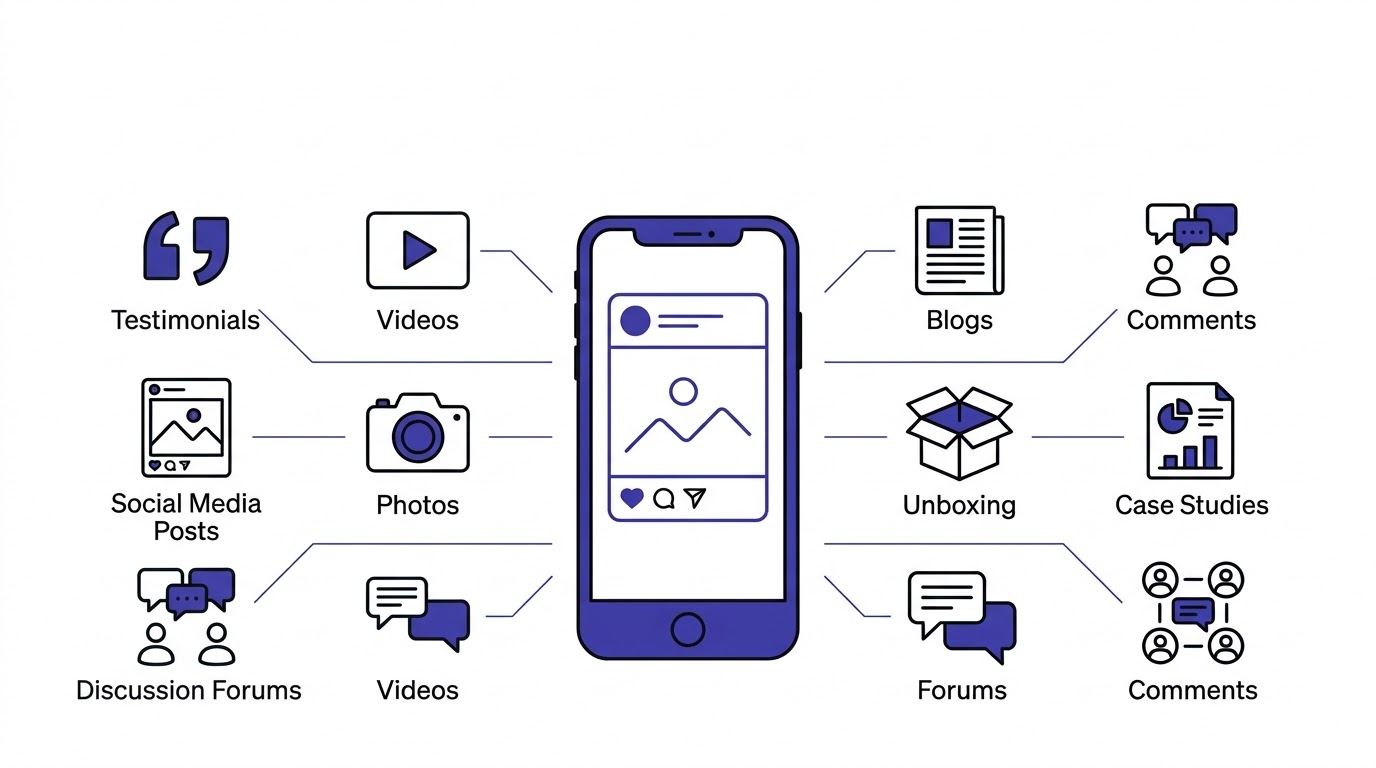
User-generated content includes reviews, testimonials, social media posts, photos, videos, blogs, case studies, unboxing videos, discussion forums, comments, and community content. Each format serves different marketing goals while providing authentic perspectives that resonate strongly with potential customers.
Customer Reviews
Written reviews remain one of the most influential forms of UGC, especially on ecommerce platforms. A detailed review, good or bad, gives future buyers information they can’t get anywhere else: how the product performs after actual use, not just on paper.
Ratings
Star ratings are the quickest form of social proof a shopper can scan. A product sitting at 4.7 stars with 2,000 ratings tells a story instantly, no reading required. Low review counts, even with high ratings, tend to convert worse simply because there’s less proof behind the number.
Social Media Posts
Organic posts tagging or mentioning a brand are some of the most valuable UGC out there because they happen entirely on the customer’s own initiative. These posts show up in followers’ feeds, extending brand reach into networks that paid ads would never naturally touch.
Product Photos
A real photo of a product in someone’s actual home, on their actual body, in actual daylight, tells shoppers more than a studio shot ever could. Product photos from customers are one of the easiest UGC types to collect and one of the most effective on product pages.
Videos
Video UGC has exploded thanks to TikTok and Reels. Unboxings, reviews, tutorials, “get ready with me” style content featuring a product, all of it performs incredibly well because video captures nuance that photos and text can’t, like tone of voice and genuine reactions.
Testimonials
Testimonials are usually a bit more polished than a random tweet, often collected directly by the brand through a form or interview. They work particularly well for service-based businesses and SaaS companies where the buying decision hinges on trust and outcomes rather than product looks.
Case Studies
Case studies are a deeper form of testimonial, usually built around a specific customer’s results over time. These are gold for B2B and SaaS companies because prospective buyers want to see measurable outcomes, not just vague praise, before committing budget.
Before-and-After Photos
Nothing sells transformation-based products, think skincare, fitness, home renovation, quite like a genuine before-and-after. These are some of the most shared and saved pieces of content because they show tangible proof that something actually works.
Community Discussions
Conversations happening in brand communities, whether that’s a private Facebook group or a Discord server, count as UGC too. These discussions often surface objections, use cases, and feedback that brands can repurpose into FAQs, product improvements, or marketing angles.
Forum Posts
Reddit threads, niche forums, and Q&A sites often contain some of the most brutally honest UGC available. Smart brands monitor these spaces closely because the feedback there tends to be unfiltered in a way that curated social content rarely is.
Blog Contributions
Guest posts, reader submissions, and community-written articles are a less flashy but still valuable form of UGC. They work particularly well for niche brands with passionate audiences who genuinely want to contribute knowledge, not just promotion.
Q&A Content
Questions and answers submitted by customers, whether on a product page or a community forum, double as both UGC and useful buyer information. Future shoppers often read the Q&A section before the actual product description because it feels less filtered.
Podcasts
Customer-hosted podcasts or podcast mentions are a growing but underused UGC category. When a podcast host casually mentions a product they genuinely use, it carries the same weight as a strong review, sometimes more, because of the parasocial trust built with listeners.
User Stories
Longer-form personal stories, “how this product changed my routine” type content, work especially well for wellness, finance, and lifestyle brands. These stories build emotional connection in a way shorter content formats simply can’t match.
Livestream Mentions
Live shopping and livestream mentions have picked up serious steam, especially in markets where live commerce is already huge. A streamer casually using or recommending a product during a live session in real time feels far more genuine than a scripted ad ever could.
Benefits of User-Generated Content for Businesses
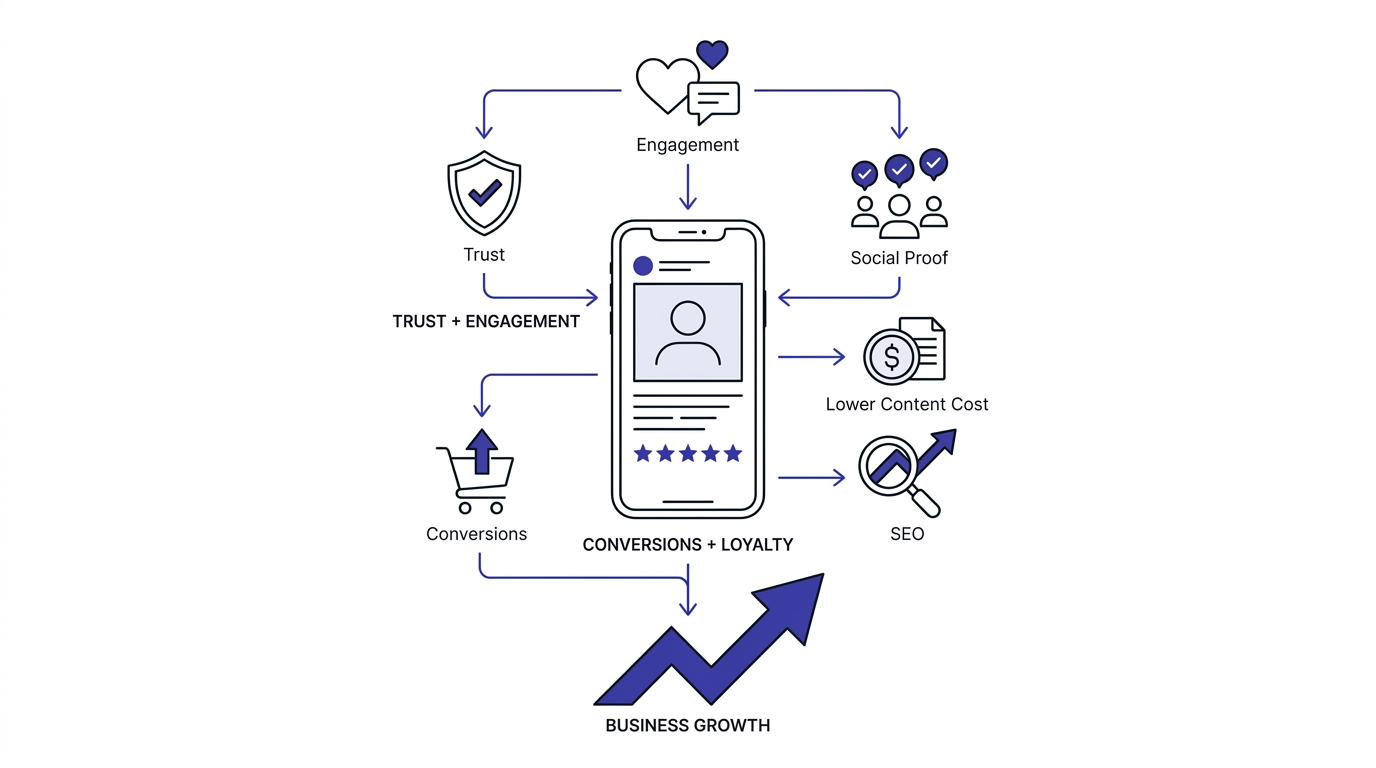
User-generated content increases brand trust, improves engagement, boosts conversion rates, strengthens customer loyalty, reduces content creation costs, enhances SEO performance, and expands social proof. Businesses also benefit from a continuous stream of authentic content created directly by satisfied customers.
Higher Engagement
Posts featuring real customers consistently pull higher engagement than standard branded posts. People stop scrolling for content that looks like it was made by someone like them, not a studio production.
Better Organic Reach
Because UGC often gets reshared by the original creator’s network, brands gain reach they didn’t pay for. This compounding effect is one of the most cost-efficient growth levers available in modern marketing.
Improved SEO
Reviews and UGC add fresh, keyword-rich content to product and landing pages continuously, without any extra writing effort from your team. Search engines tend to reward pages that update regularly with genuine user activity.
Increased Website Traffic
When customers post and tag a brand, curious followers click through to check the brand out. This creates a steady trickle of referral traffic that costs nothing beyond the effort of encouraging the post in the first place.
Lower Customer Acquisition Cost
Because UGC-driven content converts better and costs less to produce than fully branded campaigns, the blended cost of acquiring a customer tends to drop when UGC is folded into the marketing mix properly.
Stronger Customer Relationships
Featuring, replying to, and crediting customers builds a relationship that goes beyond the transaction. Customers who feel appreciated are far more likely to stick around, repurchase, and keep creating content down the line.
Higher Average Order Value
Shoppers who browse UGC-rich pages, especially ones showing multiple use cases or styling ideas, often end up adding more to their cart than they originally planned, simply because they can visualize more ways to use the product.
Better Customer Retention
A brand that regularly features its customers builds an ongoing relationship instead of a one-time sale. That relationship keeps customers emotionally invested, which directly supports retention over the long run.
Increased Repeat Purchases
Customers who feel like part of a brand’s community, through features, shoutouts, or contests, tend to come back more often. It stops being just a purchase and starts feeling like a relationship worth maintaining.
Better Email Marketing Performance
Emails that include real customer photos or reviews tend to see stronger open and click rates compared to purely promotional emails. It breaks up the monotony of “buy now” messaging with something that feels more like a recommendation.
Higher Social Media Growth
Brands that actively repost and engage with UGC tend to grow their own social following faster, because the content feels more varied and relatable, which keeps existing followers engaged and attracts new ones through shares.
Better Ad Performance
UGC-style creative consistently outperforms polished studio ads on platforms like Facebook and TikTok. Ad accounts running UGC-based creative often see lower cost-per-click and higher click-through rates simply because the content doesn’t scream “advertisement.”
Industries That Benefit Most from User-Generated Content
Industries such as eCommerce, travel, hospitality, fashion, beauty, healthcare, education, SaaS, food, and consumer electronics benefit significantly from user-generated content. Customer experiences and recommendations influence buying decisions, making authentic content a powerful marketing asset across these sectors.
Ecommerce
Ecommerce brands live and die by trust signals, and UGC is one of the strongest available. Product photos from real buyers, reviews, and unboxing videos directly influence purchase decisions on nearly every ecommerce platform out there.
Fashion
Fashion is deeply visual, and sizing anxiety is real for online shoppers. Seeing how clothes fit real bodies, not just models, helps customers commit to a purchase with far more confidence than a catalog photo alone.
Beauty
The beauty industry practically runs on UGC now. Tutorials, swatches, before-and-afters, all of it drives purchase decisions more than traditional beauty advertising ever has, especially among younger shoppers who trust creators over brands.
SaaS
SaaS companies benefit from testimonials, case studies, and community discussions that prove a product actually solves the problem it claims to solve. Buyers in this space are cautious, and peer validation shortens that decision cycle considerably.
Restaurants
A single well-shot customer video of a dish can drive more foot traffic than a paid ad campaign. Food is inherently shareable, and diners trust other diners’ opinions on taste and value far more than a restaurant’s own menu description.
Travel
Travel decisions are high-stakes and expensive, so travelers lean heavily on other travelers’ photos, reviews, and stories before booking. UGC here often does more heavy lifting in the decision process than any brochure or ad ever could.
Hospitality
Hotels and resorts benefit enormously from guest photos and reviews because prospective guests want proof the experience matches the marketing. A gap between promised and delivered experience gets exposed fast in hospitality UGC.
Fitness
Transformation photos, workout videos, and progress updates are the backbone of fitness marketing today. This industry practically depends on UGC because results, not promises, are what actually convince people to commit.
Healthcare
Patient testimonials and reviews, handled carefully within privacy regulations, help build trust in providers and services. People research doctors and clinics through reviews almost the same way they research restaurants now.
Education
Student testimonials, course reviews, and success stories help prospective students weigh whether a program is worth the investment. This is especially true for online courses and certification programs competing for attention.
Real Estate
Buyer and renter reviews of agents, property management companies, and even neighborhoods carry real weight. Video walkthroughs shared by actual residents also help prospective buyers get a feel for a space beyond staged listing photos.
Automotive
Owner reviews, long-term ownership videos, and community forums heavily influence car buying decisions. Buyers want to know how a vehicle holds up after years of real use, not just how it performs in a glossy commercial.
Consumer Electronics
Tech products live and die by reviews and comparison videos made by regular users. A single detailed YouTube review from an everyday user can shift purchase decisions more than an entire ad campaign from the manufacturer.
Local Businesses
For small, local businesses, UGC is often the single most affordable form of marketing available. A handful of happy customers posting photos and leaving reviews can do more for foot traffic than any local ad buy.
How to Build a UGC Strategy from Scratch
Building a successful UGC strategy starts with defining objectives, identifying your audience, selecting suitable platforms, creating participation opportunities, establishing content guidelines, encouraging submissions, securing permissions, and measuring performance. A structured strategy ensures consistent, scalable, and impactful user-generated campaigns.
Define Your Goals
Before collecting a single piece of content, get clear on why you’re doing this. Is it brand awareness, conversion, community building, or content cost savings? Each goal shapes what kind of UGC you prioritize and how you measure success later on.
Understand Your Audience
Know who your customers actually are, what platforms they use, and what motivates them to create content in the first place. A strategy built for Gen Z TikTok users looks completely different from one built for B2B SaaS buyers on LinkedIn.
Identify Content Opportunities
Look at your customer journey and find natural moments where content creation makes sense, unboxing, first use, results after a few weeks. These moments are where UGC happens most naturally, so build your prompts around them.
Select the Right Platforms
Don’t try to collect UGC everywhere at once. Pick one or two platforms where your audience is already active and focus your efforts there before expanding. Spreading too thin early on usually just leads to weak results everywhere.
Create Brand Guidelines
Give creators a loose framework, tone, key messaging points, hashtag usage, without stripping away their authenticity. Overly strict guidelines kill the very thing that makes UGC valuable in the first place: it feels real.
Choose Incentives
Decide what motivates your specific audience, discounts, features, prizes, or simple recognition. Test a few different incentive types early on to see what actually drives submissions rather than assuming one approach will work for everyone.
Develop Campaign Themes
Seasonal campaigns, challenges, or ongoing hashtags give people a reason and a structure to create content around. Vague requests like “share your experience” get far fewer submissions than something specific like a themed challenge.
Create a Submission Process
Make it dead simple for people to submit or tag content. Every extra step, a form, a login, a complicated hashtag, reduces participation. The easier the process, the higher your submission volume will be.
Build a Content Approval Workflow
Have a clear process for reviewing, approving, and requesting rights to use submitted content before it goes live anywhere. Skipping this step is how brands end up in legal trouble or publish content that doesn’t match brand standards.
Measure Success
Set benchmarks early so you know whether the strategy is working. Track submission volume, engagement on repurposed content, and any shift in conversion rates tied to UGC placement across your site and ads.
How to Encourage Customers to Create Content
Encourage customers by providing memorable experiences, launching contests, offering incentives, creating branded hashtags, requesting reviews, recognizing contributors, simplifying submission processes, and actively engaging with participants. Clear calls-to-action and appreciation significantly increase the likelihood of receiving authentic customer content.
Ask at the Right Time
Timing matters more than most brands realize. Asking for a review or photo right after a great customer experience, delivery, unboxing, or a support win, gets far better response rates than a generic request sent weeks later.
Create Branded Hashtags
A memorable, easy-to-spell hashtag gives customers a simple way to tag their content and gives your brand an easy way to find it. Keep it short, keep it on-brand, and use it consistently across every touchpoint.
Launch Challenges
Challenges give people a clear creative prompt instead of a blank canvas, which lowers the barrier to participation. A well-designed challenge with a fun hook can spread far beyond your existing customer base.
Run Contests
Contests with genuinely appealing prizes can spike submissions fast. Just make sure the effort required to enter matches the value of the prize, otherwise participation drops off quickly after the initial excitement fades.
Reward Participation
Even small rewards, discount codes, early access, shoutouts, go a long way in encouraging repeat participation. People are far more likely to create content again if their first submission was acknowledged in some way.
Feature Customers on Your Website
Dedicating a section of your site to real customer content shows new visitors that people actually use and love your product. It also gives existing customers a reason to keep submitting, hoping to see themselves featured.
Highlight Customers on Social Media
Reposting customer content on your own channels is one of the simplest, most effective ways to keep the content pipeline flowing. People love seeing themselves featured by a brand they follow, and it encourages others to submit too.
Offer Exclusive Benefits
Give UGC contributors something others don’t get, early product access, exclusive discounts, or invitations to special events. This creates a sense of status around participating that pure discounts alone don’t achieve.
Gamify Participation
Leaderboards, badges, or tiered rewards for repeat contributors tap into that competitive instinct mentioned earlier. Gamification keeps people coming back to create more, rather than submitting once and disappearing.
Make Sharing Easy
Add built-in sharing tools at key moments, post-purchase pages, packaging inserts, in-app prompts. The fewer clicks between “I want to share this” and actually sharing it, the more content you’ll collect.
Best Channels for Collecting User-Generated Content
Businesses can collect user-generated content through Instagram, Facebook, LinkedIn, TikTok, YouTube, X, customer reviews, online communities, email campaigns, branded hashtags, surveys, and dedicated submission forms. Selecting the right channels depends on audience behavior and campaign objectives.
Instagram remains one of the strongest UGC channels thanks to Stories, Reels, and easy tagging. Brands can collect content simply by monitoring tags and mentions, then requesting permission to repost the best submissions.
Facebook groups are still incredibly active for community-driven UGC, especially among older demographics. Brand-run groups can become a steady source of testimonials, questions, and organic product discussions over time.
TikTok
TikTok has become the single biggest driver of UGC-style content today, especially for products that lend themselves to quick, entertaining videos. A single viral TikTok can generate more organic reach than months of paid ads combined.
For B2B and SaaS brands, LinkedIn is where genuine testimonials, case study shares, and professional endorsements happen. It’s a slower-moving platform for UGC but the content carries serious weight with a business audience.
YouTube
Long-form reviews, tutorials, and unboxings thrive on YouTube. This platform tends to attract more detailed, considered UGC compared to the quick-hit style of TikTok, which makes it valuable for higher-consideration purchases.
Pinterest users actively search for inspiration, making customer photos and styling ideas especially valuable here. UGC pinned by real users often drives long-term traffic since Pinterest content has a much longer shelf life than other platforms.
X (Twitter)
Twitter, or X now, is still where quick reactions, complaints, and praise happen in real time. It’s a great channel for monitoring sentiment and catching UGC moments as they happen, even if the content itself is often short-lived.
Reddit threads often contain the most honest product feedback available anywhere online, precisely because the platform rewards authenticity over polish. Brands that engage respectfully in relevant subreddits can uncover valuable UGC and insights.
Email Campaigns
Post-purchase emails asking for reviews or photos remain one of the most reliable ways to collect UGC at scale, especially when the request comes with a small incentive attached to it.
Product Review Platforms
Sites like Trustpilot, G2, and industry-specific review platforms are goldmines of structured UGC that prospective buyers actively seek out during their research phase before making a purchase decision.
Brand Communities
Owned communities, whether a Discord server, a Slack group, or a private forum, generate some of the deepest, most valuable UGC because members are already highly engaged and invested in the brand’s success.
Mobile Apps
In-app prompts asking users to rate, review, or share their experience capture UGC at the exact moment satisfaction is highest, right after a positive interaction with the product itself.
How to Repurpose User-Generated Content
Repurpose user-generated content across websites, landing pages, email campaigns, advertisements, product pages, blogs, presentations, and social media. Reusing authentic customer content maximizes its value, strengthens brand credibility, maintains content consistency, and extends the lifespan of successful customer contributions.
Website Landing Pages
Adding real customer photos and quotes to landing pages boosts credibility instantly for first-time visitors who don’t yet have any reason to trust your brand’s own claims about itself.
Product Pages
Product pages featuring customer photos and reviews consistently convert better than pages relying solely on studio images and brand copy, since shoppers get to see the product in real-world conditions.
Social Media
Repurposing UGC into your own social content keeps your feed varied and authentic without requiring constant original production from your internal team or agency.
Paid Advertising
UGC-style ads consistently outperform polished studio ads on cost-per-click and conversion metrics, especially on platforms like TikTok and Instagram where native, authentic-feeling content blends in with regular posts.
Email Campaigns
Featuring UGC in promotional and nurture emails breaks up repetitive branded messaging and gives subscribers social proof right in their inbox at the moment they’re considering a purchase.
Newsletters
Highlighting a customer story or standout review in a regular newsletter keeps subscribers engaged and reinforces that real people are getting real value from what you’re selling.
Sales Presentations
For B2B companies, dropping a strong customer testimonial or case study into a sales deck can be the difference between a hesitant prospect and a closed deal, since it answers the “does this actually work” question directly.
Blog Posts
Weaving customer stories and quotes into blog content adds credibility and breaks up dense information with a more human, relatable element that readers connect with more easily.
Case Studies
Turning a strong customer result into a full case study gives future prospects a detailed, evidence-backed reason to trust your product, especially useful for higher-cost purchases requiring more consideration.
Ecommerce Listings
Marketplaces like Amazon and Etsy heavily reward listings with strong review counts and customer photos, since these directly influence both search ranking and buyer trust on the platform.
Digital Billboards
Some brands have started pulling real customer content onto out-of-home digital billboards, a bold move that instantly signals confidence in the product and grabs attention differently than traditional ad creative.
Offline Marketing
Printing customer quotes or photos on packaging, in-store displays, or direct mail extends UGC’s reach beyond digital spaces and reinforces trust at physical touchpoints too.
Best Practices for Managing User-Generated Content
Managing user-generated content requires obtaining permission, moderating submissions, maintaining quality standards, organizing assets efficiently, crediting creators, ensuring brand consistency, and responding to contributors promptly. Effective management protects brand reputation while encouraging ongoing customer participation and engagement.
Always Get Permission
Never republish someone’s content without explicit permission, even if they tagged your brand publicly. A simple comment or DM asking to repost, with credit, protects you legally and shows respect for the creator’s work.
Credit Original Creators
Always tag or name the original creator when reposting their content. Beyond being the right thing to do, it also encourages more people to submit content, knowing they’ll get proper recognition for it.
Moderate Content
Not every submission will be on-brand or appropriate. Have a clear moderation process to filter out anything that doesn’t align with your brand values or could cause reputational issues down the line.
Maintain Brand Consistency
While UGC should stay authentic, curate submissions that still align loosely with your overall brand aesthetic and messaging, so your feed and marketing don’t feel disjointed or off-brand.
Respond to Contributors
Take the time to like, comment, or reply to customers who create content about your brand. This small effort builds goodwill and encourages continued participation from your most engaged customers.
Create Community Guidelines
Set clear expectations for what kind of content is welcome, appropriate, and eligible for features or rewards. This avoids confusion and keeps your UGC campaigns running smoothly over time.
Archive High-Performing Content
Keep a organized library of your best UGC so it’s easy to pull from later for campaigns, ads, or seasonal content needs, rather than scrambling to find it again months later.
Track Permissions
Maintain a record of who gave permission for what content and when. This becomes essential if you’re using UGC in paid advertising, where usage rights and documentation matter a lot more.
Ensure Legal Compliance
Stay aware of copyright, disclosure, and privacy regulations relevant to your industry and region. What’s acceptable in one country’s advertising rules might not be acceptable in another, so don’t assume.
User-Generated Content Examples from Successful Brands
Leading brands successfully use customer reviews, social media challenges, branded hashtags, unboxing videos, and community campaigns to increase trust and engagement. Studying these examples reveals practical strategies businesses can adapt to build stronger relationships and improve marketing performance.
Coca-Cola’s Share a Coke Campaign
Coca-Cola printed popular names on bottles and encouraged customers to find and share their own, or a friend’s, name. The campaign generated an enormous wave of organic social sharing simply because it gave people a personal reason to post.
GoPro Customer Adventure Videos
GoPro built much of its brand identity around customer-submitted footage, from extreme sports clips to everyday adventures. This approach turned customers into the brand’s primary content engine, proving the product’s durability and versatility better than any studio ad could.
Starbucks White Cup Contest
Starbucks invited customers to doodle on their white cups and share the results, generating thousands of creative submissions. The campaign turned an everyday product into a canvas for self-expression, which drove massive organic engagement.
Airbnb Guest Stories
Airbnb regularly features real guest and host stories across its marketing, leaning into the emotional, personal nature of travel experiences. These stories build trust in a marketplace where strangers are trusting each other with their homes.
LEGO Ideas
LEGO built an entire platform where fans submit their own set designs, and the community votes on which ones get turned into official products. This is UGC taken to its logical extreme, actual product development driven by customer creativity.
Apple’s #ShotOniPhone
Apple’s long-running campaign showcases photos taken by everyday iPhone users, proving camera quality through real results instead of technical specs alone. It’s one of the most consistently effective UGC campaigns in tech marketing history.
Sephora Beauty Community
Sephora built an entire community platform where customers share looks, reviews, and tips. This turned casual shoppers into an engaged content-creating community that also happens to drive product discovery and sales.
Gymshark Community Campaigns
Gymshark grew largely through fitness influencer and customer content rather than traditional advertising, building a passionate community around its brand that continues to generate organic UGC at scale.
Duolingo Social Community
Duolingo’s playful, meme-driven social presence has inspired an enormous wave of fan-created memes and content around its mascot, turning a language app into a genuine internet culture phenomenon.
Notion Community Templates
Notion’s community regularly creates and shares templates, workflows, and use cases, which Notion then highlights. This UGC serves double duty as both marketing and free product education for new users.
Tools for Managing User-Generated Content
User-generated content management tools help businesses collect, organize, moderate, schedule, publish, and analyze customer content across multiple platforms. These solutions streamline workflows, improve collaboration, ensure compliance, and simplify measuring campaign effectiveness while saving significant time and resources.
UGC Collection Tools
Platforms like TINT, Yotpo, and Stackla help brands aggregate content from multiple channels into one manageable dashboard, making the entire collection process significantly less chaotic.
Social Listening Platforms
Social listening tools like Brandwatch and Sprout Social help brands monitor mentions and hashtags across the web, catching UGC that might otherwise slip through unnoticed.
Review Management Tools
Platforms like Trustpilot and Yotpo Reviews help collect, moderate, and display customer reviews across websites and marketplaces in an organized, trustworthy format.
Hashtag Tracking Tools
Dedicated hashtag tracking software makes it easy to see the full scope of a campaign’s reach and identify top-performing content worth repurposing elsewhere.
Content Moderation Software
AI-assisted moderation tools help flag inappropriate or off-brand submissions quickly, saving teams significant manual review time as campaign volume grows.
Rights Management Platforms
Tools that track permissions and usage rights help brands stay organized and legally protected, especially important when UGC gets used across paid advertising.
Analytics Tools
Platforms that tie UGC performance back to actual conversion and revenue data help marketing teams prove ROI and refine strategy based on real numbers, not guesswork.
CRM Integration
Connecting UGC tools with CRM systems allows brands to track which customers are their most valuable content creators and nurture those relationships more intentionally.
AI Tools for Organizing UGC
Newer AI-powered tools can automatically tag, categorize, and even suggest which submissions are worth repurposing, cutting down significantly on manual sorting work.
How to Measure the Success of Your UGC Strategy
Measure UGC success by tracking engagement, reach, conversions, click-through rates, customer acquisition costs, user participation, brand mentions, website traffic, and revenue influenced by user-generated content. Regular performance analysis helps optimize campaigns and maximize long-term marketing results.
Engagement Rate
Track likes, comments, and shares on UGC-based content compared to standard branded content to see whether the authenticity angle is actually resonating with your audience.
Reach
Measure how far UGC spreads beyond your existing follower base, since organic reshares often extend visibility well past what paid campaigns alone would achieve.
Impressions
Track total impressions on repurposed UGC to understand overall visibility, especially useful when comparing performance across different content formats and campaigns.
Shares
Shares indicate genuine resonance, since people only share content they feel reflects well on them. High share counts are a strong signal that UGC content is hitting the right note.
Website Traffic
Monitor referral traffic coming from tagged posts or UGC-driven campaigns to understand how effectively user content is driving people back to your site.
Conversion Rate
Compare conversion rates on pages with UGC elements against pages without them. This is often the clearest, most direct signal of whether UGC is actually influencing purchase decisions.
Revenue Generated
Where possible, tie specific UGC campaigns to revenue outcomes, either through attribution tracking or controlled A/B testing, to understand the real financial impact.
Customer Acquisition Cost
Track whether UGC-driven campaigns lower your overall cost per acquired customer compared to purely branded advertising efforts running in parallel.
Repeat Purchases
Measure whether customers who engage with or contribute UGC show higher repeat purchase rates than those who don’t, which often signals deeper brand loyalty.
Customer Lifetime Value
Look at whether UGC contributors and engaged community members show higher lifetime value overall, since this justifies further investment in nurturing that specific segment.
Brand Mentions
Track overall volume of brand mentions across social platforms to gauge general sentiment and awareness trends over time, beyond just campaign-specific metrics.
Hashtag Performance
Monitor branded hashtag usage over time to see whether campaigns are building sustained momentum or just generating a short-term spike that fades quickly afterward.
Sentiment Analysis
Use sentiment tracking tools to understand whether the tone of UGC mentions is trending positive, negative, or neutral, which helps catch potential reputation issues early.
ROI of UGC Campaigns
Ultimately, weigh the cost of running UGC campaigns, incentives, tools, staff time, against the value generated in engagement, conversions, and content savings to determine true return on investment.
Legal and Ethical Considerations
Businesses should obtain creator permission, respect copyright laws, protect customer privacy, disclose sponsored relationships, follow platform policies, and maintain transparency. Addressing legal and ethical considerations builds trust, minimizes compliance risks, and protects both the brand and content creators.
Copyright Laws
Technically, the person who creates content owns the copyright to it, even if it features your product. Reposting without permission can expose brands to takedown requests or legal claims, regardless of how public the original post was.
User Permissions
Always secure clear, documented permission before using someone’s content commercially, especially in paid advertising. A quick comment asking permission isn’t always enough documentation for legal purposes, depending on your region and use case.
FTC Disclosure Guidelines
In the US, the FTC requires clear disclosure when content involves any form of compensation or material connection between the creator and brand. Ignoring these guidelines can result in real regulatory consequences.
Privacy Policies
Make sure your data collection and content usage practices align with your published privacy policy, especially when collecting personal information alongside submitted content like photos or videos.
GDPR Compliance
If you’re working with European customers, GDPR adds additional requirements around consent and data handling that go beyond simple content permission. This applies even if your business isn’t based in Europe.
Children’s Content
Extra caution is required when UGC involves minors, both from a privacy standpoint and general ethical responsibility. Many platforms and regulations have stricter rules specifically around content featuring children.
Trademark Issues
Be careful about how customer content uses your brand’s logos, trademarks, or protected assets, and make sure your own reposting doesn’t infringe on anyone else’s trademarks either.
Content Ownership
Even with permission to use content, ownership typically remains with the original creator unless explicitly transferred through a contract. Understand the difference between usage rights and outright ownership before assuming too much.
Future Trends in User-Generated Content
The future of user-generated content includes AI-assisted moderation, creator communities, shoppable content, short-form videos, augmented reality experiences, personalized campaigns, and stronger community-driven marketing. Businesses embracing these trends will remain competitive while building deeper customer relationships and brand loyalty.
AI-Assisted UGC
AI tools are starting to help creators produce better content faster, editing videos, generating captions, even suggesting angles. This will likely increase both the volume and quality of UGC brands receive going forward.
Creator Communities
The line between everyday customers and semi-professional creators keeps blurring. More brands will build dedicated creator communities that sit somewhere between traditional influencer programs and organic UGC collection.
Short-Form Video Growth
Short-form video isn’t slowing down anytime soon. Brands that haven’t adapted their UGC strategy to prioritize this format are already behind, and that gap will likely widen further over the coming years.
Livestream Commerce
Live shopping continues gaining traction, particularly in markets where it’s already mainstream. Real-time UGC during livestreams, comments, reactions, spontaneous recommendations, will become an increasingly valuable data and content source.
AR and VR User Experiences
As AR try-on and VR shopping experiences become more common, user-generated content around these experiences, screen recordings, reactions, reviews of the virtual experience itself, will become a new content category worth tracking.
Interactive Shopping
Shoppable UGC, where viewers can purchase directly from a customer’s video or photo, is becoming more common on platforms like TikTok and Instagram, blurring the line between content and commerce even further.
Community-Led Marketing
More brands are shifting budget away from traditional advertising and toward building genuine communities, recognizing that a strong, engaged community consistently produces better long-term marketing results than isolated ad campaigns.
Micro-Creator Economy
Smaller creators with highly engaged, niche audiences are increasingly valuable for brands, often delivering better ROI than big-name influencers. This shift favors more UGC-style partnerships over traditional celebrity endorsements.
AI Moderation
As UGC volume grows, AI-powered moderation tools will become essential for brands managing large-scale campaigns, helping filter and categorize submissions faster than manual review ever could.
UGC in Search and AI-Powered Discovery
As AI-powered search and recommendation engines become more prominent, genuine user content, reviews, discussions, real experiences, will likely carry even more weight in how products get discovered and recommended online.
Step-by-Step User-Generated Content Action Plan (30-Day Blueprint)
Week 1
Start by setting clear goals for what you want this UGC push to achieve, whether that’s brand awareness, conversion lift, or simply building a content library. Define your target audience precisely, choose one or two platforms to focus on, and put together simple campaign guidelines so everyone involved understands the direction.
Week 2
Launch your branded hashtag and start actively inviting your first wave of participants, existing customers, email subscribers, social followers. Begin collecting submissions as they come in and make a point of responding to every single contributor, even with something as small as a like or comment.
Week 3
Start repurposing the strongest early submissions across your website, social channels, and email campaigns. Launch a small contest to boost momentum, publish a couple of standout customer stories, and begin tracking engagement metrics closely to see what’s actually resonating.
Week 4
Analyze what worked and what didn’t over the past month. Adjust your incentive structure based on what actually drove participation, double down on the campaigns that performed best, and start building a longer-term UGC content calendar so this doesn’t become a one-off effort.
Conclusion
At the end of the day, user-generated content works because it’s honest in a way branded marketing simply can’t replicate. It’s built on real experiences from real people, and that authenticity is exactly what today’s audiences are craving after years of being marketed at constantly.
The brands winning at this aren’t necessarily the ones with the biggest budgets. They’re the ones focused on genuine community participation, not just content collection for its own sake. UGC isn’t a tactic you switch on and off, it’s a relationship you build with your customers over time, one that rewards consistency and genuine appreciation far more than clever campaigns alone.
If you’re just getting started, don’t try to do everything at once. Pick one platform, set up clear and simple guidelines, make it easy for people to participate, and actually recognize the customers who show up for you. Track your results honestly and adjust as you learn what resonates.
Your customers are already out there creating content, talking about their experiences, and forming opinions about your brand whether you’re paying attention or not. The only real question is whether you’re going to notice it, nurture it, and put it to work, or leave it sitting on the table while competitors figure it out first. Start today. Pick one small step from this guide and actually do it.
Frequently Asked Questions
What is user-generated content?
User-generated content is any content, photos, videos, reviews, social posts, created by regular customers or fans rather than a brand itself. It’s typically unpaid and reflects genuine experiences with a product or service, which is exactly why it tends to carry more trust than branded advertising.
Why is user-generated content important?
It builds trust faster than traditional advertising because it comes from real people with no obvious agenda to sell. It also reduces content production costs, improves conversion rates, and helps brands build genuine community around their products over time.
How can small businesses encourage UGC?
Start simple. Ask happy customers directly for reviews or photos, create an easy branded hashtag, and offer a small incentive like a discount for participation. Small businesses often get surprisingly strong response rates just by asking politely at the right moment.
Is paid UGC the same as influencer marketing?
Not exactly. Paid UGC involves hiring creators to produce content that looks and feels organic, usually for use in ads, without necessarily requiring the creator to have a large following. Influencer marketing typically leans on someone’s existing audience and reach as part of the deal.
How do I legally use customer content?
Always get explicit permission before republishing anyone’s content commercially, ideally documented in writing or through a clear opt-in process. Credit the original creator, and stay aware of relevant disclosure and privacy laws depending on your region and industry.
Which social media platform is best for UGC?
It depends entirely on your audience. Instagram and TikTok tend to work well for visual, lifestyle-driven brands, while LinkedIn suits B2B companies better. The best approach is going where your specific customers already spend their time rather than chasing every platform at once.
Does UGC improve SEO?
Yes, indirectly but meaningfully. Reviews and UGC add fresh, keyword-rich content to pages regularly, which search engines tend to favor. UGC also drives engagement signals and backlinks that support broader SEO efforts over time.
How do I measure UGC ROI?
Track engagement, conversion rate lifts on pages featuring UGC, and any reduction in content production or advertising costs. Comparing performance of UGC-based content against purely branded content over the same period gives the clearest picture of actual return.
How often should brands run UGC campaigns?
Consistency matters more than frequency. Rather than a single big push, aim for an ongoing rhythm of smaller prompts and campaigns throughout the year, with occasional bigger contests or challenges to boost momentum periodically.
What types of incentives work best?
It varies by audience, but discounts, exclusive access, features on brand channels, and small prizes tend to perform well across most industries. Test a few different incentive types early to see what actually drives participation for your specific customer base.
Can B2B companies benefit from UGC?
Absolutely. Case studies, testimonials, and community discussions carry serious weight in B2B buying decisions, where trust and proven results matter enormously. It looks different from consumer UGC, but it’s just as valuable in influencing purchase decisions.
What tools help manage UGC efficiently?
Platforms like Yotpo, TINT, and Stackla help collect and organize UGC from multiple sources. Social listening tools help catch mentions, and rights management tools keep permissions organized, all of which becomes essential once campaign volume starts growing.